Identifying Animals Normal Science Worksheets for Ages 5-8
3 filtered results
-
From - To
Introduce young learners to the world of animals with our "Identifying Animals" Science Worksheets, designed specifically for ages 5-8. These engaging worksheets help children recognize different animals, understand their characteristics, and develop essential observation skills. Featuring vibrant images and fun activities, our resources make learning about various animal species exciting and interactive. Ideal for both classroom and home use, these worksheets inspire curiosity and a love for science. Parents and teachers will both find great value in these tools to help kids explore and categorize the incredible diversity of the animal kingdom. Discover, identify, and learn!
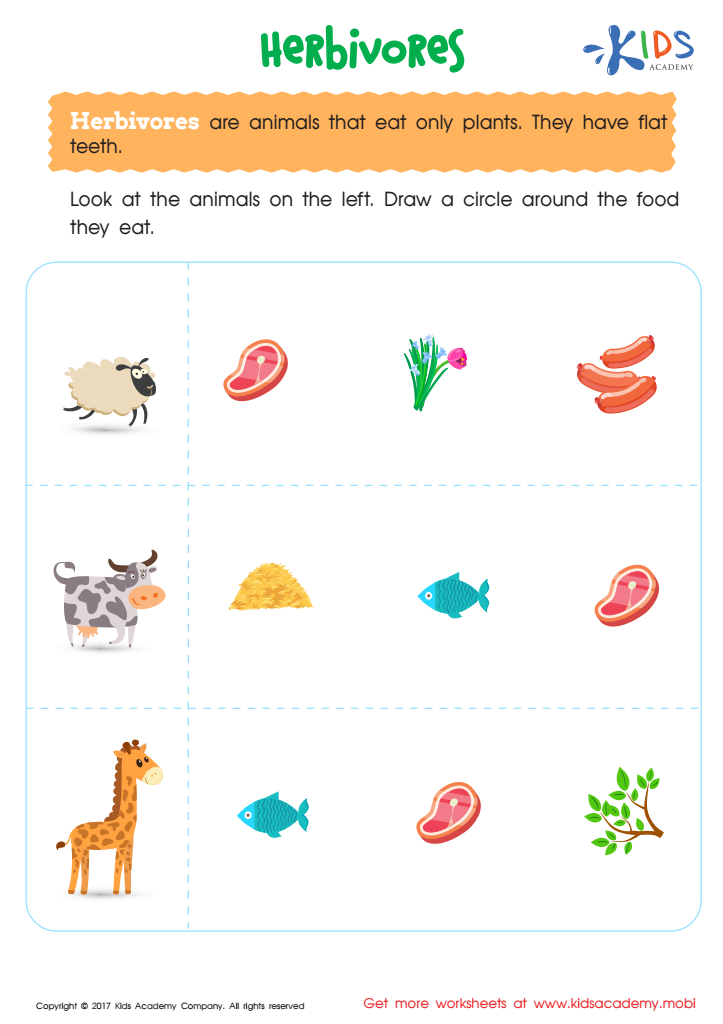
Herbivores Printable
 Assign to My Students
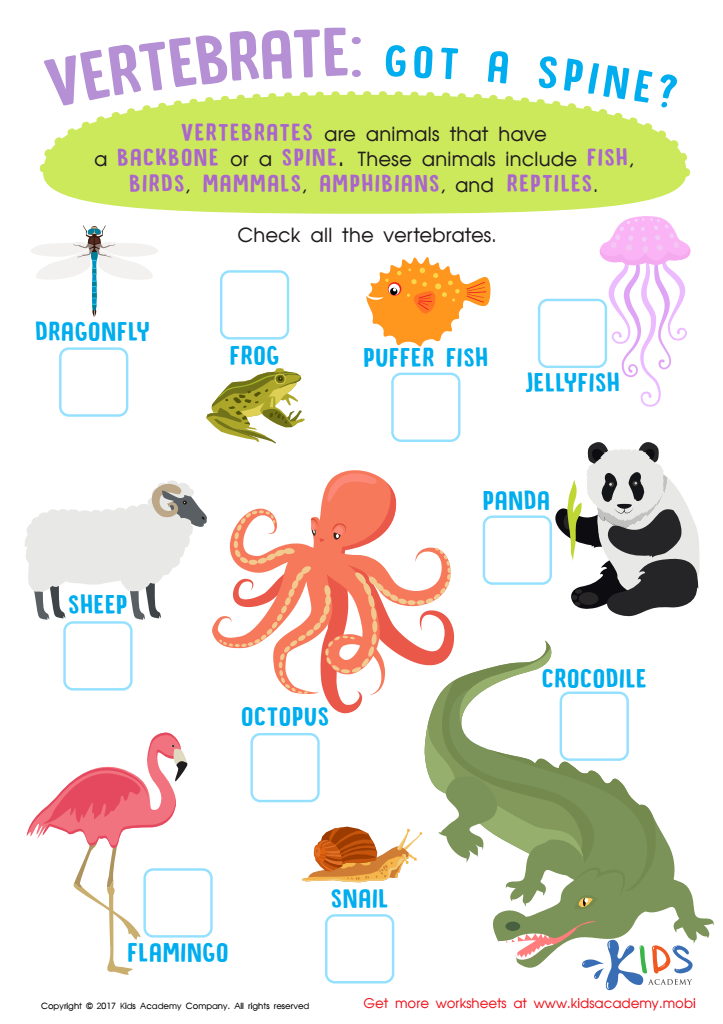
Vertebrates Animals Worksheet for 3rd Grade
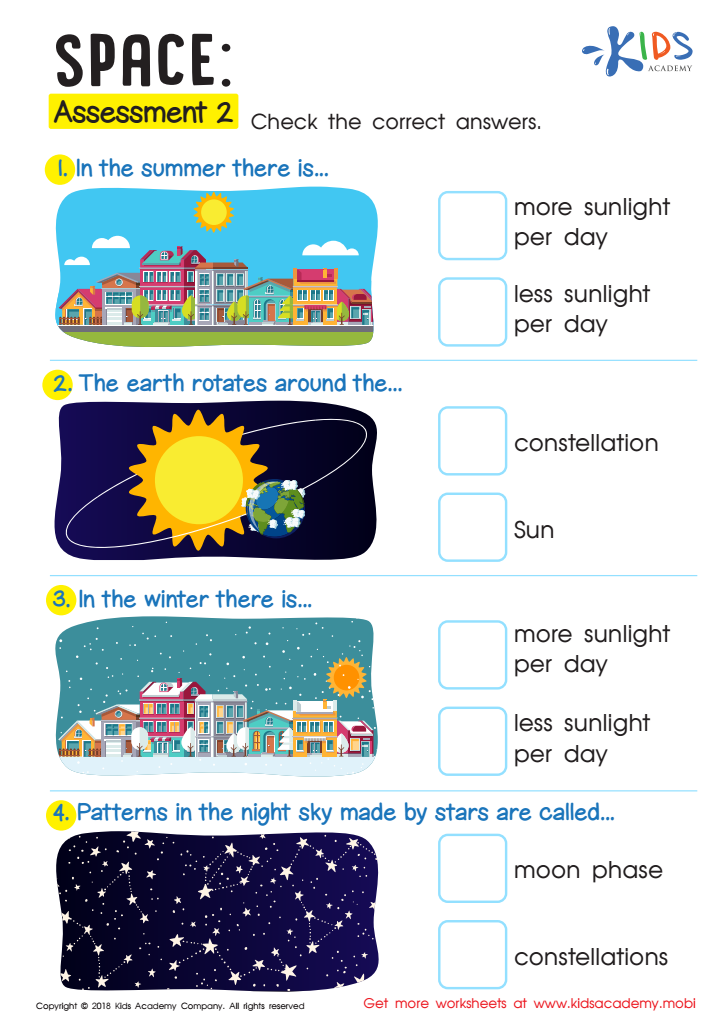
Space: Assessment 2 Worksheet







Parents and teachers should care about identifying animals as part of normal science for children aged 5-8 because it cultivates foundational skills and enhances overall development. Early identification and categorization of animals can ignite a child's curiosity about the natural world, laying the groundwork for lifelong learning and scientific thinking. At this developmental stage, children's brains are particularly receptive to new information and learning about animals helps them develop observation and classification skills, as well as an appreciation for biodiversity.
Furthermore, understanding different animals introduces young learners to concepts of habitats, ecosystems, and conservation, fostering a sense of responsibility and empathy towards living creatures. It strengthens language skills through the acquisition of new vocabulary and can also improve cognitive abilities such as memory and attention to detail.
Engaging in animal identification activities also provides opportunities for hands-on learning and interactive experiences, such as nature walks, visits to zoos, and hands-on projects, which are both educational and fun. Collaborative learning environments, where children discuss and share findings, enhance social skills and teamwork.
Ultimately, these activities support a well-rounded early education framework, connecting scientific knowledge with ethical and emotional awareness, setting children on a path of informed and engaged citizenship.







