Map reading skills Normal Science Worksheets for Ages 5-8
1 filtered results
-
From - To
Discover the excitement of map reading with our engaging science worksheets tailored for ages 5-8! Designed to spark curiosity and enhance geography skills, these printable activities make learning fun and interactive. Kids will practice identifying landmarks, understanding directions, and interpreting symbols through colorful and age-appropriate exercises. Perfect for early grade students, our worksheets support fundamental skills crucial for academic success while fostering a love for exploration. Whether used in the classroom or at home, these resources offer an enriching experience that combines the wonders of science and the art of navigation. Start your child's journey into map reading today!
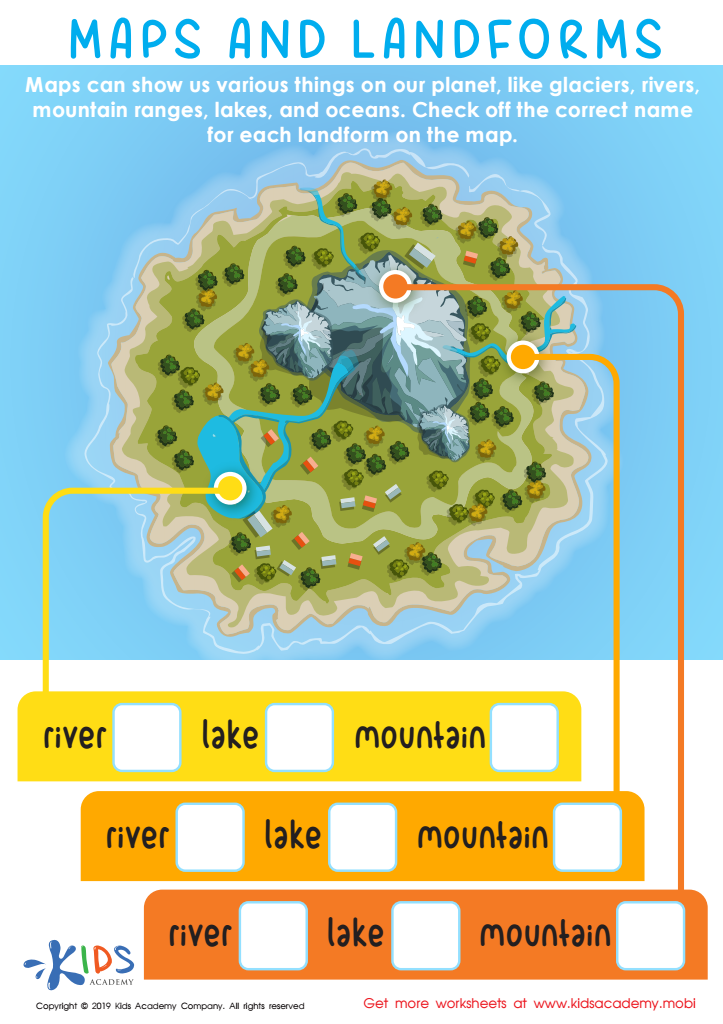
Maps and Landforms Worksheet
 Assign to My Students





.jpg)

Parents and teachers should care about teaching map reading skills to children aged 5-8 because these skills form a fundamental part of early spatial awareness, critical thinking, and problem-solving abilities. Map reading helps children understand the world around them and promotes cognitive development through the recognition of symbols, directionality, and scale. Engaging with maps introduces concepts of geography, including locations, landmarks, and the environment, fostering curiosity about different places.
Moreover, map reading can enhance a child's ability to navigate their surroundings. Understanding simple routes and locations helps build their independence and confidence. Integrating map reading in science-related activities is particularly beneficial as it complements learning about habitats, physical features, and the Earth's processes. This reinforces scientific thinking and encourages students to observe, analyze, and make predictions based on their findings.
By engaging with maps, young children also develop fine motor skills through activities like drawing routes or placing markers. Collaborative learning with maps encourages communication and teamwork, as children often work together to solve map-related puzzles or simulate journeys. Therefore, map reading is a multidisciplinary tool that enhances overall educational development, making it a critical skill to nurture in the early stages of a child's learning journey.







