Recognizing Patterns Normal Science Worksheets for Ages 5-8
3 filtered results
-
From - To
Unlock the wonder of science with our "Recognizing Patterns" worksheets tailored for children aged 5-8. These engaging printables help young learners grasp core scientific concepts through fun and interactive activities. By identifying and creating patterns, kids enhance critical thinking and build a solid foundation in STEM. Perfect for classroom use or supplementary home learning, our expertly designed worksheets develop observation skills and understanding of natural, predictable sequences. Foster an early love for science and discovery with Kids Academy's comprehensive resources. Dive into the world of patterns today and watch your child grow intellectually and creatively!
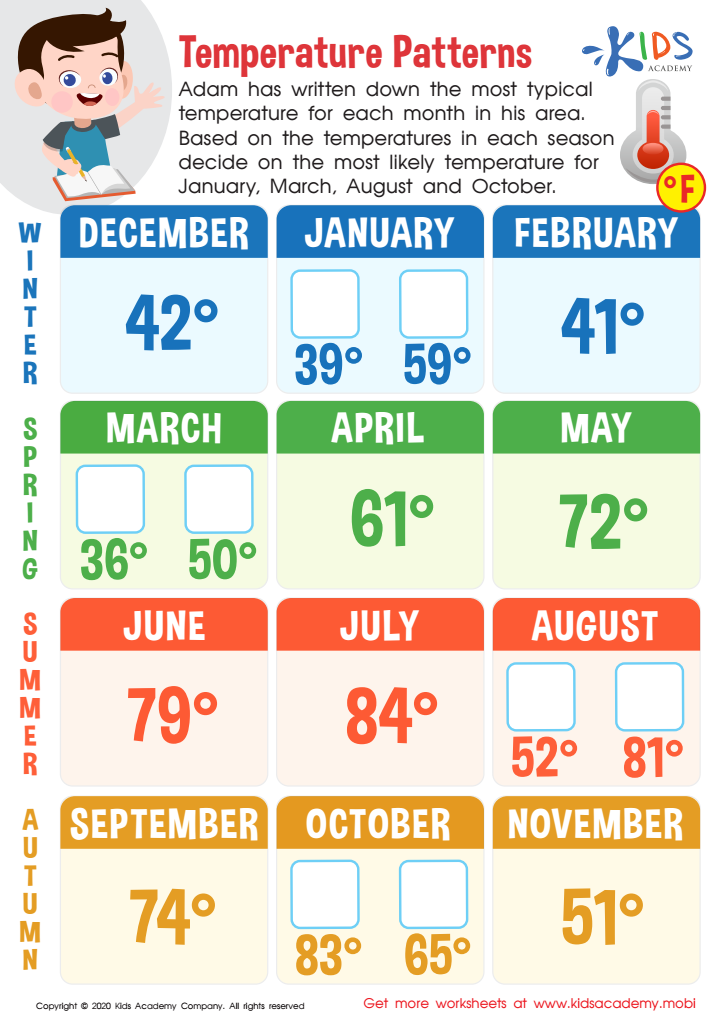
Temperature Patterns Worksheet
 Assign to My Students
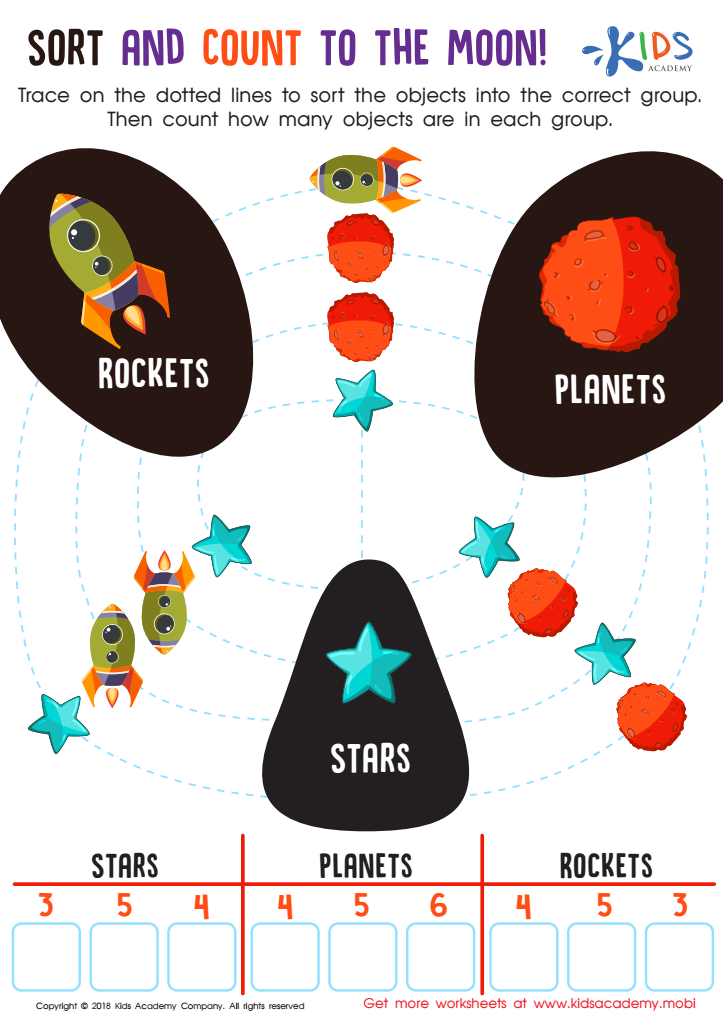
Sort and Count to the Moon Worksheet
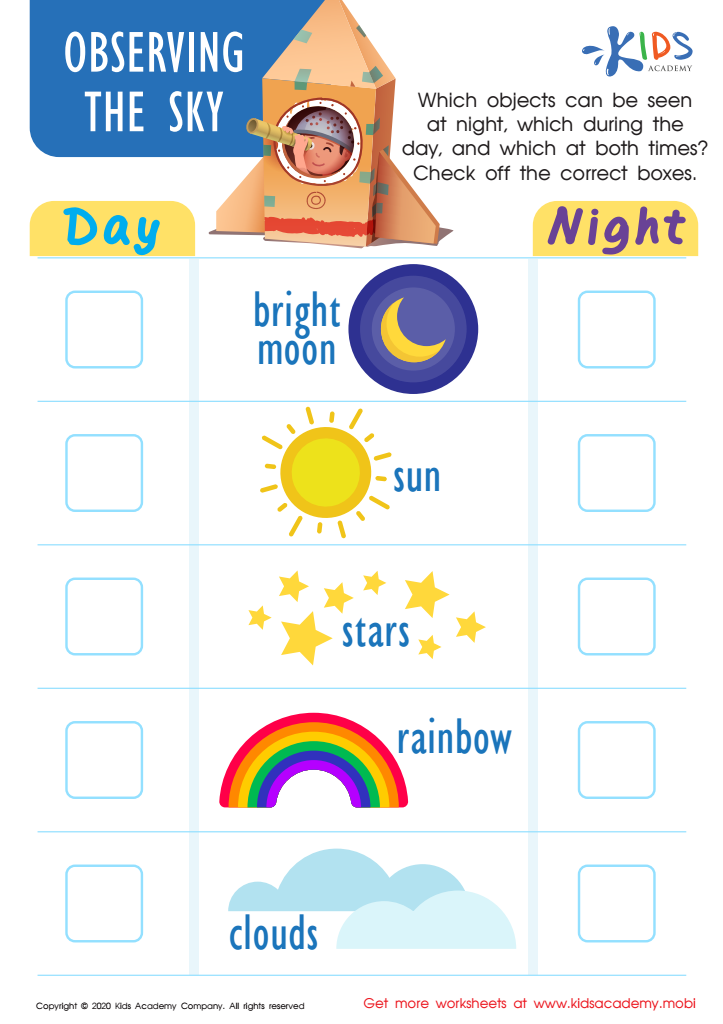
Observing the Sky Worksheet








Recognizing patterns is a foundational skill that plays a crucial role in early childhood development, particularly for children ages 5-8. At this stage, children’s brains are highly receptive, and pattern recognition helps them make sense of the world. For parents and teachers, promoting this skill is essential as it lays the groundwork for future learning in various subjects.
In mathematics, identifying sequences and understanding number patterns fosters early numeracy. It allows children to grasp basic concepts like addition, subtraction, and eventually multiplication and division. Recognizing patterns in shapes and colors is also vital for geometric understanding and for developing spatial awareness.
Moreover, pattern recognition extends beyond math. In language development, children discern patterns in sounds, such as rhymes and rhythms, which are pivotal for reading fluency and phonics. Recognizing repeated story structures aids comprehension and memory.
Cognitively, recognizing patterns strengthens neural connections, enhancing problem-solving skills and logical thinking. It encourages curiosity and observational skills, prompting children to inquire and explore more.
Patterns also offer consistency and predictability, providing emotional comfort and confidence. Discovering patterns in daily routines and social interactions helps children navigate and understand their environment better.
In essence, fostering pattern recognition equips young learners with essential cognitive tools, enriching their academic performance and helping them develop a more nuanced understanding of the world around them. Parents and teachers have a pivotal role in nurturing this critical skill.







