Understanding light sources Normal Science Worksheets for Ages 5-8
4 filtered results
-
From - To
Explore the wonders of light sources with our engaging Normal Science Worksheets designed for kids ages 5-8! These worksheets offer fun and interactive activities that help young learners grasp the concept of light and its various sources. With colorful illustrations and easy-to-follow instructions, children will enjoy discovering the difference between natural and artificial light. Our materials encourage hands-on learning, fostering curiosity and creativity while reinforcing essential science skills. Perfect for classrooms or homeschooling, these worksheets aim to make learning about light an exciting adventure. Download and ignite your child's interest in science today!
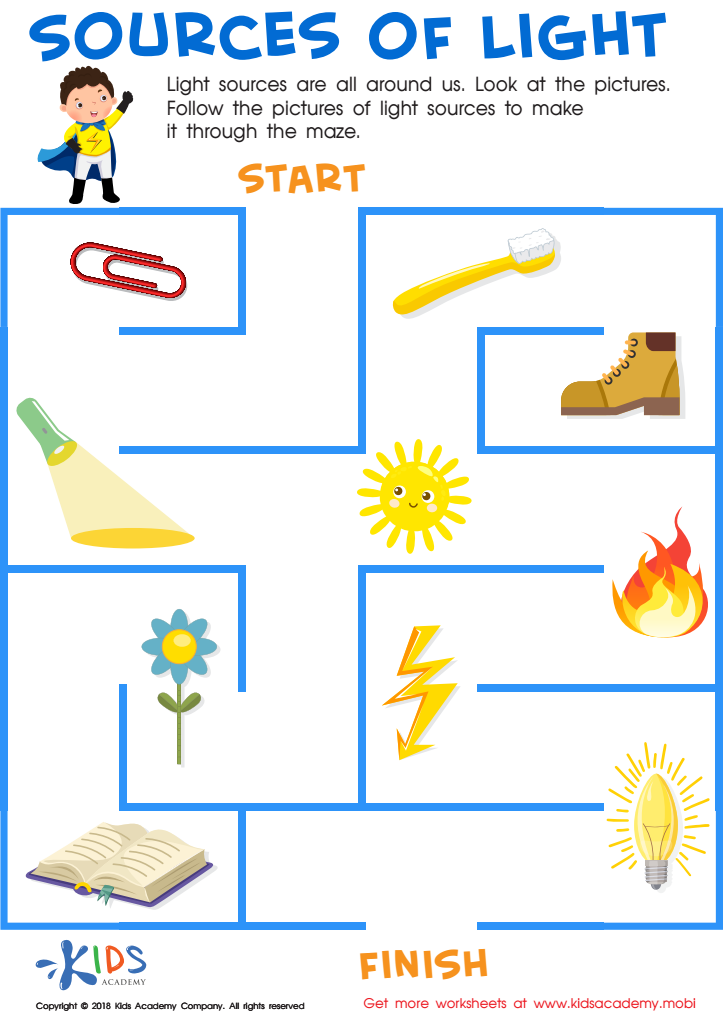
Sources of Light Worksheet
 Assign to My Students
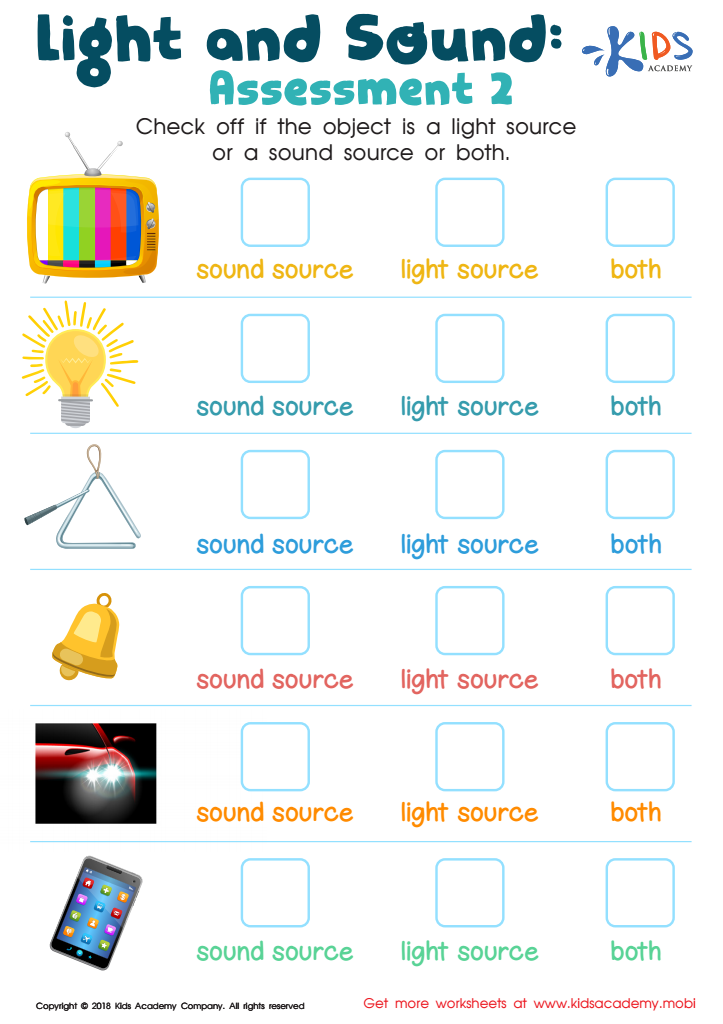
Light and Sound: Assessment 2 Worksheet
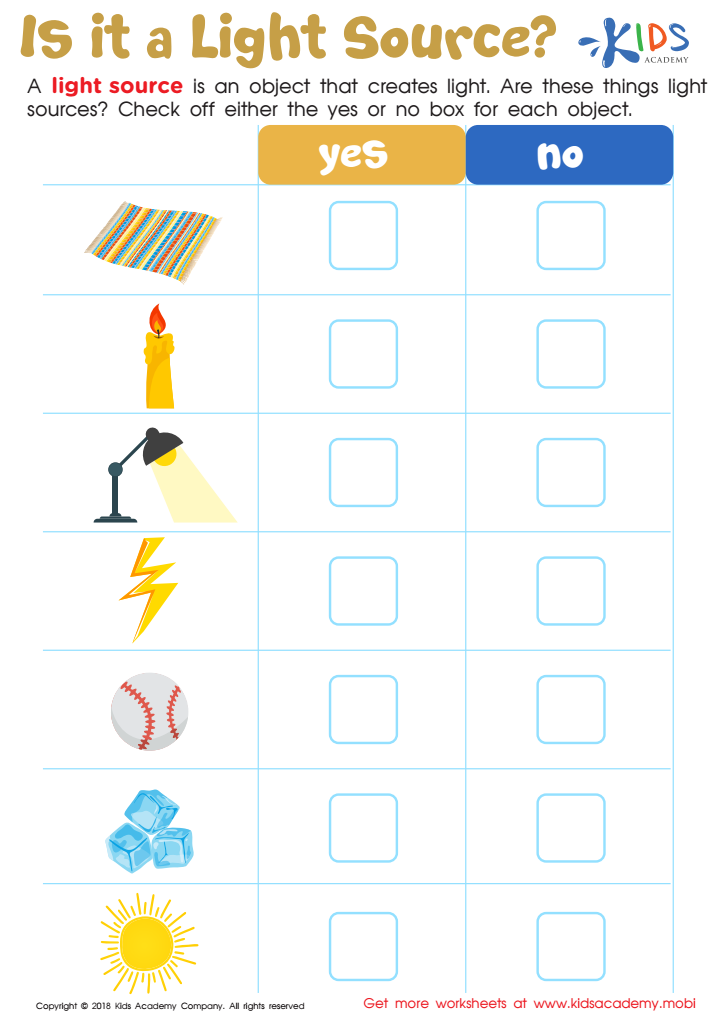
Is It a Light Source? Worksheet
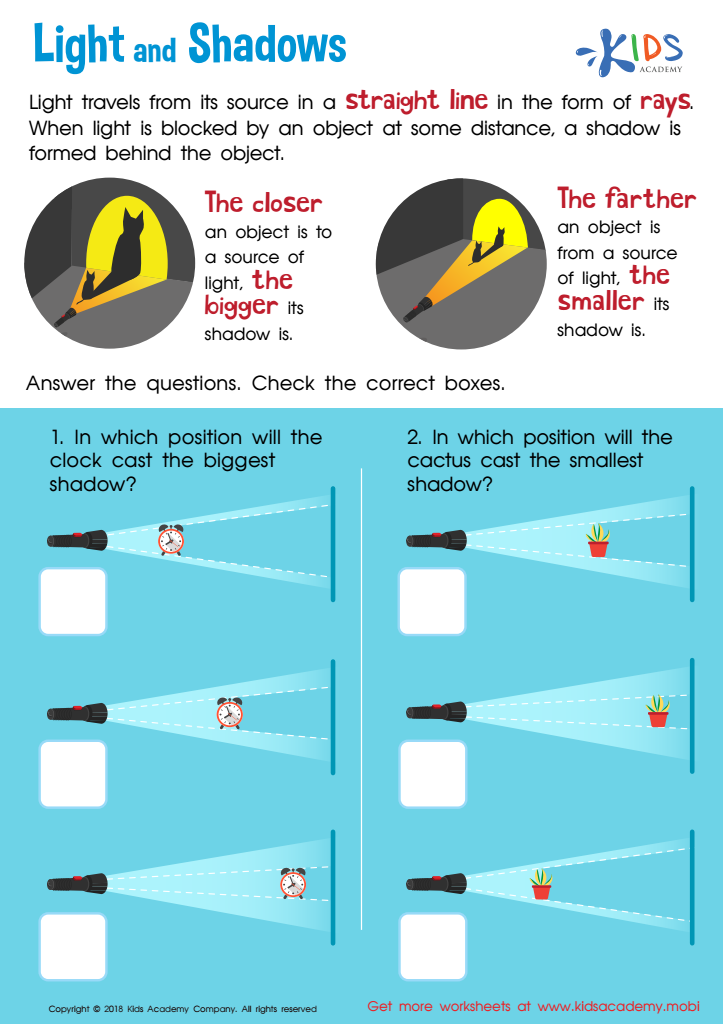
Light and Shadow Worksheet for Grade 3






Understanding light sources is crucial for children aged 5-8, as it lays the foundation for scientific literacy and curiosity. At this age, children are naturally inquisitive, eager to explore the world around them. Teaching them about light sources enhances their observational skills, helping them recognize the difference between natural and artificial light. This fundamental concept fosters critical thinking and encourages children to ask questions about their environment, nurturing a sense of exploration.
Parents and teachers should care because a solid grasp of light helps students understand phenomena like shadows, reflections, and the importance of light in life processes like photosynthesis. Integrating light source education into everyday activities, such as discussions about the sun, light bulbs, or campfire flames, promotes experiential learning.
Furthermore, this knowledge aligns with early science standards and paves the way for more complex scientific concepts in the future. Engaging children with interactive activities—such as simple experiments with mirrors or exploring shadows—can make learning fun and memorable. Ultimately, fostering a strong understanding of light sources not only enhances their current engagement with science but also cultivates lifelong learning habits and prepares them for more advanced studies in science.







