
Understanding life cycles Normal Plants and Animals Worksheets for Ages 5-8
3 filtered results
Difficulty Level
Grade
Age
-
From - To
Subject
Activity
Standards
Discover the fascinating world of plants and animals with our "Understanding Life Cycles Normal Plants and Animals" worksheets, designed for ages 5-8. These engaging, interactive worksheets from Kids Academy guide young learners through the life cycles of various plants and animals in an easy-to-understand format. With vibrant illustrations and clear, age-appropriate explanations, children will learn essential concepts, from seed germination to butterfly metamorphosis. Perfect for curious minds eager to explore nature's wonders, these worksheets provide a fun, educational experience that supports foundational science skills and a lifelong love of learning.
Favorites
With answer key
Interactive
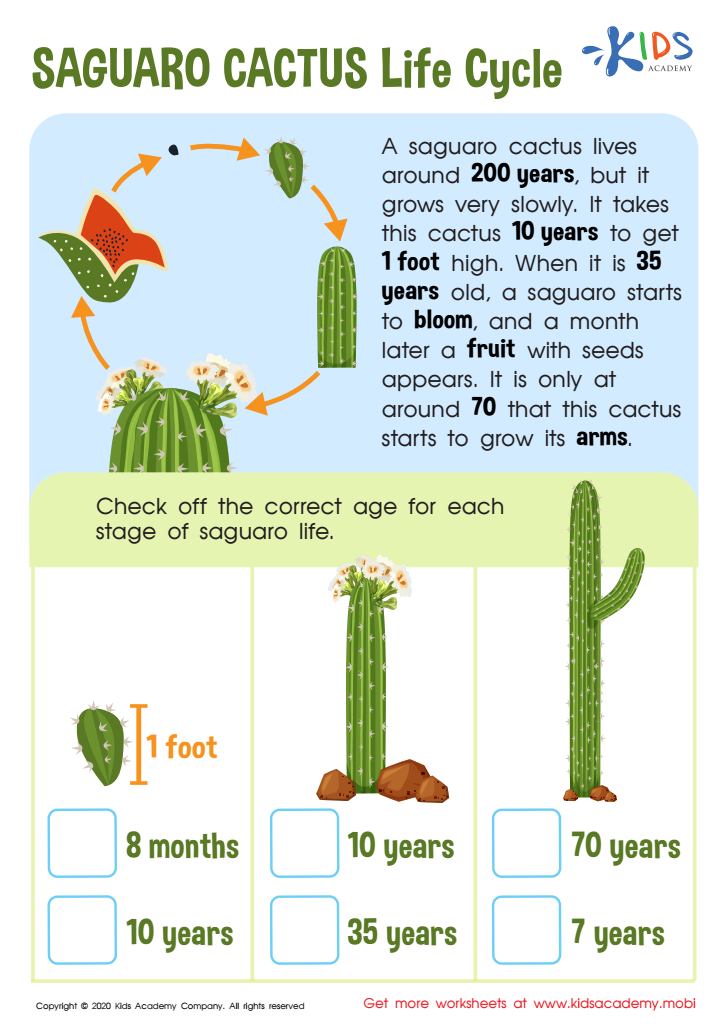
Saguaro Cactus Life Cycle Worksheet
Teach your child about the saguaro cactus, which takes 35 years to bloom and can live up to twice the lifespan of a human! Print this free PDF worksheet to engage learners with an interesting passage. Check off the correct answers to reflect their learning!
 Assign to My Students
Saguaro Cactus Life Cycle Worksheet
Worksheet











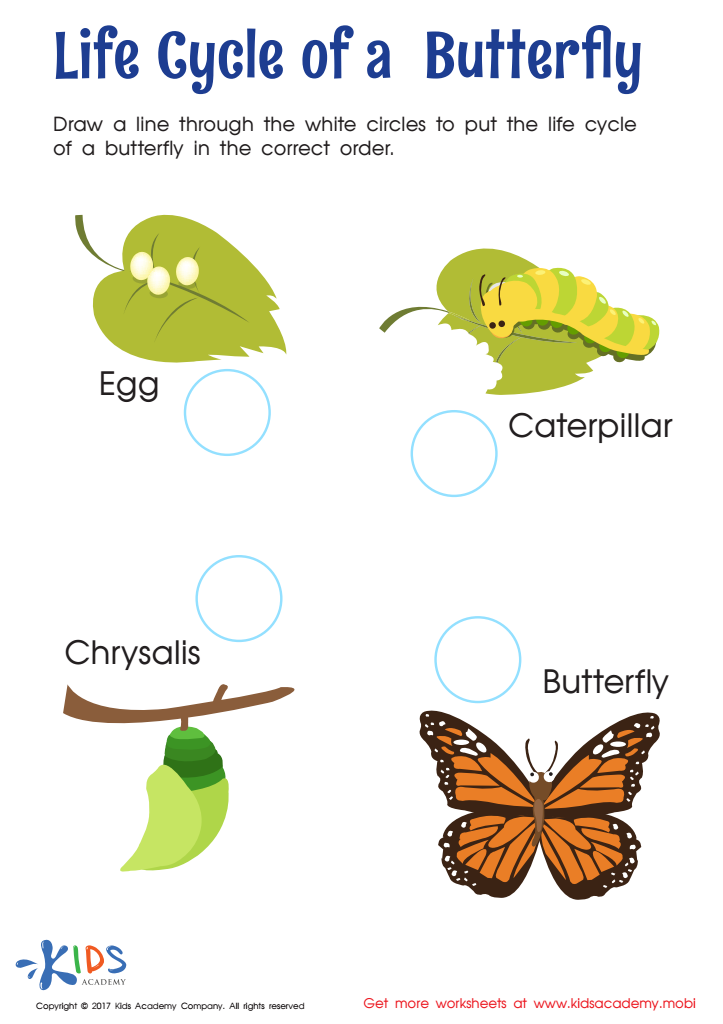
Life Cycle of Butterfly Worksheet
Kids Academy offers an exciting activity – a Life Cycle of a Butterfly Worksheet PDF. It shows four stages in the lifecycle of a butterfly with vivid pictures. Kids put the stages in the correct order to study the lifecycle.
Life Cycle of Butterfly Worksheet
Worksheet
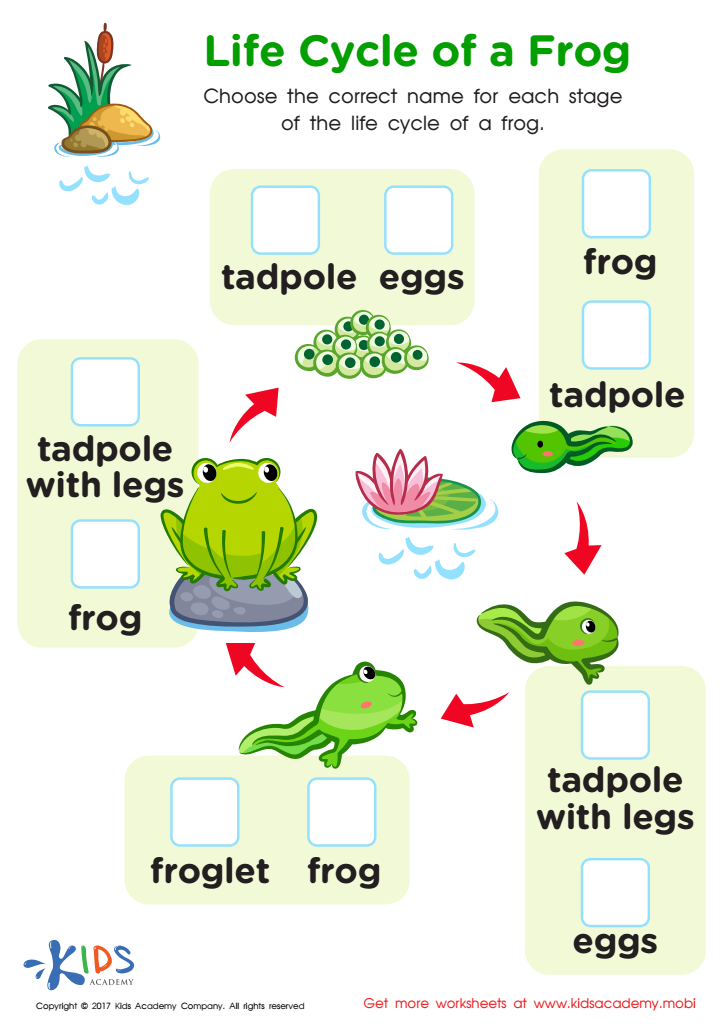
Life Cycle Frog Printable
Kids can explore the life cycle of frog with this fun worksheet! Draw lines from one stage to the next to follow the transformation from tadpole to frog and learn about the cycle of life.
Life Cycle Frog Printable
Worksheet
Join Kids Academy for Free
Who is primarily going to use this learning content?








Understanding life cycles of plants and animals is crucial for children aged 5-8 because it builds a foundation for scientific literacy and promotes a sense of curiosity about the natural world. At this developmental stage, kids are highly inquisitive and eager to explore their surroundings. By learning how plants grow from seeds to mature plants and how animals develop from birth to adulthood, children gain a clear understanding of basic biological processes.
This knowledge fosters respect for living organisms and their roles in our ecosystem, encouraging responsible behavior towards nature. Early familiarity with life cycles can also reinforce important concepts like growth, change, and the interdependence of living things. This understanding can lead to an interest in subjects like biology, environmental science, and agriculture, nurturing a lifelong passion for learning.
Moreover, engaging in hands-on activities such as planting seeds or observing caterpillars transform into butterflies enhances observational and critical-thinking skills. These activities can also improve motor skills and coordination. In a broader context, learning about life cycles contributes to emotional development by helping children understand and cope with changes and the various stages of life, fostering empathy and resilience. Therefore, prioritizing this topic within early education aids in holistic child development.







