Understanding pollination Normal Plants and Animals Worksheets for Ages 5-8
3 filtered results
-
From - To
Discover the wonders of pollination with our "Understanding Pollination Normal Plants and Animals Worksheets" for children ages 5-8. These engaging printable worksheets from Kids Academy are designed to introduce young learners to the vital process of pollination. Through fun activities, kids explore the roles of insects, animals, and wind in helping plants reproduce. Our carefully crafted worksheets encourage curiosity and enhance understanding of science concepts, helping children build foundational knowledge. Ideal for classroom or home use, these worksheets make learning about nature interactive and enjoyable. Start your child’s environmental education journey today!
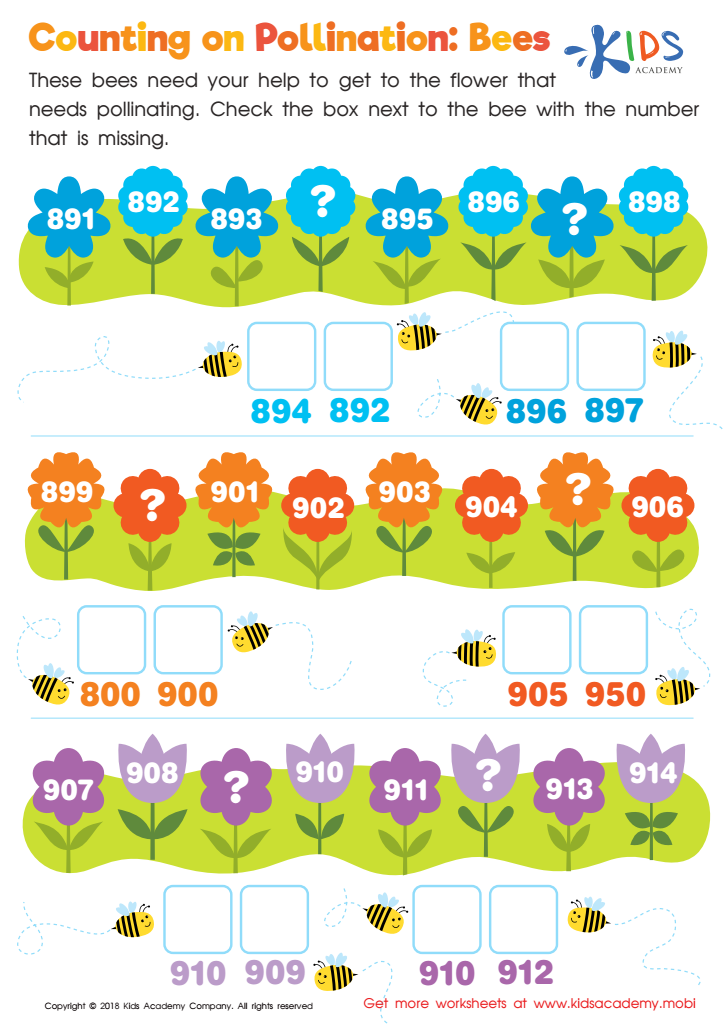
Counting on Pollination: Bees Worksheet
 Assign to My Students

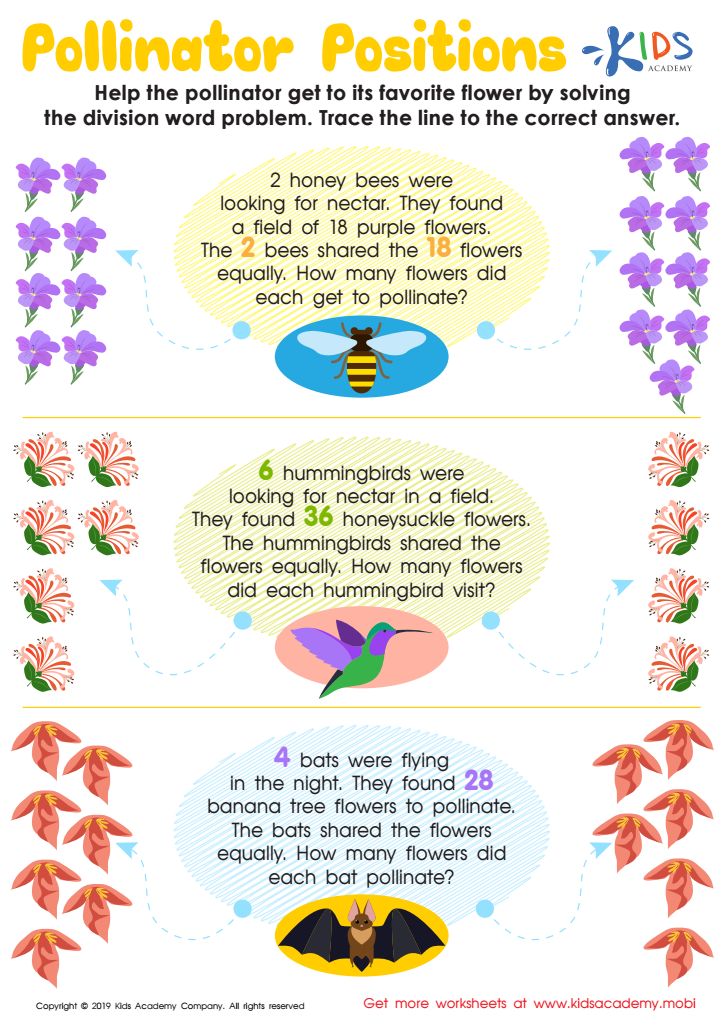
Pollinator Positions Worksheet
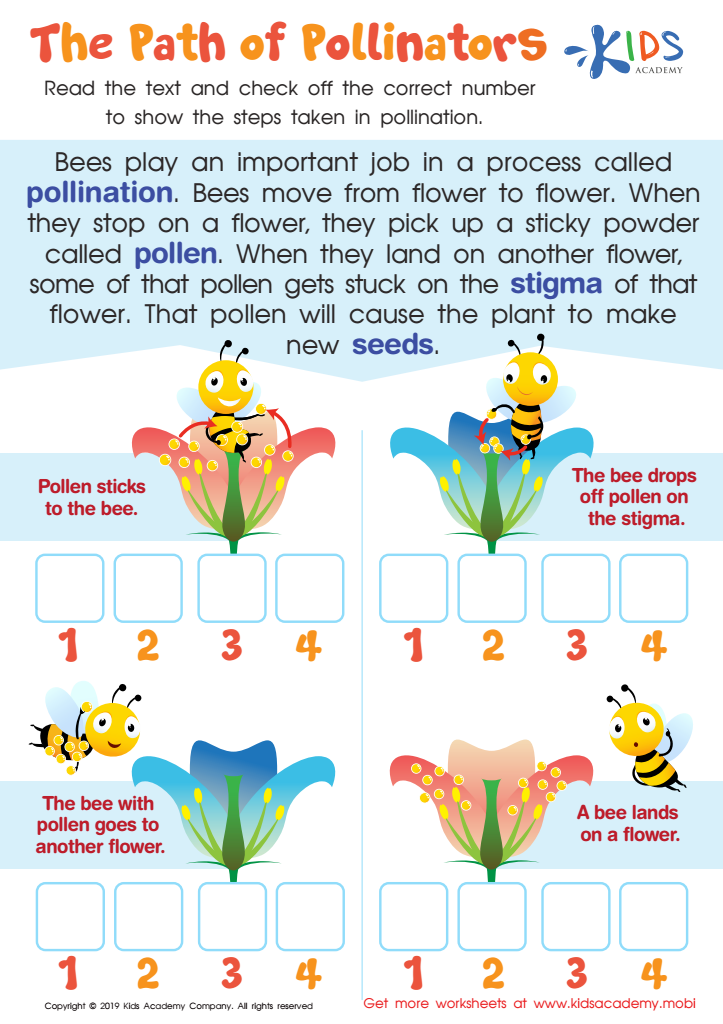
The Path of Pollinators Worksheet







Understanding pollination and the roles of plants and animals in this process is vital for parents and teachers, especially when educating children aged 5-8. At this developmental stage, children are naturally curious about the world around them, and fostering their connection with nature sets the foundation for lifelong environmental stewardship. Learning about pollination enables young children to grasp basic scientific concepts in biology, ecology, and the interdependence of life systems.
When kids discover how bees, butterflies, birds, and even the wind help plants to reproduce and bear fruit, they can appreciate the intricate balance of ecosystems. This understanding promotes respect and care for the environment. Involving children in activities like planting flowers or observing insects can provide hands-on learning experiences that make these concepts tangible.
For parents and educators, teaching pollination also integrates various educational objectives: vocabulary expansion through words like “pollen,” “nectar,” and “pollinators,” as well as critical thinking through questioning and exploration. Plus, these lessons can cross over into other subjects such as art (drawing flowers and insects), math (counting petals or seeds), and literacy (writing simple stories about garden creatures).
In essence, prioritizing this understanding helps shape eco-conscious, knowledgeable individuals from a young age, instilling values that our planet deeply needs.







