Weather identification Normal Weather Worksheets for Ages 5-8
4 filtered results
-
From - To
Discover our engaging Weather Identification Worksheets designed for children aged 5-8! These worksheets make learning about different weather patterns exciting and educational. Kids will identify, predict, and describe normal weather conditions through fun activities that enhance critical thinking and observation skills. Packed with vibrant illustrations and easy-to-understand instructions, these printable resources support young learners in recognizing rainy, sunny, cloudy, and snowy days. Ideal for classroom use or at-home practice, our weather worksheets boost science knowledge while fostering a lifelong curiosity about the world. Inspire your little meteorologist today with our comprehensive Weather Identification Worksheets.
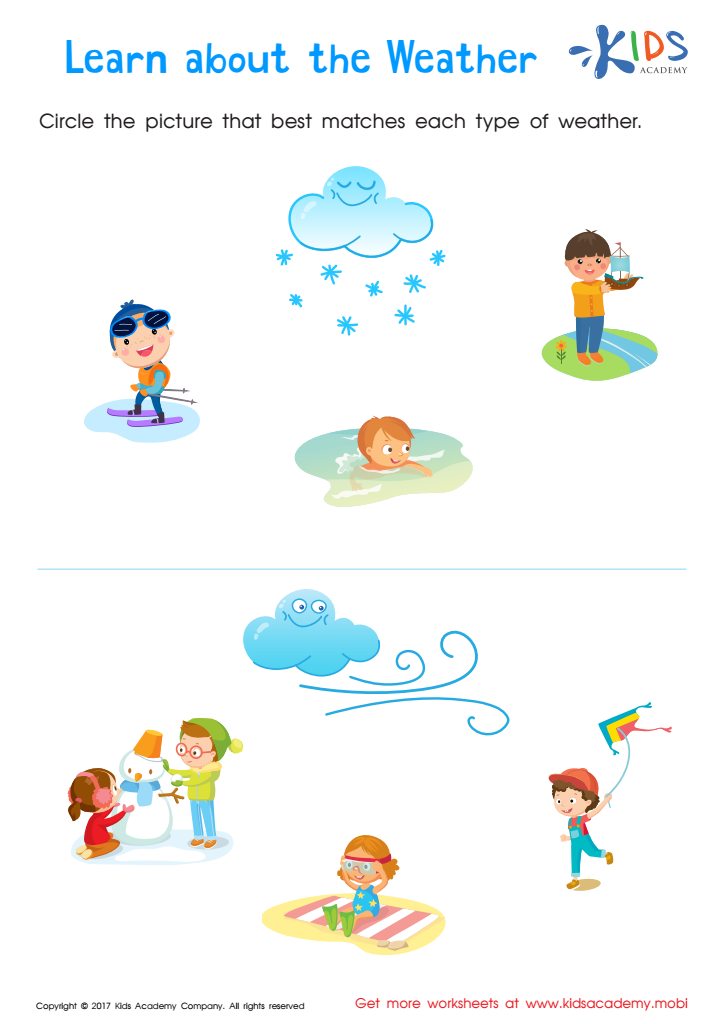
About the Weather Printable
 Assign to My Students
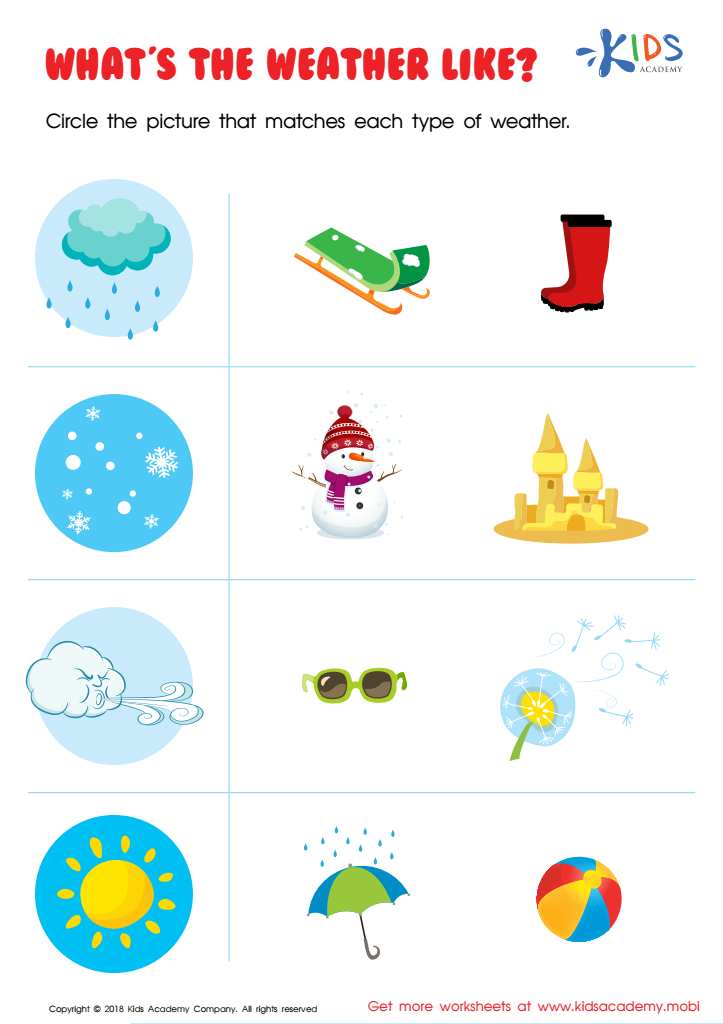
What's the Weather Like? Worksheet
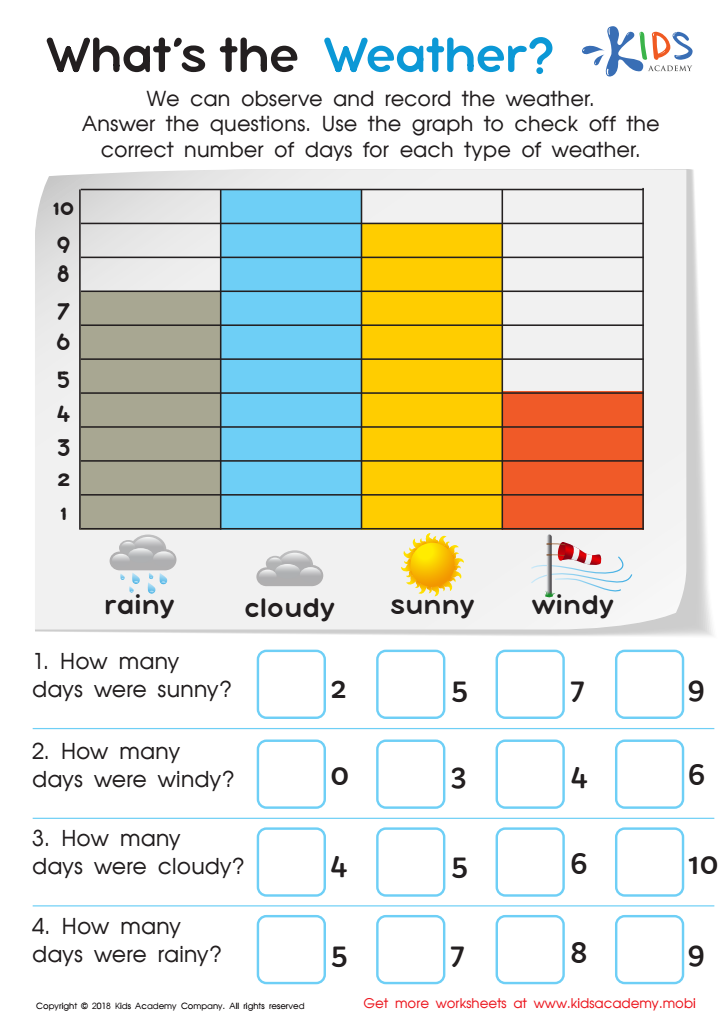
What's the Weather? Worksheet
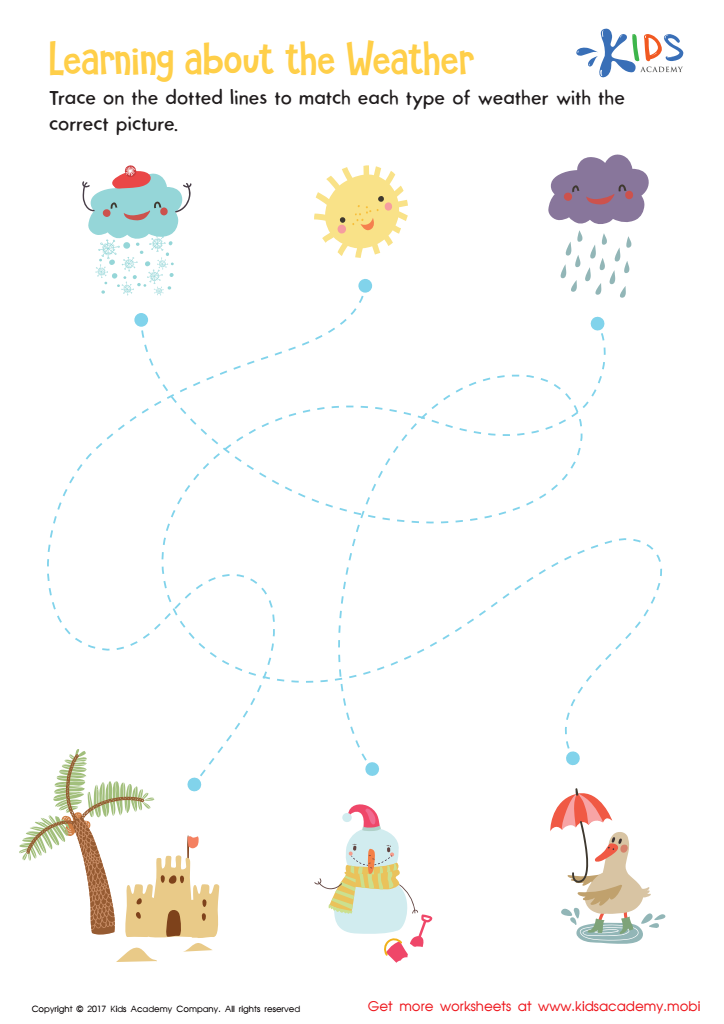




%20(1).jpg)



Understanding normal weather patterns is crucial for young children, and both parents and teachers should actively engage them in weather identification activities. For ages 5-8, this practice serves multiple purposes. Firstly, it helps children develop observational skills and curiosity about the world around them. When kids consistently monitor weather conditions, they learn to recognize patterns and make predictions based on observable data, fostering critical thinking and analytical skills.
Additionally, knowing how to identify different types of weather allows children to make informed decisions about their safety and well-being. For instance, if a child can recognize the signs of an approaching storm, they can seek shelter and be prepared, reducing risks associated with sudden weather changes. Parents and teachers can use weather identification lessons to teach broader science concepts, such as the water cycle, seasons, and types of precipitation, thereby enhancing their overall understanding of natural phenomena.
Moreover, weather identification encourages outdoor play and interaction with nature. Children naturally become more attuned to their environment and develop respect and care for it. By nurturing an early interest in weather, parents and teachers set the foundation for future scientific interest and personalized safety awareness, both of which are invaluable life skills.








