Geography skills Normal Geography Worksheets for Ages 5-8
3 filtered results
-
From - To
Discover an engaging way for children ages 5-8 to develop crucial geography skills with our Normal Geography Worksheets. These carefully crafted resources introduce young learners to key geographical concepts including maps, Earth's features, continents, and oceans. Each worksheet is designed to be both educational and fun, encouraging curiosity and a love for exploration. Kids will enhance their understanding of spatial awareness and improve critical thinking while navigating various activities. Perfect for use in the classroom or at home, our geography worksheets provide a solid foundation for young adventurers eager to discover the world around them.
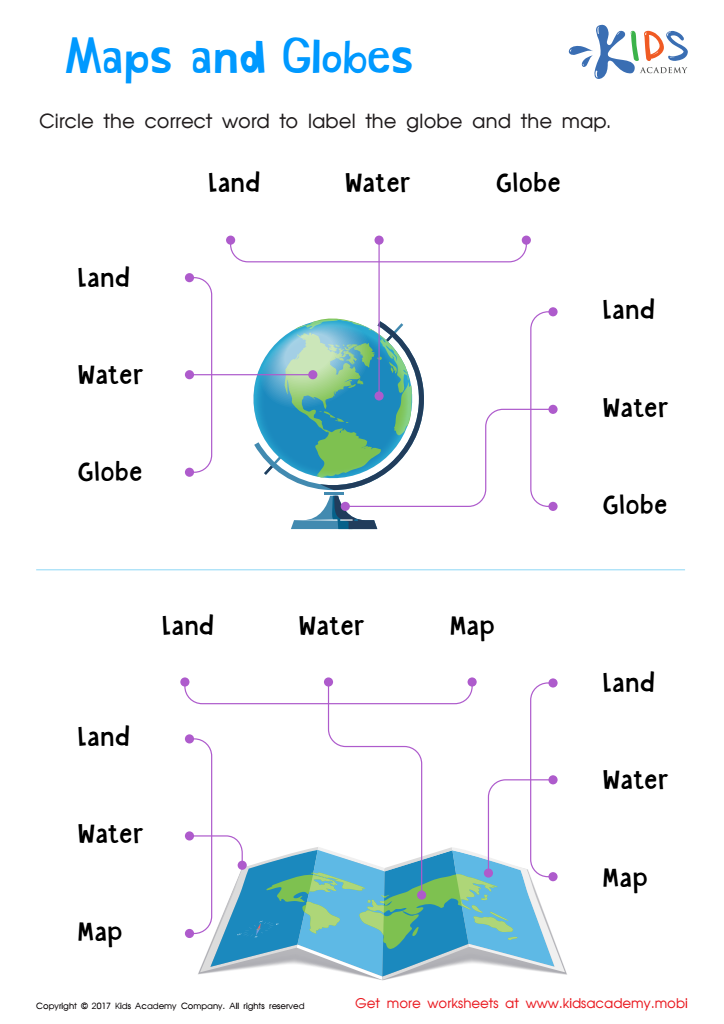
 Assign to My Students
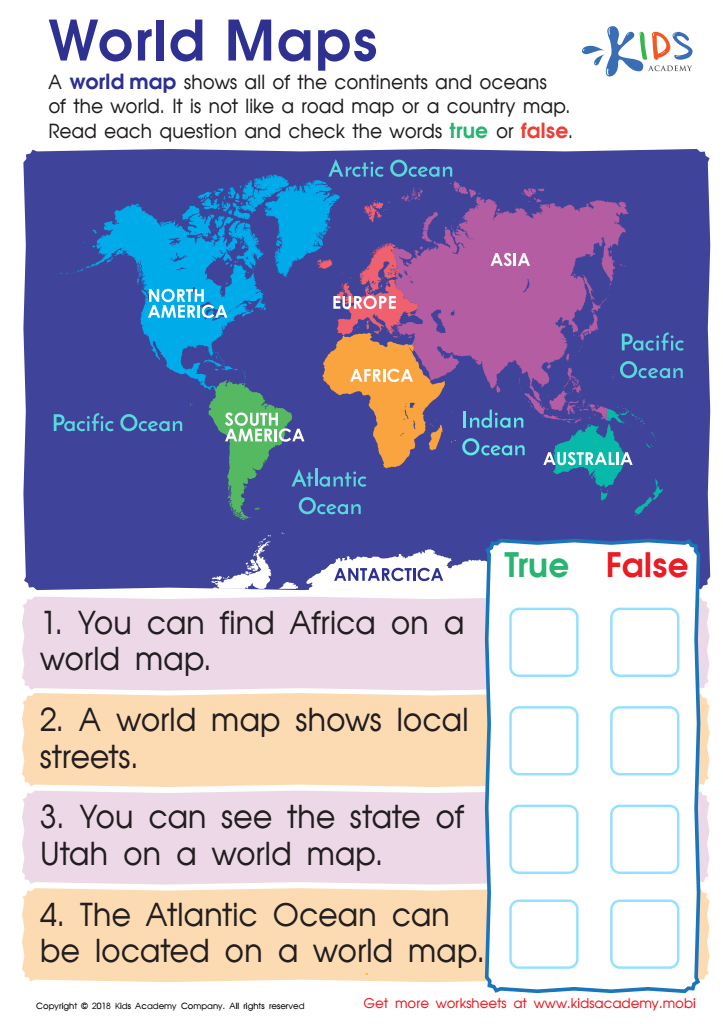
World Maps Worksheet
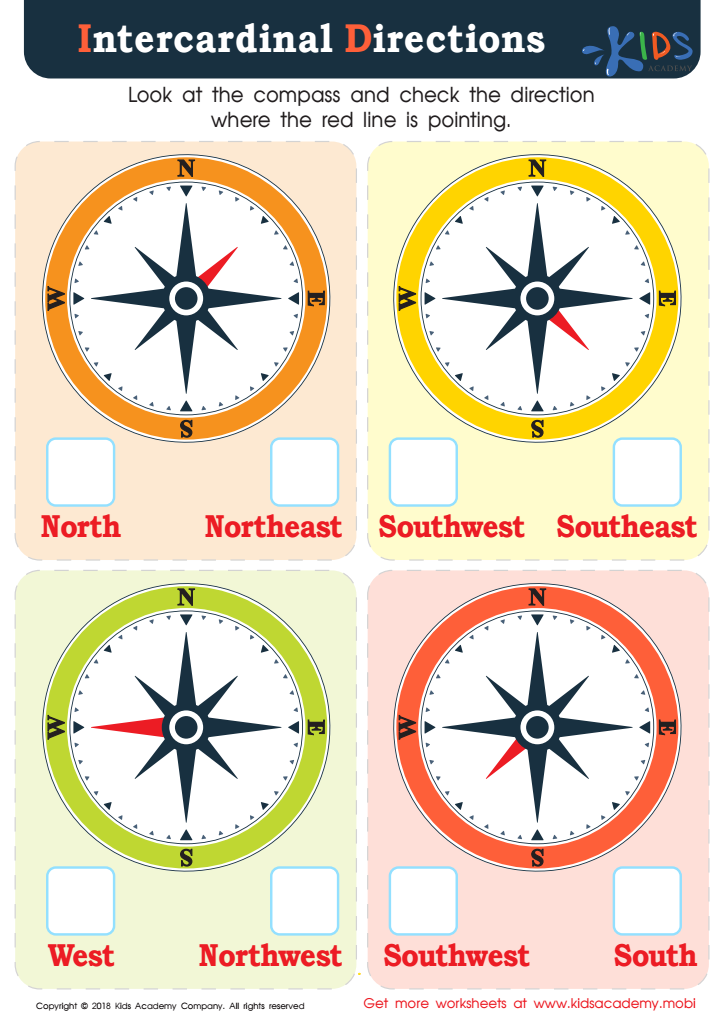
Intercardinal Directions Worksheet




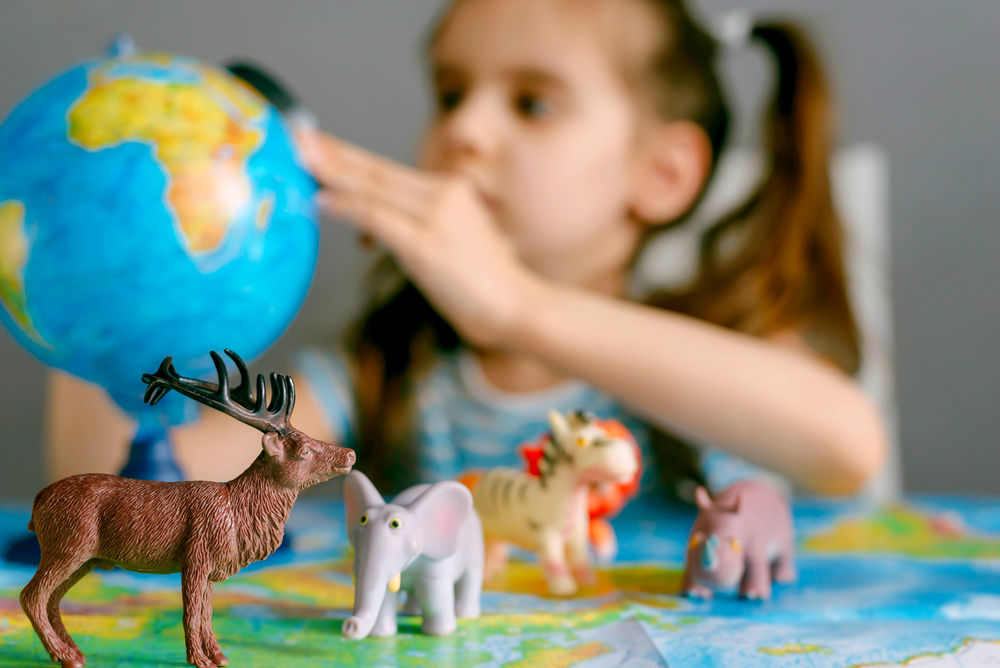


Parents and teachers should prioritize geography skills for children aged 5-8 because these foundational years are critical for cognitive and social development. In early childhood, understanding basic geography helps kids comprehend their immediate environment, boosting their spatial awareness and ability to recognize patterns. This early exposure can effectively hone their problem-solving skills by enabling them to make connections between different places and cultures.
Learning geography at a young age also nurtures curiosity and a sense of wonder about the world. It can foster an appreciation for diversity and enhance cultural empathy by introducing children to various countries, people, and customs. This broad understanding contributes significantly to the development of well-rounded, globally-minded individuals.
Furthermore, geographic literacy is integral to numerous essential skills, including reading and interpreting maps, understanding the Earth's processes, and knowing the relationship between human activities and the planet. These skills have practical uses, such as navigating physical spaces and recognizing the importance of sustainable practices.
For teachers, incorporating geography into the curriculum enhances interdisciplinary learning by linking history, science, and social studies, thus providing a richer educational experience. For parents, encouraging geography-related activities like map reading or cultural storytelling can make learning enjoyable at home while bonding over shared knowledge explorations. Ultimately, strong geography skills lay the groundwork for lifelong learning and informed citizenship.








