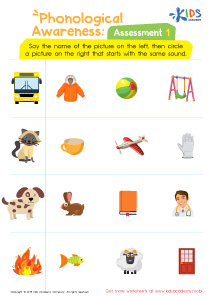
Word identification Normal Elementary Phonics Worksheets for Ages 5-9
3 filtered results
-
From - To
Discover our engaging Word Identification Normal Elementary Phonics Worksheets, specially designed for children aged 5-9. These worksheets are perfect for helping young learners develop essential reading skills through playful and interactive activities. Each worksheet focuses on identifying words, enhancing phonemic awareness, and improving vocabulary in a fun way. With vibrant visuals and age-appropriate exercises, your little ones will enjoy mastering word recognition, paving the way for lifelong reading success. Aligning with educational standards, these printable resources are ideal for both classroom use and at-home practice. Unleash your child’s potential while fostering a love for reading with our expertly crafted phonics worksheets!
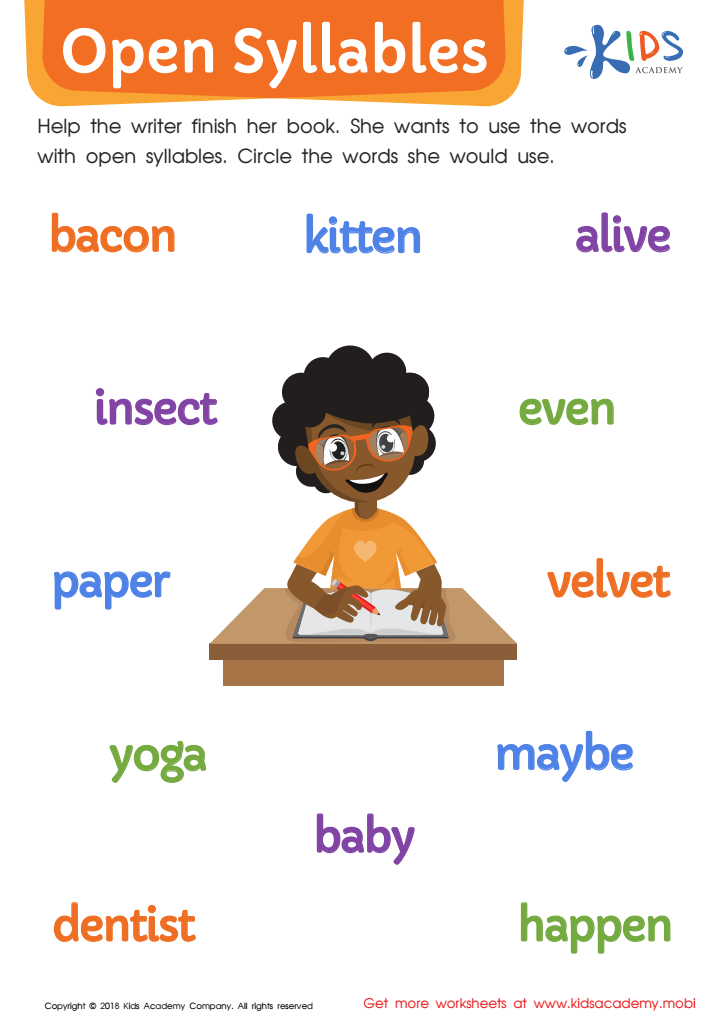
Open Syllables Worksheet
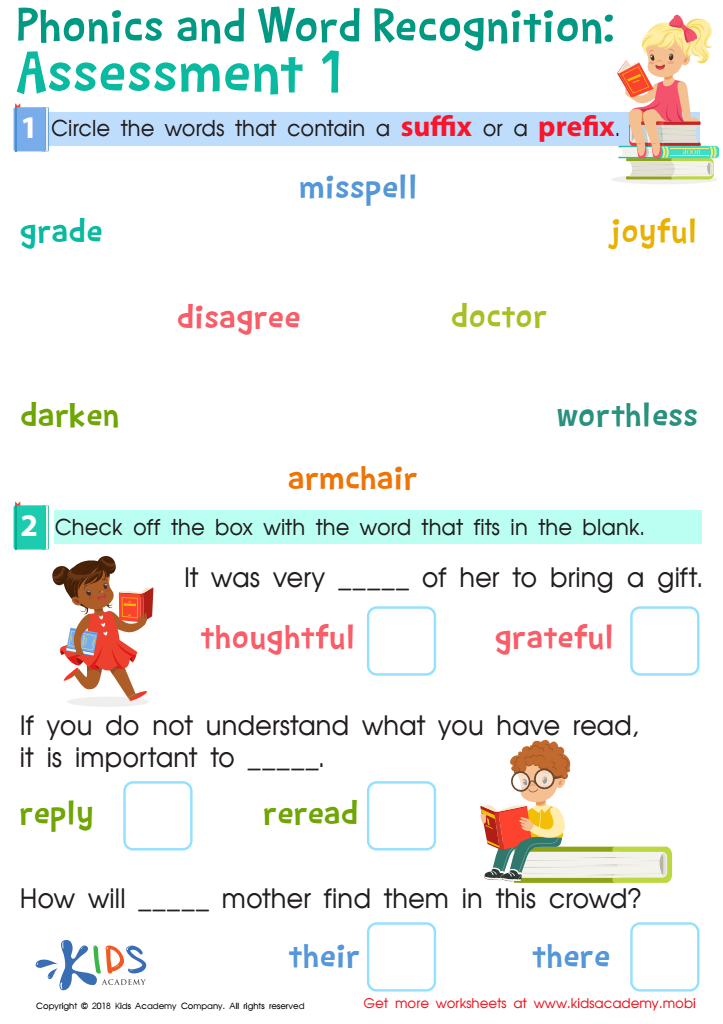
Phonics and Word Recognition: Assessment 1 Worksheet
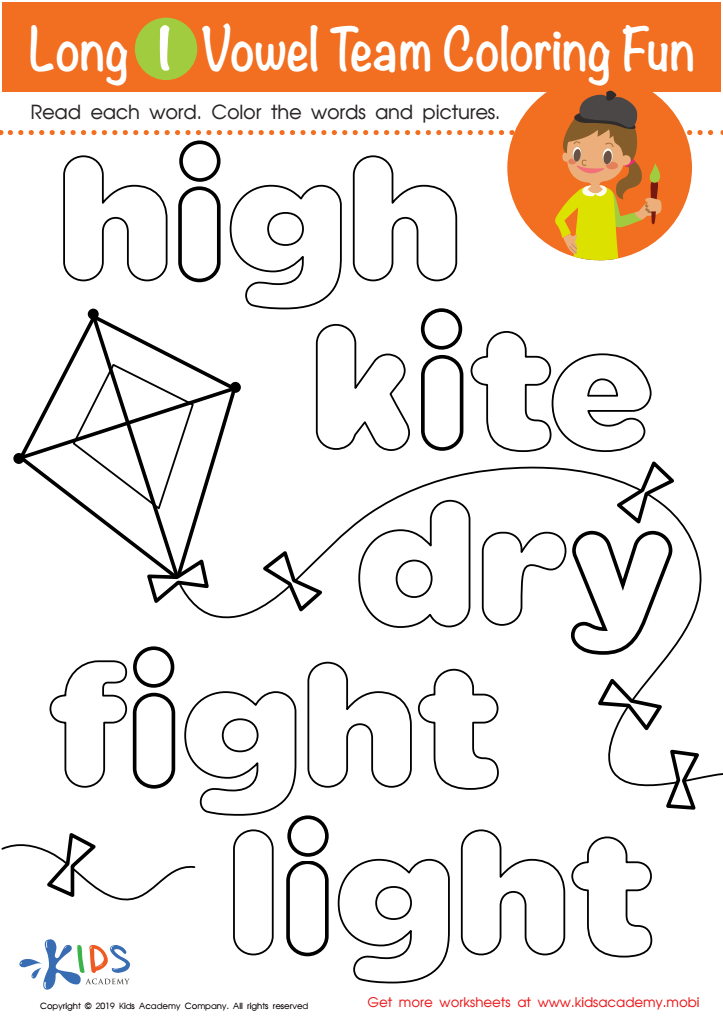
Long I Vowel Team Coloring Worksheet
 Assign to My Students




Parents and teachers play a crucial role in the literacy development of children aged 5-9, making proficiency in word identification through programs like Normal Elementary Phonics essential. This age group is a critical period where foundational reading skills are established. Understanding phonics equips children with the ability to decode words, recognize patterns, and ultimately make sense of what they read.
Phonics instruction fosters word identification skills, enabling students to tackle unfamiliar words and expand their vocabulary. This skill lays the groundwork for more complex literacy tasks, aiding in comprehension and fluency. Moreover, when children can easily identify words, their confidence grows, encouraging a love for reading and learning.
Incorporating phonics in the classroom and at home creates a cohesive support system for children. By engaging in shared reading and phonics activities, parents and teachers can reinforce these skills, bridging the gap between school and home learning environments. Prioritizing phonics is not just about literacy; it’s about nurturing lifelong learners who thrive academically and socially. Ultimately, mastery of word identification through phonics benefits children by enhancing critical thinking, expanding their imaginative capabilities, and fostering a positive relationship with language and literacy.