
Letter tracing skills Normal Alphabet Worksheets for Ages 5-9
5 filtered results
Difficulty Level
Grade
Age
-
From - To
Subject
Activity
Standards
Boost your child's handwriting and fine motor skills with our engaging Letter Tracing Skills Normal Alphabet Worksheets, designed for ages 5-9! These expertly crafted worksheets feature clear, easy-to-follow tracing paths for each letter of the alphabet, helping young learners develop precise letter formation. Perfect for both beginner writers and those needing extra practice, our worksheets encourage confident, consistent handwriting. Ideal for home or classroom use, they turn learning into an enjoyable activity with fun illustrations and varied tracing exercises. Equip your child with the foundation for writing success and explore our comprehensive range of alphabet tracing worksheets today!
Favorites
With answer key
Interactive
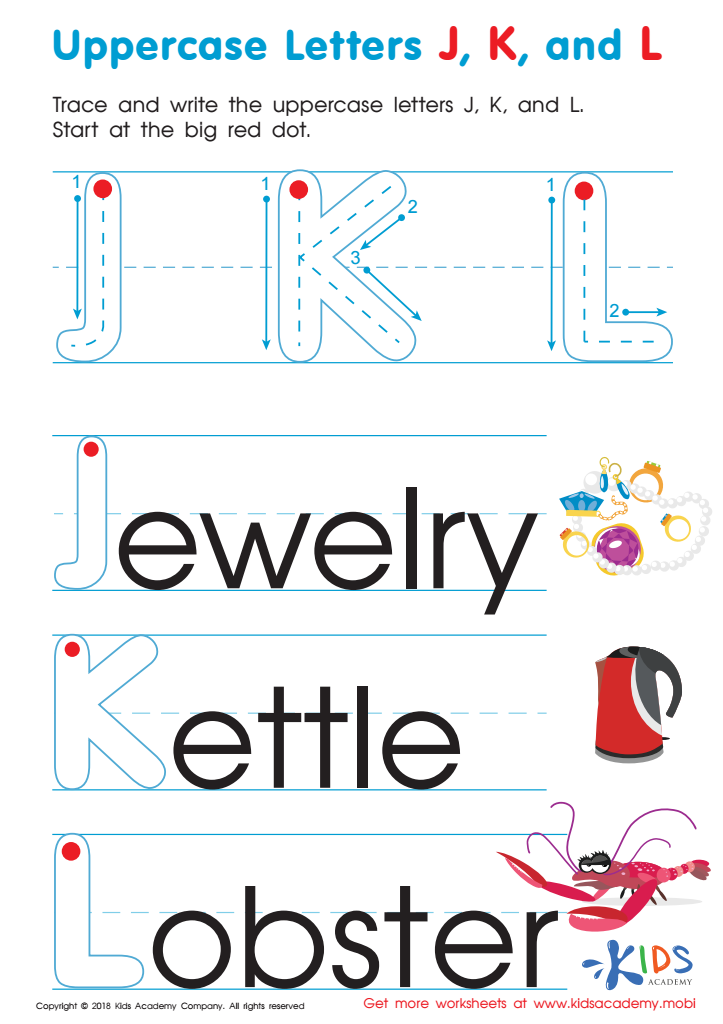
Uppercase Letters J, K, and L Worksheet
Jewelry, kettle and lobster share a common trait: their names start with J, K and L, 3 letter neighbors found in the middle of the alphabet. This traceable worksheet helps kids learn letter sounds and practice writing. Arrows and tracing lines make it easy to form neat pencil strokes. Red dot shows where kids should start. Perfect for preschoolers and kindergarteners!
Uppercase Letters J, K, and L Worksheet
Worksheet
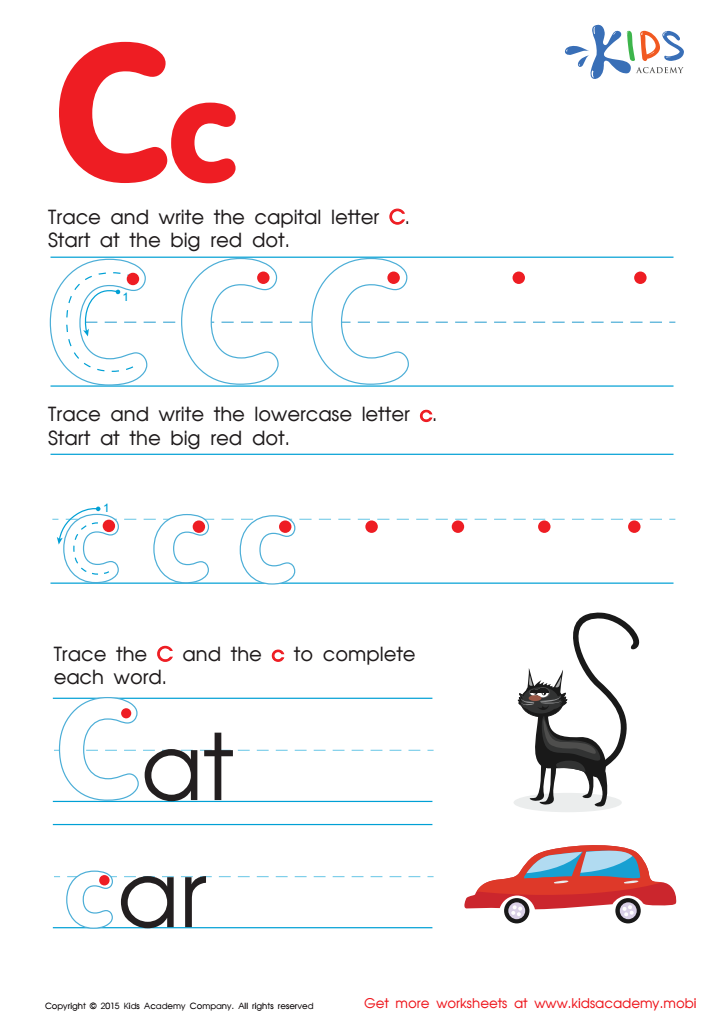
Letter C Tracing Page
Trace and write the letter 'C'! Put the pencil at the red dot then follow the lines – the capital letter first then the lowercase one. Cats love it and so will you! Get more free printables to practice tracing and writing.
Letter C Tracing Page
Worksheet
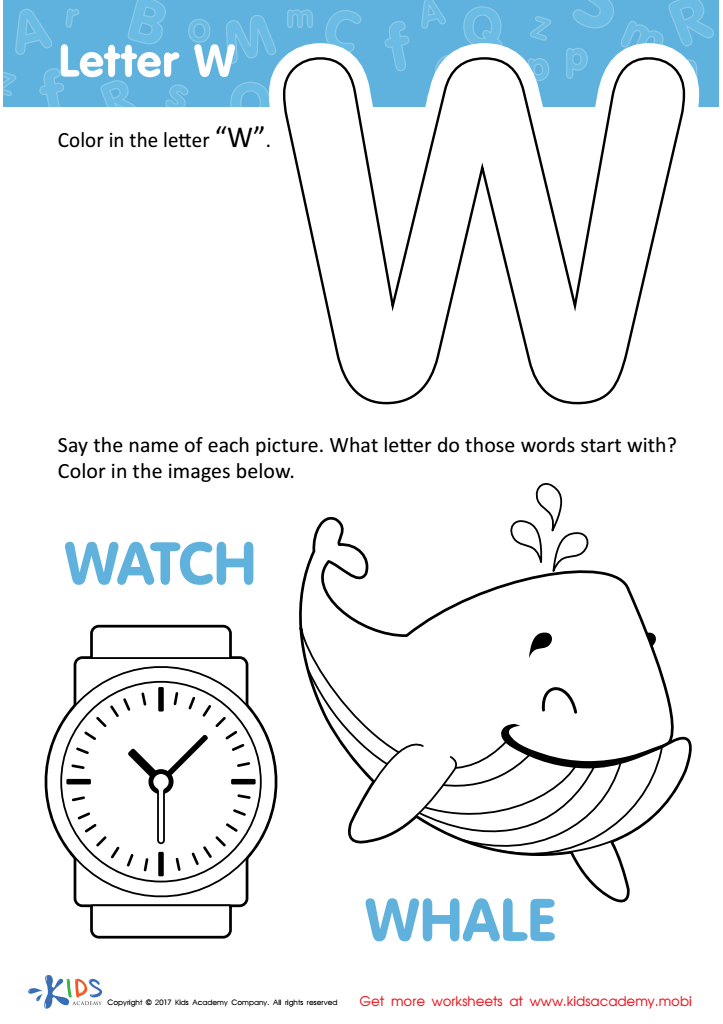
Letter W Coloring Sheet
Let your child have fun with this letter "W" coloring page! They can use their imagination to color the whale and discover the letter and its sound. Give them a helping hand to make it a whale of a time!
Download (PDF)
 Assign to My Students
Assign to My Students
Letter W Coloring Sheet
Worksheet
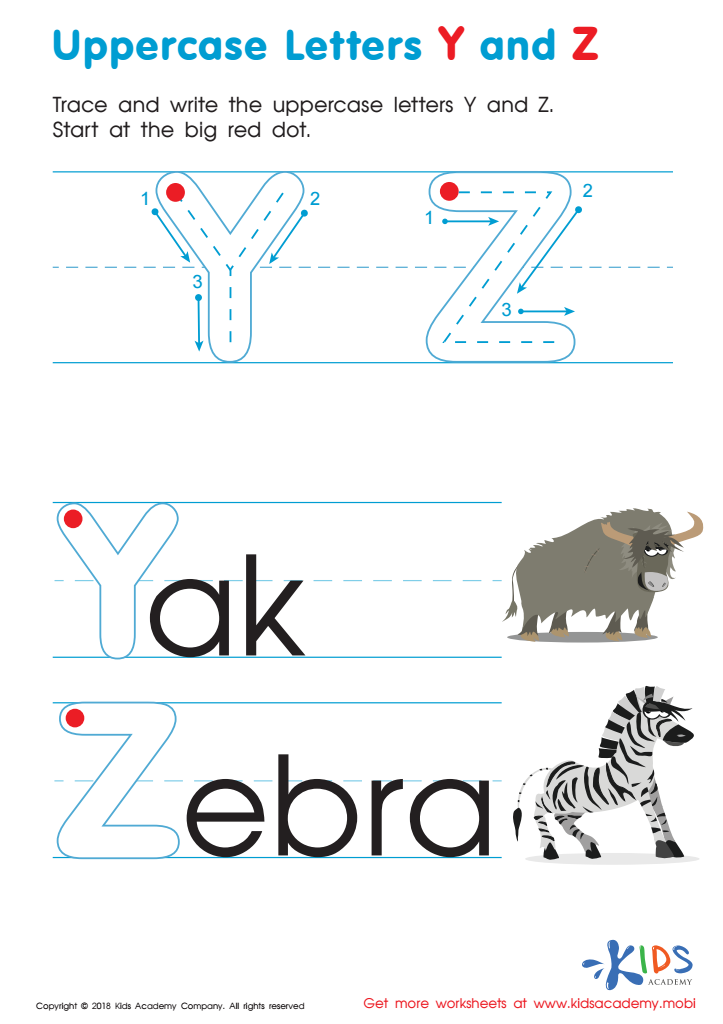
Uppercase Letters Y Z Worksheet
Help your child learn their ABCs with this fun tracing activity! They must trace and write Y and Z in uppercase form, starting from the red dot. Kids will love the fun images for extra engagement. Guiding their hand carefully will help them practice and perfect their writing skills.
Uppercase Letters Y Z Worksheet
Worksheet
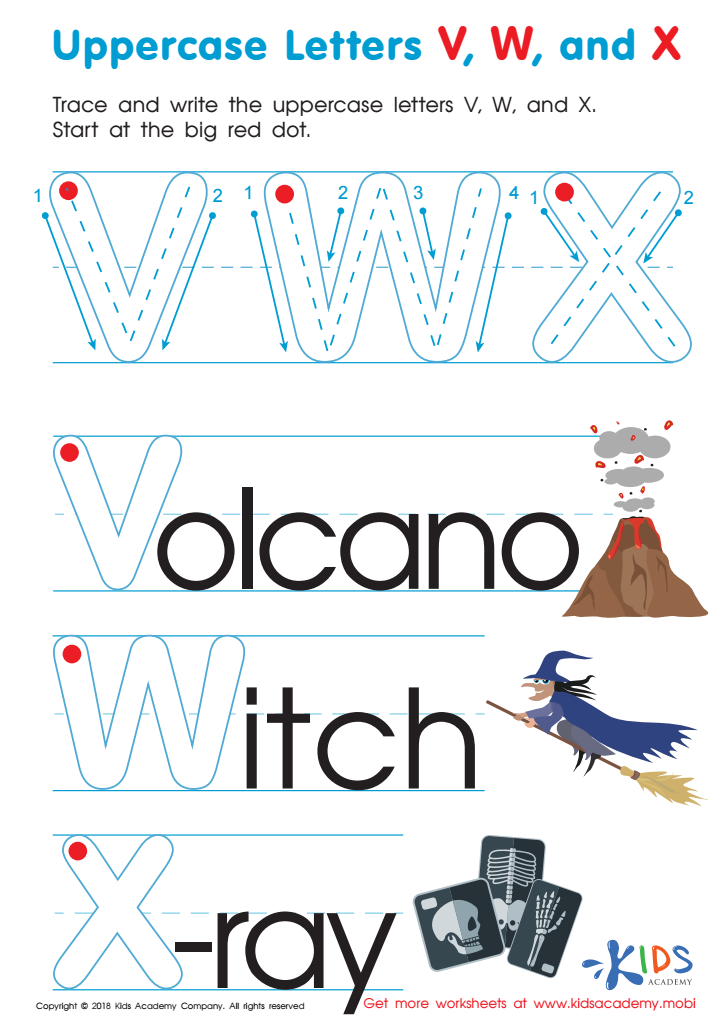
Uppercase Letters V, W, and X Worksheet
This worksheet is perfect for kids struggling to write uppercase letters V, W, and X. Warm up their brains first by having them name words starting with these letters. Then, help them trace and write each letter from the big red dot. With your assistance, they will quickly sharpen their writing skills.
Uppercase Letters V, W, and X Worksheet
Worksheet
Join Kids Academy for Free
Who is primarily going to use this learning content?







Letter tracing skills in the normal alphabet play a pivotal role in foundational literacy for children ages 5-9. First and foremost, letter tracing helps strengthen the fine motor skills necessary for writing. By guiding a pencil along a designated path, children develop greater hand control and coordination, setting the stage for successful handwriting. This practice can also enhance their ability to form letters clearly and consistently, which is critical for readable writing.
Moreover, letter tracing can significantly improve letter recognition. Repeated exposure and practice help young learners solidify their understanding of each letter's shape and its associated sound, which is essential for reading and spelling. As children trace letters, they become more familiar with their alphabetical order and are better able to differentiate between similar-looking characters, such as 'b' and 'd.'
Children also gain confidence through tracing exercises. Successfully completing these tasks boosts their self-esteem, fostering a positive attitude toward learning. Additionally, this method helps bridge the gap between letter recognition and the ability to write words and sentences, supporting more comprehensive language development.
For both parents and teachers, integrating letter tracing into daily activities offers a proactive approach to fostering early literacy skills, laying a robust foundation for future academic success.







