Phonics understanding Normal Alphabet Worksheets for Ages 5-9
3 filtered results
-
From - To
Unlock the power of reading with our "Phonics Understanding Normal Alphabet Worksheets" designed for ages 5-9. These engaging and educational worksheets help young learners grasp the fundamentals of phonics, connecting sounds with letters and words. From mastering individual letters to forming basic words, our worksheets offer a step-by-step approach to building strong reading skills. Perfect for both classroom use and at-home practice, each worksheet is crafted to make learning fun and effective. Dive into the world of phonics and watch your child's reading abilities soar with Kids Academy’s expertly designed resources. Start your phonics journey today!
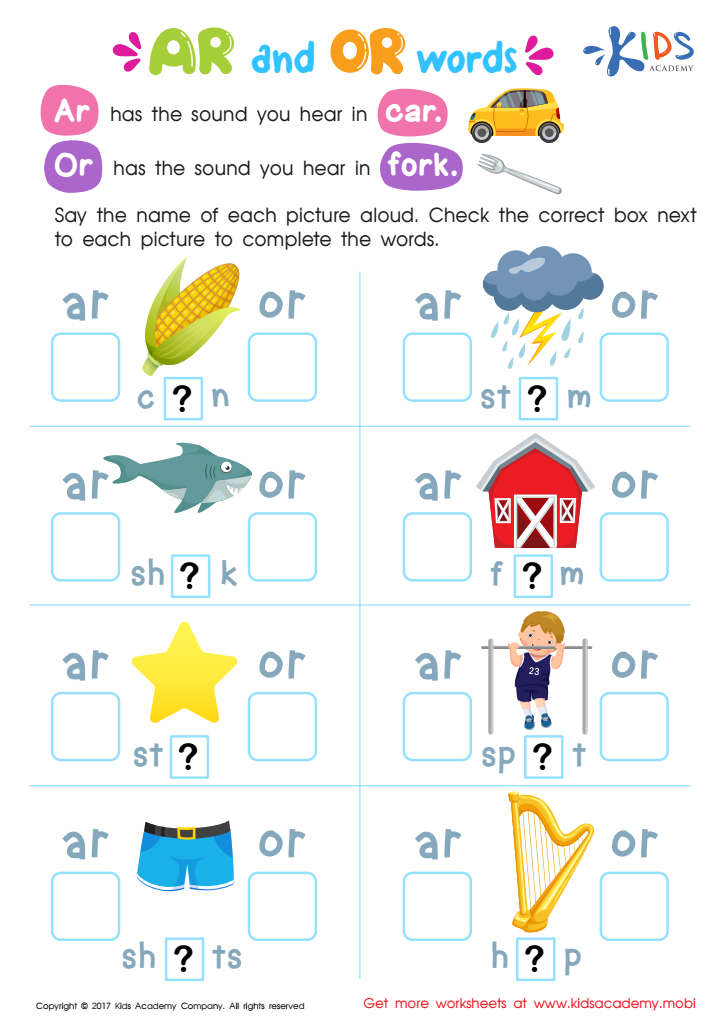
Ar and Or Words Phonics Worksheet
 Assign to My Students
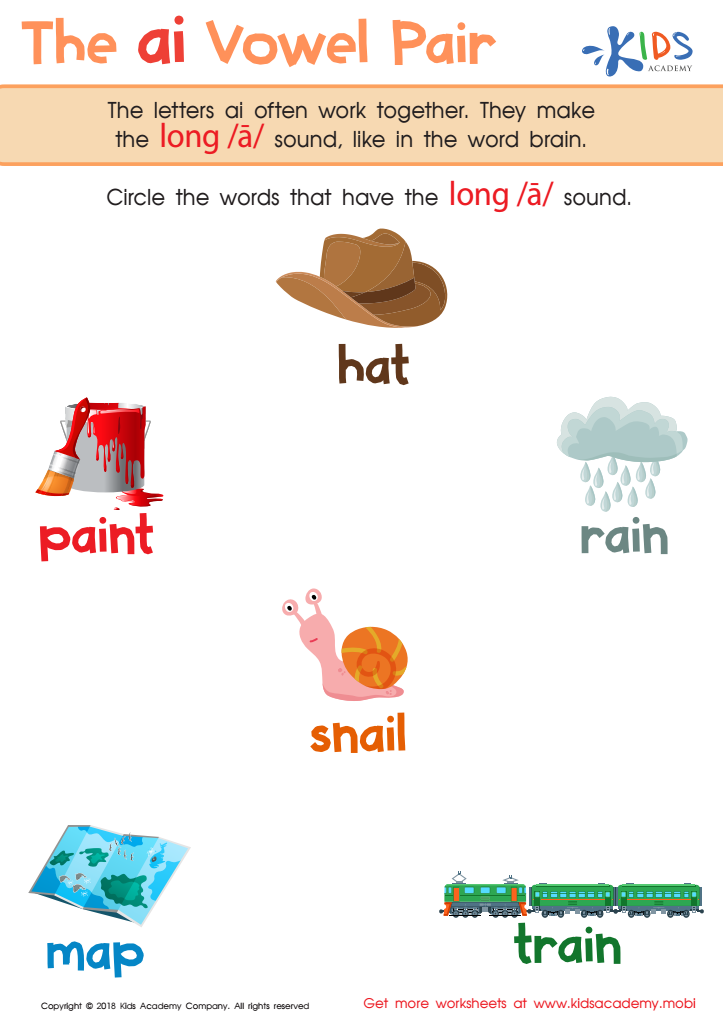
The AI Vowel Pair Worksheet
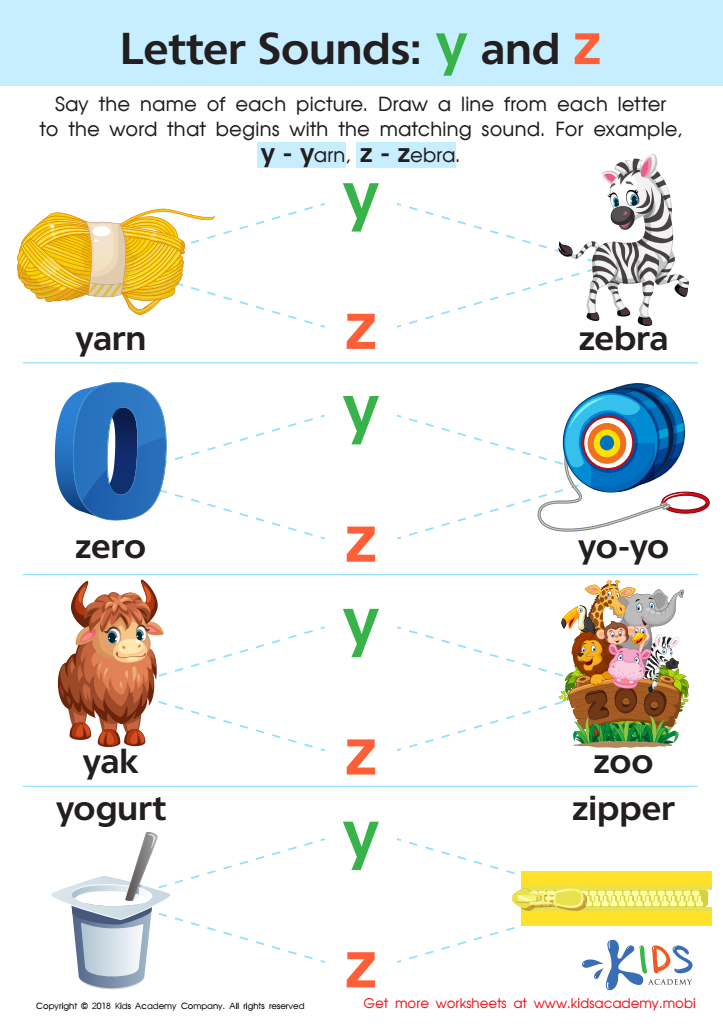
Letter Y and Z Sounds Worksheet







Understanding phonics and the relationship between letters and sounds is crucial for young children aged 5-9 as it lays the foundational skills necessary for reading and literacy. Phonics instruction helps children decode words by sounding them out, which is essential for reading fluency. When children grasp phonics rules, they can tackle unfamiliar words with confidence, enhancing their reading capability and comprehension. This skill builds self-esteem, fosters a love for reading, and sets them up for academic success.
For parents, comprehending phonics as it relates to the normal alphabet means they can better support their children's reading efforts at home. Simple activities like reading together, playing alphabet games, or practicing letter sounds can reinforce the concepts taught in school.
Teachers, on the other hand, benefit by tailoring instruction to meet each child's learning needs. Phonics instruction is a proven method for teaching reading; educators can identify struggling readers early and provide targeted interventions to help them catch up.
Overall, a solid understanding of phonics bridges the gap between recognizing letters and being able to read and understand words. This skill is imperative; without it, children may struggle with literacy, affecting their overall educational trajectory. Thus, investing time and resources in phonics education benefits individual children and society at large by fostering a generation of proficient readers.







