Phonological awareness Normal Alphabet Worksheets for Ages 5-9
3 filtered results
-
From - To
Discover an enriching collection of Phonological Awareness Alphabet Worksheets designed for children ages 5-9 at Kids Academy! These engaging, printable activities help young learners develop crucial reading skills by enhancing their understanding of letter sounds and word formation. Children will enjoy interactive exercises that nurture their ability to recognize and manipulate sounds, paving the way for successful reading and writing. Ideal for classroom use or at-home learning, our worksheets combine fun and education to foster strong foundations in phonological awareness. Boost your child's literacy journey today with our expertly crafted alphabet worksheets!
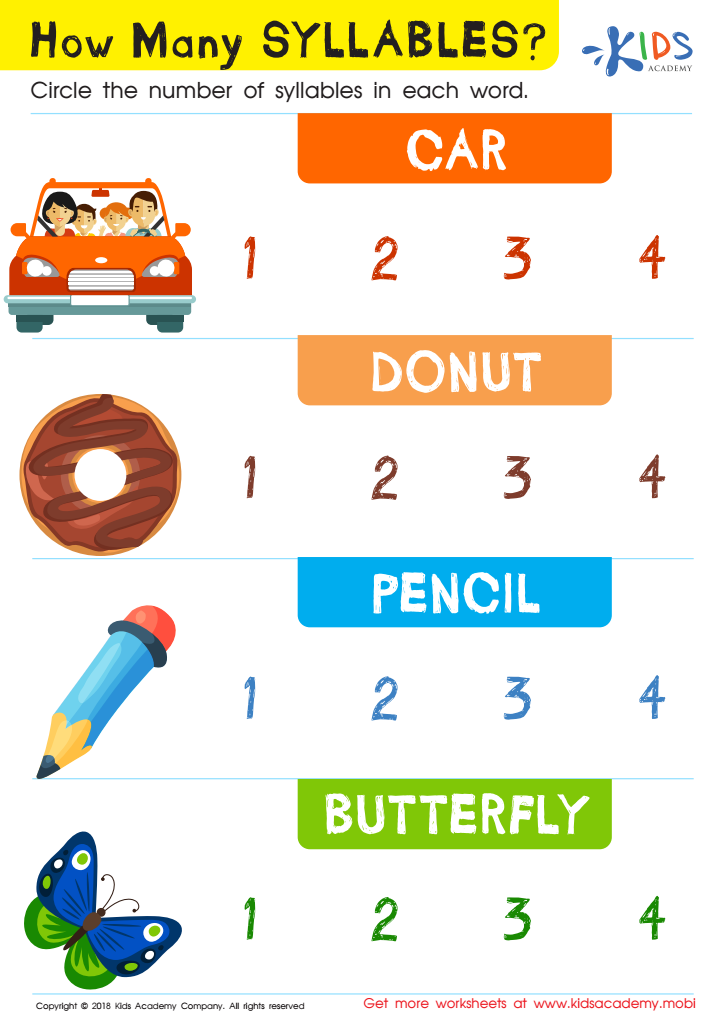
How Many Syllables? Worksheet
 Assign to My Students
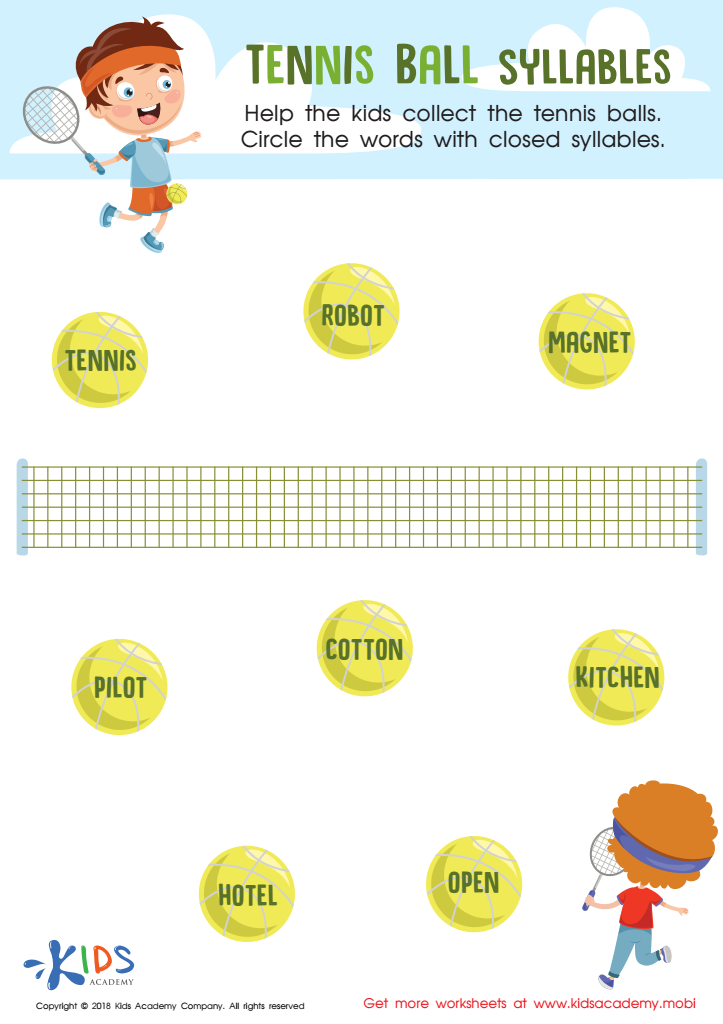
Tennis Ball Syllables Worksheet
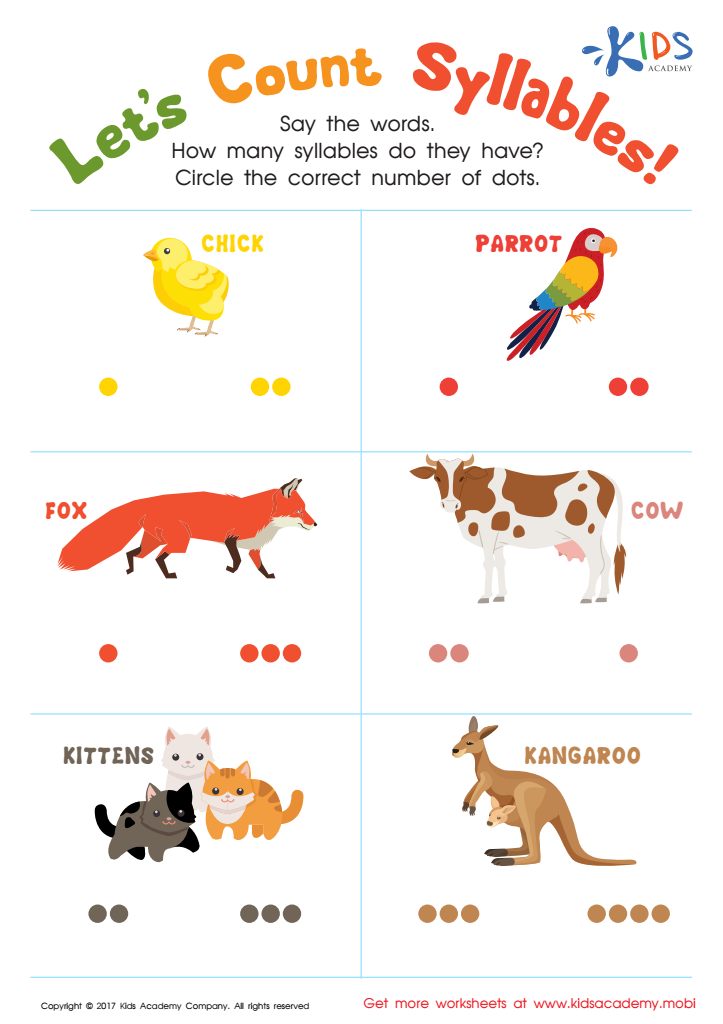
Lets Count Syllables Worksheet






.jpg)
Phonological awareness is a foundational skill that significantly impacts a child's ability to learn to read and write, which is particularly crucial for children ages 5-9. This awareness involves recognizing and manipulating sounds in spoken language, such as identifying rhymes, syllables, and individual phonemes, the smallest units of sound.
When parents and teachers focus on developing phonological awareness, they lay the groundwork for successful literacy development. Children who have strong phonological awareness can better decode new words, which boosts their reading fluency and comprehension. In other words, these children are more likely to read smoothly and understand what they are reading. Moreover, it also enhances their spelling abilities as they begin to understand the relationship between sounds and letters.
For instance, being able to segment words into individual sounds or blend sounds to make words helps kids with phonics, where they learn the relationship between letters and sounds. Early interventions and focused activities, like reading aloud, singing songs, and playing phonemic games, can close gaps before they widen.
By supporting phonological awareness from a young age, parents and teachers enable children to build more complex literacy skills with confidence and ease, setting them on a path of academic success and a lifelong love of reading and learning.







