Sound-letter association Normal Alphabet Worksheets for Ages 5-9
3 filtered results
-
From - To
Explore our Sound-Letter Association Normal Alphabet Worksheets, tailored for ages 5-9. These engaging worksheets strengthen the connection between letters and sounds, bolstering early reading and writing skills. Perfect for young learners, our activities include matching exercises, phonetic puzzles, and tracing tasks designed to make learning interactive and fun. Teachers and parents will appreciate the age-appropriate challenges that foster phonemic awareness and boost literacy development. With our vibrant, easy-to-use printables, children will build a solid foundation for their language journey. Visit Kids Academy to discover how our worksheets can support your child's educational progress!
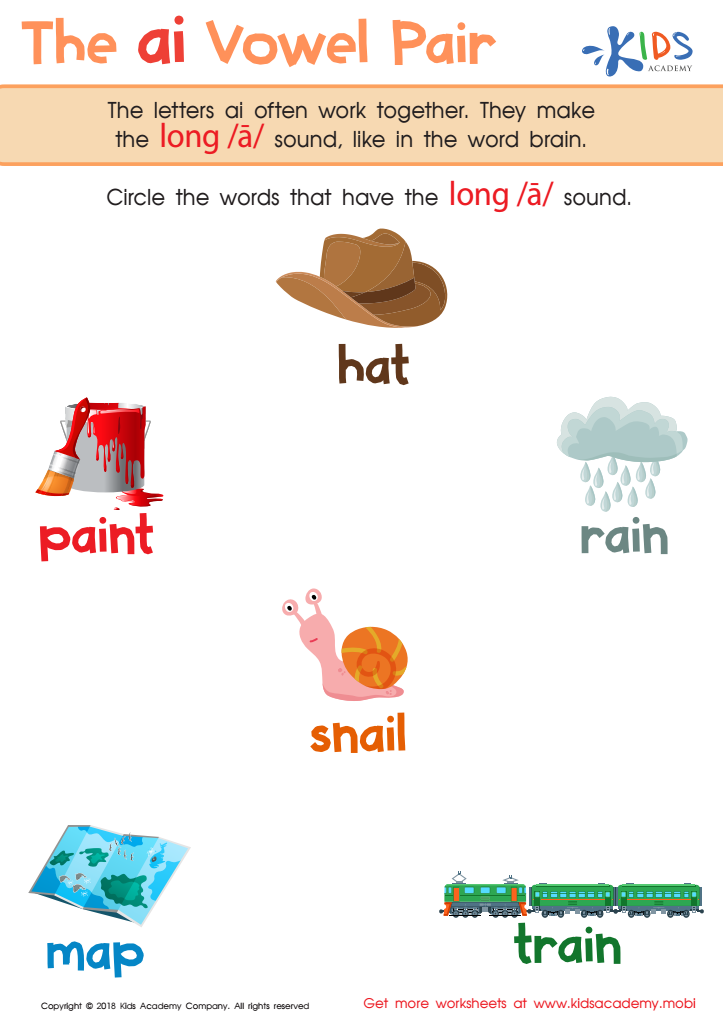
The AI Vowel Pair Worksheet
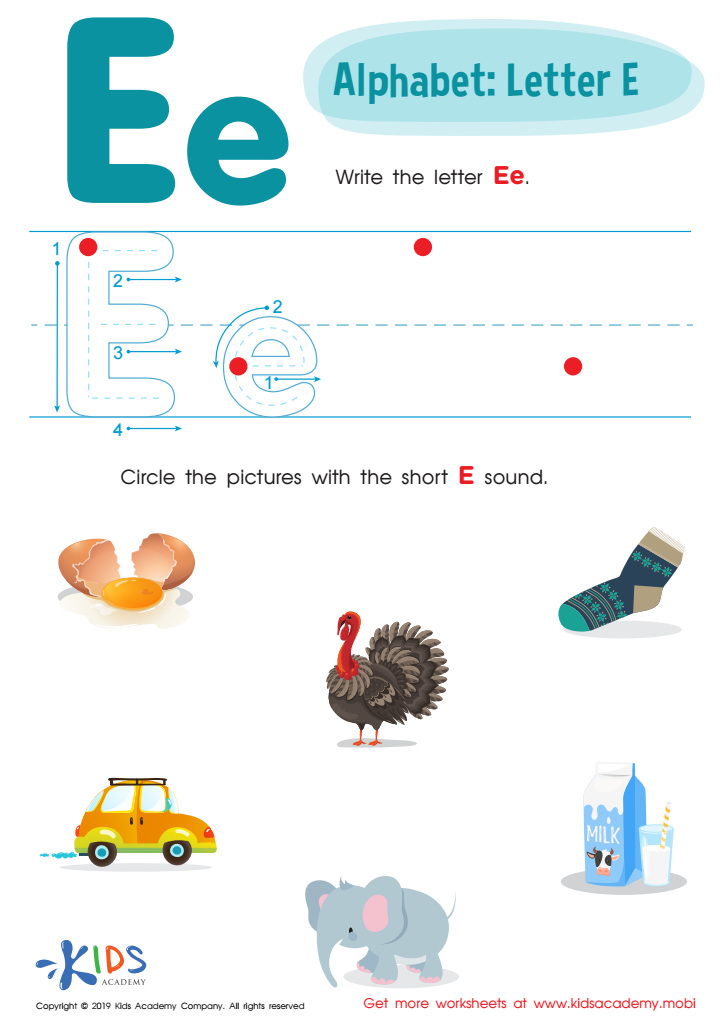
Letter E Tracing Worksheet
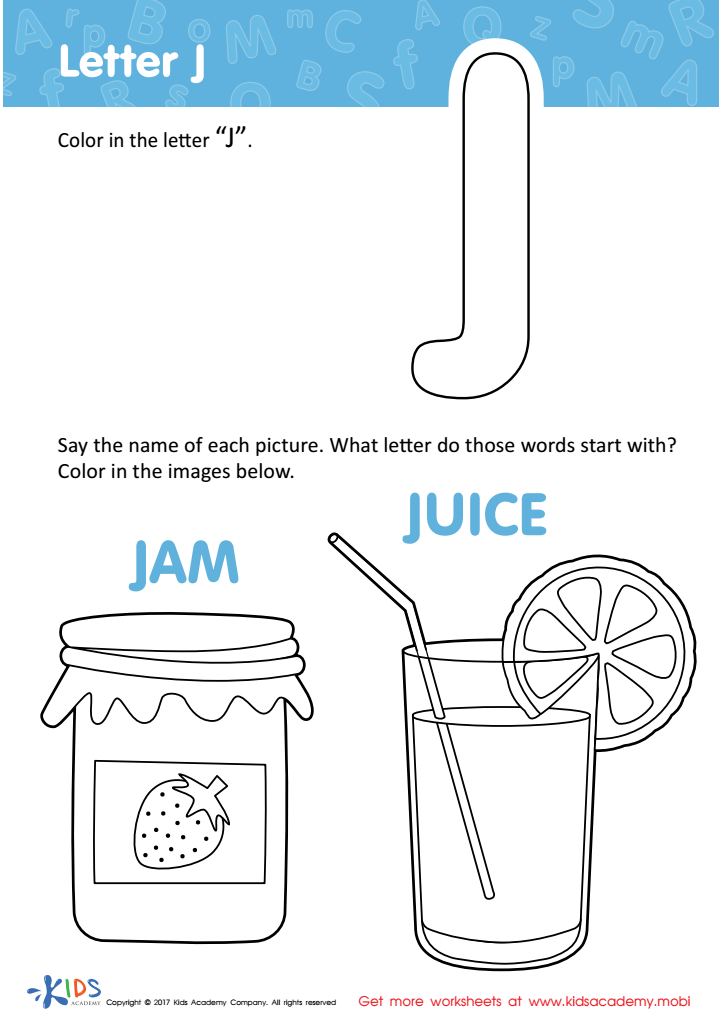
Letter J Coloring Sheet
 Assign to My Students








Understanding sound-letter associations is foundational for early literacy development among children ages 5-9. This relationship, where each letter corresponds to specific sounds, is essential for learning to read and write. For parents and teachers, nurturing this skill means setting children up for long-term academic success and boosting their confidence.
When young children grasp these associations, they can decode new words, read fluently, and comprehend texts better. Without a solid grounding in sound-letter relationships, children may struggle with reading, leading to academic difficulties in other subjects where reading is fundamental.
Strong sound-letter association skills also enrich children's vocabulary and communication abilities. As children learn to read, they encounter new words, enhancing their language skills. Early proficiency contributes to a love of reading, inspiring lifelong learning.
By actively engaging in activities like phonics games, storytelling, and letter-sound matching exercises, parents and teachers can make this learning process enjoyable and effective. Early intervention and consistent practice make a significant difference, preventing potential reading difficulties and setting a robust educational foundation for the future. Therefore, by prioritizing sound-letter associations, parents and teachers are investing in a child's overall cognitive and academic development.







