
Letter recognition Normal Letter Sounds Worksheets for Ages 5-9
14 filtered results
Difficulty Level
Grade
Age
-
From - To
Subject
Activity
Standards
Unlock your child’s potential with our engaging "Letter Recognition Normal Letter Sounds Worksheets" designed for ages 5-9. Our printable worksheets provide a fun and interactive way for young learners to identify letters and associate them with their corresponding sounds. These expertly crafted activities enhance phonemic awareness, making learning engaging and effective. Each worksheet features colorful illustrations and activities, perfect for reinforcing important literacy skills at home or in the classroom. Ideal for both parents and teachers, our resources foster a strong foundation in reading and language, setting children on the path to academic success. Start your child’s learning journey today!
Favorites
With answer key
Interactive
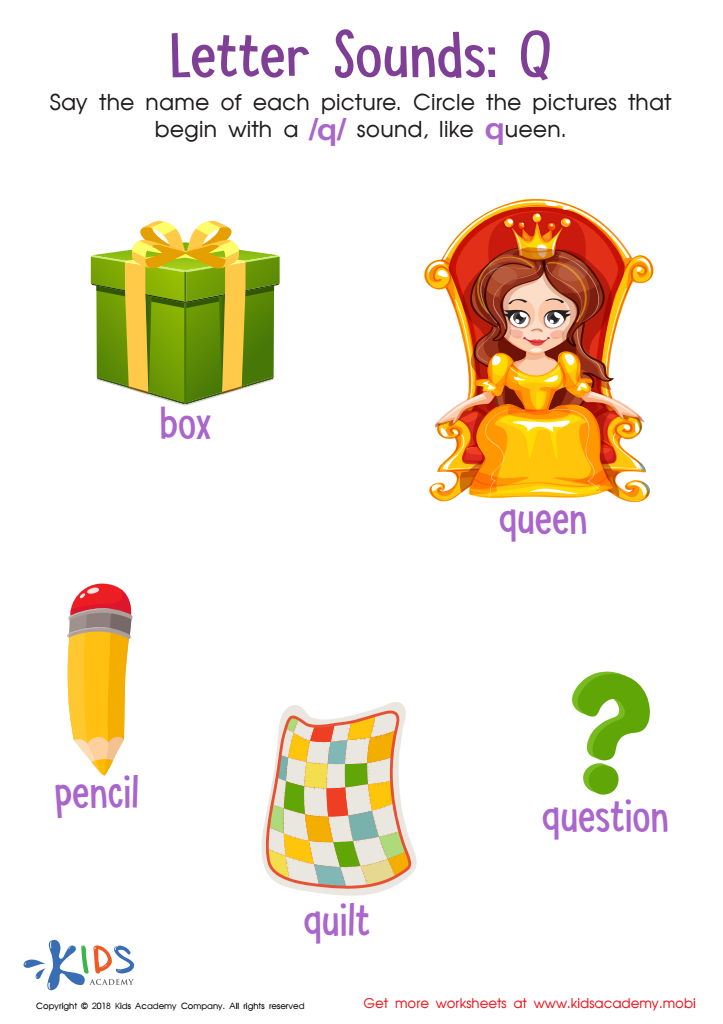
Letter Q Sounds Worksheet
Kids can get confused between "K" and "Q" sounds. Help them learn with this phonics worksheet. They'll name each image and read the word underneath. Point out that words with "Q" also have a "U" which affects how it sounds. Have them circle the matching pictures and watch as they learn this unique letter sound.
 Assign to My Students
Letter Q Sounds Worksheet
Worksheet
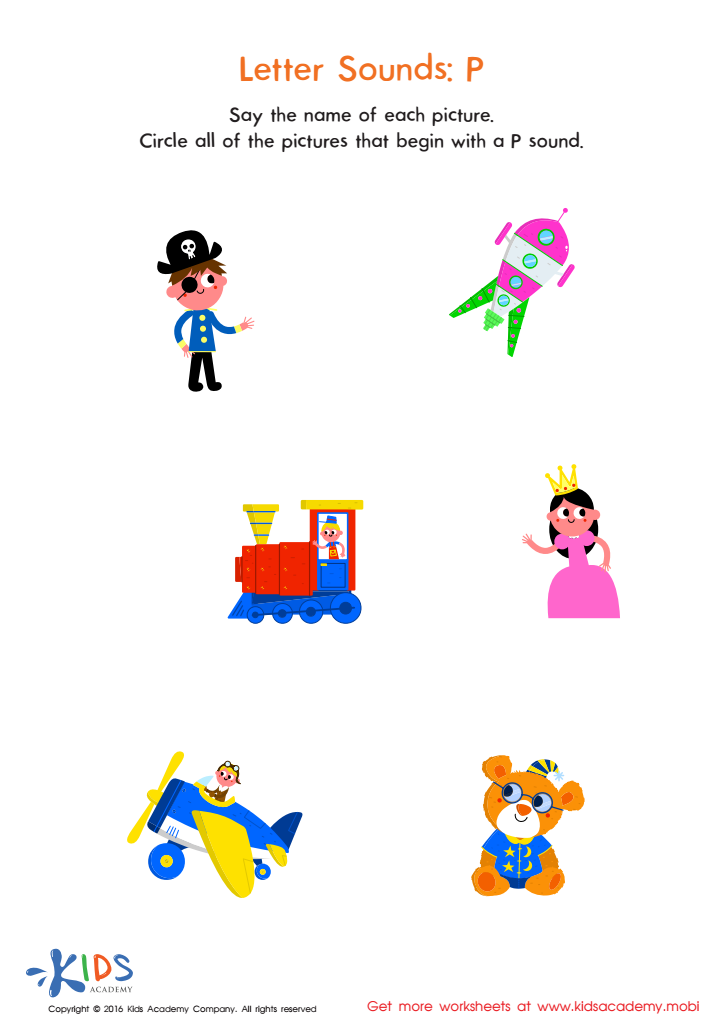
Letter P Sound Worksheet
Think P! Kids practice phonics with this fun letter P worksheet. With delightful illustrations, they'll sound out simple words and get closer to reading.
Letter P Sound Worksheet
Worksheet
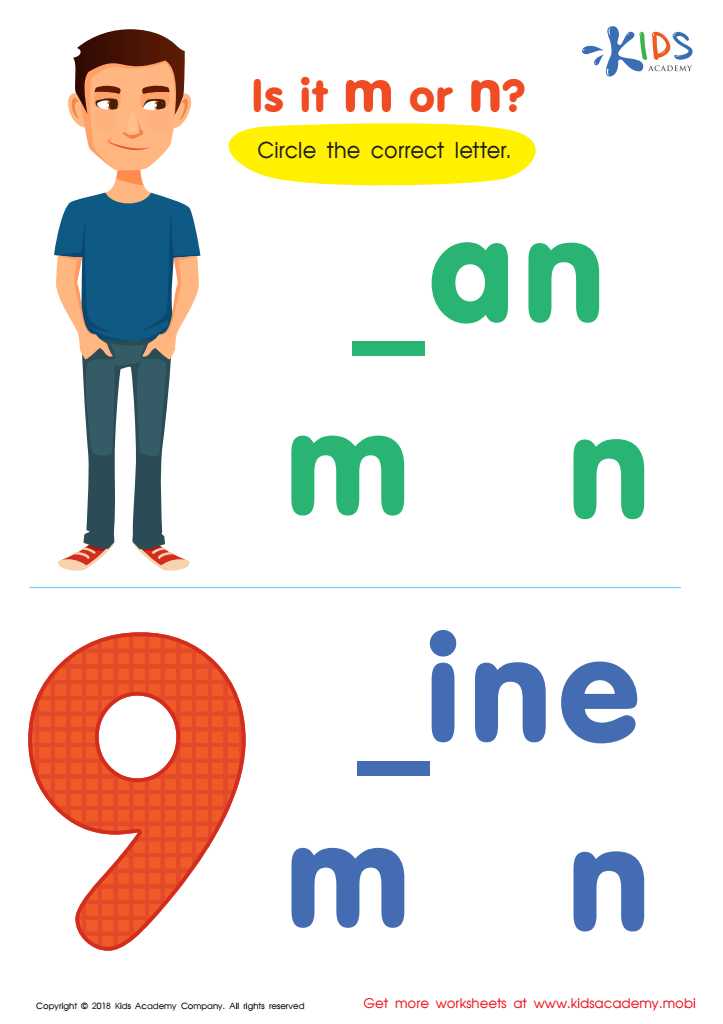
Is It m or n? Worksheet
Help your child circle the letter that begins the words "man" and "nine" in the picture. This is a great way for them to learn the alphabet.
Is It m or n? Worksheet
Worksheet
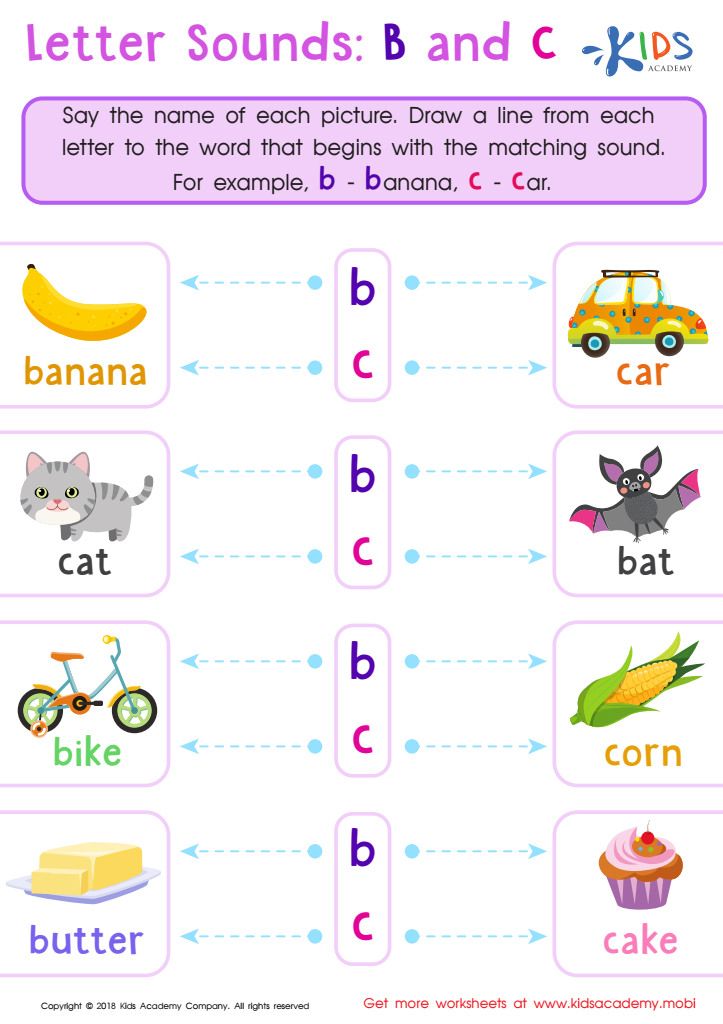
Letter B and C Sounds Worksheet
This fun worksheet offers bright, engaging pictures and helps kids learn to distinguish between the sounds of "B" and "C". With the use of pictures and familiar items, kids will trace lines to the correct initial consonant sound, while also developing fine-motor skills. It's a great way to build decoding ability!
Letter B and C Sounds Worksheet
Worksheet
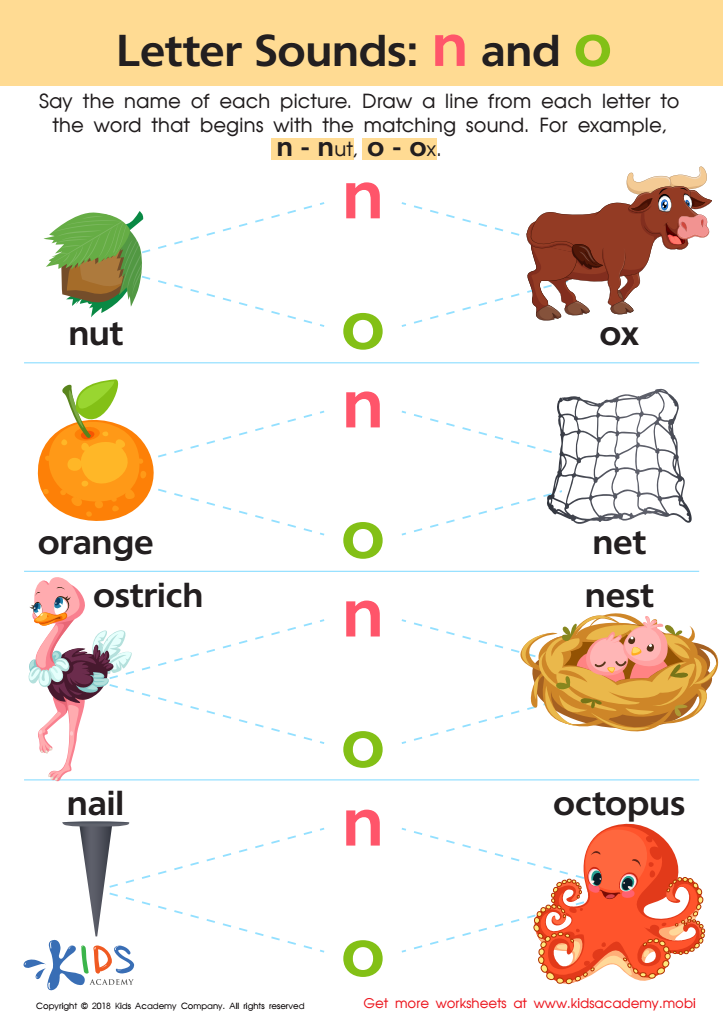
Letter N and O Sounds Worksheet
Help your preschooler learn to recognize the N and O letter sounds with this vibrant worksheet from Kids Academy! Have them say the name of each picture and listen for N or O. Trace the dotted line from letter to its match to complete the phonics review. It's a fun way to help them master the difference between the two sounds!
Letter N and O Sounds Worksheet
Worksheet
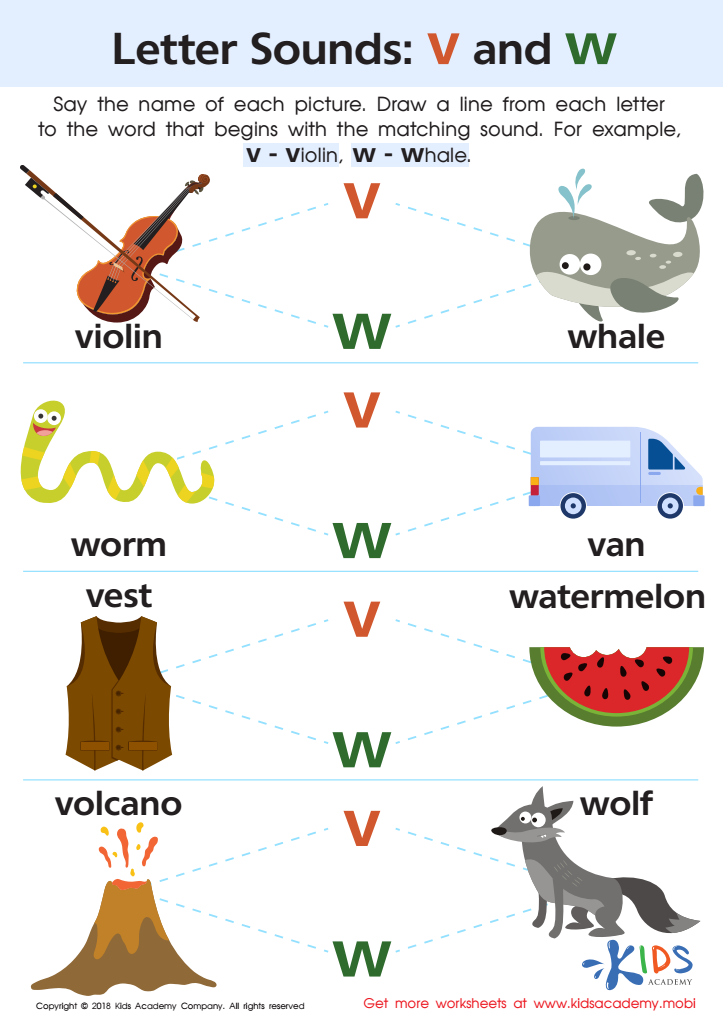
Letter V and W Sounds Worksheet
Help your child master the sounds of W & V while completing this fun phonics worksheet. Have them trace the dotted line from letter to picture while saying words like "worm", "violin" and "van" aloud to notice how each word begins with either W or V. Listen and pay attention to the pronunciation to complete the practice.
Letter V and W Sounds Worksheet
Worksheet
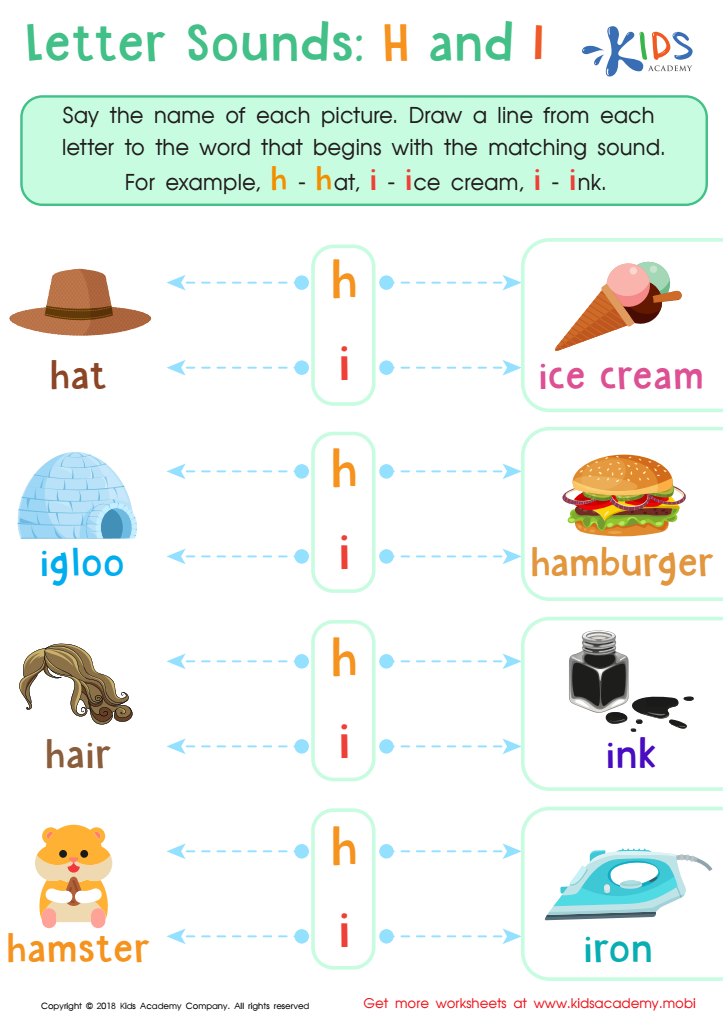
Letter H and I Sounds Worksheet
Preschoolers will have fun and develop reading and writing skills at the same time! They'll use pictures to recognize familiar words and differentiate between 'H' and 'I' sounds. Then they'll trace lines to connect each sound to the picture, improving their fine-motor skills. Bright and cheerful visuals make learning a breeze!
Letter H and I Sounds Worksheet
Worksheet
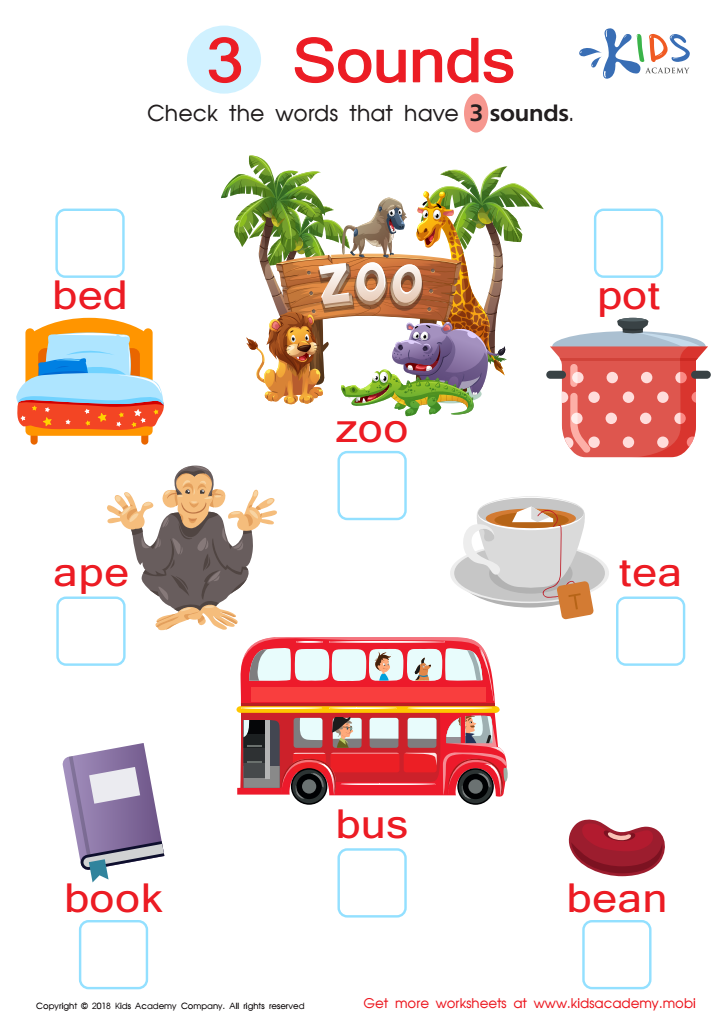
3 Sounds Worksheet
Kids will love learning with this free, colorful worksheet. It's full of familiar words they can name and sound out with three distinct sounds. This helps build decoding skills, plus they get to check off words they read. It's a fun way to teach children to identify and use sounds.
3 Sounds Worksheet
Worksheet
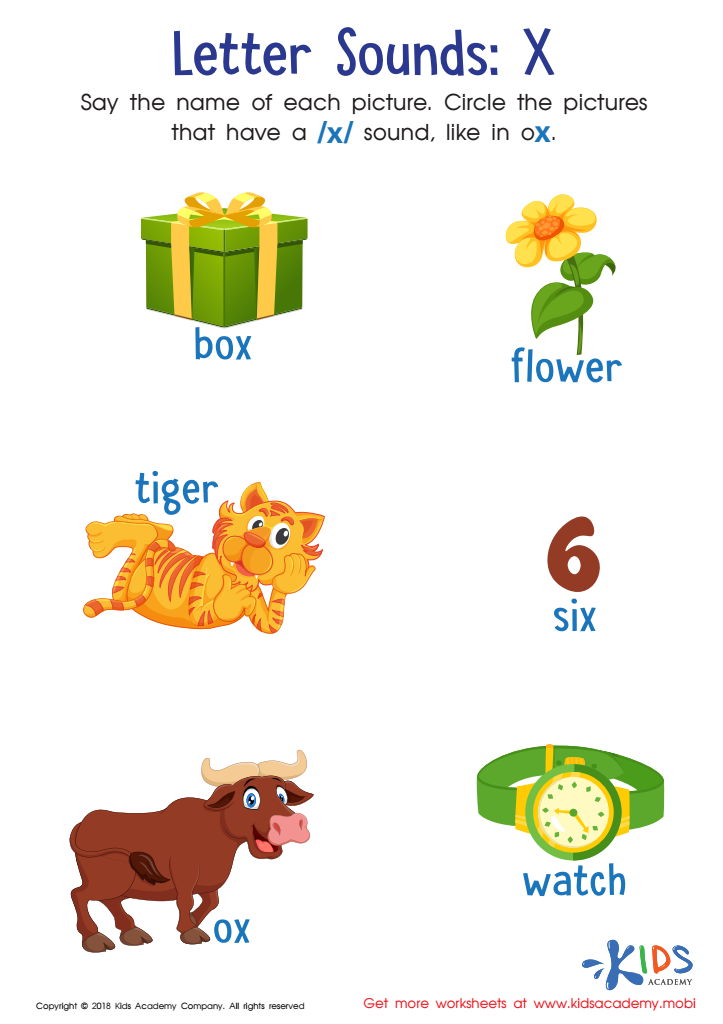
Letter X Sounds Worksheet
Help your early learner master the letter X sound with this fun, illustrated phonics worksheet. Have kids name the pictures, listening for the pronunciation of each. Have them circle only the pictures with the X sound, then double check by looking for the letter in the word below.
Letter X Sounds Worksheet
Worksheet
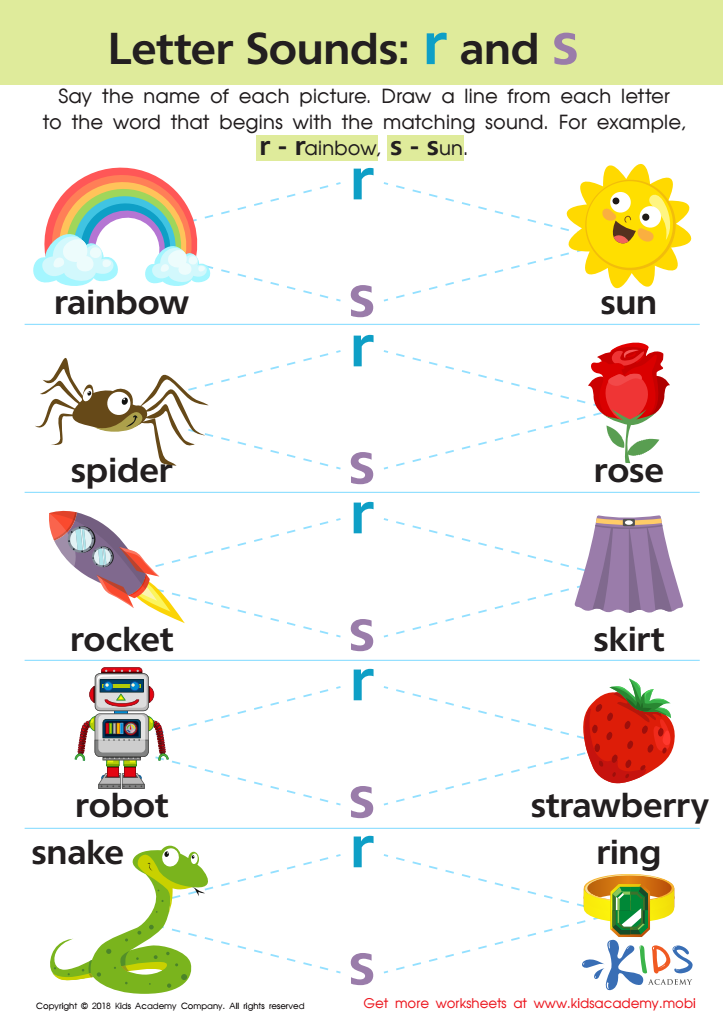
Letter R and S Sounds Worksheet
Kids Academy's phonics worksheet is full of fun and color! Help your child name the pictures and read the words under each one. Does it begin with an R or S? Then, use a pencil to trace the dotted line from the letter to its image. It's a great way to practice phonics skills!
Letter R and S Sounds Worksheet
Worksheet
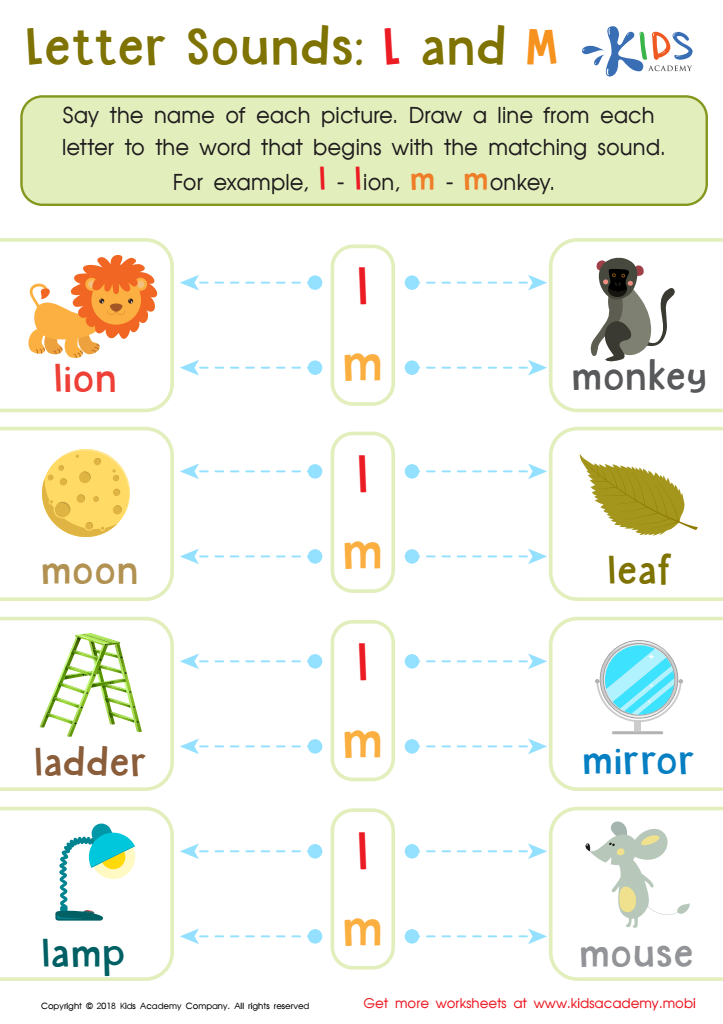
Letter l and M Sounds Worksheet
Our Kids Academy phonics practice pages give clear instructions and captivating pictures to pique children's interest. This fun worksheet helps kids identify a picture, then match its beginning sound. Listen and say each word - does it start with "L" or "M"? Trace the dotted line from the letter to the correct match and listen closely to the sound it makes.
Letter l and M Sounds Worksheet
Worksheet
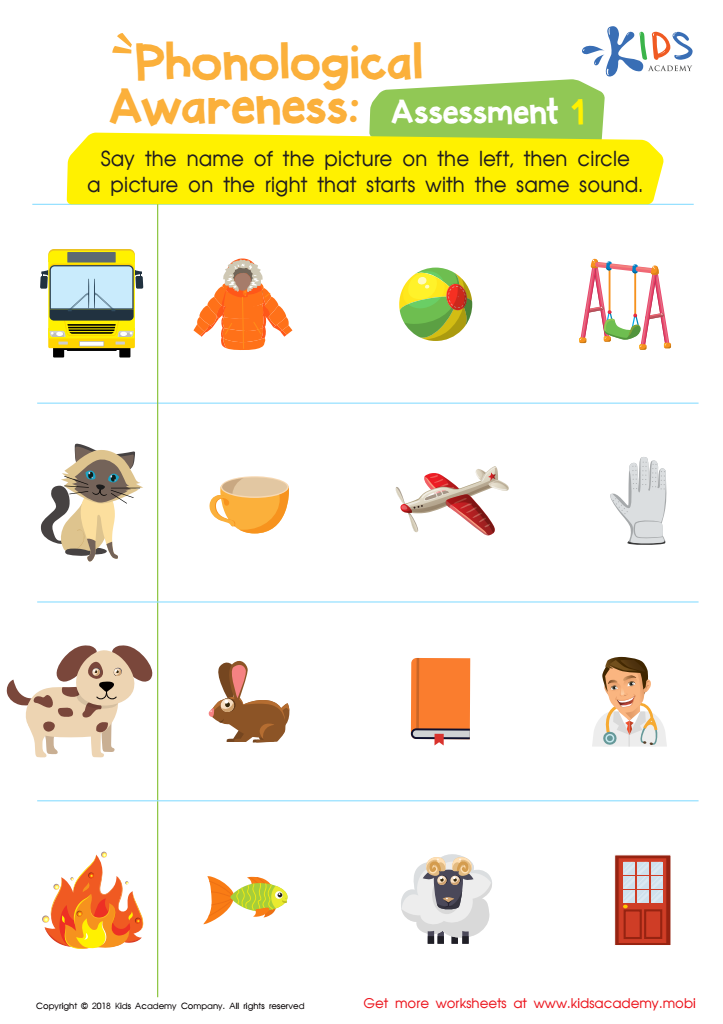
Phonological Awareness: Assessment 1 Worksheet
This worksheet helps kids build key phonics skills for pre-reading. They say each picture name aloud, focusing on the starting sound. Then, they match the sound with an image in the same row. Use as a checkpoint for kindergarten or grade 1 phonics readiness.
Phonological Awareness: Assessment 1 Worksheet
Worksheet
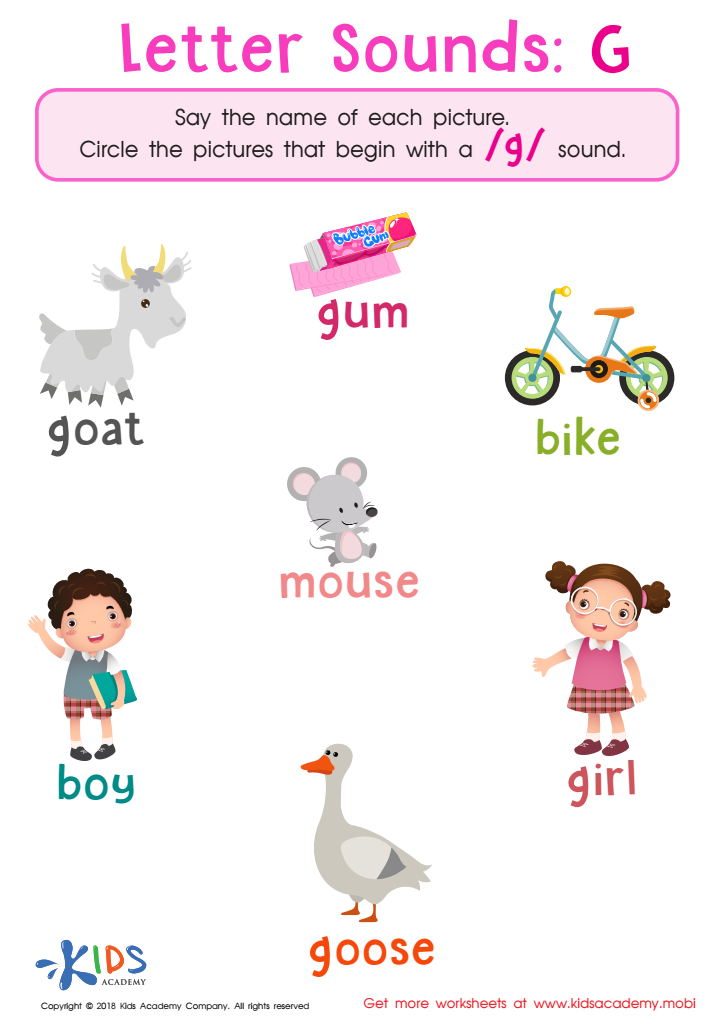
Letter G Sounds Worksheet
Help emerging readers build confidence by giving them practice identifying hard "G" with this free PDF worksheet. They'll use picture clues to name the words, and practice fine-motor skills tracing circles around the corresponding pics. It's a great way to introduce or reinforce hard "G" words.
Letter G Sounds Worksheet
Worksheet
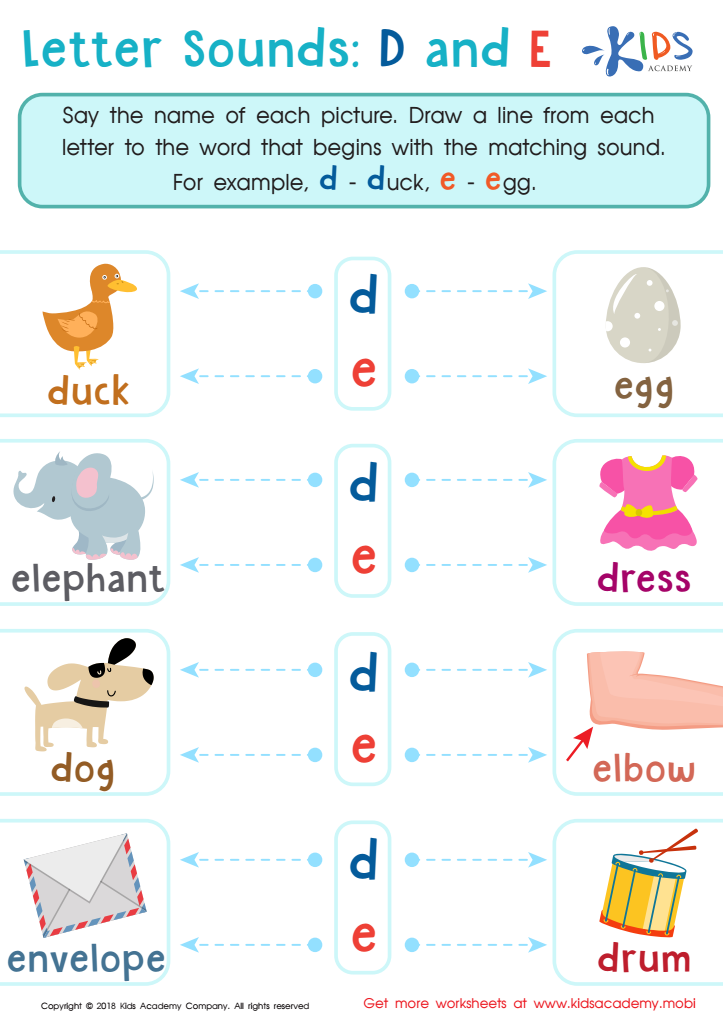
Letter D and E Sounds Worksheet
Kids can use picture clues and visual discrimination to name cheerful pics and isolate the beginning sound. This free PDF worksheet will help them develop phonological awareness, differentiate between "D" and "E", and hone fine-motor skills. It'll also boost their confidence as they become readers.
Letter D and E Sounds Worksheet
Worksheet
Join Kids Academy for Free
Who is primarily going to use this learning content?








Letter recognition and understanding normal letter sounds are fundamental components of early literacy development for children aged 5 to 9. First and foremost, these skills lay the groundwork for reading. When children can recognize letters and associate them with their corresponding sounds, they unlock the ability to decode words, enabling them to read independently. This competence fosters a love for reading, as children begin to experience the joy of sharing stories and solving problems through literature.
Additionally, letter recognition and sound awareness are crucial for spelling. When children understand the sounds that letters make, they can better encode words, leading to improved writing skills. This proficiency is vital as children progress through school, where effective communication becomes increasingly important for academic success.
Moreover, integrating these skills into everyday activities promotes cognitive development and boosts self-esteem. Engaging parents in this learning process creates a supportive environment that reinforces these concepts both at home and in school.
By prioritizing letter recognition and normal letter sounds, parents and teachers not only prepare children for academic success but also fuel their creativity, critical thinking, and lifelong learning. Understanding and supporting this stage is essential to shaping confident, capable readers and writers.






