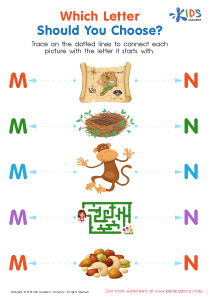
Lowercase identification Normal Lowercase/Small Letters Worksheets for Ages 5-9
4 filtered results
-
From - To
Explore our engaging Lowercase Identification Worksheets designed for children ages 5-9! These printable resources help young learners master normal lowercase letters through fun and interactive activities. Each worksheet focuses on recognizing small letters, reinforcing letter sound correspondence, and improving fine motor skills. Ideal for both classroom and home use, these worksheets provide a comprehensive approach to early literacy. With colorful illustrations and varied exercises, kids will enjoy practicing their spelling, writing, and identification skills. Give your child the tools they need to confidently navigate the world of language with our thoughtfully crafted lowercase worksheets! Perfect for making learning fun!
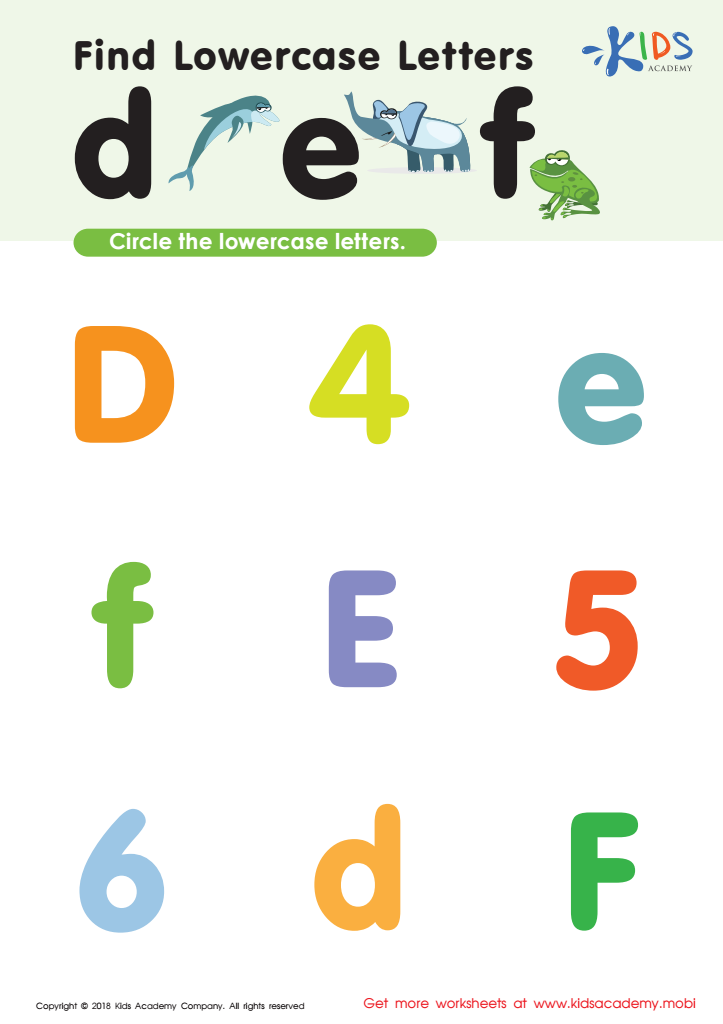
Find Lowercase Letters d e f Worksheet
 Assign to My Students
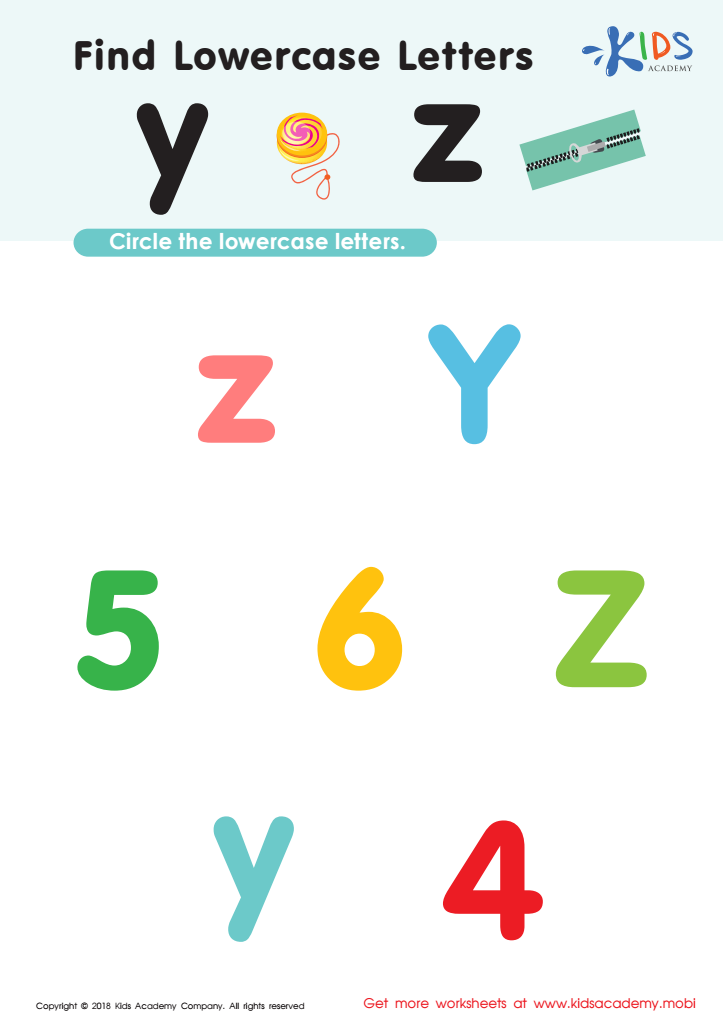
Find Lowercase Letters y z Worksheet
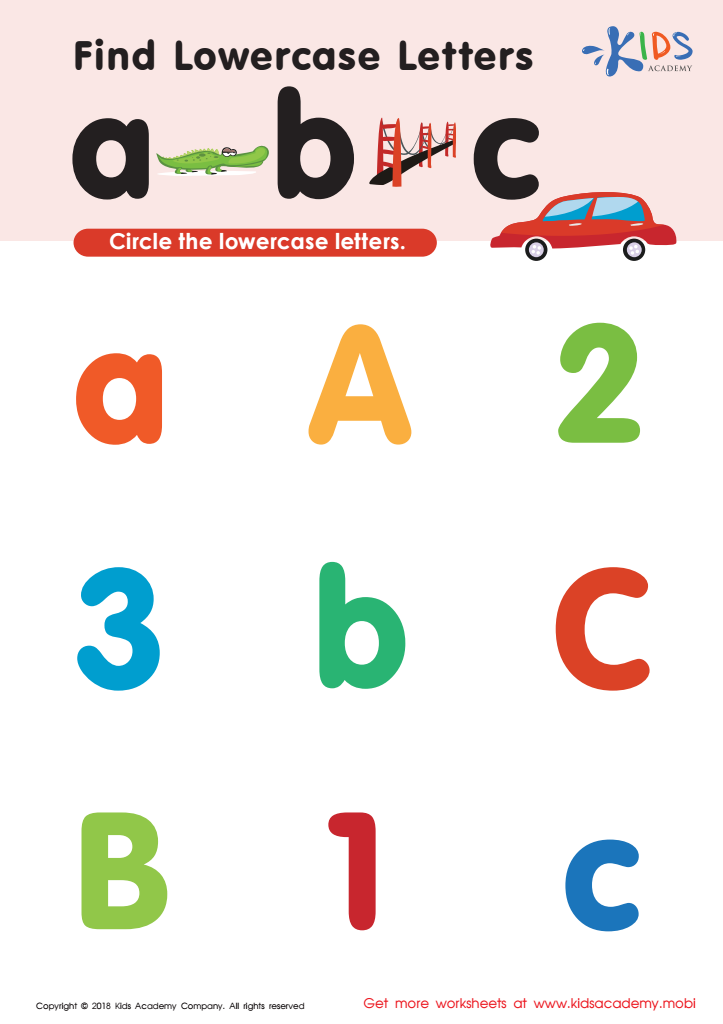
Find lowercase letters a b c Worksheet
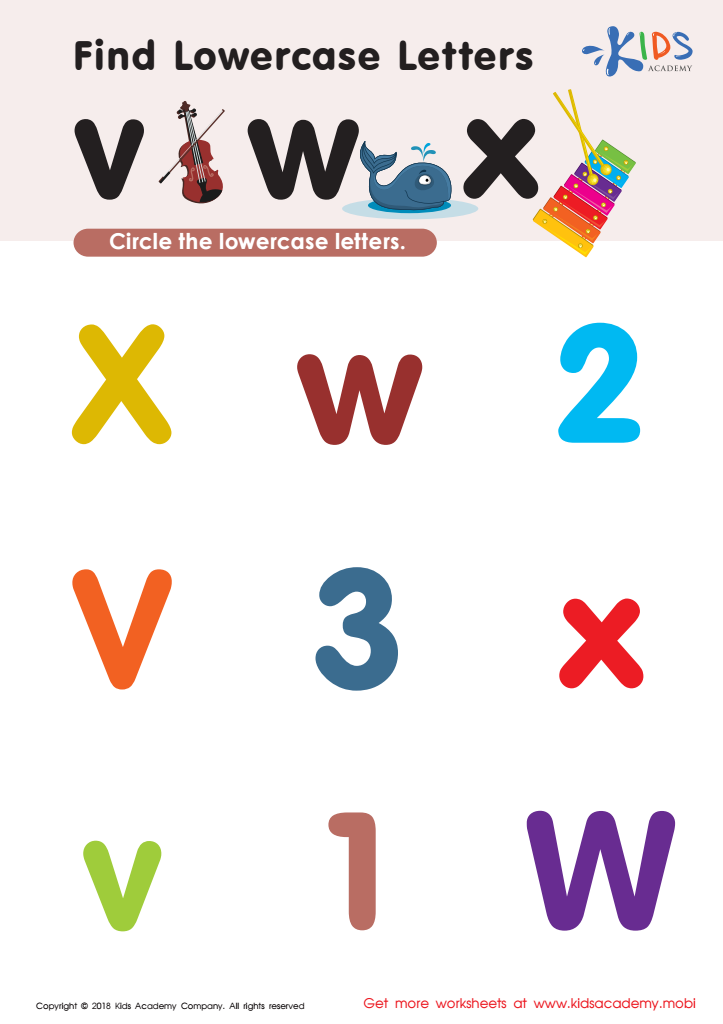
Find Lowercase Letters v w x Worksheet


Parents and teachers play a crucial role in the early literacy development of children aged 5-9. Identifying lowercase letters—or small letters—is a fundamental skill that lays the groundwork for reading and writing. Understanding lowercase letters is essential because they are the most frequently used letters in written English. While uppercase letters are important for starting sentences and proper nouns, lowercase letters dominate in everyday reading material.
Fostering familiarity with lowercase letters helps children build reading fluency. When they encounter texts, they can read more smoothly if they recognize common words in their lowercase forms. Additionally, writing proficiency is linked to lowercase identification, as most writing involves these letters. Early mastery of small letters contributes to better spelling, handwriting, and overall communication skills.
Moreover, recognizing lowercase letters aids in boosting children's confidence. When they feel comfortable with these foundational skills, they are more likely to engage in reading and writing activities, fostering a love for literacy. Engaging parents in support activities at home, such as reading together or playing letter recognition games, further reinforces this competency. Ultimately, lowercase letter recognition is integral to a child's academic growth and enjoyment of language arts.