Phonological awareness Normal Phonics Worksheets for Ages 5-9
3 filtered results
-
From - To
Enhance your child's reading abilities with our engaging Phonological Awareness Normal Phonics Worksheets for ages 5-9! These carefully designed worksheets focus on fundamental phonological skills, helping young learners recognize sounds within words, rhyme patterns, and syllable segmentation. Our interactive activities promote active participation while reinforcing essential language concepts, making learning enjoyable and effective. Ideal for both classroom and home use, these worksheets support early literacy development in a structured, fun way. Perfect for teachers and parents alike, explore a variety of exercises that nurture your child's confidence in reading. Discover the fun of phonological awareness today for a successful learning journey!
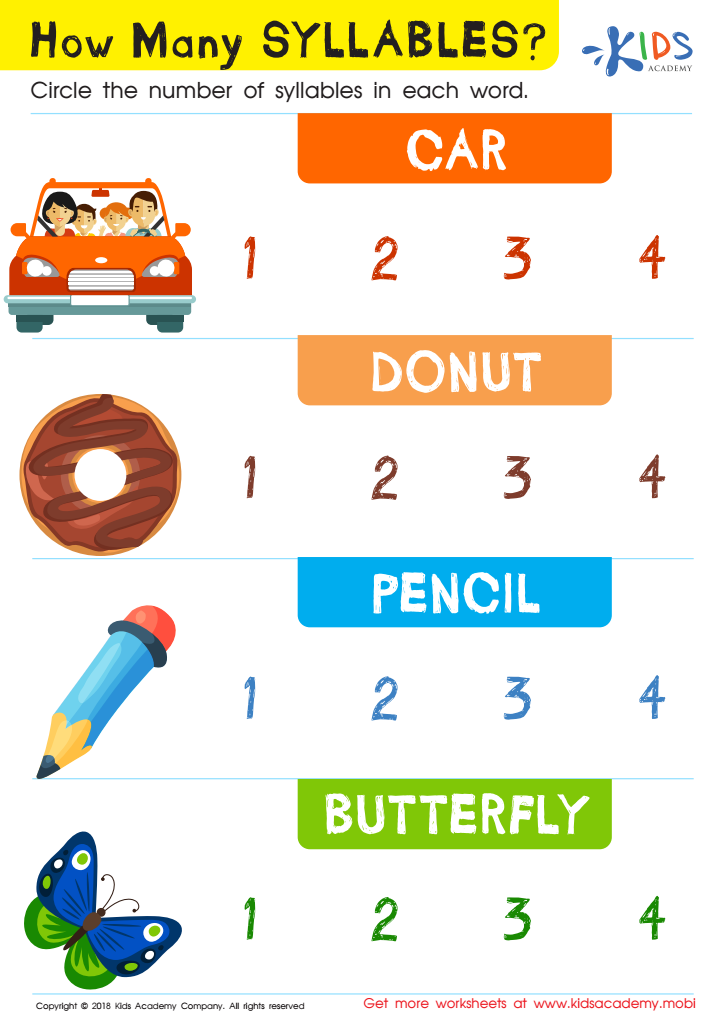
How Many Syllables? Worksheet
 Assign to My Students
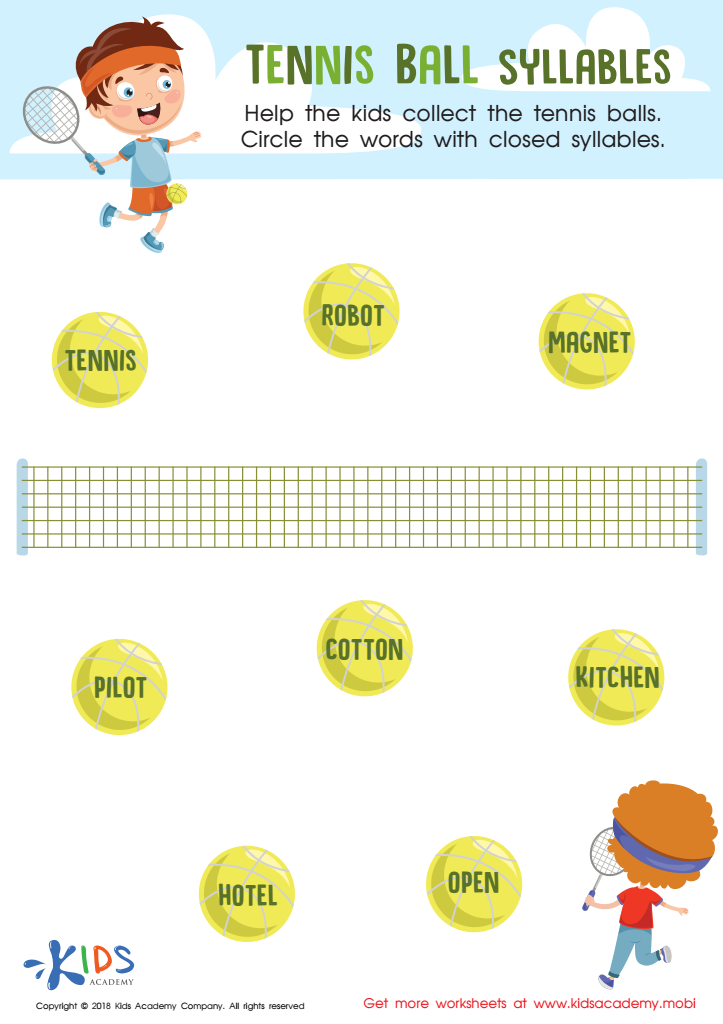
Tennis Ball Syllables Worksheet
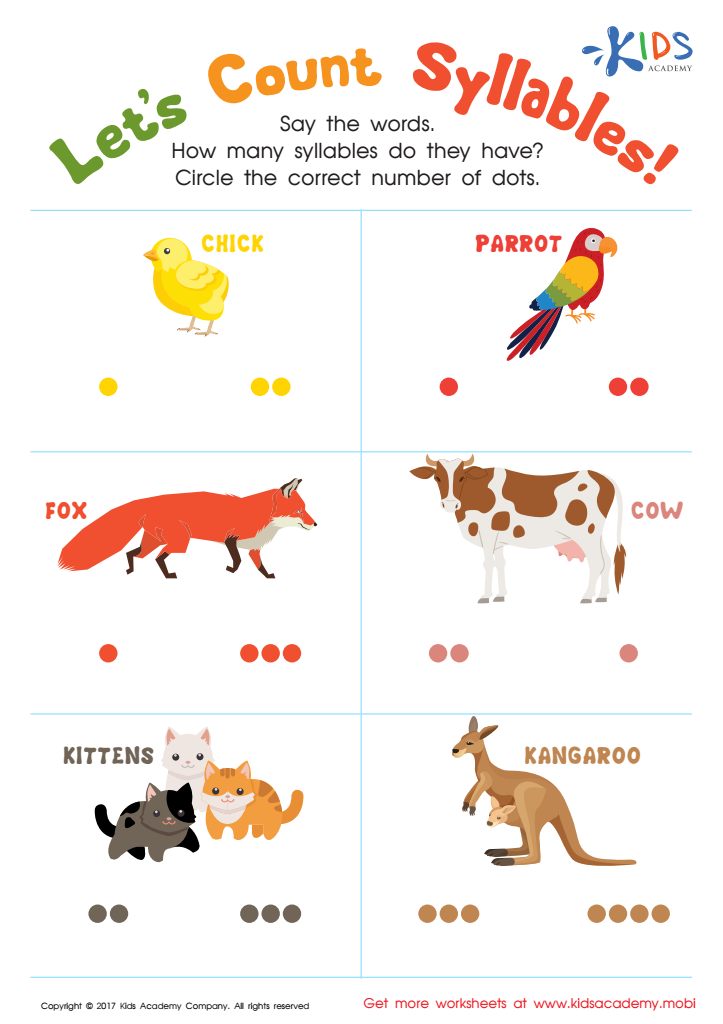
Lets Count Syllables Worksheet








Phonological awareness and phonics are essential components of early literacy development for children aged 5-9. These skills form the foundation for mastering reading and writing, which are crucial for academic success across subjects. Phonological awareness involves recognizing and manipulating sounds in language, aiding children in understanding the structure of words. This skill helps them develop the ability to hear, segment, and blend sounds, which directly impacts their reading fluency.
Normal phonics, on the other hand, teaches children the relationship between sounds and letters. It provides a systematic approach to decoding words, fostering their ability to read unfamiliar text with confidence. By incorporating both phonological awareness and phonics, children develop strong foundational skills that lead to improved comprehension and vocabulary.
Parents and teachers should prioritize these skills as they foster overall literacy development, boost self-esteem, and encourage a love of reading. Children who struggle with phonics may face challenges in school, leading to a cycle of frustration and disengagement. By supporting phonological awareness and phonics, adults are investing in their children's lifelong learning and critical thinking skills. Fostering these skills ensures that children are equipped for academic success and prepared for future endeavors.







