
Vocabulary development Normal Phonics Worksheets for Ages 5-9
16 filtered results
Difficulty Level
Grade
Age
-
From - To
Subject
Activity
Standards
Enhance your child's language skills with our Vocabulary Development Normal Phonics Worksheets tailored for ages 5-9. These engaging worksheets are designed to build a strong phonics foundation, essential for early reading success. Each activity focuses on recognizing letters, understanding sounds, and expanding vocabulary in a fun, interactive manner. Perfect for classrooms or at-home practice, our worksheets support various learning styles, making phonics enjoyable and effective. Join us at Kids Academy and give your child the head start they deserve in developing vital language skills. Explore our free resources to foster a love for reading today!
Favorites
With answer key
Interactive
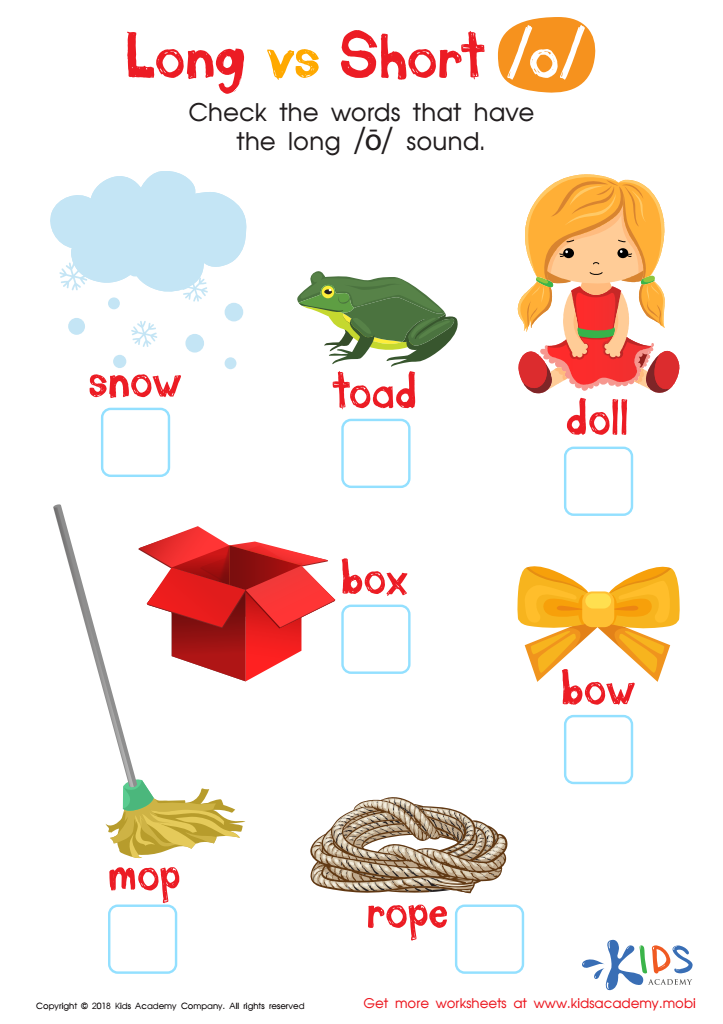
Long vs Short O Reading Worksheet
Help your child learn to identify the long and short «o» sound with this colourful worksheet. Guide them as they spot words with the long or short «o» sound. With practice, your child will find it easier to tell the difference between the two.
 Assign to My Students
Long vs Short O Reading Worksheet
Worksheet
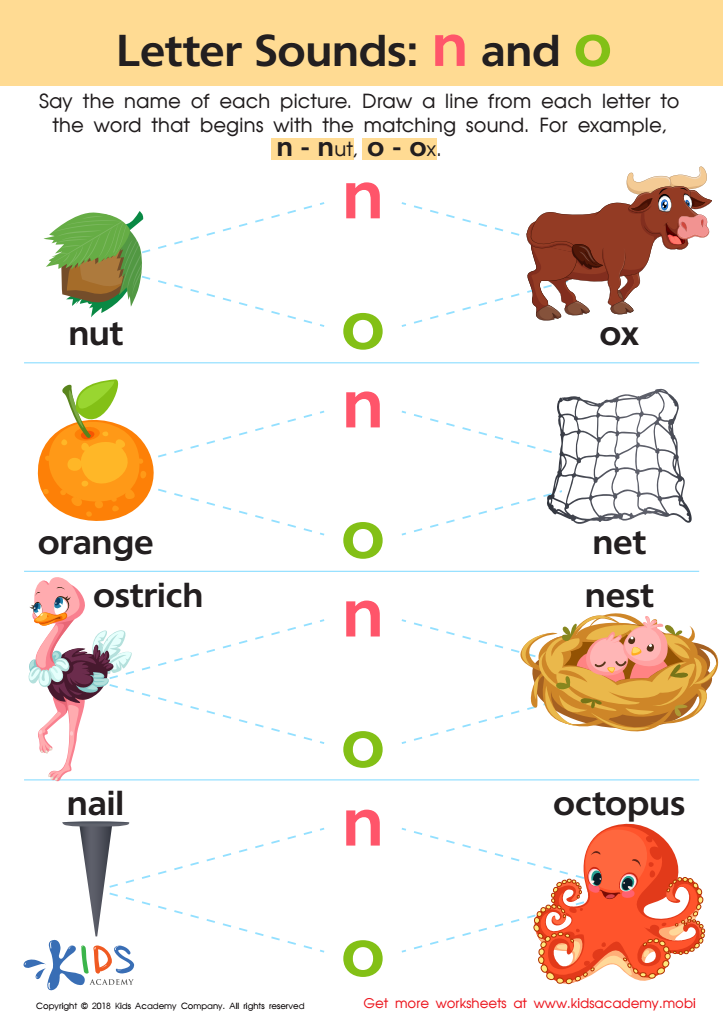
Letter N and O Sounds Worksheet
Help your preschooler learn to recognize the N and O letter sounds with this vibrant worksheet from Kids Academy! Have them say the name of each picture and listen for N or O. Trace the dotted line from letter to its match to complete the phonics review. It's a fun way to help them master the difference between the two sounds!
Letter N and O Sounds Worksheet
Worksheet
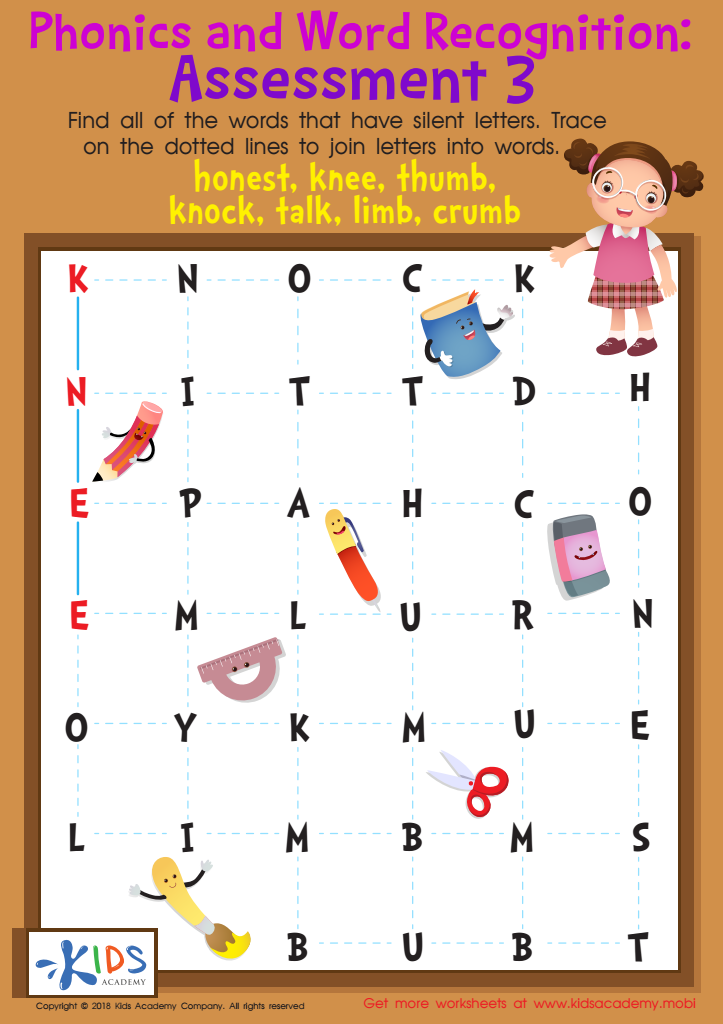
Phonics and Word Recognition: Assessment 3 Worksheet
Silent letters can be tricky for kids learning to read and write. Show them how they work with words like 'knee' and 'dumb'. Then, challenge them to come up with their own. Give them a worksheet with silent letters and trace the lines to join the letters into words.
Phonics and Word Recognition: Assessment 3 Worksheet
Worksheet
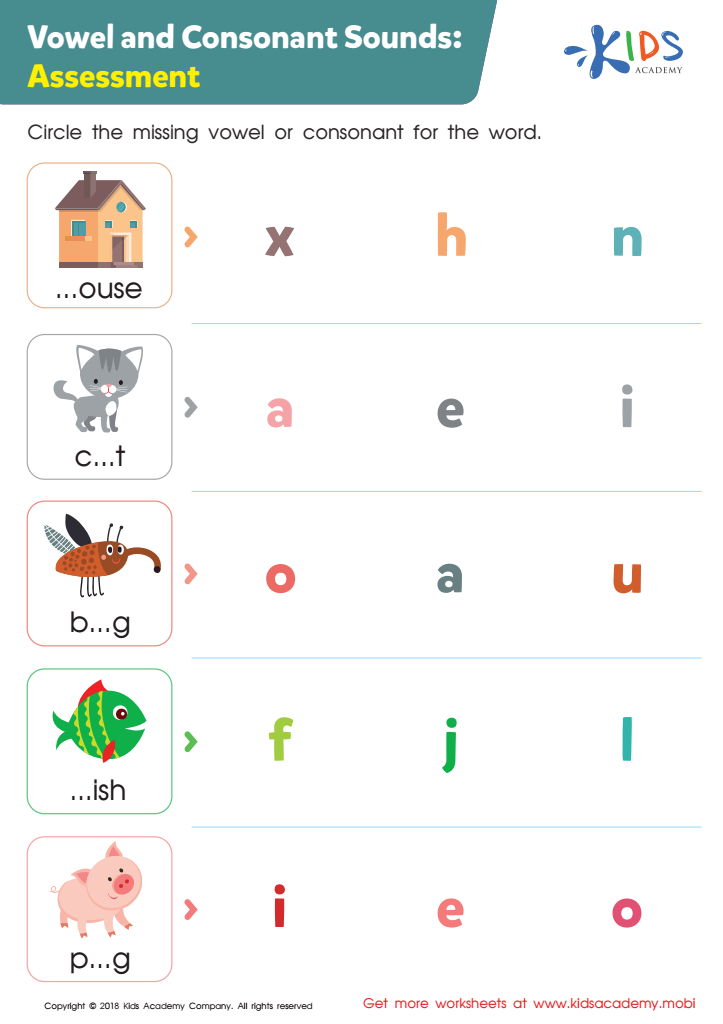
Vowel and Consonant Sounds: Assessment Worksheet
Test young elementary students on vowel and consonant sounds with this friendly phonics assessment worksheet. Get kids to name each image and look at the word underneath. Ask them to sound out the word, then circle the missing letter to complete. This will help assess their knowledge and skills!
Vowel and Consonant Sounds: Assessment Worksheet
Worksheet
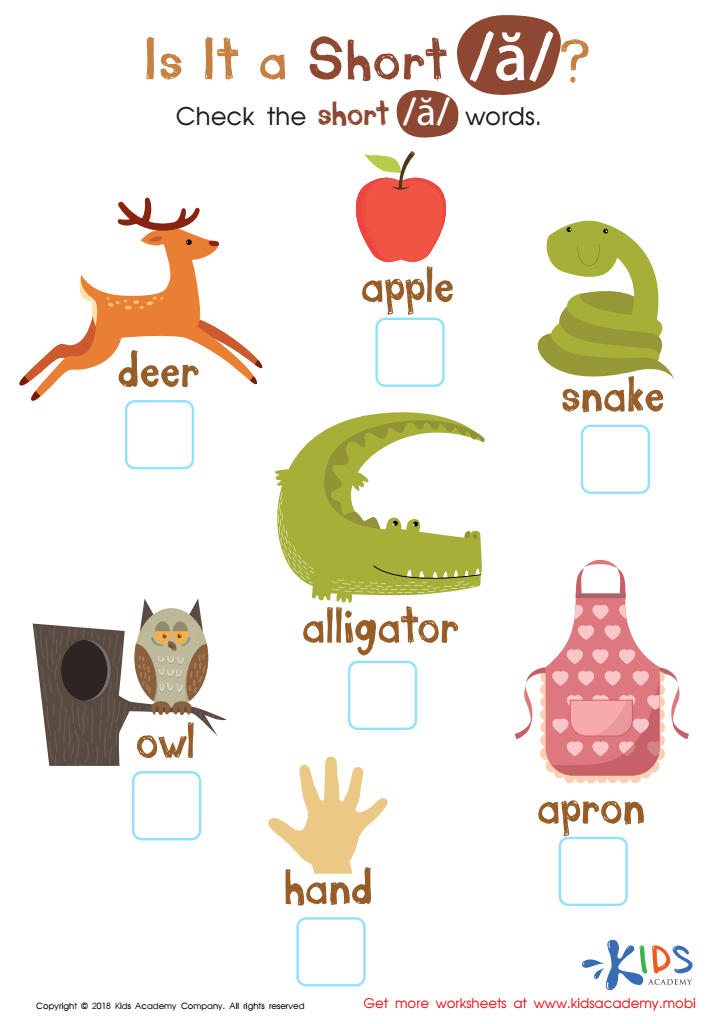
Is It Short A? Reading Worksheet
Struggling readers may have difficulty distinguishing short from long vowels. With this fun PDF worksheet, they practice identifying the corresponding short «ă» by naming each picture and ticking the right boxes. It's a great way to work on decoding and fluency skills!
Is It Short A? Reading Worksheet
Worksheet
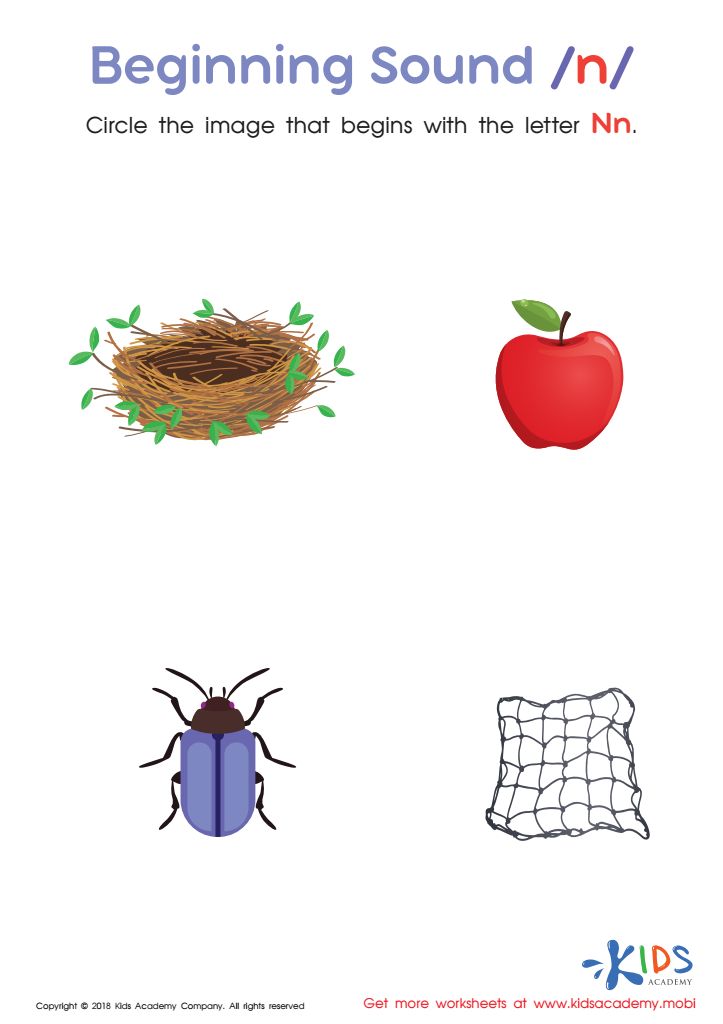
Beginning Sound «n» Worksheet
Help your emerging reader learn the initial «n» sound with this free PDF worksheet! Strengthen fine motor skills by tracing circles around words beginning with «n». Pictures are clear and engaging, giving beginning Phonics learners the right amount of practice and the confidence to succeed.
Beginning Sound «n» Worksheet
Worksheet
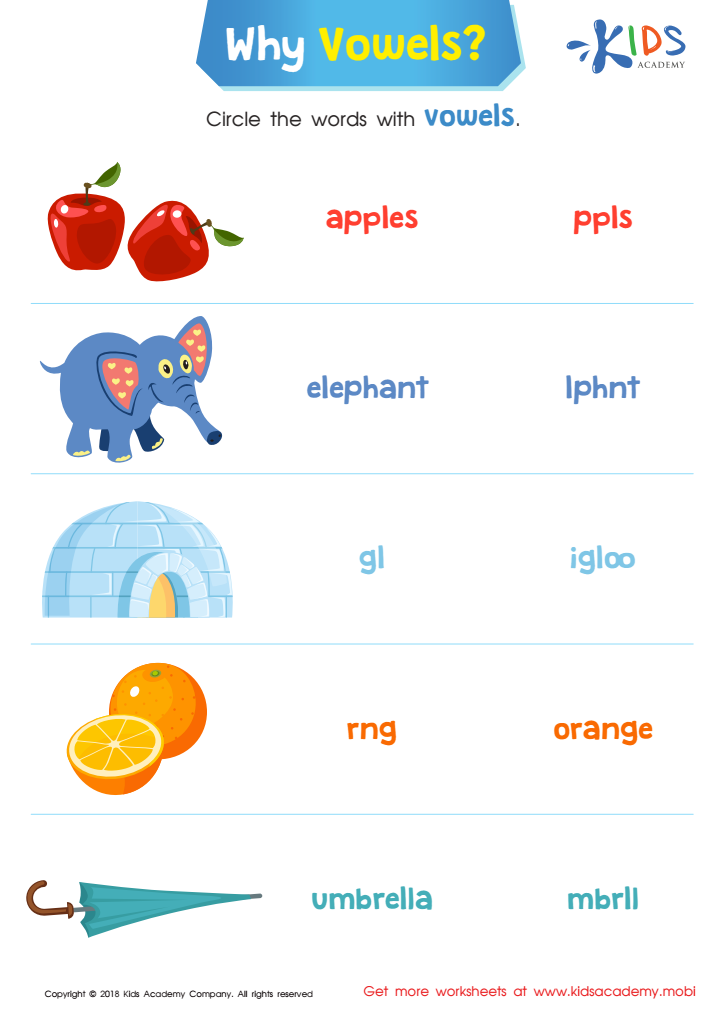
Why Vowels? Reading Worksheet
This worksheet teaches kids to spell words with vowels. It features familiar pics for them to recognize, and they practice fine motor skills by circling the correct spelling. It's an enjoyable way for kids to learn how to spell and promote reading skills.
Why Vowels? Reading Worksheet
Worksheet
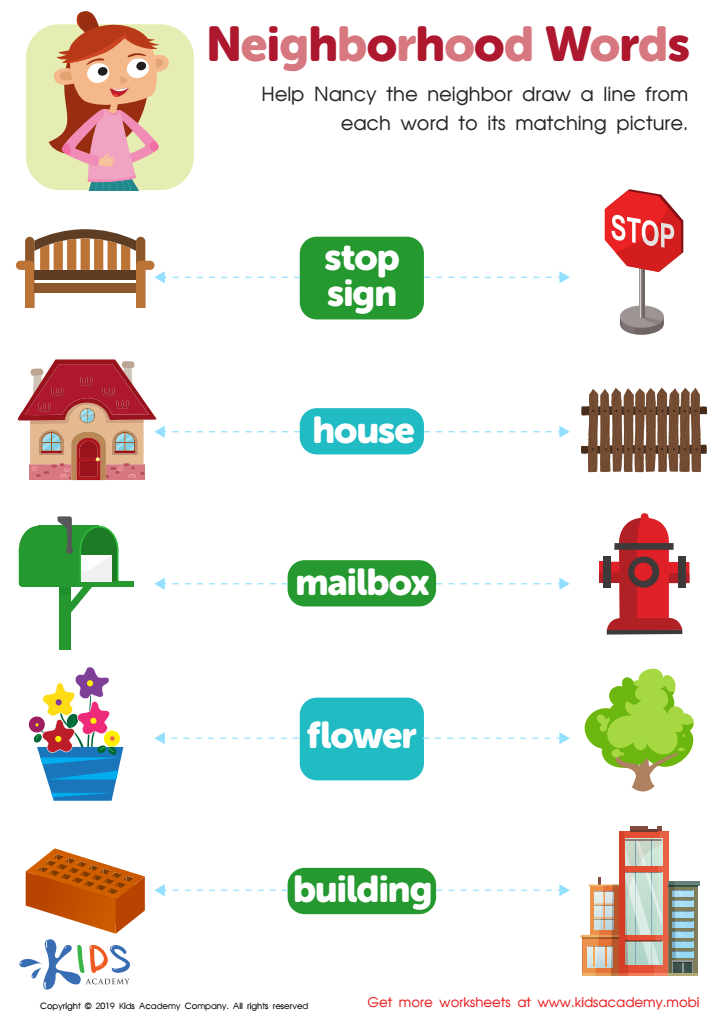
Neighborhood Words Worksheet
Help preschoolers develop life skills and familiarize them with words and concepts with this worksheet! It'll also boost their fine motor skills as they trace lines to match pictures with the words. They'll learn new words and feel more confident in their reading.
Neighborhood Words Worksheet
Worksheet
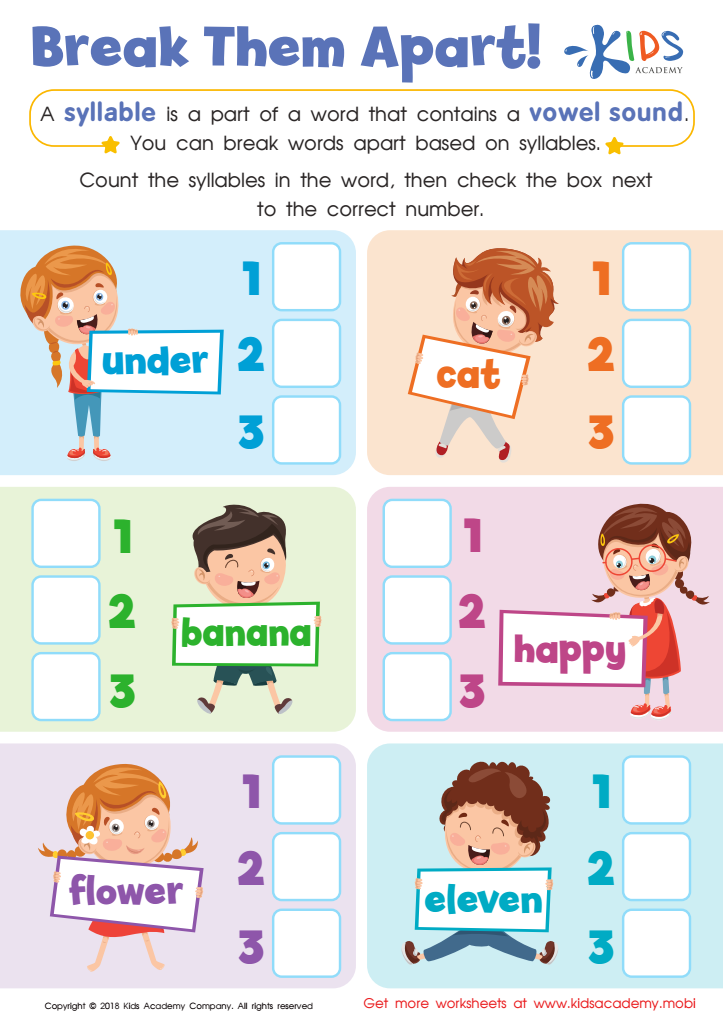
Reading: Break Them Apart Worksheet
See if students understand syllables with this fun worksheet. It teaches them that a syllable is a word part with a vowel sound. Kids read each word and choose how many parts it has. Doing this often helps them decode new words and gain confidence.
Reading: Break Them Apart Worksheet
Worksheet
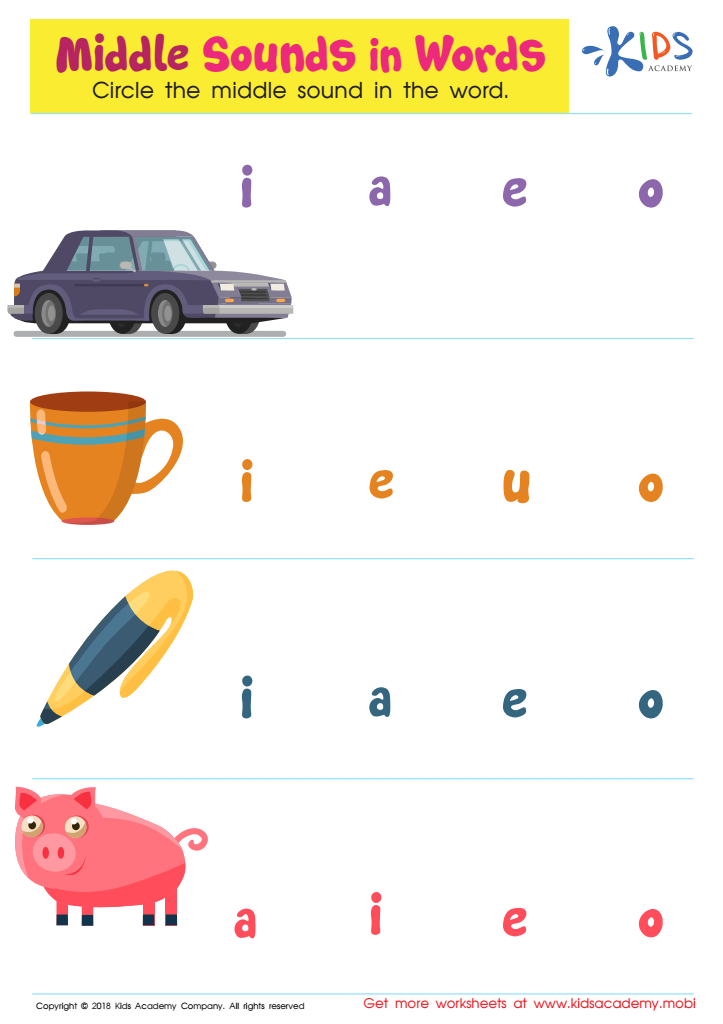
Middle Sounds in Words Worksheet
This worksheet helps emerging readers use picture clues to identify familiar words and practice tracing and fine-motor abilities. It also reinforces spelling by helping them distinguish middle sounds in words. A great way to build listening and literacy skills!
Middle Sounds in Words Worksheet
Worksheet
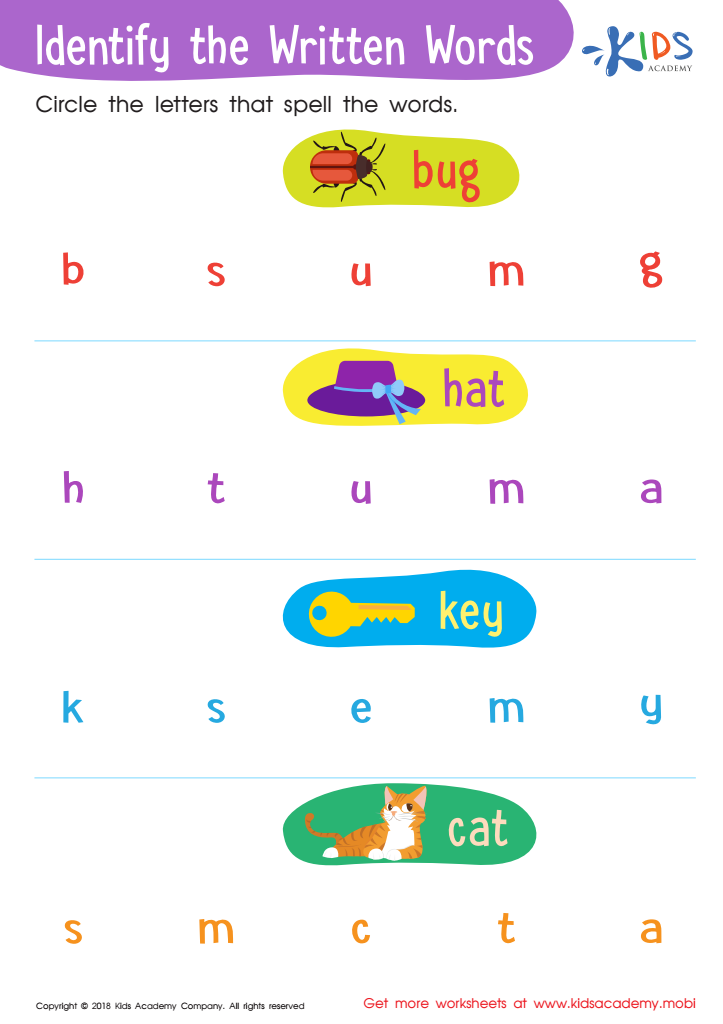
Identify the Written Words Worksheet
Have your students identify the objects on the printout, then spell the words. If they already know how to spell, this exercise should be easy. Help them circle the correct letters from the set to spell out the words. This is a great way to reinforce reading and spelling skills. Max 80 words.
Identify the Written Words Worksheet
Worksheet
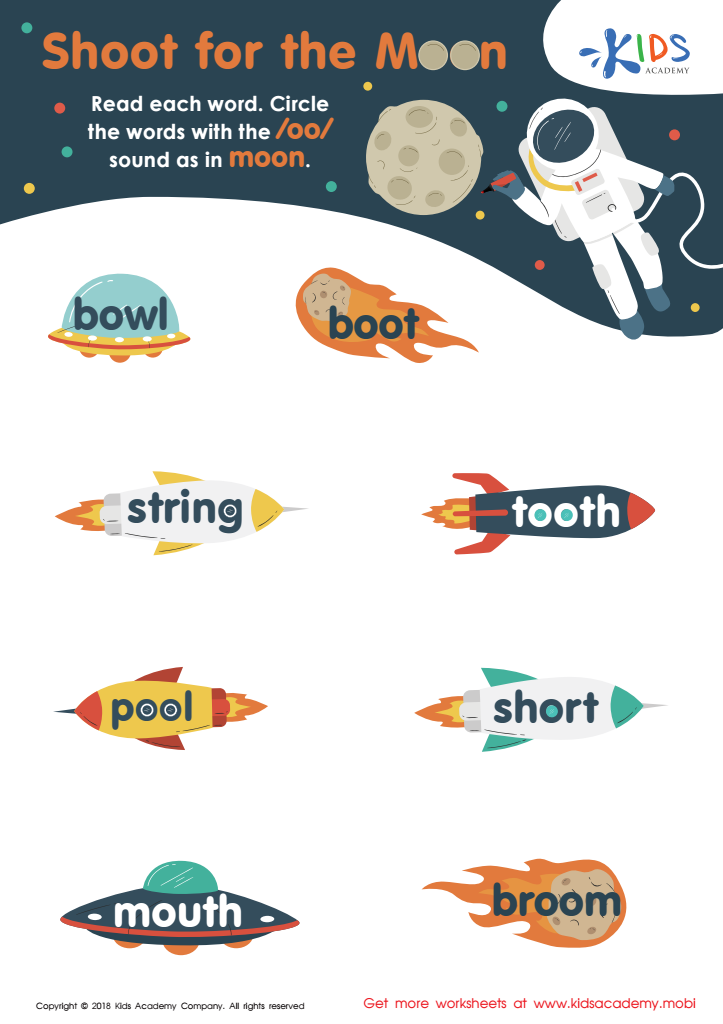
Reading: Shoot for the Moon Worksheet
Ask your kids if they can name any common words with the /oo/ sound. Read each word with them and help them pronounce it. Then, have them circle the words that have the /oo/ sound as in moon.
Reading: Shoot for the Moon Worksheet
Worksheet
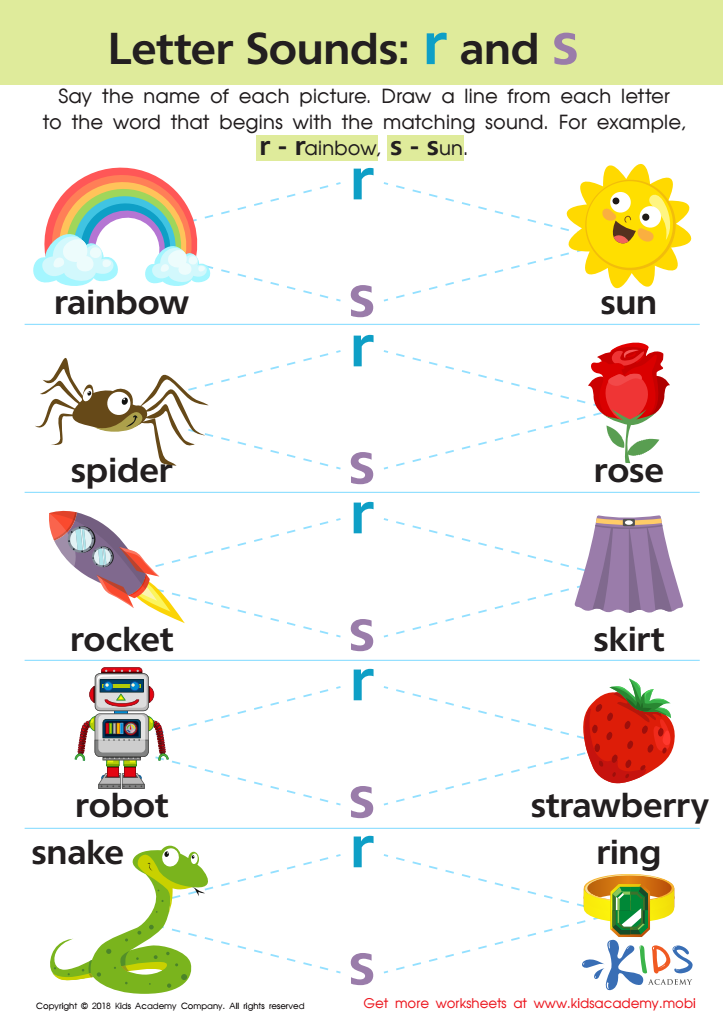
Letter R and S Sounds Worksheet
Kids Academy's phonics worksheet is full of fun and color! Help your child name the pictures and read the words under each one. Does it begin with an R or S? Then, use a pencil to trace the dotted line from the letter to its image. It's a great way to practice phonics skills!
Letter R and S Sounds Worksheet
Worksheet
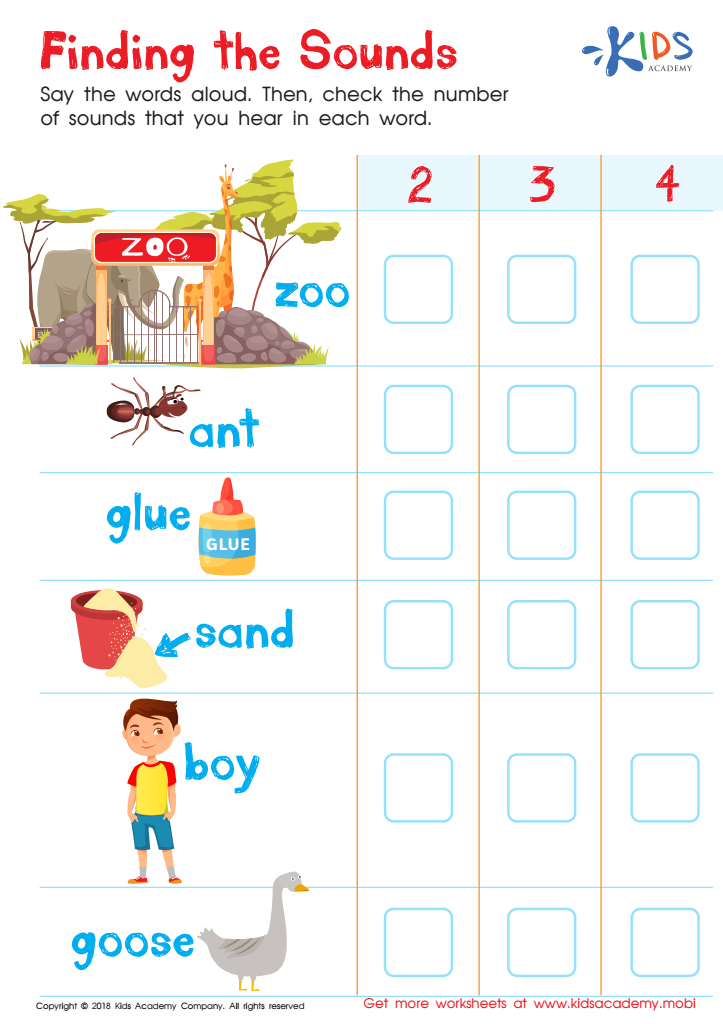
Finding the Sounds Worksheet
This free colorful worksheet assists children in learning words and breaking them down into sounds. It boosts auditory discrimination, phonological awareness and fine motor skills. Picture clues help them read confidently, and they can check the appropriate boxes to practice their reading skills.
Finding the Sounds Worksheet
Worksheet
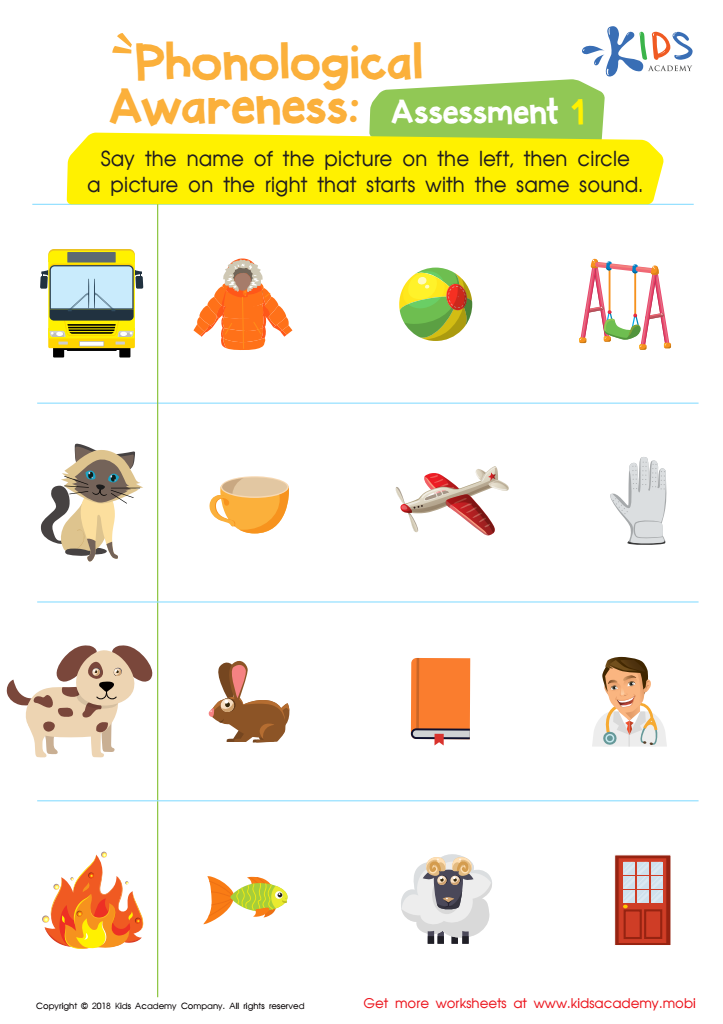
Phonological Awareness: Assessment 1 Worksheet
This worksheet helps kids build key phonics skills for pre-reading. They say each picture name aloud, focusing on the starting sound. Then, they match the sound with an image in the same row. Use as a checkpoint for kindergarten or grade 1 phonics readiness.
Phonological Awareness: Assessment 1 Worksheet
Worksheet
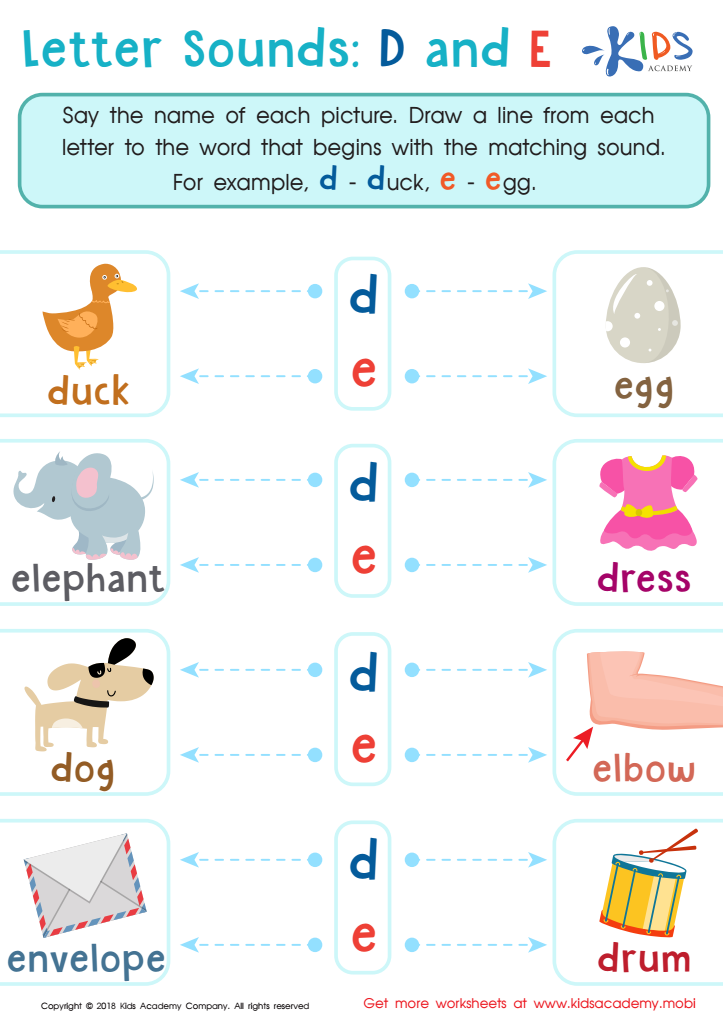
Letter D and E Sounds Worksheet
Kids can use picture clues and visual discrimination to name cheerful pics and isolate the beginning sound. This free PDF worksheet will help them develop phonological awareness, differentiate between "D" and "E", and hone fine-motor skills. It'll also boost their confidence as they become readers.
Letter D and E Sounds Worksheet
Worksheet
Join Kids Academy for Free
Who is primarily going to use this learning content?








Vocabulary development and phonics are crucial components of early literacy, forming the foundation for a child’s reading and comprehension skills. For children aged 5-9, a critical period for language acquisition, cultivating a robust vocabulary enhances their capacity to understand and engage with the world around them. A strong vocabulary allows children to express themselves clearly, understand stories and instructions, and participate confidently in discussions.
Phonics, the method of teaching reading by correlating sounds with symbols in an alphabetic system, is equally important. It helps children decode new words while reading, facilitating smoother, faster, and more accurate reading skills. As children become proficient readers, they are more likely to enjoy reading, leading to a lifelong love for books and a continuous expansion of vocabulary and knowledge.
Parents and teachers play key roles in this developmental phase. They can provide a language-rich environment filled with books, educational games, and conversations that introduce new words and concepts. Phonics instruction, through activities like rhyming games, letter-sound matching, and reading aloud, ensures children grasp the relationship between letters and sounds. Together, vocabulary development and phonics lay the groundwork for academic success, critical thinking, and effective communication, making it essential for a child's overall development.







