Reading proficiency Normal Vowels Worksheets for Ages 5-9
5 filtered results
-
From - To
Enhance your child’s reading skills with our engaging Normal Vowels Worksheets designed for ages 5-9! These worksheets focus on improving reading proficiency through fun, interactive activities that make learning enjoyable. With a variety of exercises focused on recognizing and using normal vowels, children will strengthen their phonic awareness and reading fluency. Perfect for home or classroom use, our worksheets encourage independent learning while building confidence in young readers. Accessible and kid-friendly, our resources promote essential literacy skills and make mastering vowels an exciting adventure. Unlock your child’s reading potential today with these valuable worksheets!
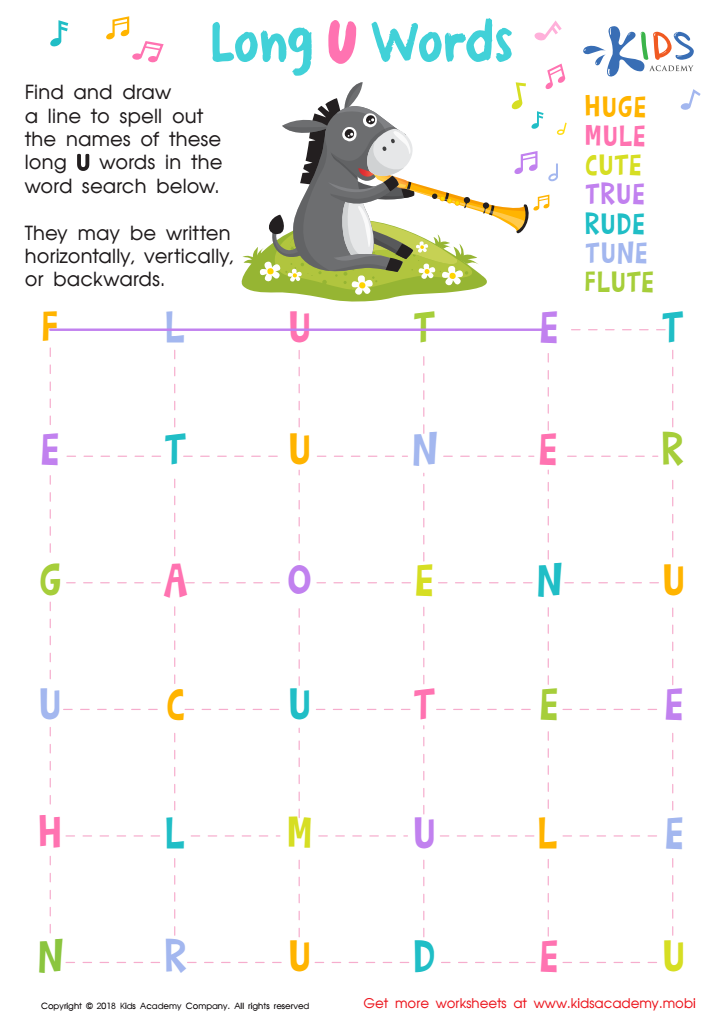
Long /u/ Words Worksheet
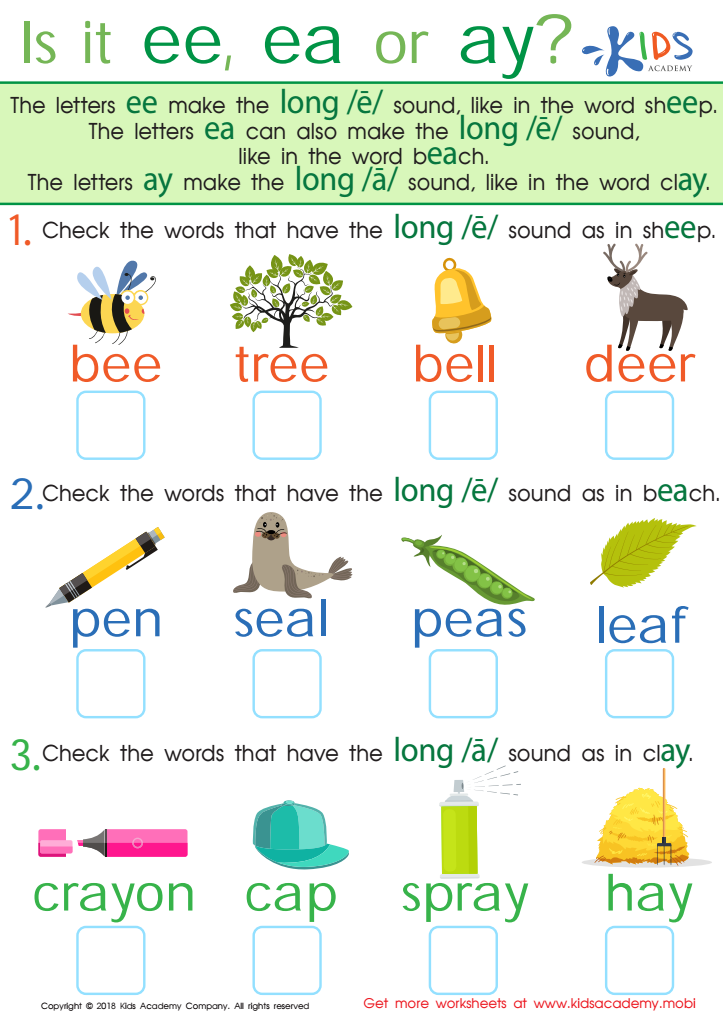
Is It EE, EA, or AY? Worksheet
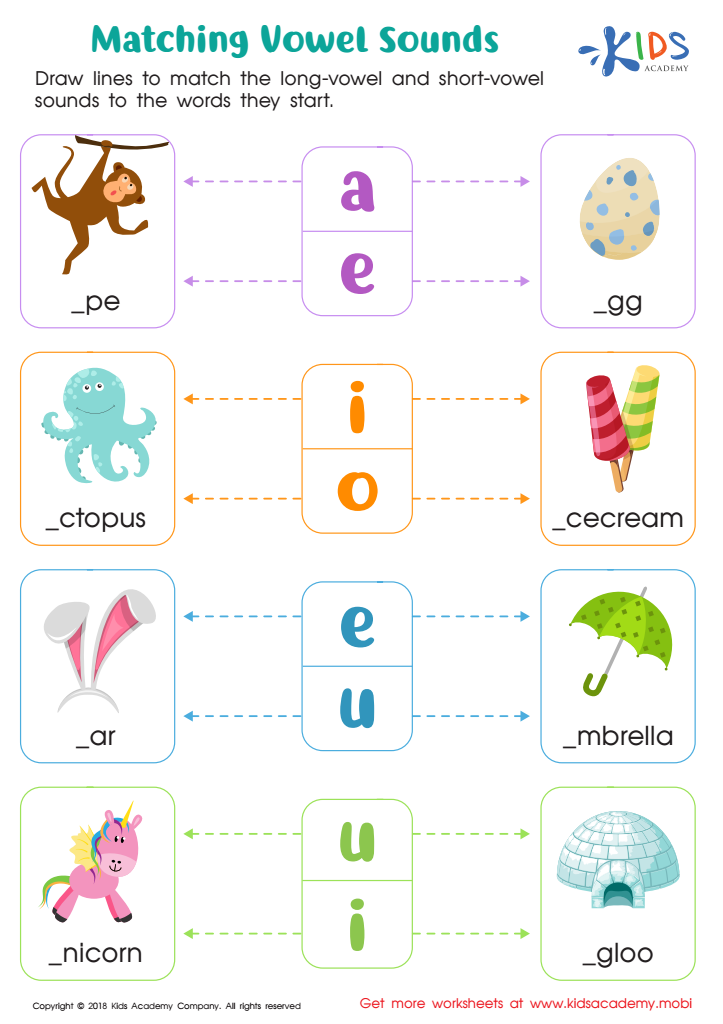
Matching Vowel Sounds Worksheet
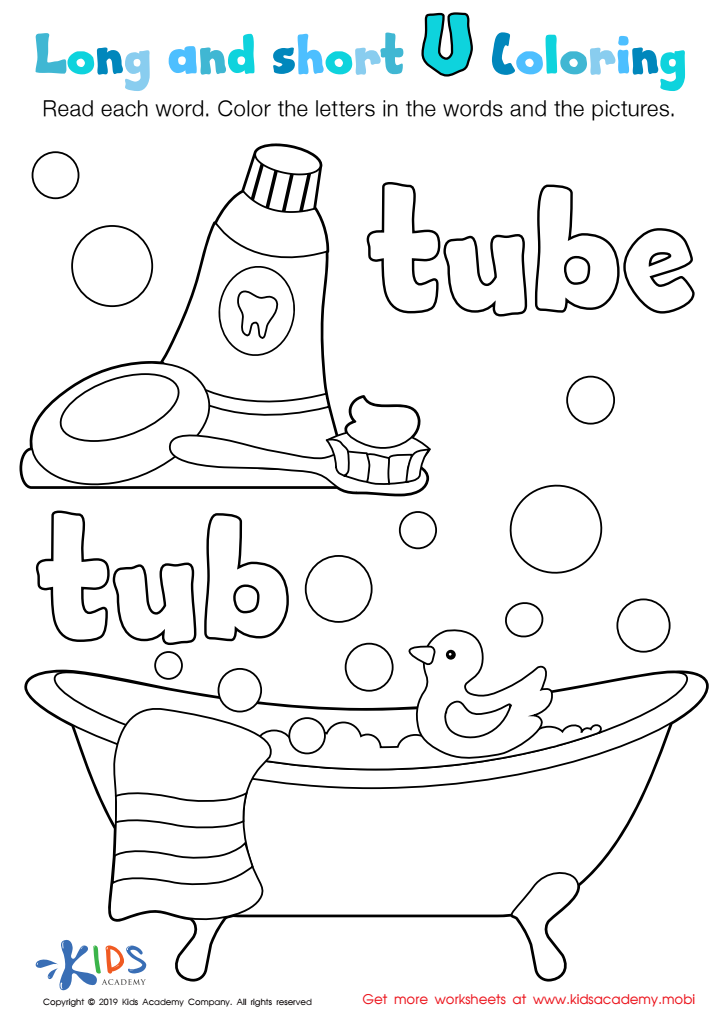
Long and Short U Worksheet
 Assign to My Students
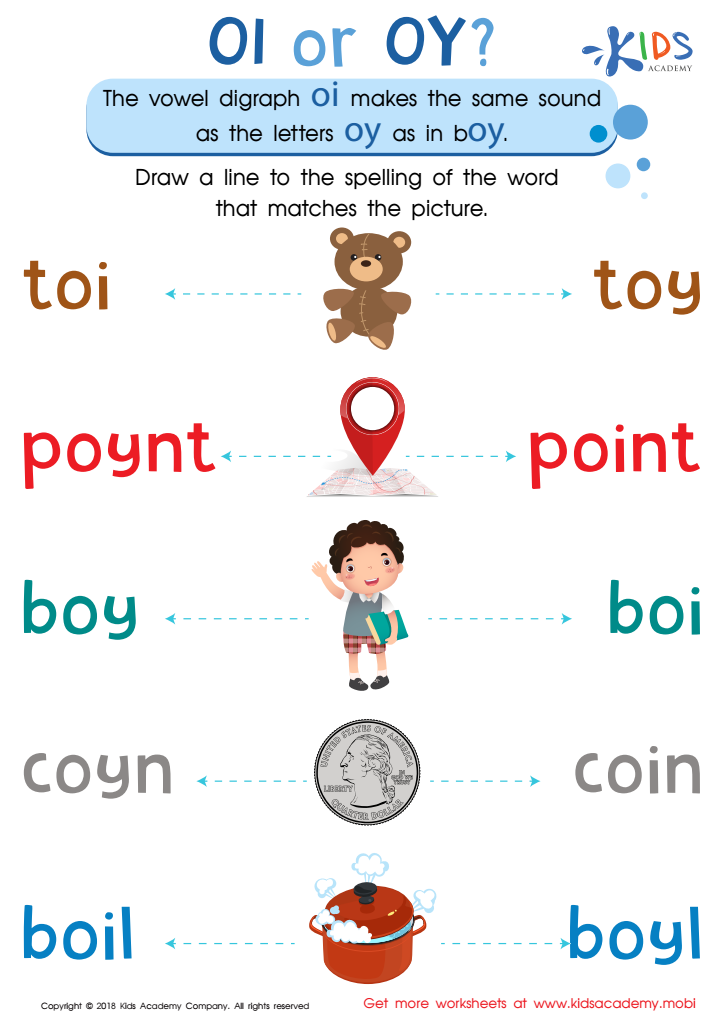
Reading: OI and OY Worksheet





Reading proficiency, particularly concerning Normal Vowels for ages 5-9, is crucial for children's development in numerous ways. This foundational skill not only lays the groundwork for literacy but also significantly impacts children's overall academic success and confidence. At this age, children are at a critical stage of language acquisition, where they begin to develop phonemic awareness and vocalize sounds associated with vowels.
When children grasp the concept of Normal Vowels, they enhance their ability to decode words. This understanding boosts their comprehension skills and empowers them to engage with texts independently. Proficient reading goes beyond fluent pronunciation; it aids in critical thinking, problem-solving, and creativity.
Moreover, proficiency in reading also supports emotional and social skills. Children who read well tend to be more encouraged to participate in discussions, share thoughts, and collaborate with peers, fostering social interactions.
Teachers and parents should prioritize this aspect of literacy to ensure children can fully enjoy the benefits of reading, such as knowledge acquisition, and imaginative exploration, and a love for literature. Investing time in helping children master Normal Vowels will set them on a steadfast path toward lifelong learning and achievement, making it an essential focus in early education.






