Animal Classification Normal Worksheets for Ages 5-9
9 filtered results
-
From - To
Discover our engaging Animal Classification Normal Worksheets designed for children ages 5-9! These worksheets provide a fun and educational way for young learners to explore the animal kingdom. Kids will enjoy activities that help them identify, categorize, and understand various animal types through vibrant illustrations and simple, interactive exercises. With diverse tasks ranging from matching animals to their habitats to recognizing animal characteristics, these worksheets enhance observation skills and foster a love for nature. Perfect for at-home learning or classroom use, our easy-to-follow format supports early education in a playful way. Make learning about animals an exciting adventure today!
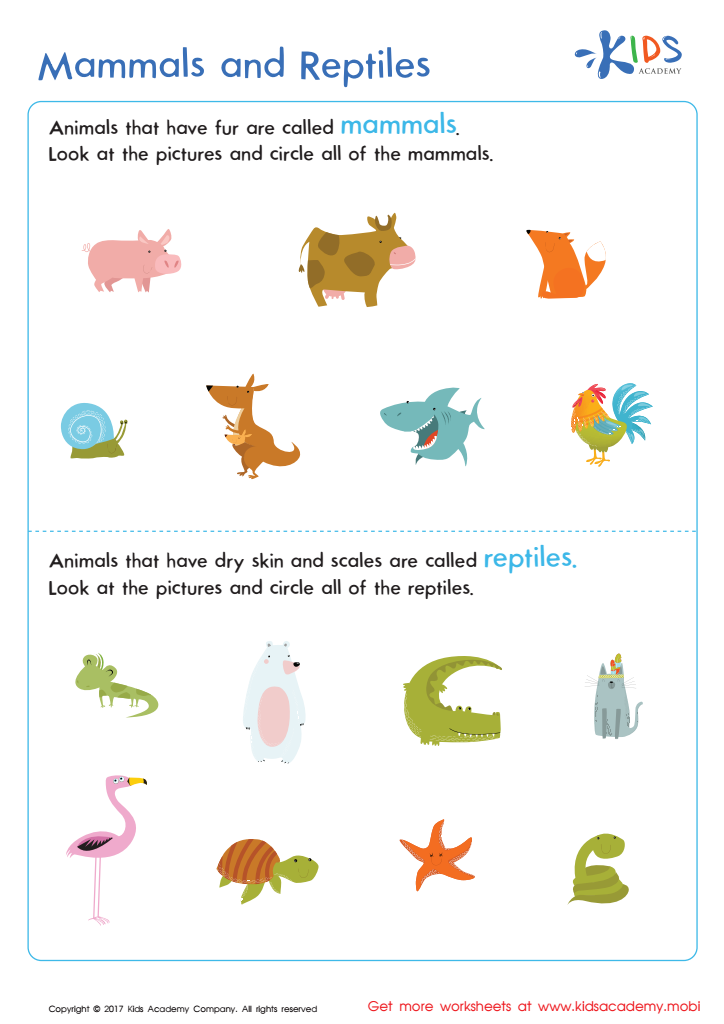
Mammals and Reptiles Worksheet
 Assign to My Students
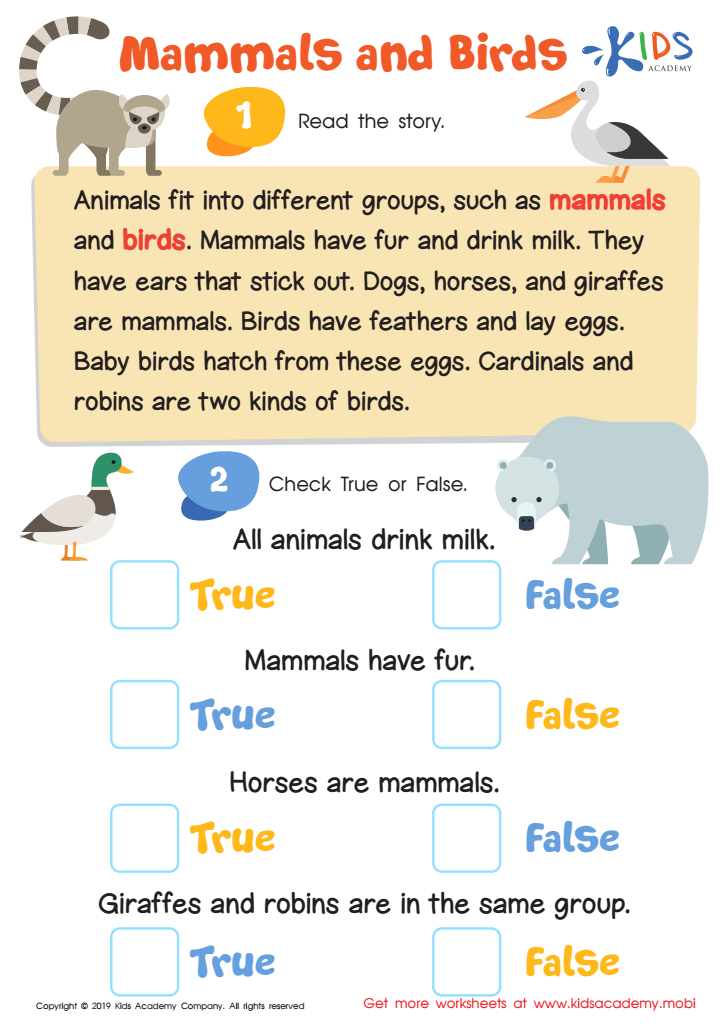
Mammals and Birds Worksheet
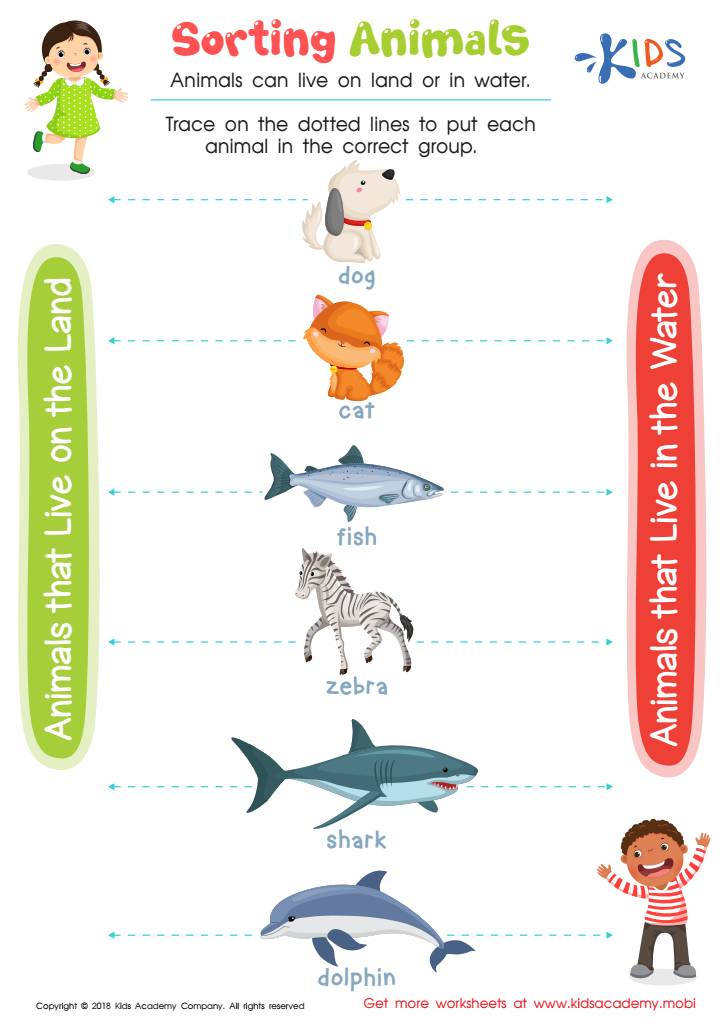
Sorting Animals Worksheet
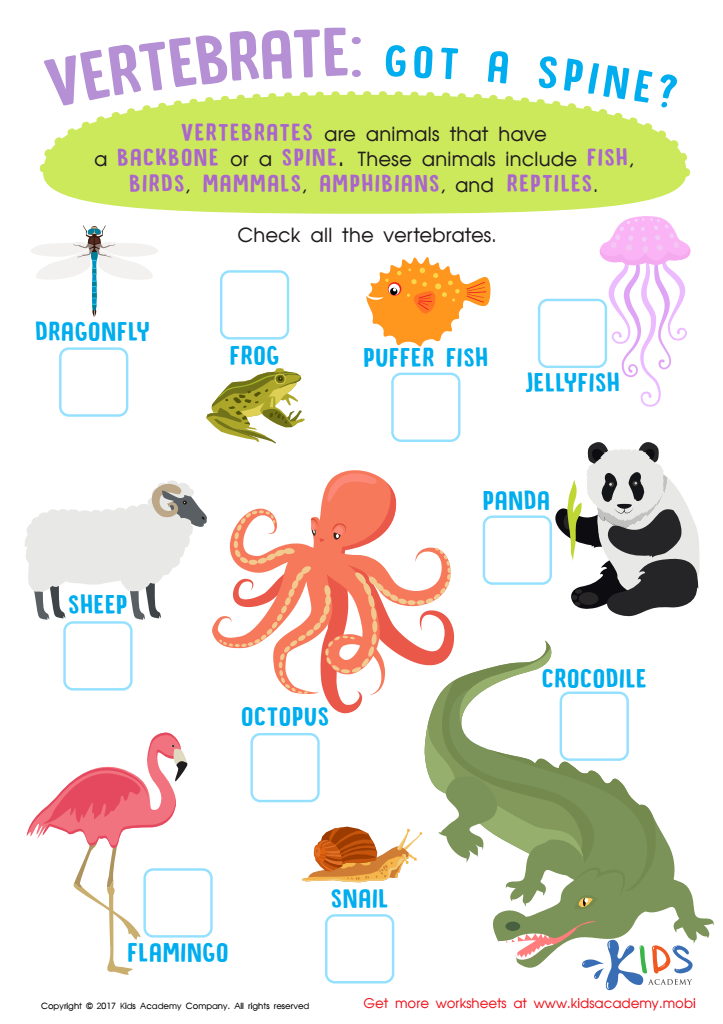
Vertebrates Animals Worksheet for 3rd Grade
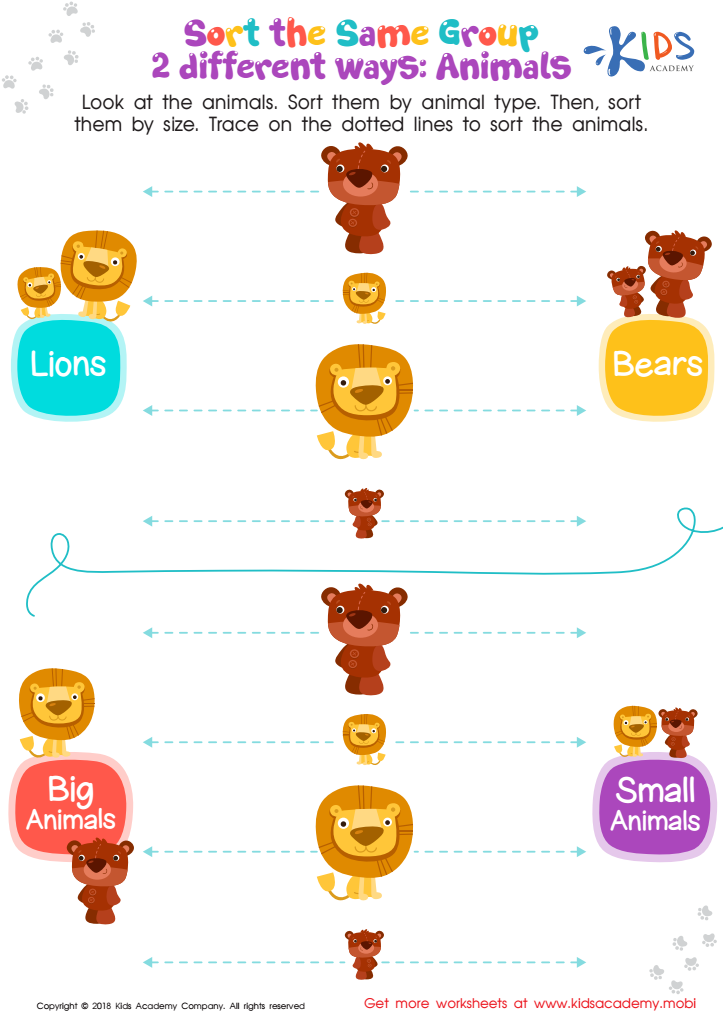
Sort the Same Group 2 Different Ways: Animals Worksheet
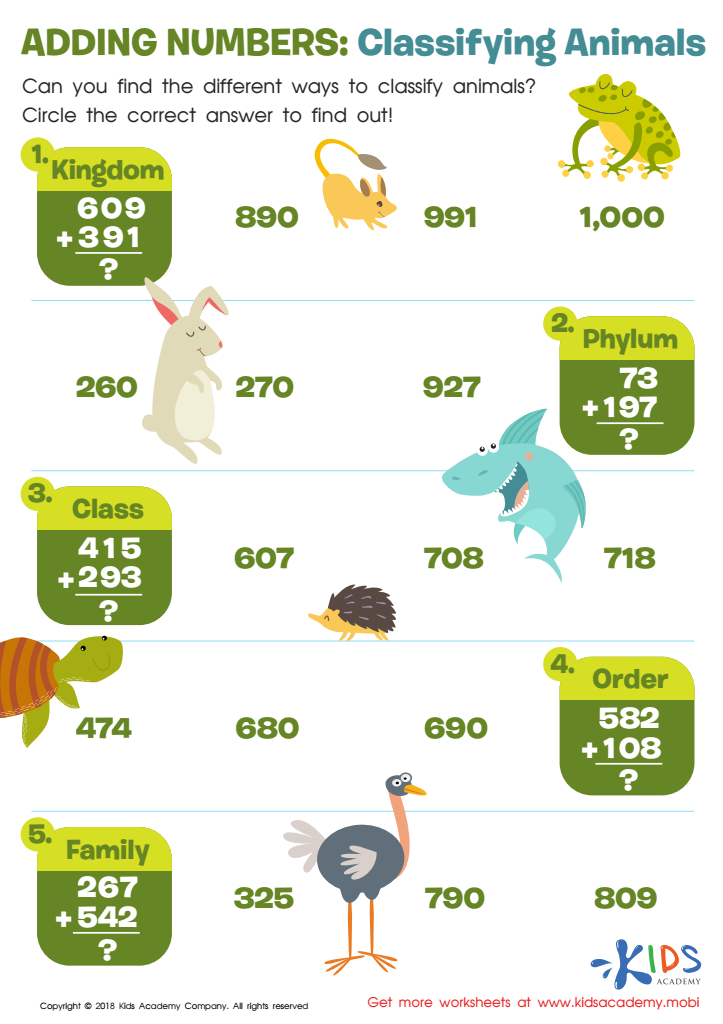
Adding Numbers: Classifying Animals Worksheet
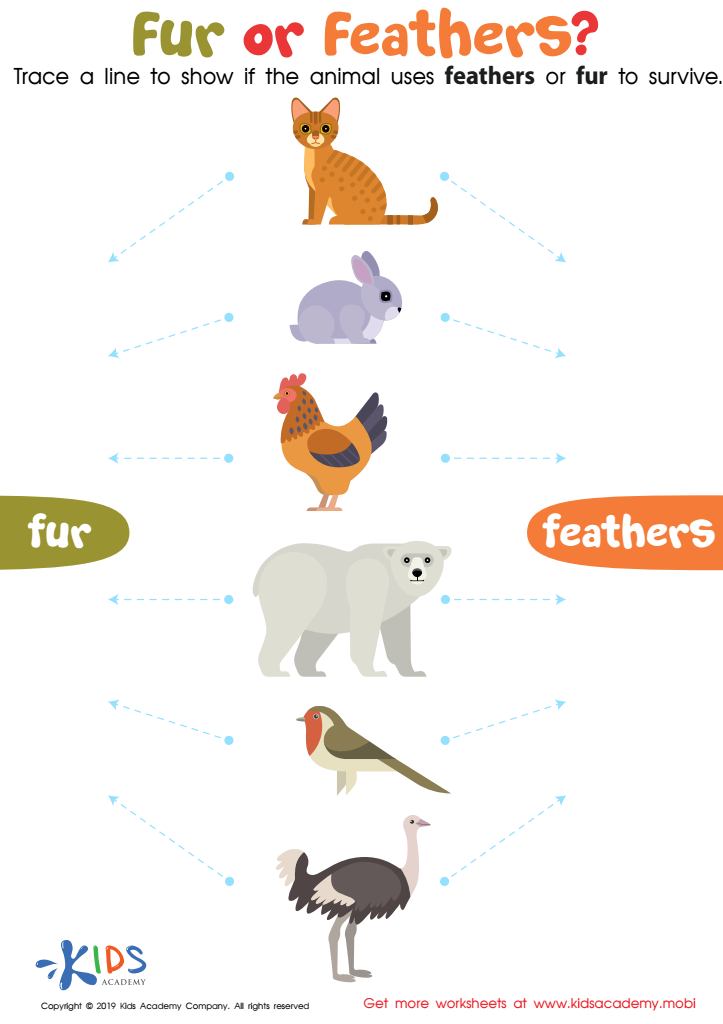
Fur or Feathers? Worksheet
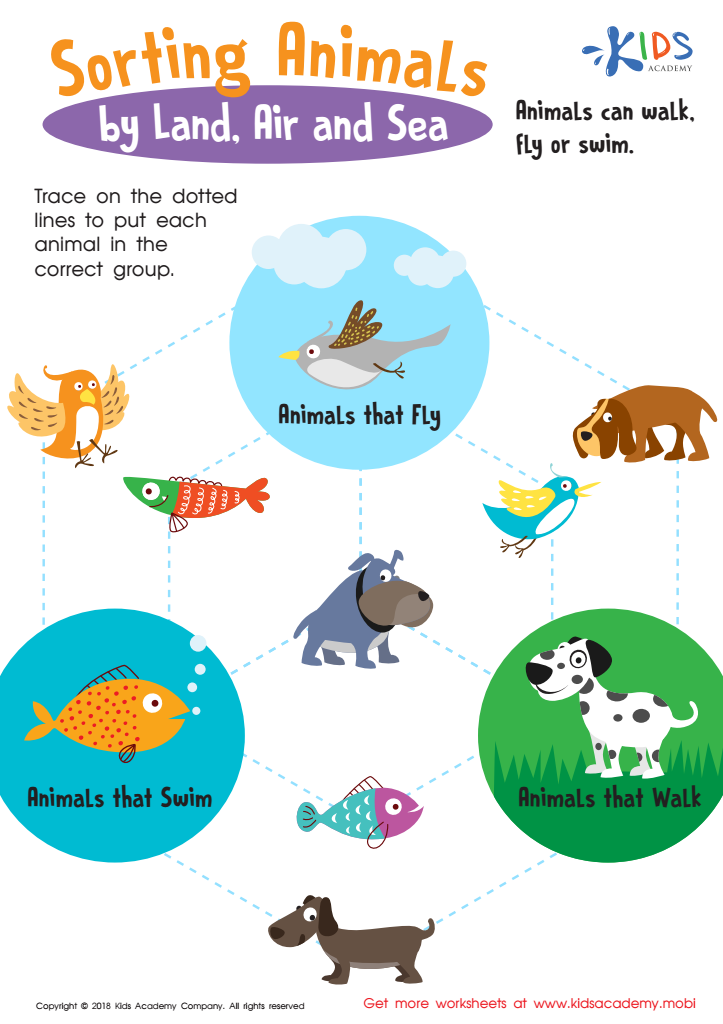
Sorting Animals by Land, Air and Sea Worksheet
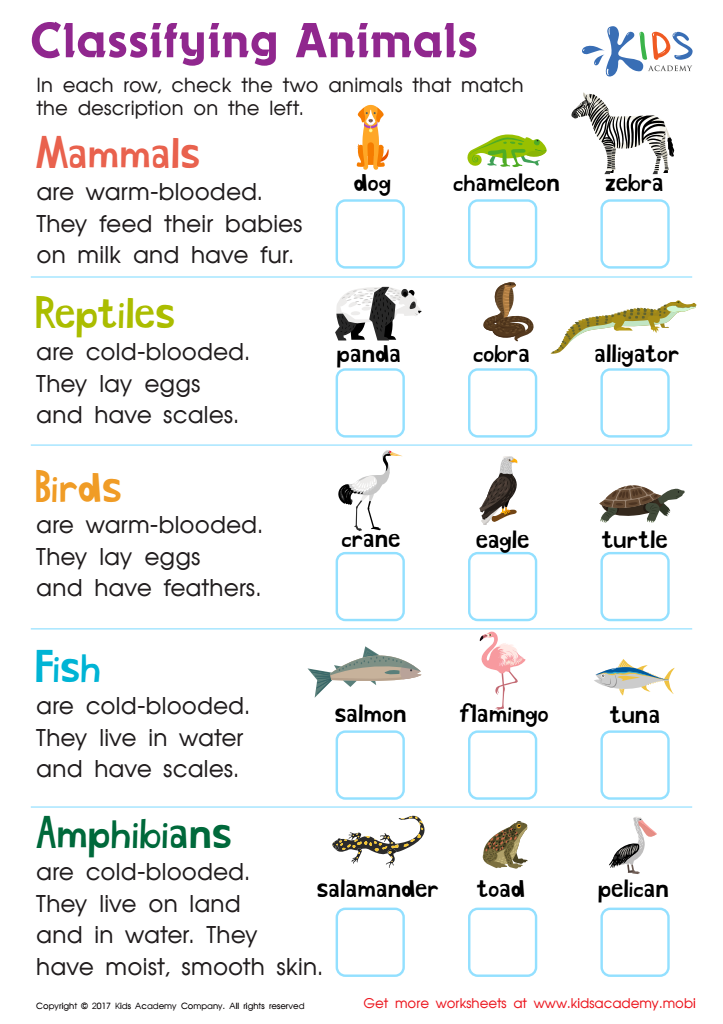
Classifying Animals Worksheet







Animal classification is important for young learners aged 5-9 as it introduces them to the incredible diversity of life on Earth. By understanding how animals are grouped into categories, such as mammals, birds, reptiles, and amphibians, children can better appreciate the unique characteristics that define each animal. This foundational knowledge fosters curiosity, encouraging them to observe and ask questions about the natural world.
Additionally, learning about animal classification promotes critical thinking skills. Children begin to recognize patterns and relationships among animals, which enhances their cognitive development. It also provides an opportunity to teach broader concepts, such as ecosystems, habitats, and the importance of biodiversity in maintaining a healthy planet.
Incorporating animal classification into the curriculum also supports social-emotional learning by instilling empathy and respect for living creatures. Children learn about endangered species and conservation efforts, encouraging a sense of responsibility for the environment.
For parents and teachers, engaging children in animal classification is not just educational but also fun. Interactive activities like sorting animals or visiting a zoo help reinforce these lessons in an enjoyable and memorable way, making it essential for comprehensive early education.








