Comparing objects Normal Worksheets for Ages 5-9
4 filtered results
-
From - To
Explore our Comparing Objects Normal Worksheets designed for ages 5-9 at Kids Academy! These engaging and educational worksheets help young learners develop critical thinking and observation skills by comparing size, shape, length, and other attributes of various objects. Perfect for early grade students, our printables are crafted to make learning both fun and effective. Tailored to fit age-appropriate cognitive abilities, each worksheet provides exciting and interactive activities that foster a strong foundation in math and science concepts. Visit Kids Academy today and empower your child’s learning journey with our superior educational resources!
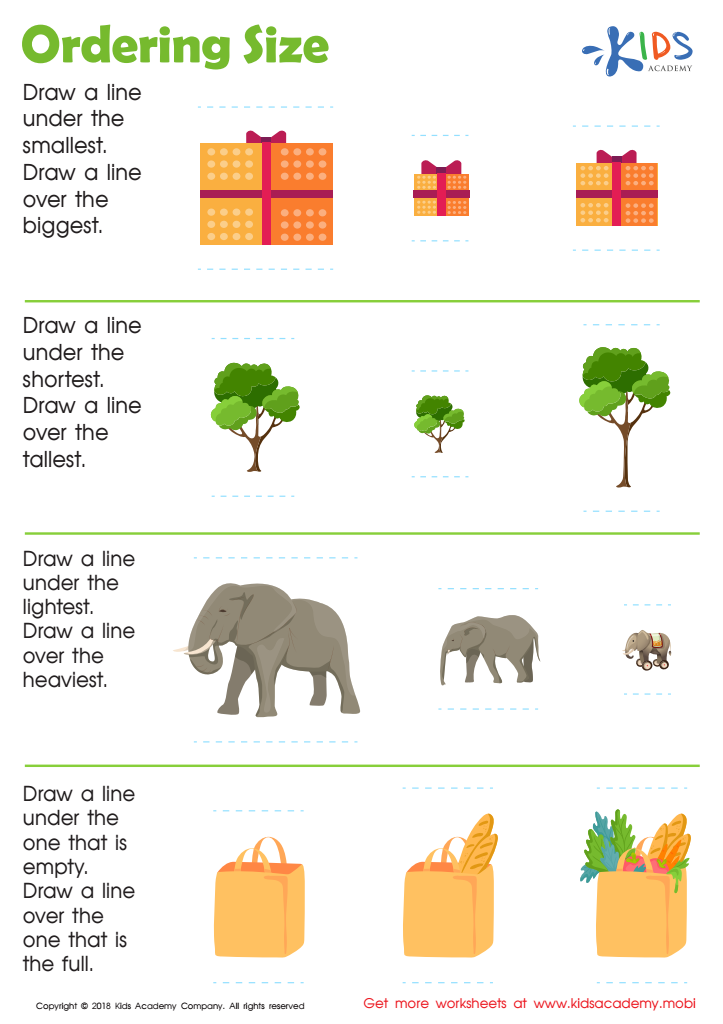
Ordering Size Worksheet
 Assign to My Students
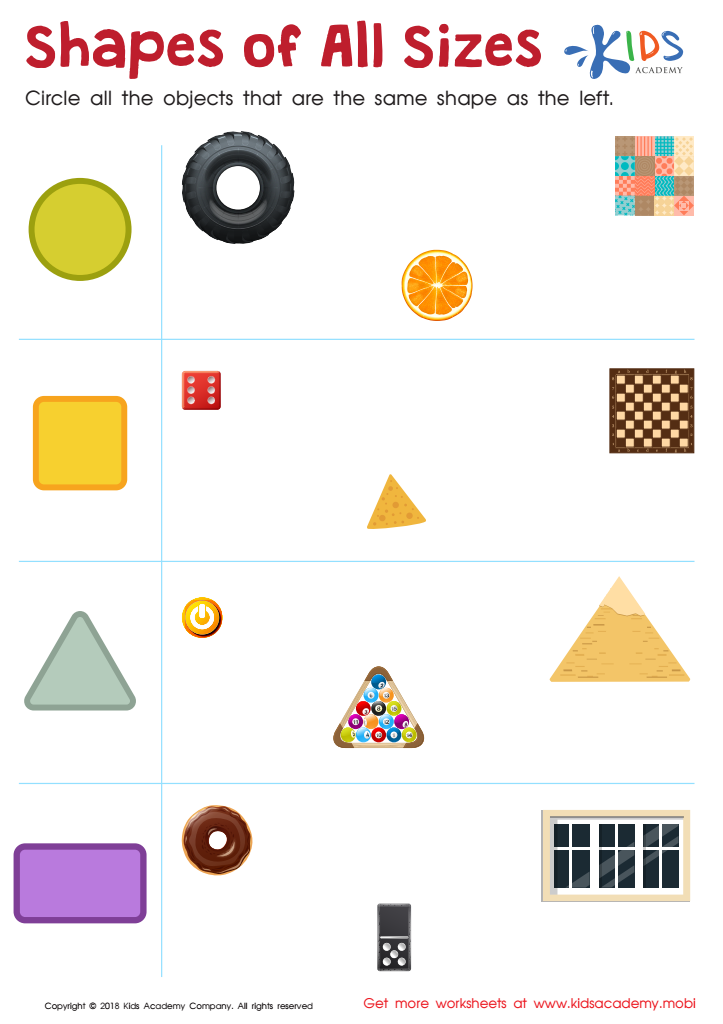
Shapes of All Sizes Worksheet
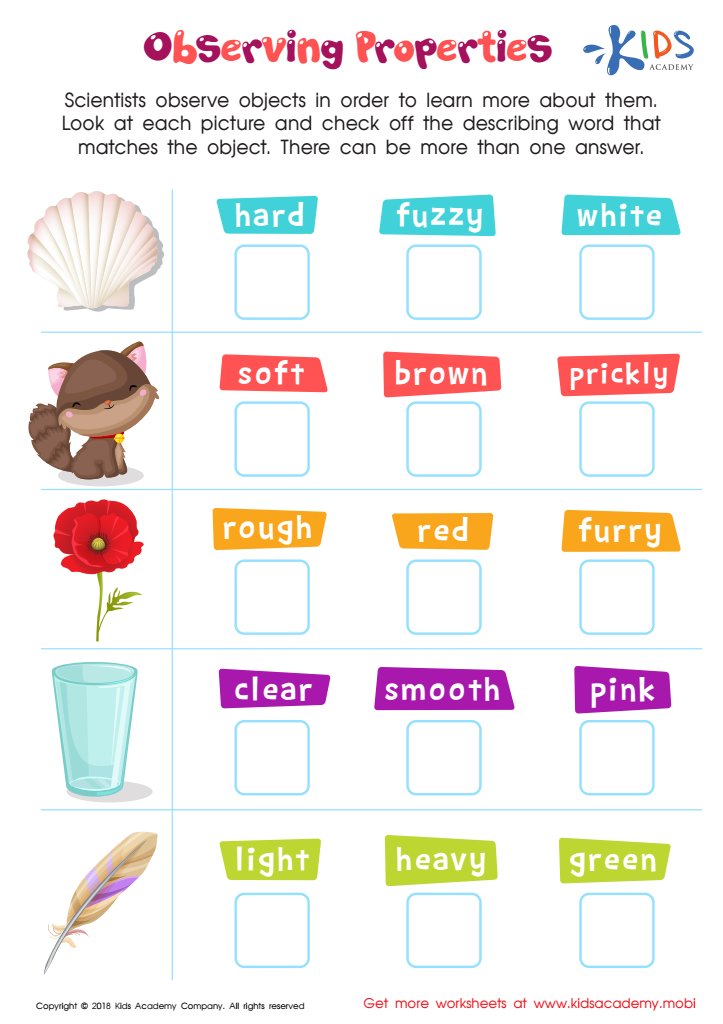
Observing Properties Worksheet
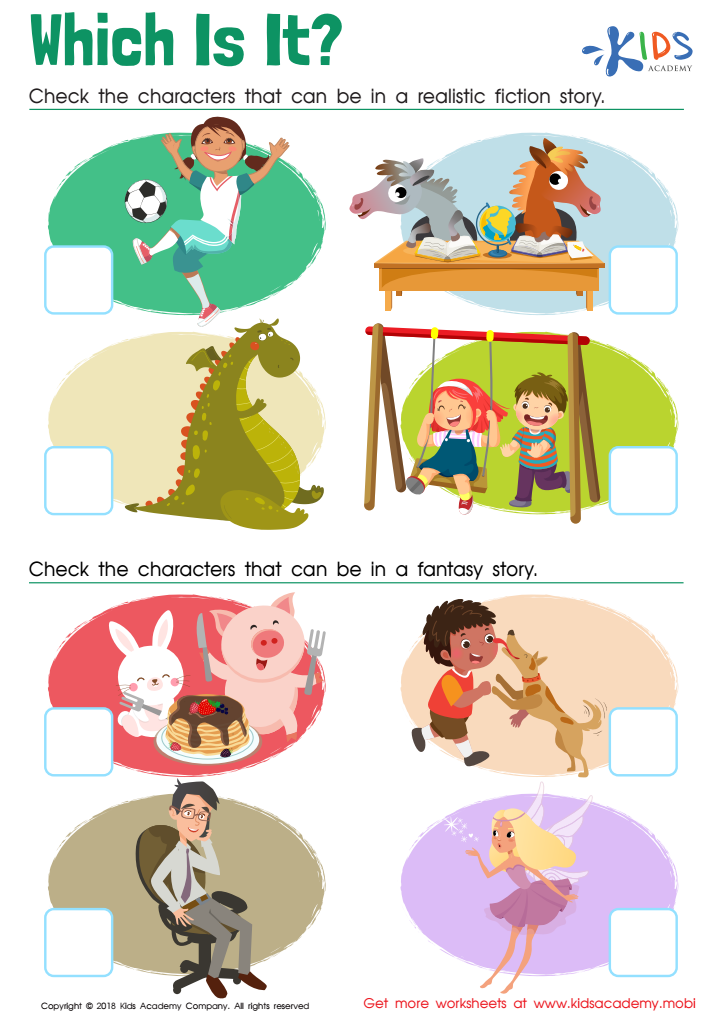
Which Is It? Worksheet







Comparing objects is a fundamental cognitive skill that serves as a foundation for mathematical understanding and problem-solving, especially crucial for children aged 5-9. At this tender age, children's minds are exceptionally receptive to learning through observation and hands-on activities. When parents or teachers engage young learners in comparing objects, be it by size, length, weight, or volume, they are fostering the development of critical thinking and analytical skills.
These comparisons aren't just about math; they are deeply interconnected with everyday decision-making and comprehending the world. For example, understanding that a larger box can hold more toys or that it's more suitable to wear a heavier jacket in winter helps kids navigate daily life efficiently and make informed choices. It nurtures their curiosity and encourages a methodical approach to exploring their surroundings.
Additionally, engaging children in tasks like sorting and categorizing enhances their ability to notice details and discern patterns, which are valuable for reading, writing, and broader scientific inquiry as they progress in their education. Encouraging comparisons lays the groundwork for later, more complex mathematical concepts, such as measurement, geometry, and data analysis, promoting a smoother transition into higher-level math and sciences.
Therefore, investing time and effort in these early-stage educational activities cultivates a profound and lasting intellectual curiosity and lays a solid educational foundation.








