
Critical thinking enhancement Normal Worksheets for Ages 5-9
4 filtered results
Difficulty Level
Grade
Age
-
From - To
Subject
Activity
Standards
Enhance your child's critical thinking skills with our engaging Normal Worksheets, designed specifically for children aged 5-9. These carefully crafted worksheets promote analytical reasoning, problem-solving abilities, and cognitive development through fun activities that challenge young minds. Kids will enjoy puzzles, scenario-based questions, and creative exercises that stimulate curiosity and independent thought. Our resources not only make learning enjoyable but also equip children with essential skills for academic success. Perfect for both home and classroom use, our worksheets encourage exploration and foster a love for learning. Empower your child today with our critical thinking enhancement materials!
Favorites
With answer key
Interactive
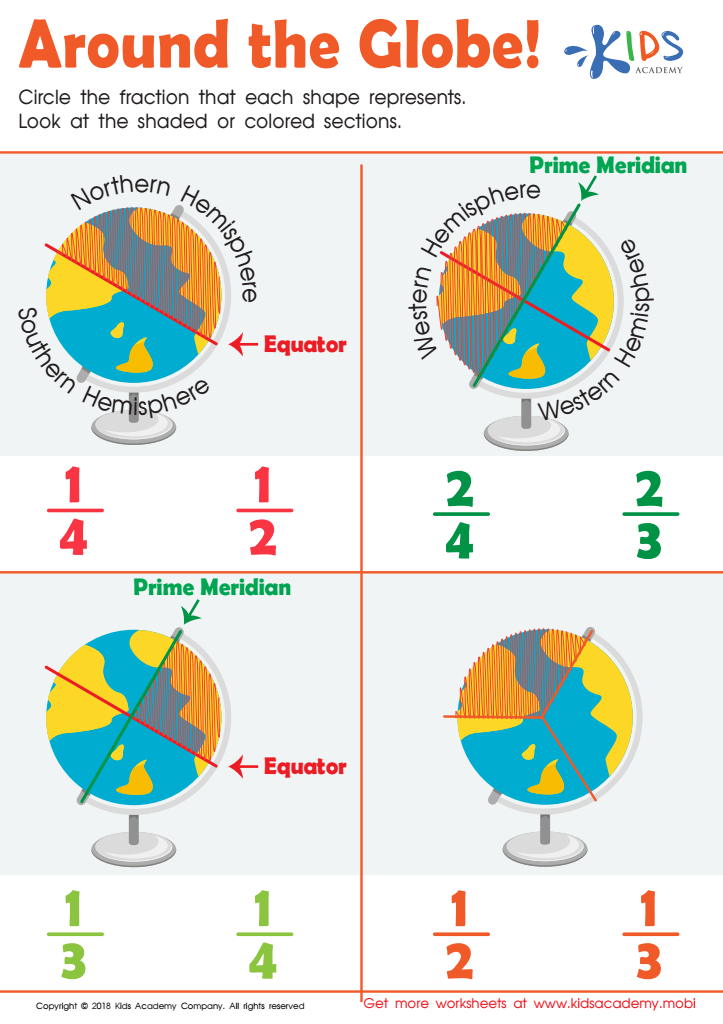
Around the Globe Worksheet
This worksheet introduces your students to the globe. Explain that it's a 3D representation of our planet, and highlight the Northern, Southern, Eastern and Western Hemispheres, plus the Equator and Prime Meridian. Then, have them circle the fractions associated with the shapes shown. Point out the shaded or colored sections for guidance.
 Assign to My Students
Around the Globe Worksheet
Worksheet
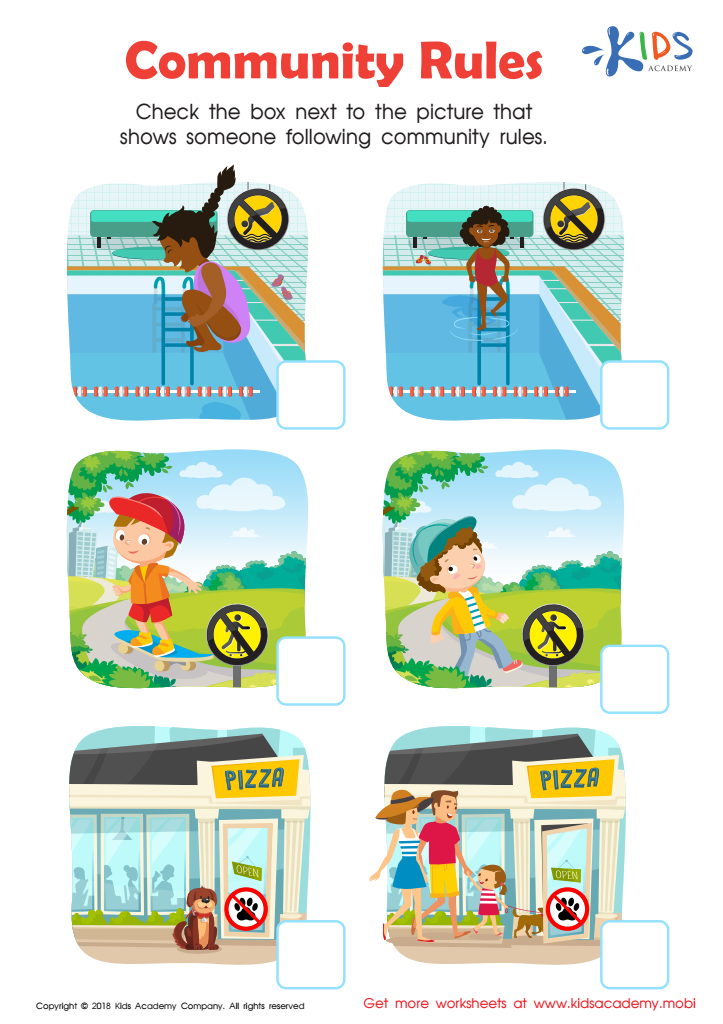
Community Rules Worksheet
Communities are where different people live, work and worship. They're made up of homes, schools, places of worship, businesses and other buildings. To create a healthy, functioning community, it's important for members to follow the rules and guidelines. Use this printout to teach kids about community rules. Ask them to check the box next to the picture that shows someone following them.
Community Rules Worksheet
Worksheet
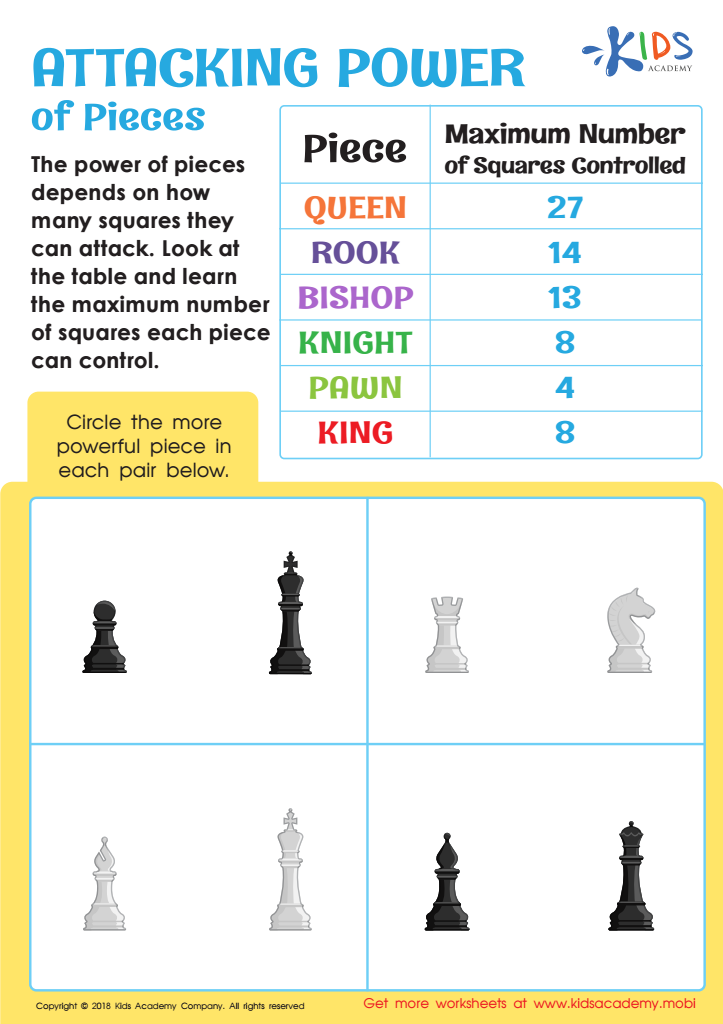
Attacking Power of Chess Pieces Worksheet
.
This worksheet introduces your child to chess pieces and how they move. Ask them to look at the table, noting the squares each piece can control. Then, have them circle the most powerful piece among each power pictured at the bottom. With this insight, your child will gain an understanding of a chess piece's power and how many squares it can attack.
Attacking Power of Chess Pieces Worksheet
Worksheet
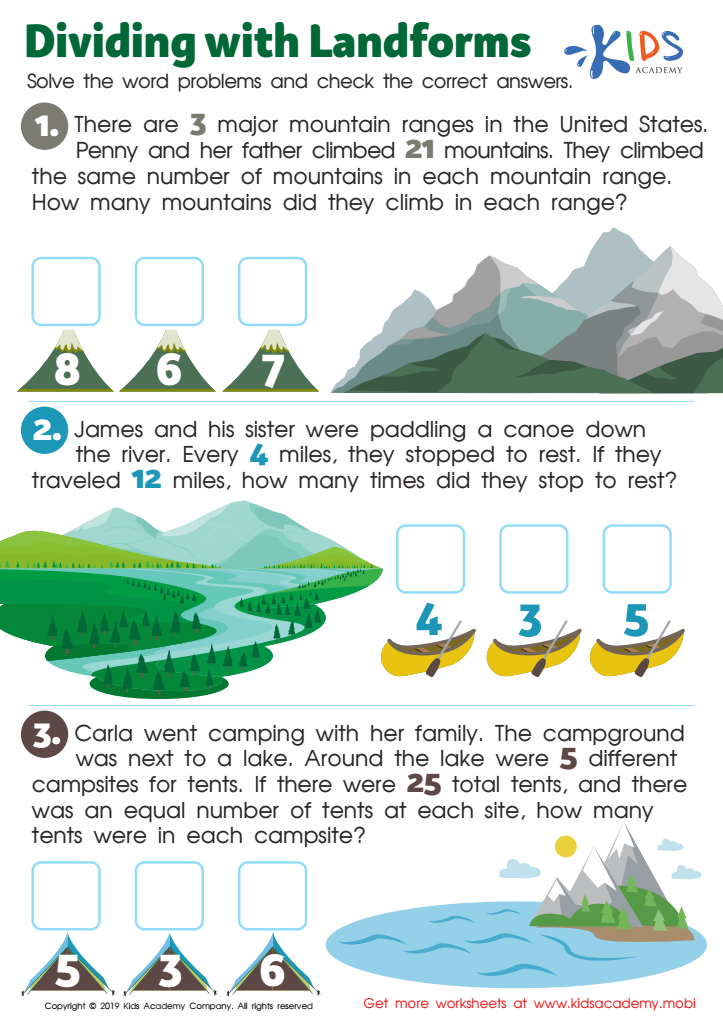
Dividing with Landforms
Mixing subjects to help your child learn is always nice. This worksheet combines landforms, problem-solving and division. The PDF highlights numbers, uses bold colors and provides pictures to help your child understand the questions and answer choices, making them feel empowered, not intimidated.
Dividing with Landforms
Worksheet
Join Kids Academy for Free
Who is primarily going to use this learning content?








Critical thinking is an essential skill for children ages 5-9, as it lays the foundation for their cognitive development and future learning. During this formative stage, children are naturally curious and eager to explore the world around them. By enhancing their critical thinking abilities, parents and teachers can nurture this curiosity and encourage children to analyze, evaluate, and synthesize information effectively.
Critical thinking helps children to question assumptions, make informed decisions, and solve problems creatively. It equips them with the skills to navigate a rapidly changing world where information is abundant, yet not always accurate. Emphasizing these skills at a young age fosters independence and resilience, enabling children to approach challenges with confidence and a questioning mindset.
Moreover, promoting critical thinking encourages collaboration and communication among peers, enhancing social skills essential for future interactions in school and life. It also builds a strong foundation for academic success, as critical thinking is integral to all subjects, from reading comprehension to science experiments.
In essence, investing in critical thinking enhancement from ages 5-9 prepares children not only for academic achievement but also for thoughtful, responsible citizenship, ultimately shaping them into competent, adaptive adults.








