Differentiating shapes Normal Worksheets for Ages 5-9
3 filtered results
-
From - To
Enhance your child’s understanding of shapes with our Differentiating Shapes Normal Worksheets designed for ages 5-9! These engaging worksheets provide an interactive and fun way for young learners to explore and distinguish between various shapes, including circles, squares, triangles, and more. Perfect for reinforcing classroom learning, these worksheets incorporate colorful visuals and age-appropriate activities that promote shape recognition and critical thinking skills. Parents and educators can seamlessly integrate these resources into lesson plans or use them as supplementary practice at home. Engage your little ones in shape exploration today and watch their confidence blossom through learning! Download now for a vibrant educational experience!
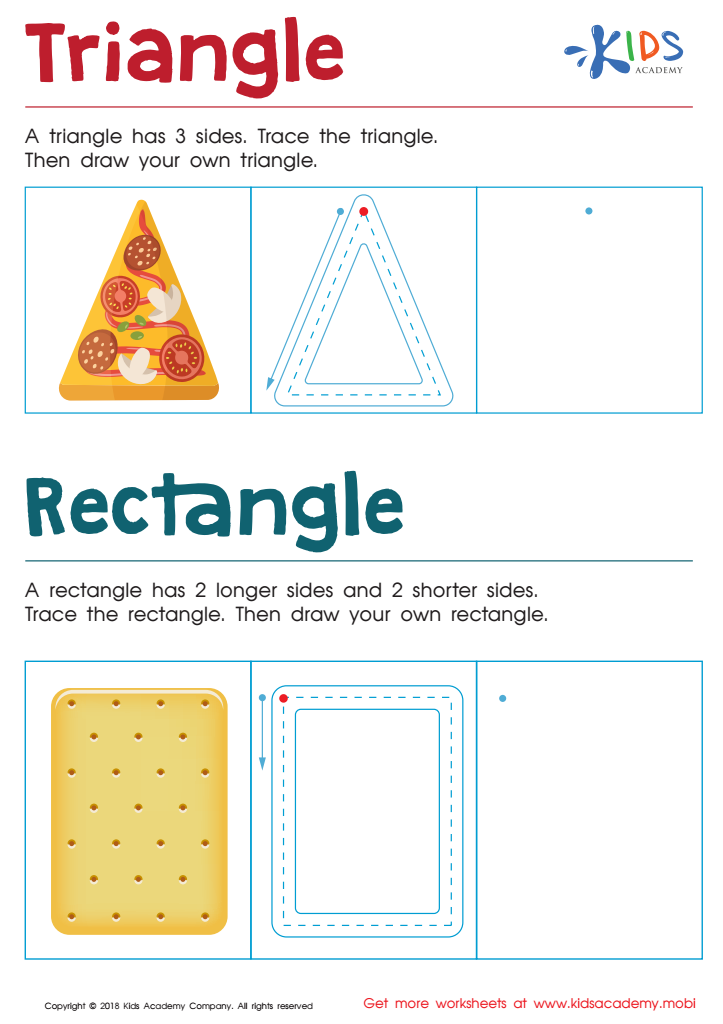
Triangle Rectangle Worksheet
 Assign to My Students
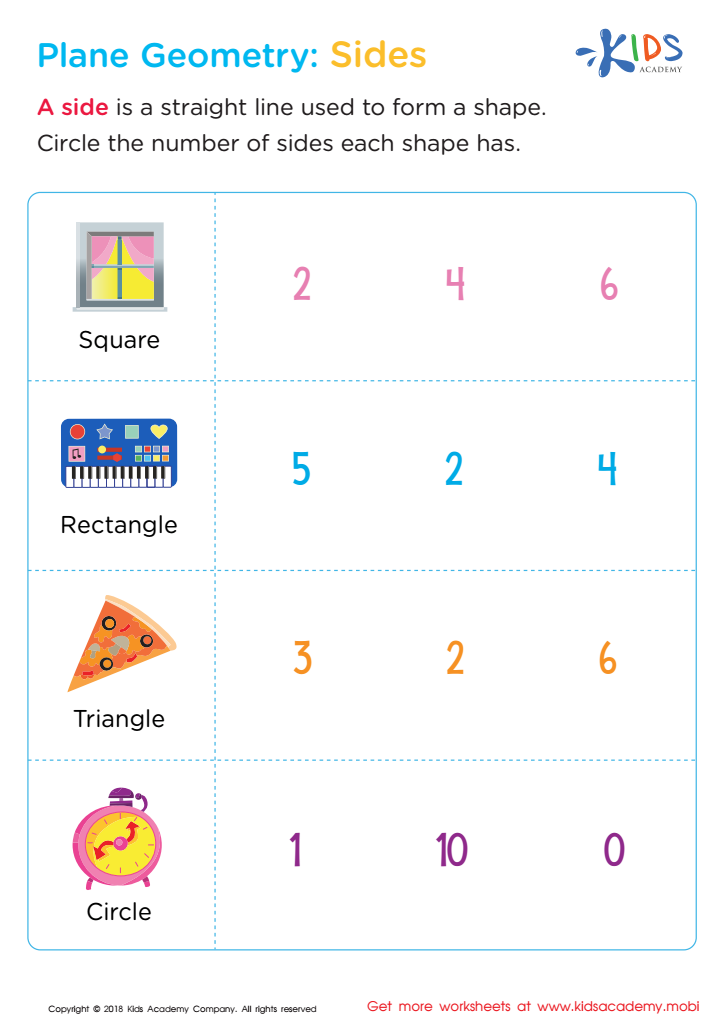
Plane Geometry: Sides Worksheet
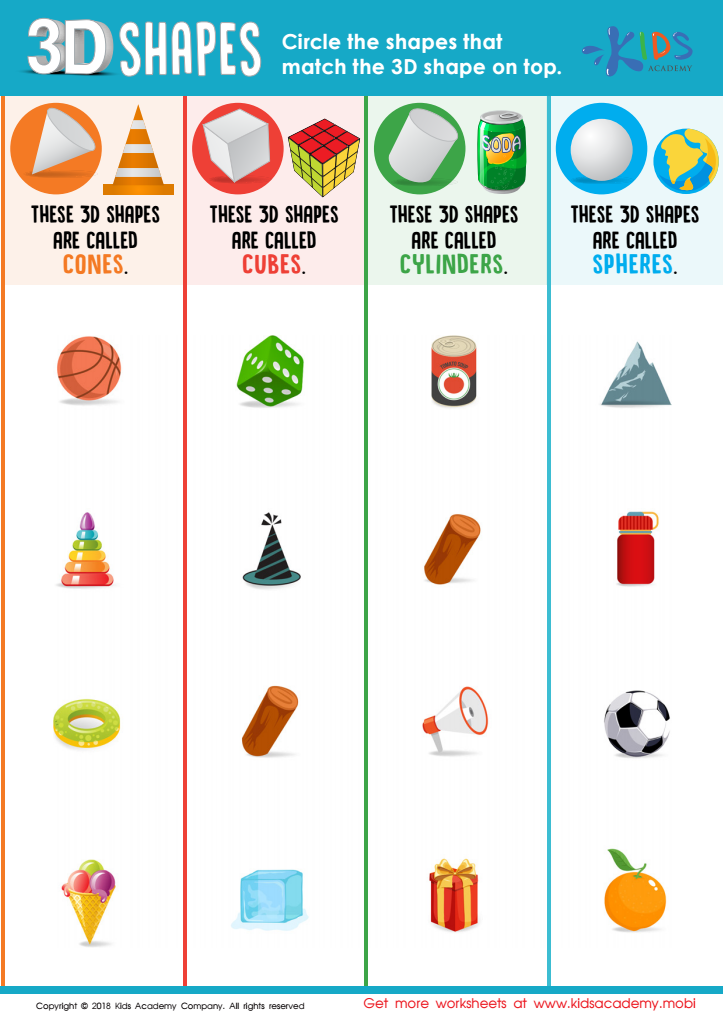
3D Shapes Worksheet




.jpg)



Differentiating shapes is crucial for children aged 5-9 as it serves as a foundational skill in both mathematics and cognitive development. This age group is particularly receptive to learning through visual and tactile experiences, making it an ideal time for engaging activities centered around shapes. By helping children identify, compare, and categorize shapes, parents and teachers can enhance spatial awareness, a skill linked to future success in subjects like geometry and even in everyday problem-solving.
Moreover, differentiating shapes nurtures critical thinking. When children learn to analyze characteristics such as sides, angles, and symmetry, they develop observational skills that are vital for academic growth. Activities involving shape differentiation can foster creativity; for instance, children can create patterns or models, integrating art with learning.
Parents and teachers also play a significant role in reinforcing these concepts, making it vital for them to engage with shape-related activities at home and in class. This synergy between home and school enriches children's learning experiences, allowing them to view shapes not just as abstract concepts, but as real-world elements involved in architecture, nature, and art.
Ultimately, fostering shape differentiation in early education supports holistic development, preparing children for more complex cognitive tasks in the future.








