Identifying story elements Normal Worksheets for Ages 5-9
3 filtered results
-
From - To
Explore our engaging "Identifying Story Elements" worksheets designed for children ages 5-9! These resources focus on fundamental storytelling components such as characters, settings, and plots, fostering critical thinking and comprehension skills. With colorful illustrations and age-appropriate activities, kids will enjoy learning how to dissect stories and understand their structure. Perfect for classroom or at-home use, our worksheets promote creativity and literacy—all while helping young learners become confident storytellers. Download your free worksheets today and watch as your child grows fascinated by the magic of stories! Start building a strong foundation in reading comprehension and analytical skills with our fun, educational materials.
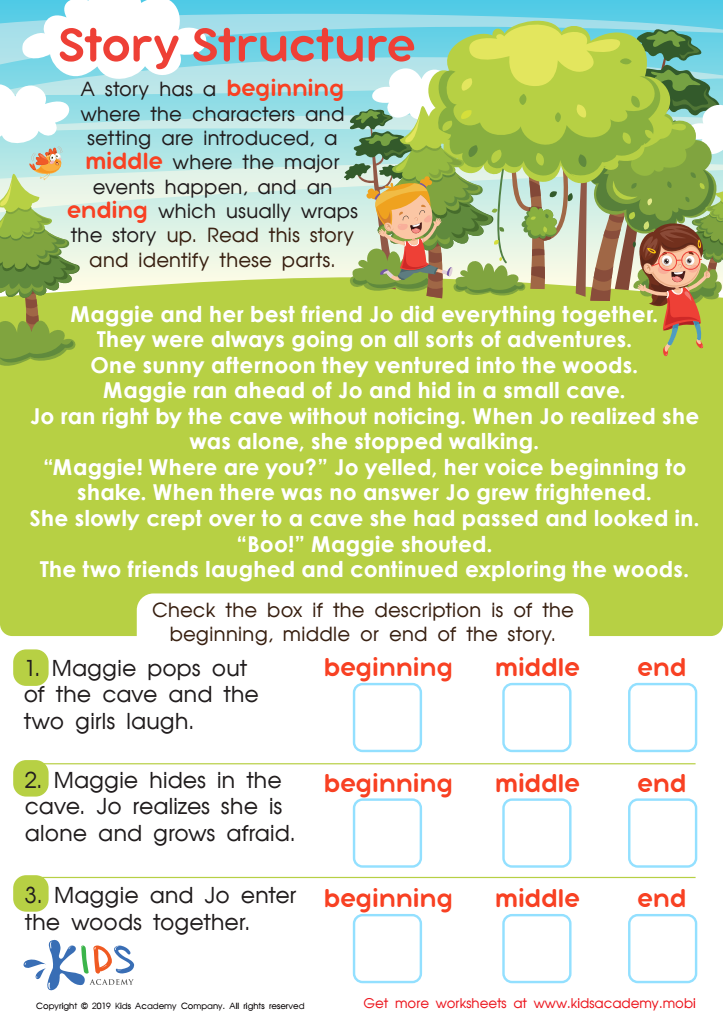
Story Structure Worksheet
 Assign to My Students
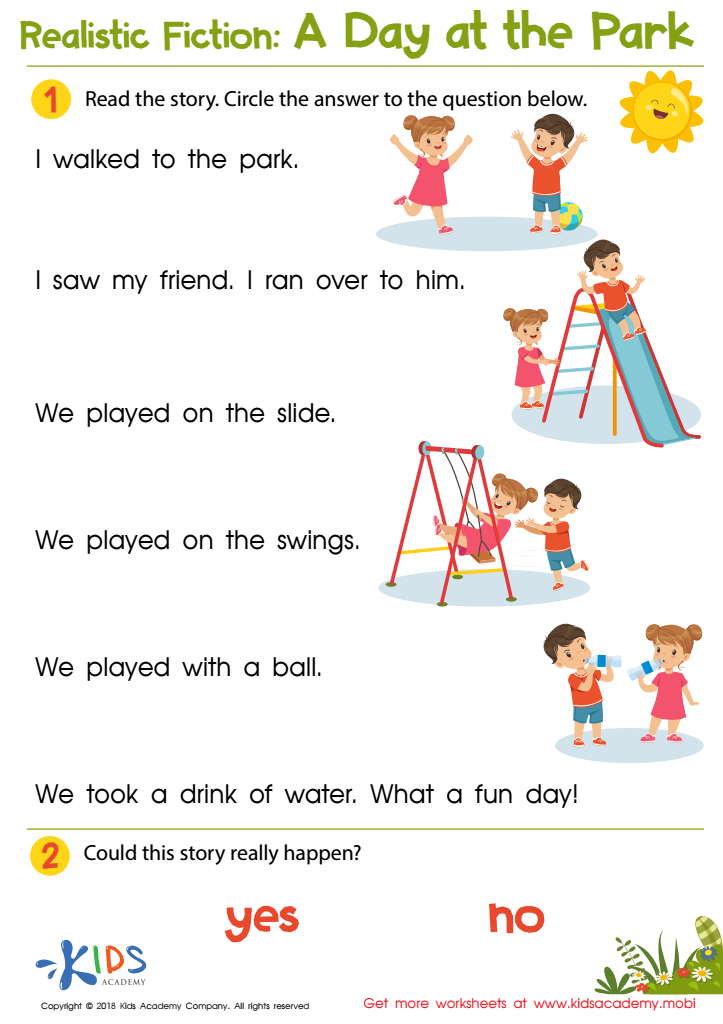
A Day at the Park Worksheet
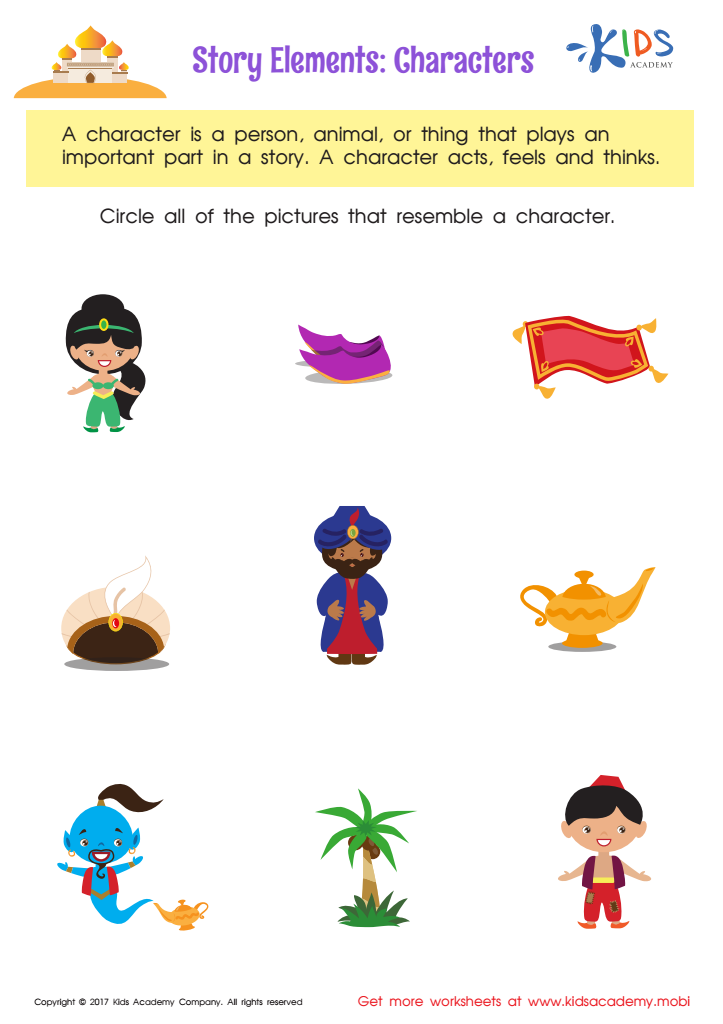
Story Elements Printable


.jpg)




Identifying story elements is crucial for young readers aged 5-9, and both parents and teachers play a vital role in this developmental process. Understanding story elements—such as characters, setting, plot, conflict, and resolution—enhances children's comprehension and engagement with narratives. When children can recognize these components, they are better equipped to retell and analyze stories, fostering critical thinking skills.
For parents, encouraging their children to identify these elements not only promotes literacy but also strengthens family bonds through shared storytelling experiences. Discussing characters and conflicts can lead to conversations about values and morals, enriching children’s emotional and social development.
Teachers, on the other hand, can use story elements as tools to support curriculum goals in literacy and language arts. Incorporating activities that promote recognition of these elements helps create a strong foundation for reading fluency, vocabulary expansion, and imaginative thinking. Additionally, understanding story structure prepares students for more complex texts as they progress in their education.
Ultimately, by focusing on story elements, parents and teachers provide children the skills they need to become confident readers and thinkers, paving the way for lifelong learning and a deeper appreciation of literature.








