
Improving observation skills Normal Worksheets for Ages 5-9
4 filtered results
Difficulty Level
Grade
Age
-
From - To
Subject
Activity
Standards
Enhance your child's observation skills with our engaging Normal Worksheets, specifically designed for ages 5-9. These interactive and colorful activities encourage children to pay attention to details, spot differences, and make connections, fostering critical thinking and cognitive development. Each worksheet offers an array of fun tasks, such as puzzles, matching games, and visual challenges that not only entertain but also cultivate essential skills for academic success. Perfect for at-home learning or classroom use, these worksheets are a valuable resource for parents and teachers alike, ensuring kids develop their observation skills while having a blast. Start your child's journey to keen observation today!
Favorites
With answer key
Interactive
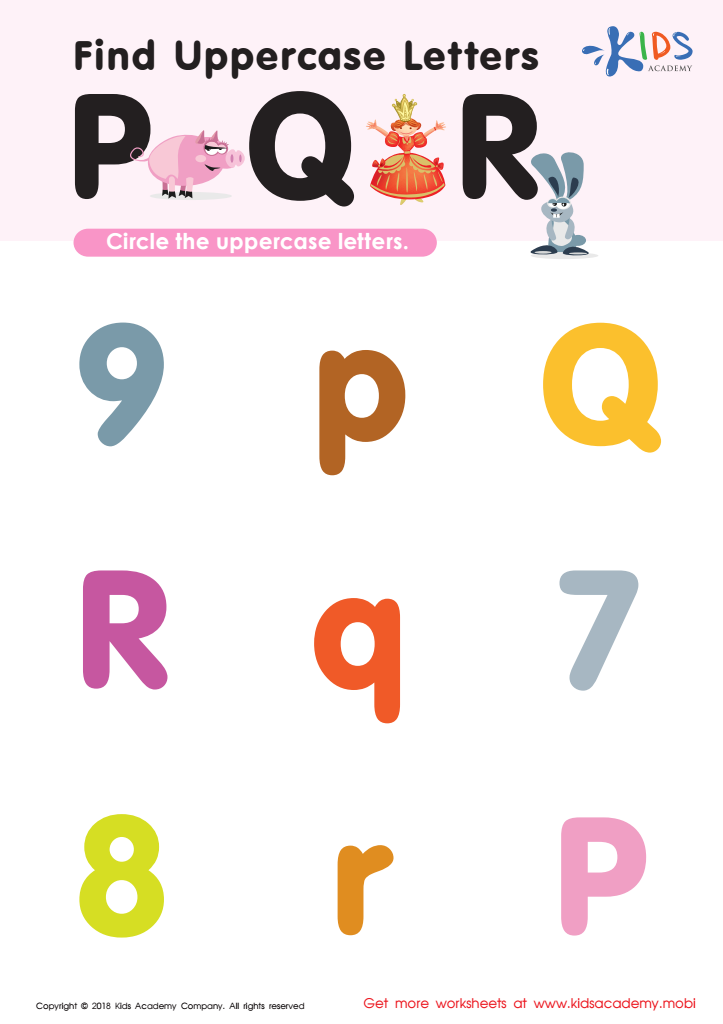
Find Uppercase Letters P, Q, and R Worksheet
Kids learn best when they can make connections. This free printable worksheet guides kids to solve the puzzle using the example letters P, Q, and R, supported by graphics and colors. Point out the page is pink, like the pig (which starts with P!) and solve by finding and circling the uppercase letters – be careful of the numbers!
 Assign to My Students
Find Uppercase Letters P, Q, and R Worksheet
Worksheet
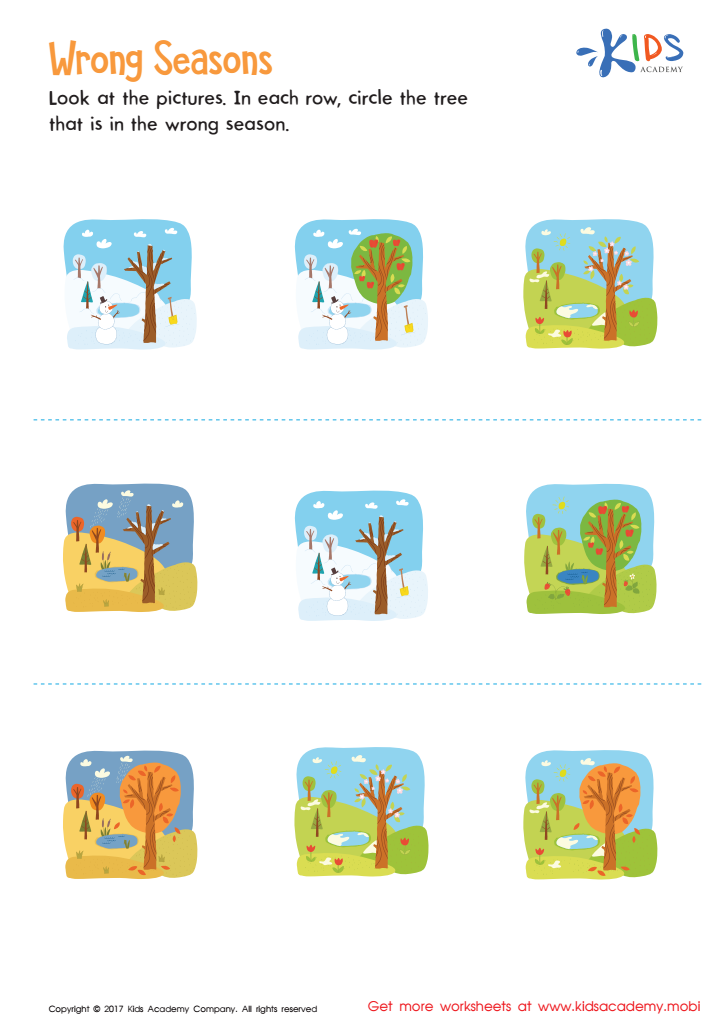
Wrong Seasons Worksheet
Uh oh! Trees are out of place in these vibrant pictures! Use this wrong seasons worksheet to help your child develop observation, analytical, and critical thinking skills. They'll learn about how the seasons change the surroundings, like trees. Print it out today to sharpen your child's eye for spotting the seasons!
Wrong Seasons Worksheet
Worksheet
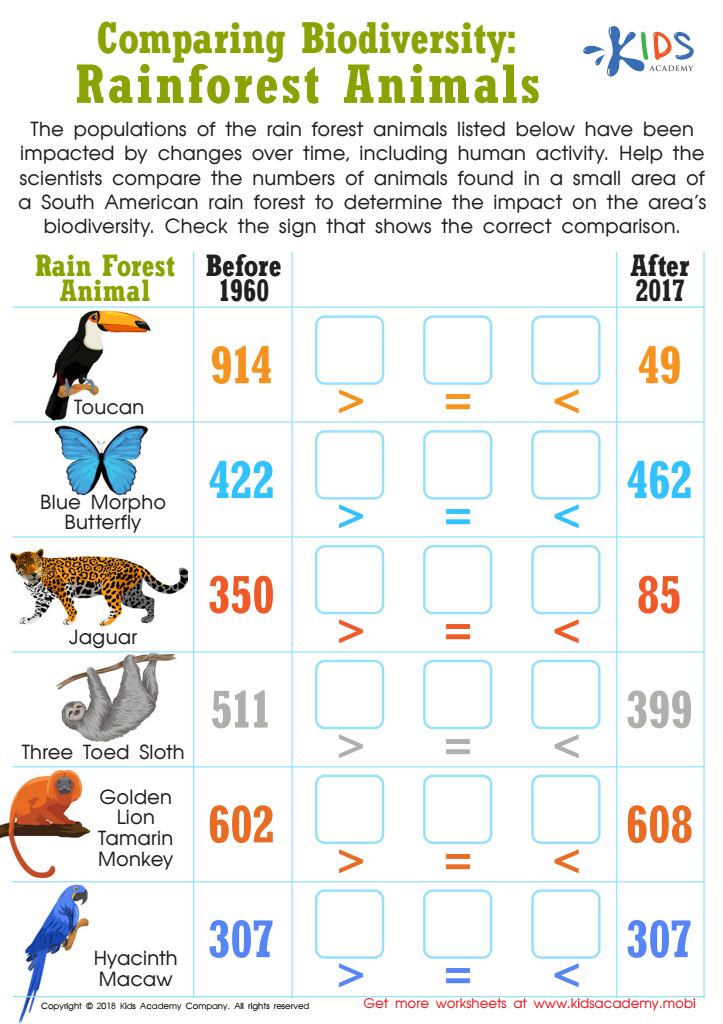
Comparing Biodiversity: Rainforest Animals Worksheet
This dynamic PDF worksheet combines fun and education. Kids will explore rainforest animals and biodiversity, comparing numbers from 1960 to 2017. They'll strengthen number sense and reasoning skills while learning about area biodiversity and its effects. A perfect mix of math and social science!
Comparing Biodiversity: Rainforest Animals Worksheet
Worksheet
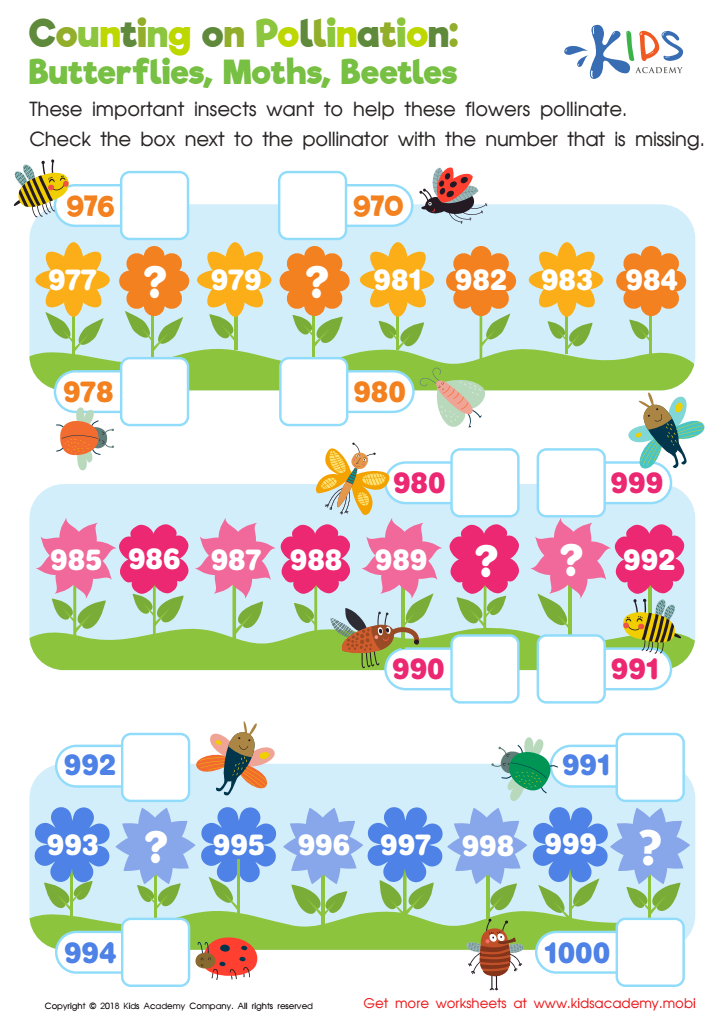
Counting on Pollination: Butterflies, Moths, Beetles Worksheet
A number line can help boost computation accuracy and efficiency. It can also be used with more advanced numbers. Help your child practice by having them identify missing numbers in sequences. This fun worksheet lets them help the pollinators in the process, as they strengthen their number sense.
Counting on Pollination: Butterflies, Moths, Beetles Worksheet
Worksheet
Join Kids Academy for Free
Who is primarily going to use this learning content?








Parents and teachers should prioritize improving observation skills for children aged 5-9 as these skills are crucial for cognitive and social development. This age group is characterized by rapid learning, curiosity, and the strong desire to explore the world around them. Enhanced observation skills allow children to notice details, patterns, and differences in their environment, fostering critical thinking and problem-solving abilities.
Moreover, strong observation skills can aid in social interactions by enabling children to read body language, facial expressions, and contextual cues, promoting empathy and effective communication. This lays the foundation for healthy relationships and collaboration with peers.
Additionally, observation is a key component of early childhood education, feeding into subjects like science where students learn through exploration and inquiry. When children learn to observe closely, they become more engaged learners, connecting their observations with knowledge and experiences.
Finally, developing observation skills can boost confidence and independence, as children gain the ability to navigate their surroundings and articulate their discoveries. By emphasizing the importance of observational skills, parents and teachers empower children to become better learners, communicators, and problem-solvers, skills that are vital for their future success in any endeavor.








