Lowercase letter writing Normal Worksheets for Ages 5-9
3 filtered results
-
From - To
Boost your child's handwriting skills with our Lowercase Letter Writing Normal Worksheets designed for ages 5-9. Perfect for early learners, these engaging worksheets help children master the basics of writing lowercase letters through fun and interactive activities. Featuring clear instructions, attractive visuals, and ample practice space, these worksheets create a solid foundation for legible handwriting. Whether your child is just starting or looking to improve, our expertly crafted worksheets make learning enjoyable and effective. Encourage confidence and skill in young writers with our tailored lowercase letter writing resources today!
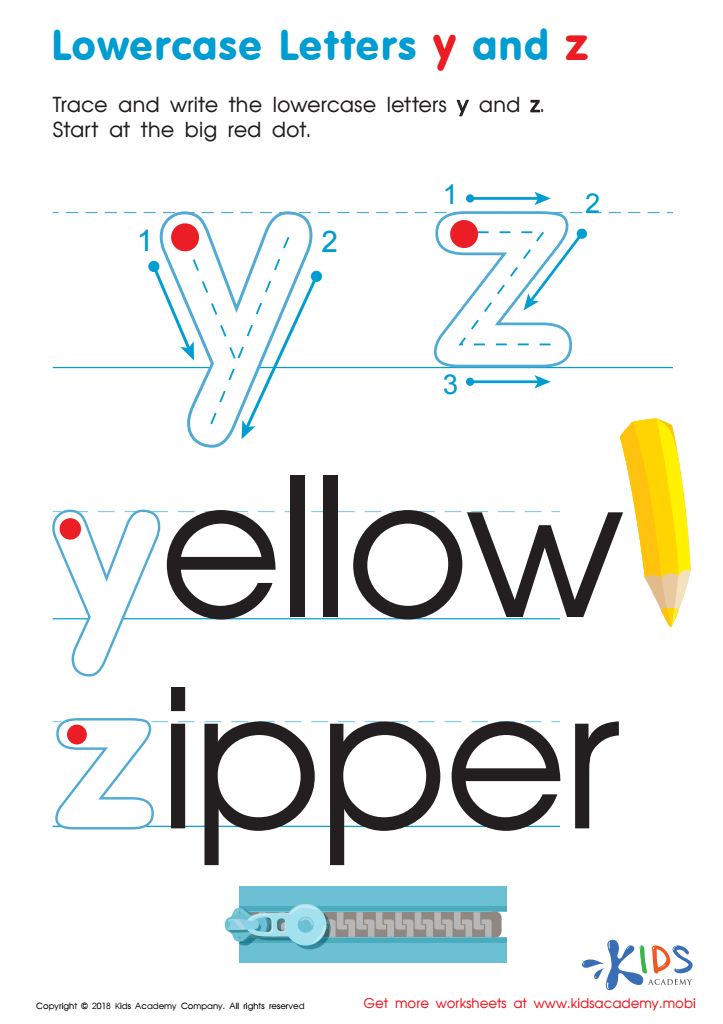
Lowercase Letters y z Worksheet
 Assign to My Students
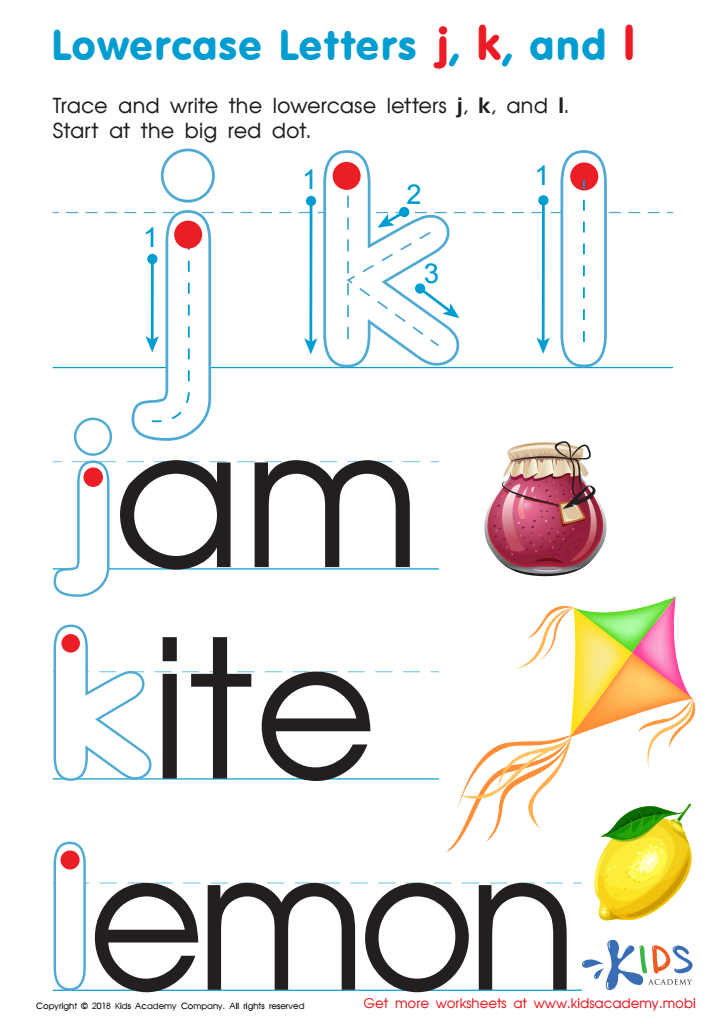
Lowercase Letters j k l Worksheet
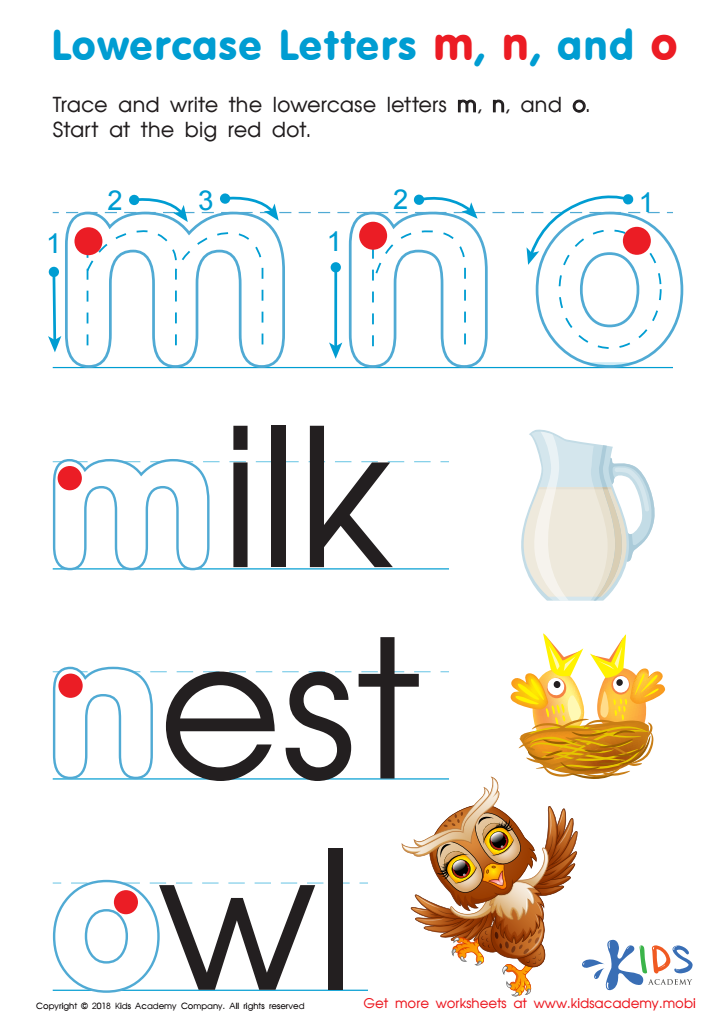
Lowercase Letters m n o Worksheet







Parents and teachers should prioritize teaching lowercase letter writing to children aged 5-9 because it lays the foundation for effective communication skills and academic success. When children learn how to write lowercase letters properly, they develop fine motor skills, hand-eye coordination, and muscle memory, which are important for all forms of handwriting. Lowercase letters are encountered more frequently in text, making up about 95% of written language, so proficiency in writing them enables smoother reading and writing experiences.
Moreover, mastering lowercase letter writing contributes to overall literacy. As children become comfortable writing in lowercase, they can more easily recognize these letters in books and other print materials. This familiarity facilitates reading fluency, comprehension, and the ability to express their thoughts clearly on paper. Inconsistent or incorrect handwriting can slow down a child's writing speed and impede their ability to keep up in the classroom, potentially leading to frustration or a lack of confidence.
Furthermore, early mastery of lowercase letter writing nurtures good study habits and attention to detail, helping children to feel proud of their accomplishments. By providing appropriate practice tools and encouragement, parents and teachers are equipping children with necessary skills that will benefit them not just in early education, but throughout their academic journey and beyond.








