Phonics comprehension Normal Worksheets for Ages 5-9
3 filtered results
-
From - To
Enhance your child's reading skills with our Phonics Comprehension Normal Worksheets, designed specifically for ages 5-9. These engaging worksheets focus on developing phonemic awareness and reading comprehension through fun activities. Ideal for early learners, each worksheet includes exercises that promote recognition of sounds, blending techniques, and simple storytelling prompts. Our user-friendly format encourages independent practice, allowing children to build confidence in their abilities. Perfect for home study or classroom use, these resources make learning phonics enjoyable and effective. Unlock the joy of reading with our thoughtfully crafted worksheets that cater to the unique learning needs of young readers. Start exploring today!
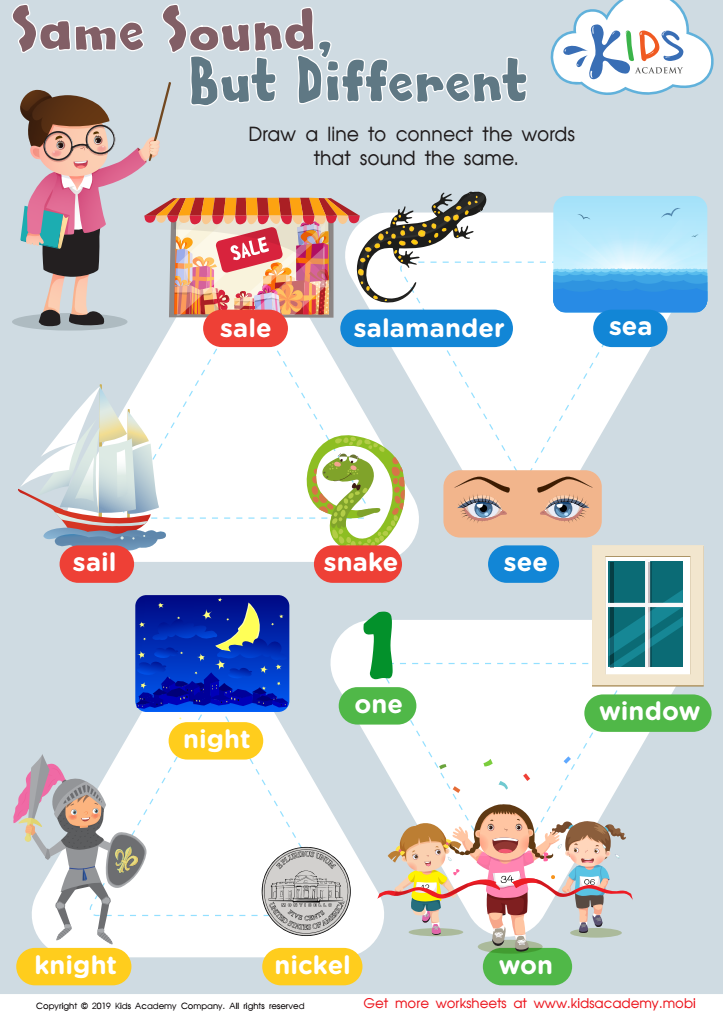
Sound Different Worksheet
 Assign to My Students
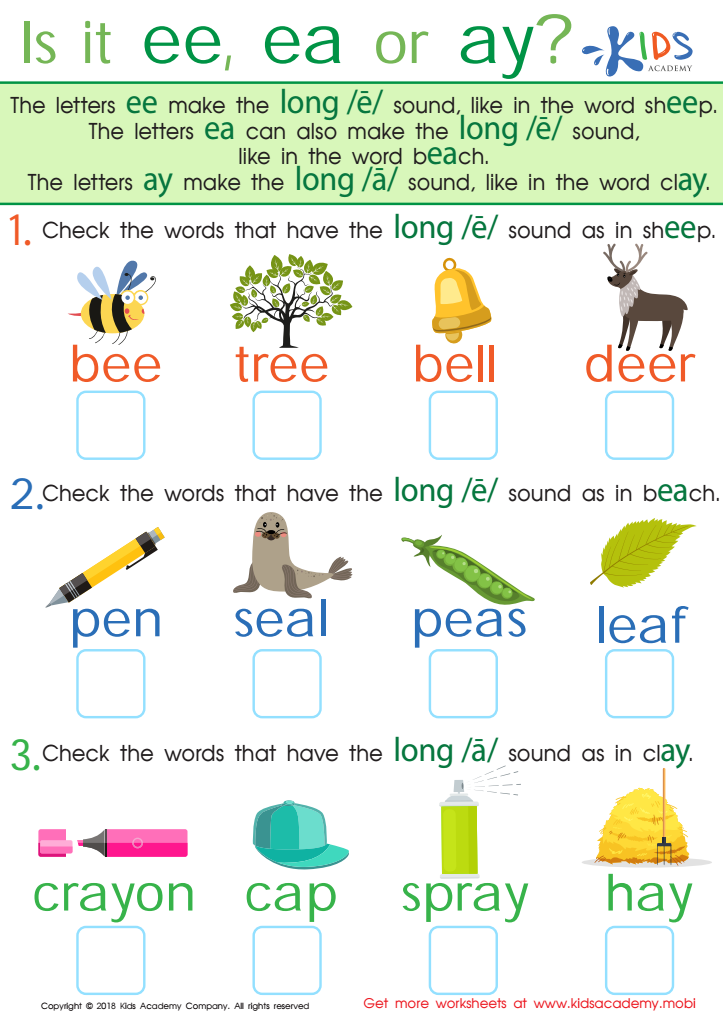
Is It EE, EA, or AY? Worksheet
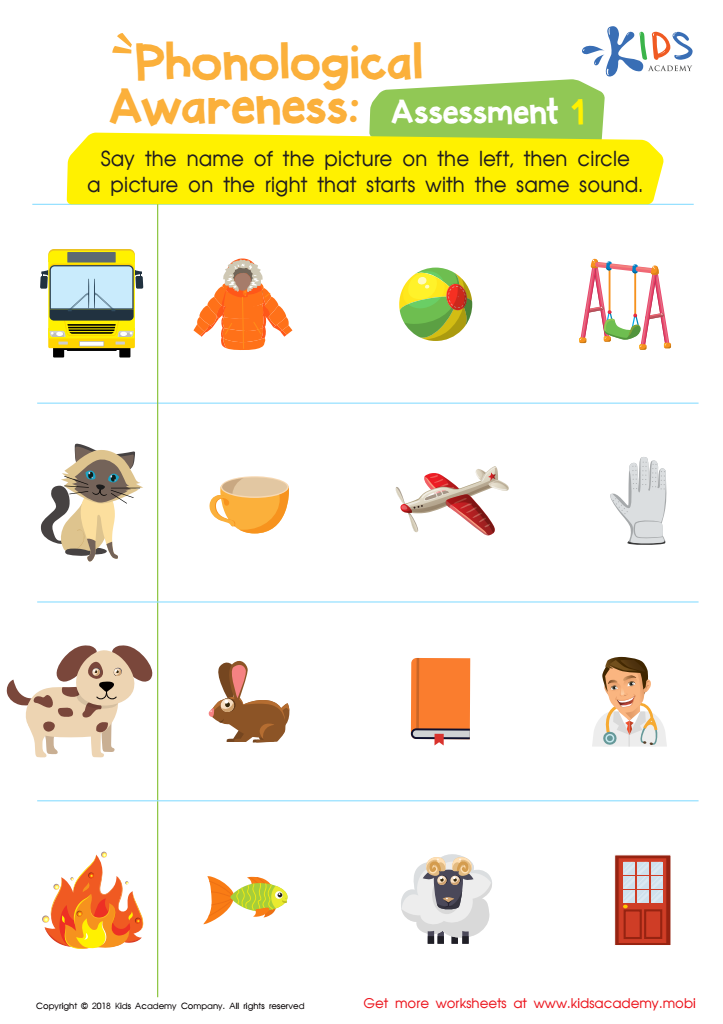
Phonological Awareness: Assessment 1 Worksheet








Phonics comprehension is a crucial aspect of early literacy that parents and teachers should prioritize for children aged 5 to 9. Understanding phonics—the relationship between letters and sounds—forms the foundation for reading and writing skills. When children grasp phonics, they can decode new words, leading to improved reading fluency and comprehension.
This age group is pivotal; children are building their language skills and starting to navigate more complex texts. A solid grounding in phonics not only enhances their reading abilities but also fosters a love for learning. It opens doors to tackling challenging vocabulary and understanding text meaning, which is essential across all subjects.
Moreover, phonics comprehension can directly impact a child's confidence in academics. Success in reading boosts self-esteem, encouraging children to engage more actively in classroom discussions and collaborative projects. Conversely, difficulties with phonics can lead to frustration and a reluctance to participate.
In summary, supporting phonics comprehension equips children with necessary tools for school success and lifelong learning. Parents and teachers collaborating in this journey can create a nurturing environment where children thrive academically and develop a passion for reading.








