Prefix understanding Normal Worksheets for Ages 5-9
3 filtered results
-
From - To
Welcome to our engaging Prefix Understanding Normal Worksheets for Ages 5-9! These worksheets are designed to help young learners grasp the concept of prefixes, enhancing their reading and vocabulary skills. Each activity features age-appropriate exercises that spark curiosity and encourage critical thinking. Children will enjoy a variety of interactive tasks, including matching prefixes with root words and constructing new words, all while building confidence in their language abilities. Our colorful and easy-to-follow formats make learning fun and accessible. Perfect for classroom use or at-home practice, these worksheets are an excellent resource for fostering foundational literacy skills in early education.
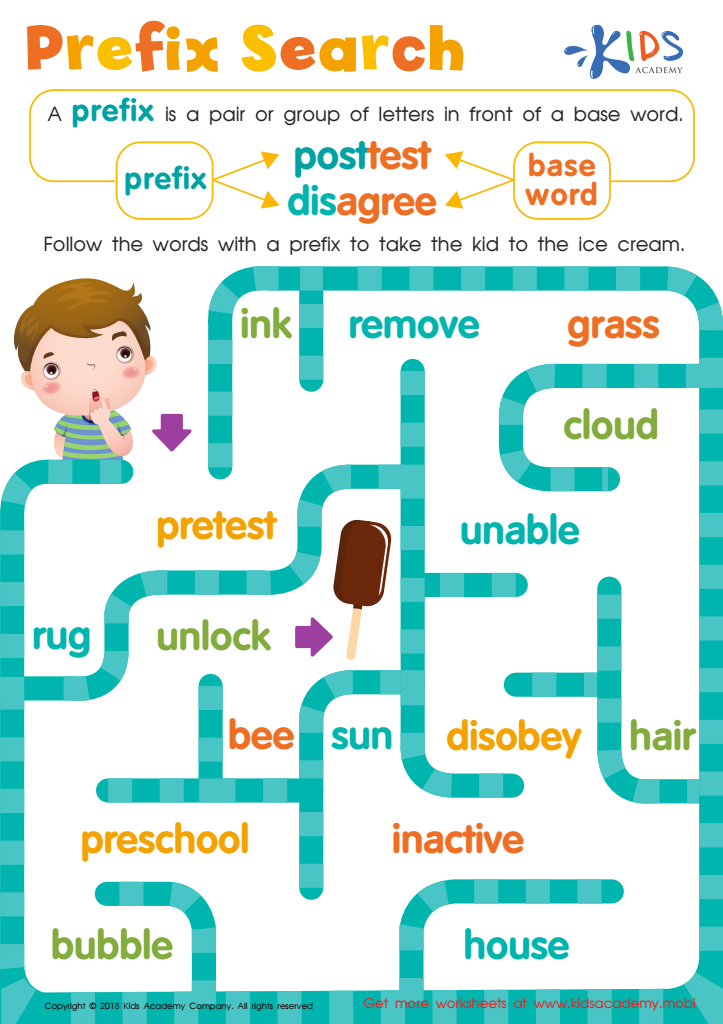
Reading: Prefix Search Worksheet
 Assign to My Students
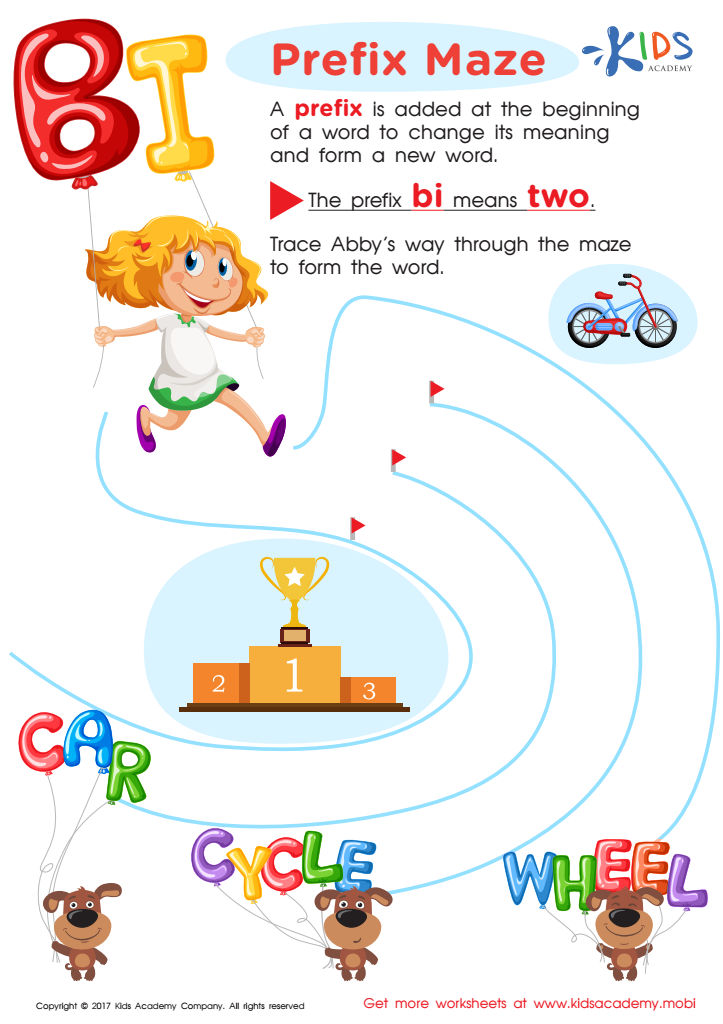
Prefix Bi Words Worksheet
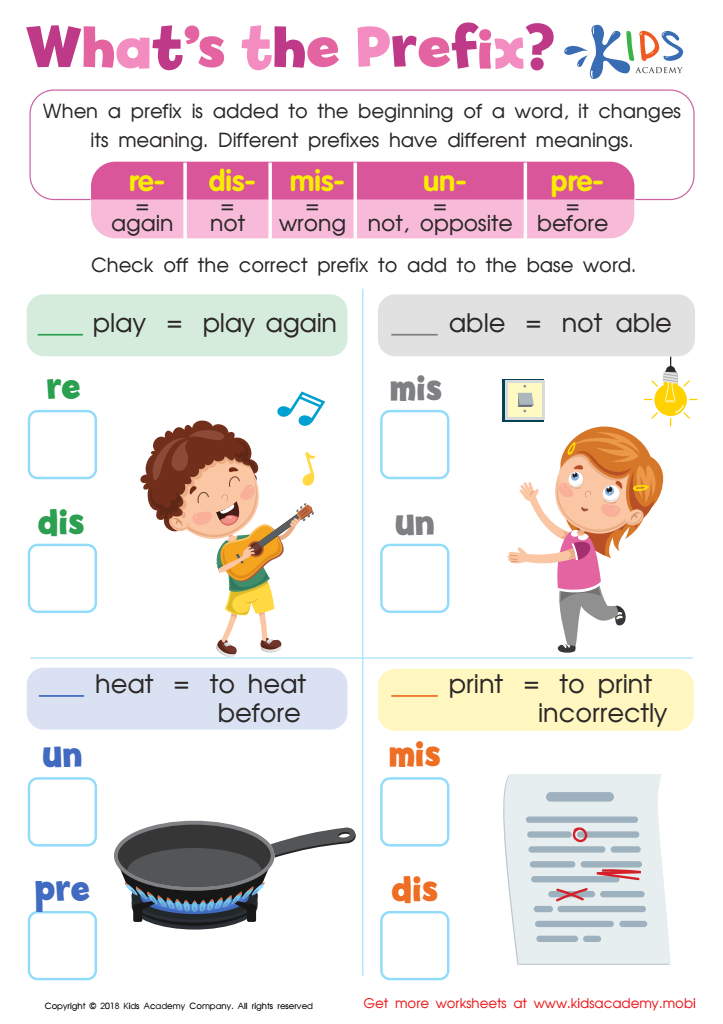
Reading: What Is the Prefix Worksheet







Understanding prefixes is crucial for children aged 5-9 as it lays a foundational skill for reading and language development. Prefixes, the letter combinations added to the beginning of root words, change the meaning of words and help young learners decode new vocabulary. This skill enhances their reading comprehension, making it easier for them to approach unfamiliar texts.
Additionally, knowledge of prefixes empowers children to expand their vocabulary. For instance, understanding the prefix “un-” allows them to grasp the meanings of words like “happy” becoming “unhappy.” This understanding fosters critical thinking and encourages students to experiment with language creatively, improving both their writing and communication skills.
Moreover, early engagement with prefixes can spark a love for language, promoting a lifelong interest in words and reading. It also lays the groundwork for more complex linguistic concepts in later grades, aligning with educational goals.
For parents and teachers, promoting prefix understanding cultivates confident readers and communicators, preparing children for academic success. By encouraging discussions and exploration of word structures, they can make language learning fun and interactive, ultimately shaping articulate individuals equipped with essential literacy skills for the future.








