Reading clocks Normal Worksheets for Ages 5-9
3 filtered results
-
From - To
Unlock the joy of learning with our “Reading Clocks Worksheets” designed for children ages 5-9! These engaging printable worksheets help young learners master the art of telling time, enhance their mathematical skills, and develop a strong foundation in time management. Featuring colorful visuals and interactive activities, students will practice identifying clock faces, understanding hours and minutes, and solving time-related problems. Perfect for use in the classroom or at home, our resources offer a fun, hands-on approach to learning. Explore the world of time-telling and watch your child's confidence grow as they navigate time with ease! Start their journey today!
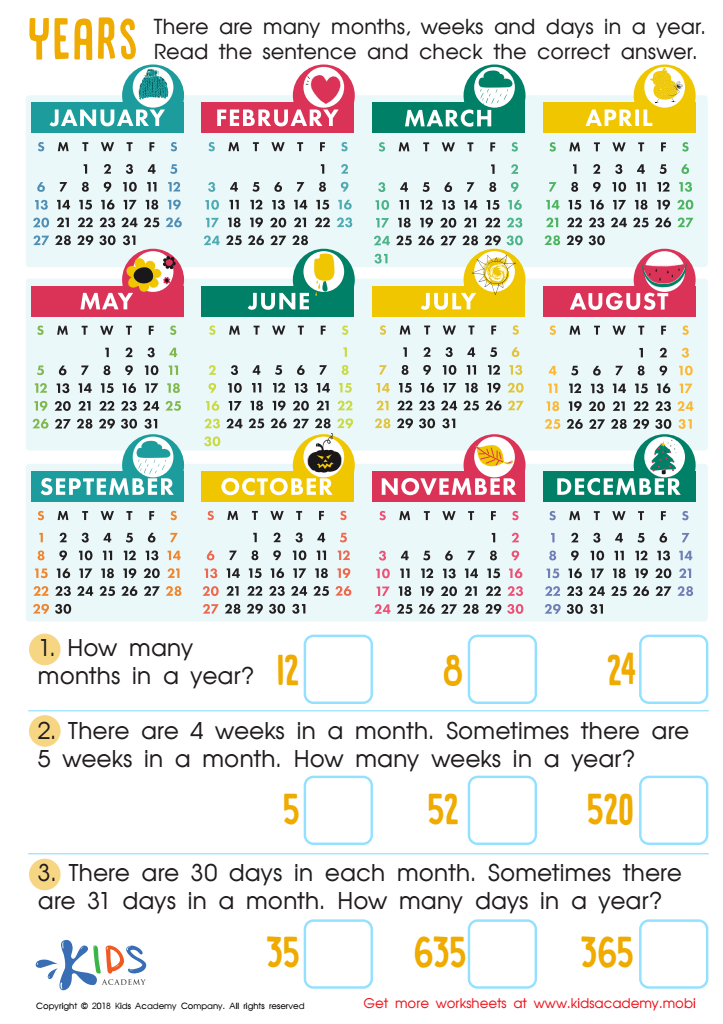
Years Worksheet
 Assign to My Students
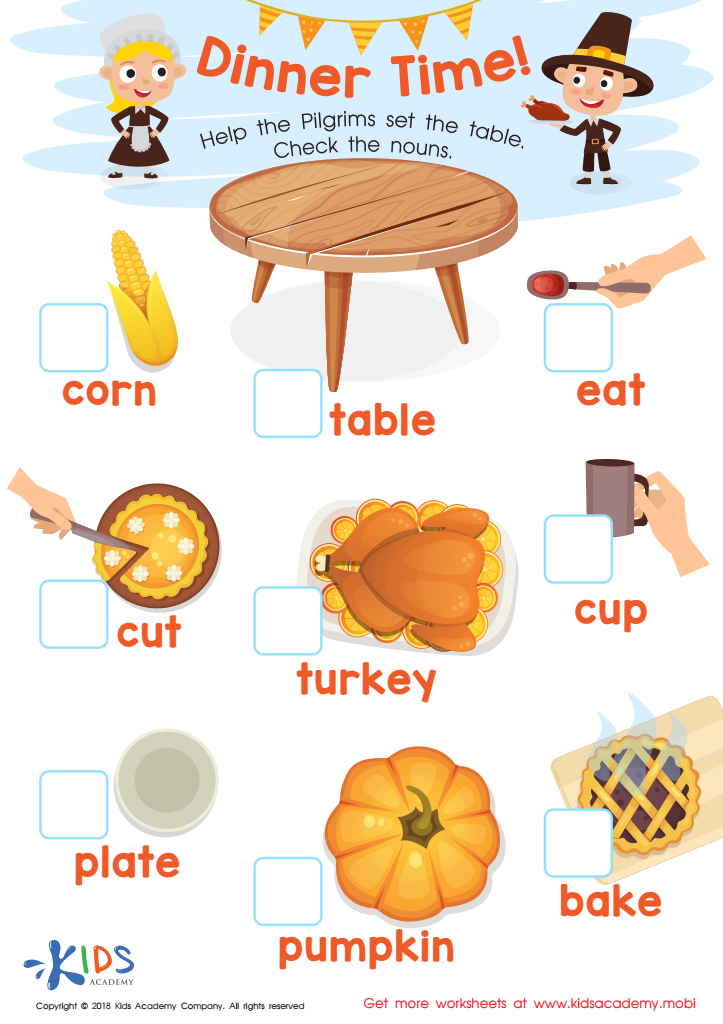
Dinner Time! Worksheet
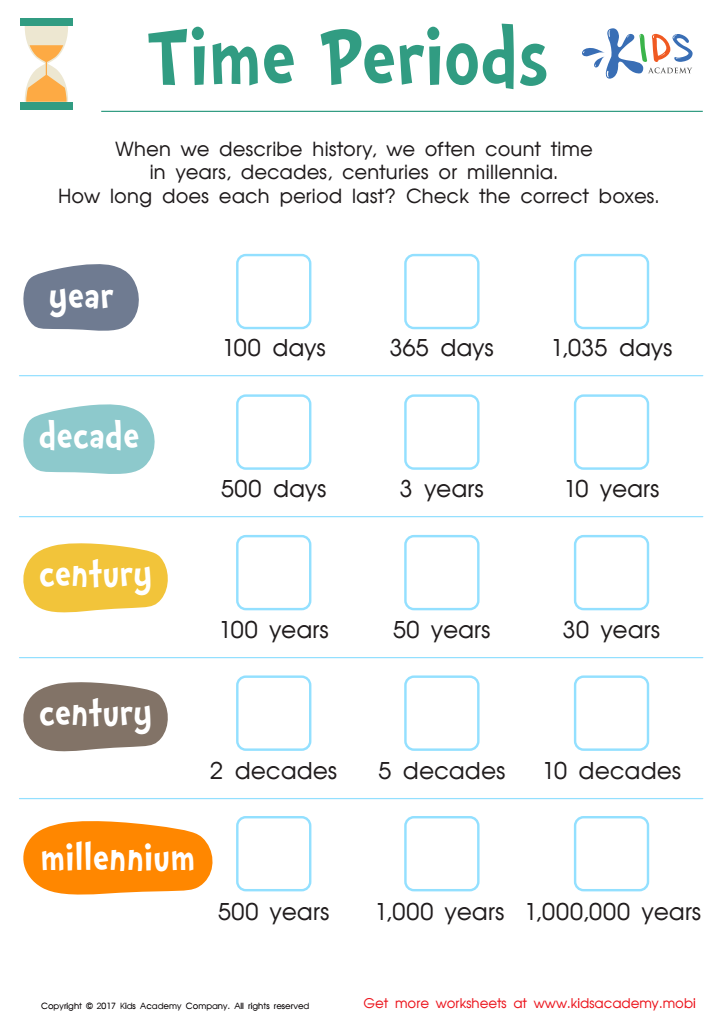
Time Periods Worksheet





.jpg)
Teaching children how to read clocks is an important skill that lays the foundation for time management and daily routines. For children aged 5-9, understanding how to tell time not only enhances their cognitive development but also empowers them to become more independent. Recognizing hours and minutes helps children grasp the concept of sequences, enabling them to understand the passage of time and to categorize events accordingly.
Moreover, learning to read analog clocks encourages critical thinking and problem-solving. It inspires curiosity as children start connecting time with various aspects of their lives, like homework, meals, and playtime. This application enhances their mathematical skills, as they learn to measure and conceptualize time intervals.
For parents and teachers, fostering this skill helps in creating structured environments where routines can be effectively established. It teaches children responsibility and accountability, as they begin to monitor their own activities and commitments. Additionally, understanding time aids in reducing anxiety related to schedules, fostering a sense of security. Ultimately, imparting the ability to read clocks equips children with essential life skills that carry on into adulthood, making it a fundamental area of focus in early education.








