Spatial Orientation Normal Worksheets for Ages 5-9
4 filtered results
-
From - To
Explore our collection of Spatial Orientation Normal Worksheets designed for children aged 5-9! These engaging worksheets help young learners develop essential spatial awareness skills through fun activities and exercises. By working on identifying positions, directions, and relationships between objects, kids enhance their problem-solving abilities and critical thinking. Our user-friendly worksheets cater to various learning styles, making them ideal for classrooms and home learning. Whether your child is tracing, matching, or completing puzzles, they will build confidence in their spatial reasoning. Download our Spatial Orientation worksheets today and empower your child to navigate their world with ease and precision!
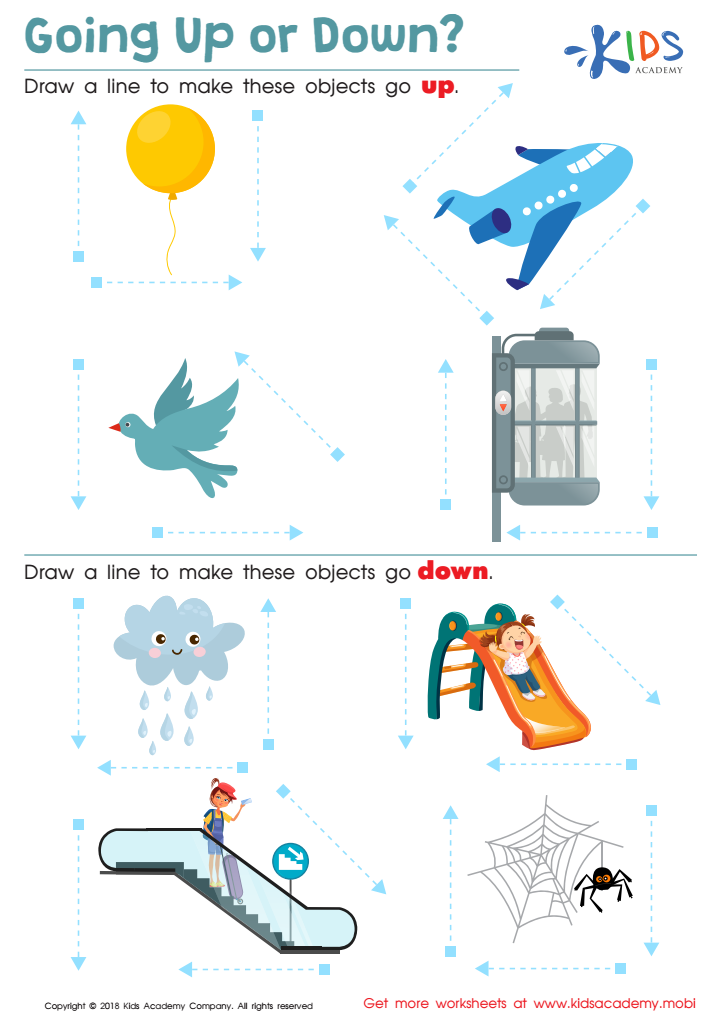
Going up or Down? Worksheet
 Assign to My Students
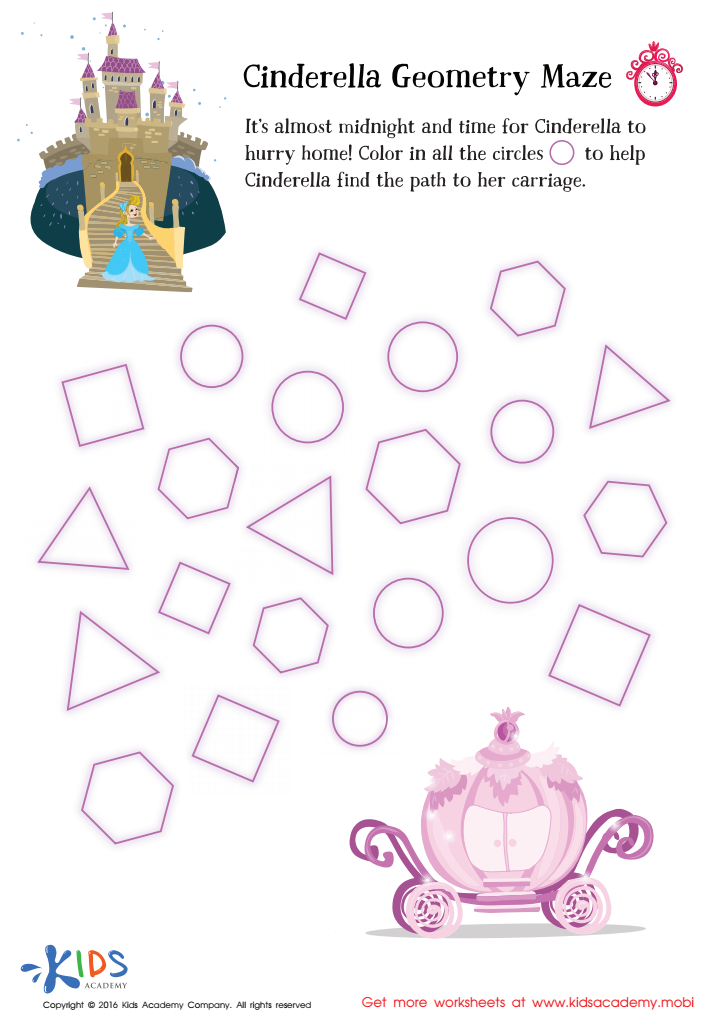
Cinderella Geometry Maze Worksheet
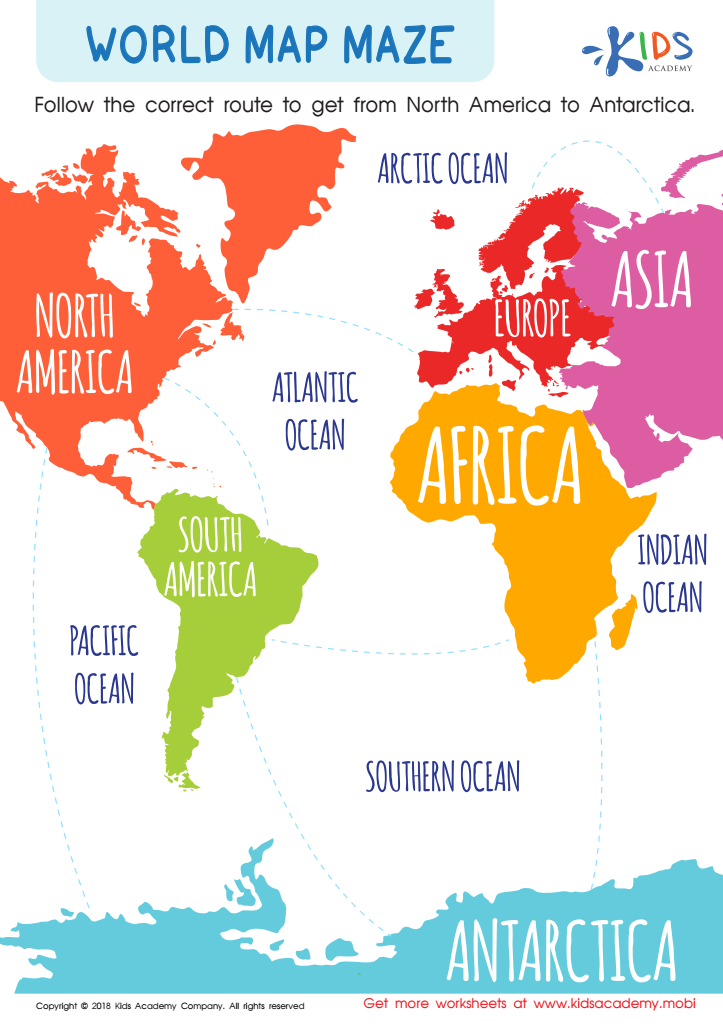
World Map Maze Worksheet
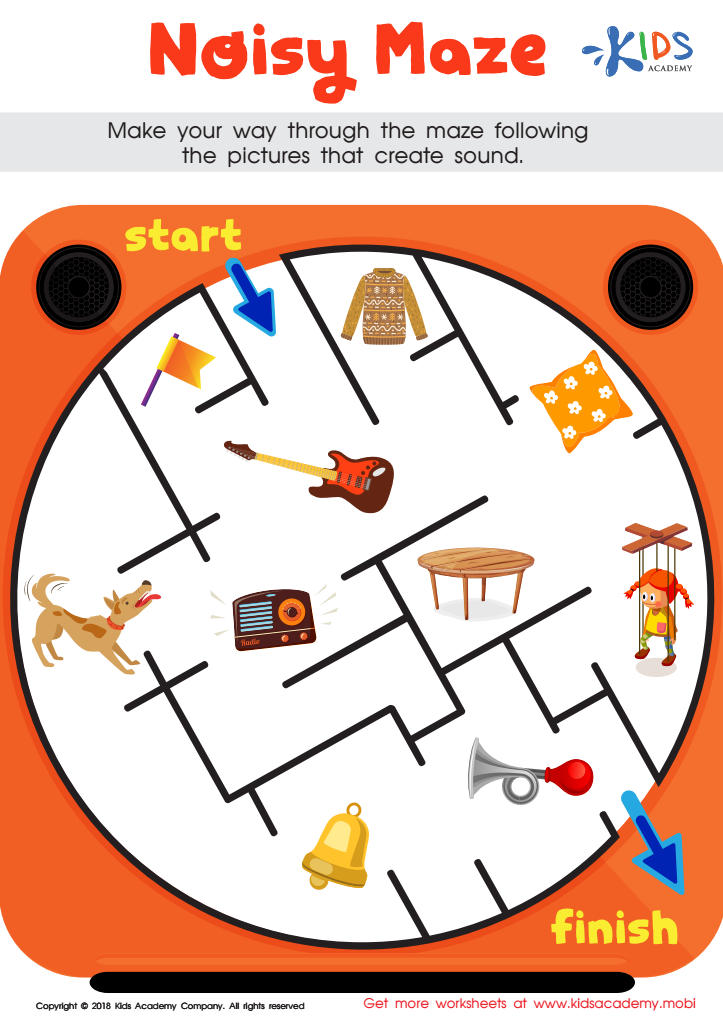
Noisy Maze Worksheet






Spatial orientation skills are crucial for children aged 5 to 9 as they form the foundation for navigating the world and developing other cognitive abilities. During this period, children's understanding of space, distance, and direction significantly impacts their learning and daily activities. Strong spatial orientation enhances skills in mathematics—helping children comprehend shapes, measurement, and geometry. These skills are not only vital in academic contexts but also in practical situations, such as reading maps or understanding spatial relationships in games and sports.
Moreover, spatial orientation facilitates the development of fine motor skills and coordination, essential for tasks such as writing, drawing, and participating in physical activities. For parents and teachers, nurturing these skills can lead to increased confidence and independence in children, fostering a sense of accomplishment.
Encouraging activities that enhance spatial awareness—such as building with blocks, engaging in puzzles, or participating in outdoor exploration—can significantly benefit children's overall growth. By prioritizing spatial orientation development, parents and teachers can support children's cognitive and social emotional development, ensuring they thrive in various aspects of life. Ultimately, investing in these skills early on lays the groundwork for lifelong learning and problem-solving abilities.








