Understanding biodiversity Normal Worksheets for Ages 5-9
4 filtered results
-
From - To
Discover the wonders of biodiversity with our "Understanding Biodiversity Normal Worksheets" designed for ages 5-9! These engaging worksheets invite young learners to explore the diversity of life on our planet through fun activities and vibrant visuals. Each worksheet helps children identify various plants, animals, and ecosystems while fostering an appreciation for nature. Ideal for home or classroom use, these resources support key educational skills, encouraging curiosity and environmental awareness. Whether through coloring, matching, or simple puzzles, kids will enhance their understanding of how species interact and contribute to our world’s richness. Start your journey into biodiversity today and inspire the next generation!
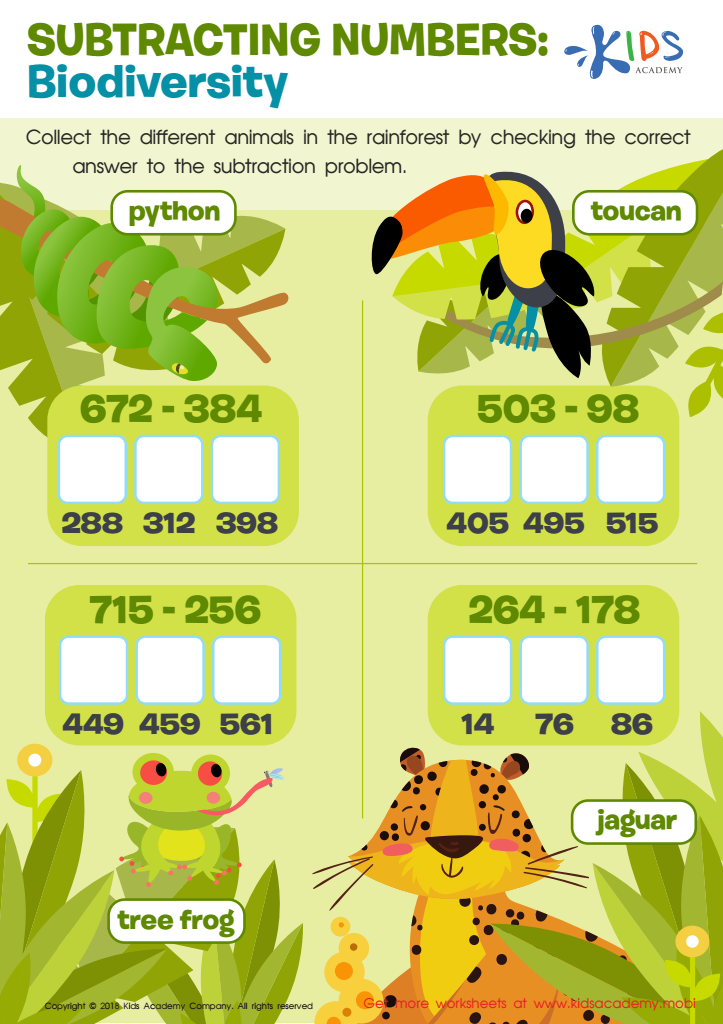
Subtracting Numbers: Biodiversity Worksheet
 Assign to My Students
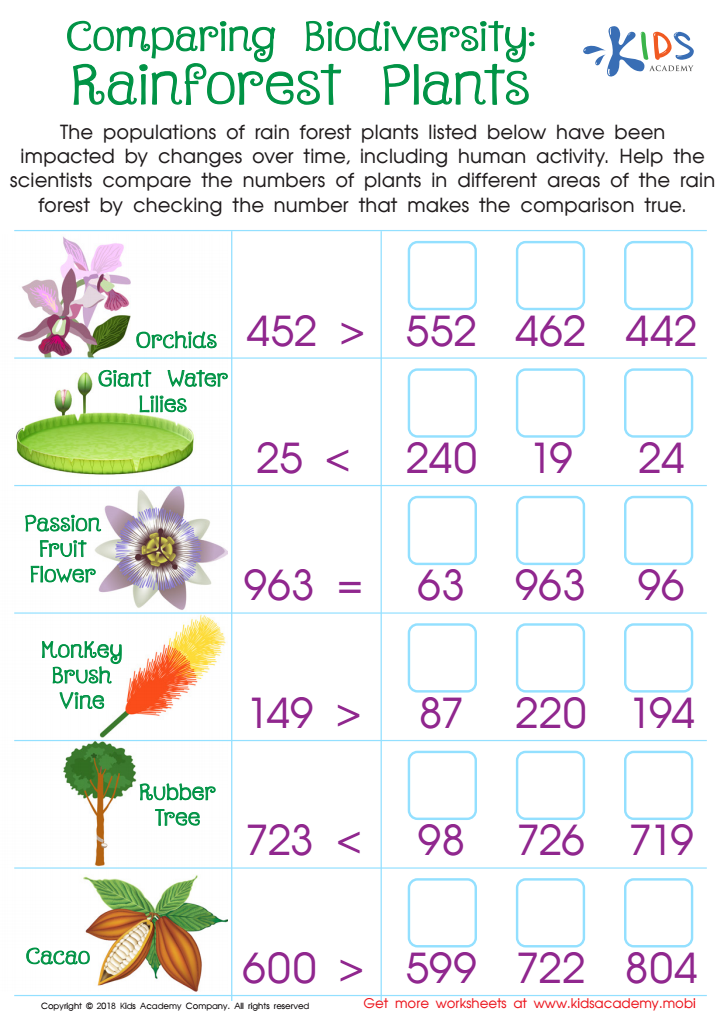
Comparing Biodiversity: Rainforest Plants Worksheet
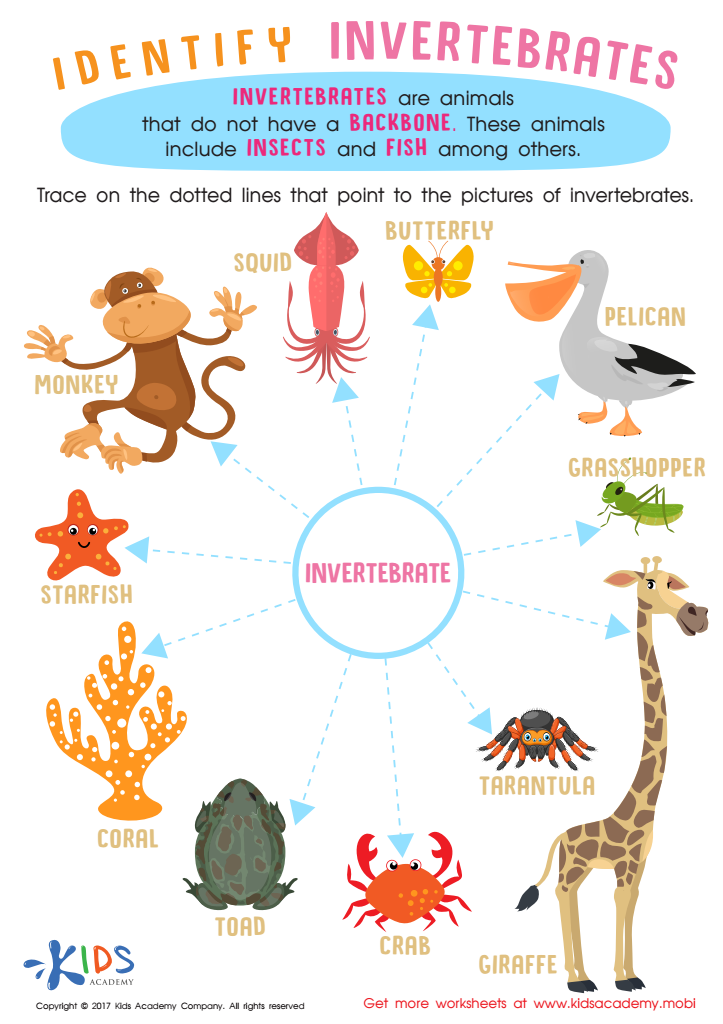
Invertebrates Worksheet for Grade 3
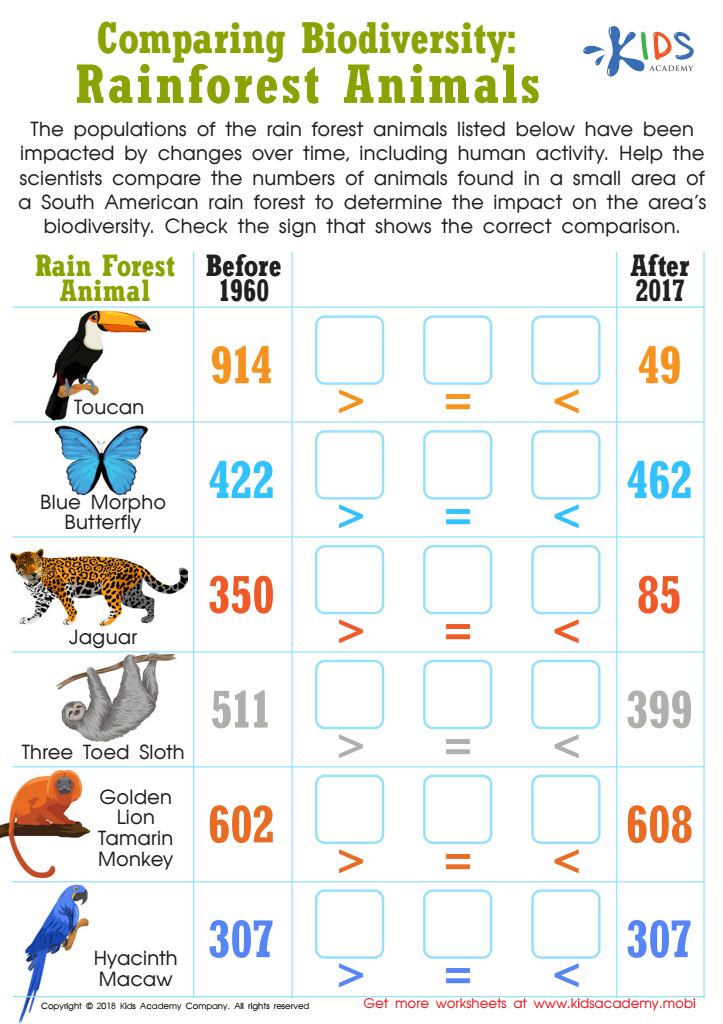
Comparing Biodiversity: Rainforest Animals Worksheet








Understanding biodiversity is essential for parents and teachers, especially for children ages 5-9, as it lays the foundation for appreciating nature and the world around them. Biodiversity refers to the variety of plants, animals, and ecosystems that make up our planet. Teaching young children about biodiversity helps them recognize the importance of different species and how they all play a role in maintaining a balanced environment.
Engaging with biodiversity encourages curiosity and exploration, prompting children to ask questions about where different animals live, how plants grow, and the interplay of ecosystems. This knowledge fosters a sense of responsibility in children towards caring for the environment. When they learn about the threats to biodiversity—like pollution or habitat destruction—they understand the impact of their actions.
Moreover, early exposure to concepts of diversity helps develop empathy and respect for all living things. It promotes an understanding that every organism, no matter how small, contributes to the health of our planet. As future stewards of the Earth, instilling a love for biodiversity in young minds equips them with the values and knowledge needed to protect the natural world as they grow.








