Understanding perspectives Normal Worksheets for Ages 5-9
3 filtered results
-
From - To
Help your child develop critical thinking skills with our "Understanding Perspectives Normal Worksheets" designed for ages 5-9. These engaging resources encourage children to explore different viewpoints, fostering empathy and highlighting the importance of understanding others' feelings. Each worksheet features age-appropriate activities that promote discussion, reflection, and comprehension of diverse perspectives. Ideal for home or classroom use, these worksheets make learning fun while supporting cognitive development. Educators and parents can effortlessly integrate them into lesson plans or daily activities. Encourage your young learners to embrace diversity and nurture their creativity with our thoughtfully crafted materials!
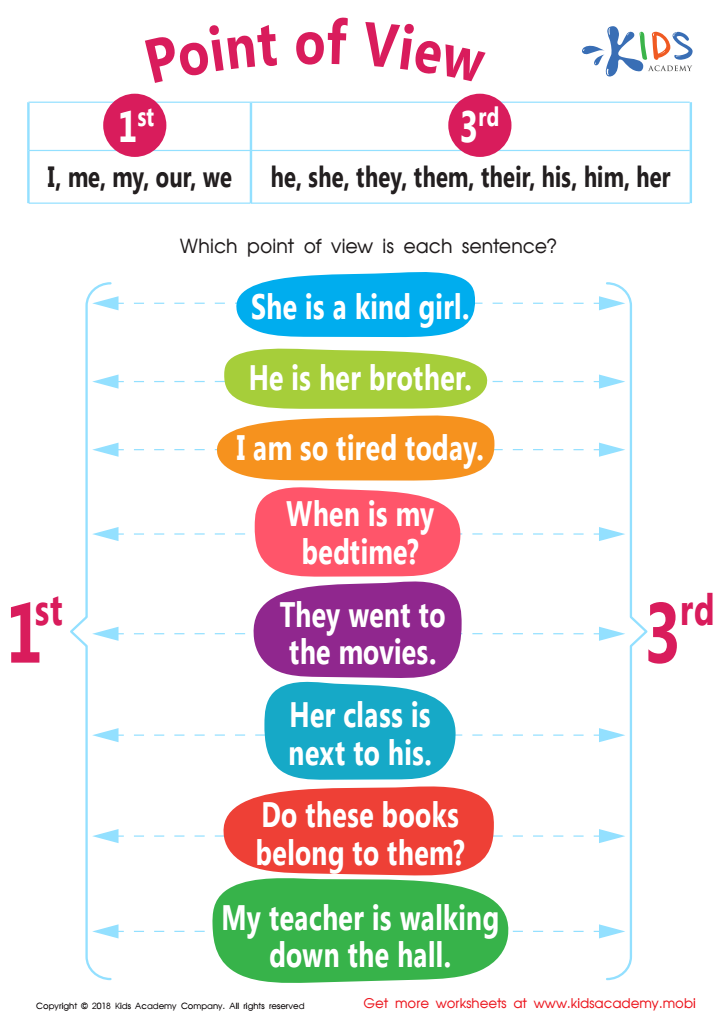
Point of View Worksheet
 Assign to My Students
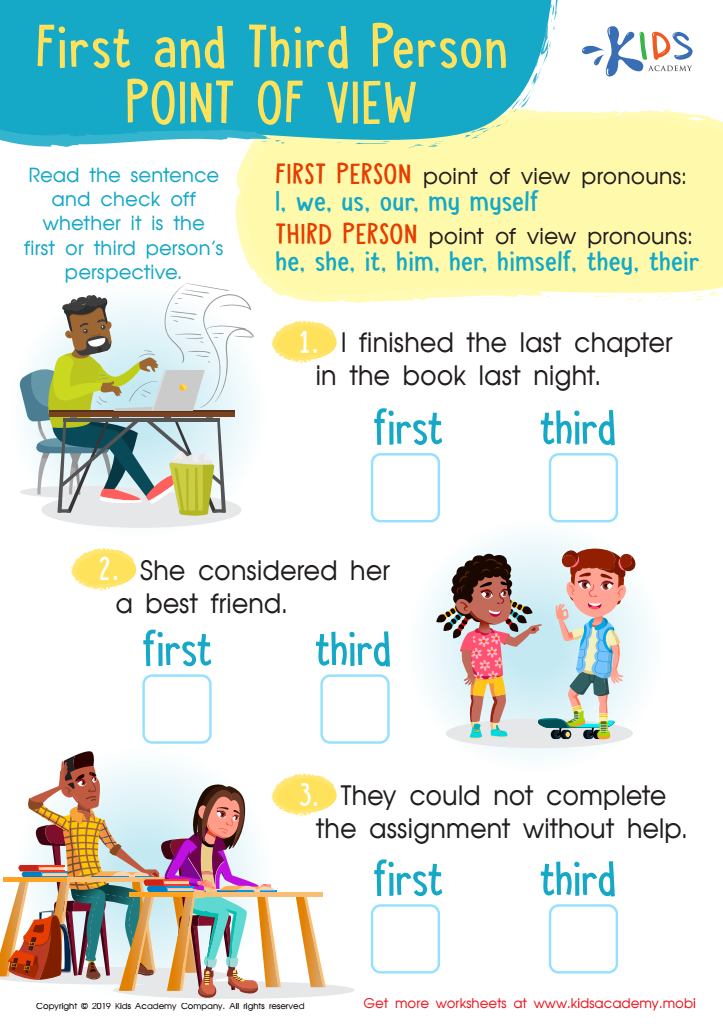
First and Third Person Point of View Worksheet
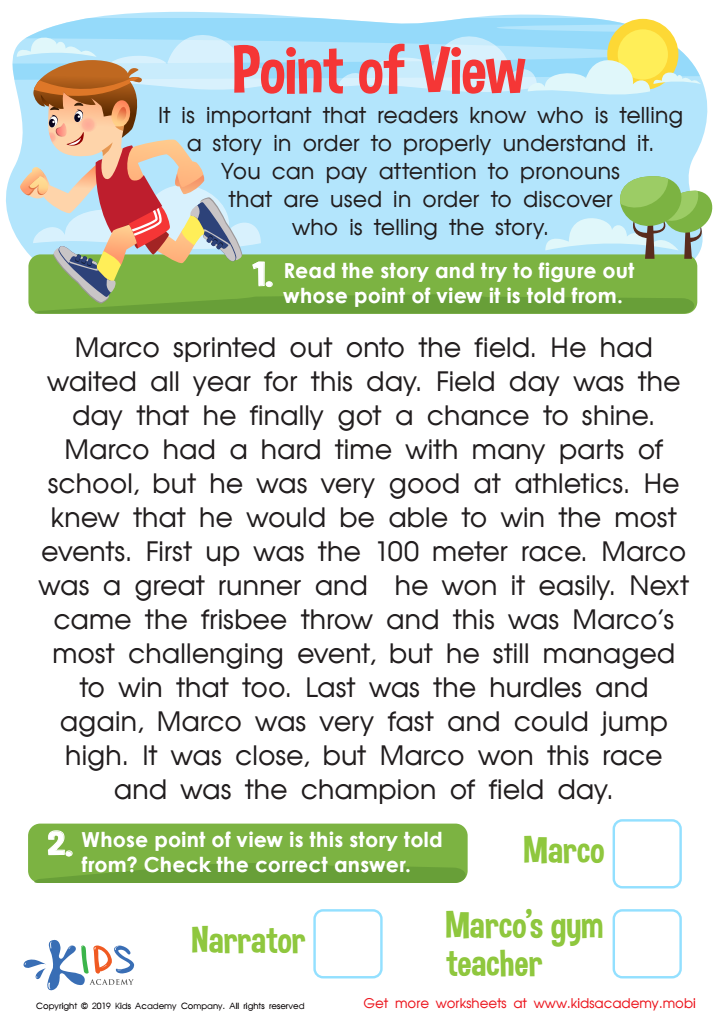
Point of View Worksheet



%20(1).jpg)




Understanding perspectives is crucial for children aged 5-9, as it lays the foundation for social and emotional development. At this age, kids are beginning to understand that others have different thoughts, feelings, and experiences. By learning to see things from various viewpoints, they develop empathy, which is key to forming positive relationships with peers and adults. This skill helps reduce conflicts, as children are more likely to consider others’ feelings and negotiate solutions peacefully.
Additionally, increasing perspective-taking skills enhances critical thinking. Children learn to analyze situations from multiple angles, fostering creativity and problem-solving abilities. This approach not only enriches their interactions but also contributes positively to their academic performance.
Teachers and parents play a vital role in nurturing this skill. They can create opportunities for discussions around different perspectives, encourage storytelling, and incorporate diverse materials that showcase various cultural viewpoints. Engaging in role-playing and collaborative activities can also enhance understanding. Ultimately, fostering perspective-taking is indispensable for cultivating compassionate, socially aware future citizens, making it important for both educators and parents to prioritize in developmental activities and learning environments.








