Normal Addition and Subtraction Word Problems Worksheets for Ages 5-9 - Page 2
29 filtered results
-
From - To
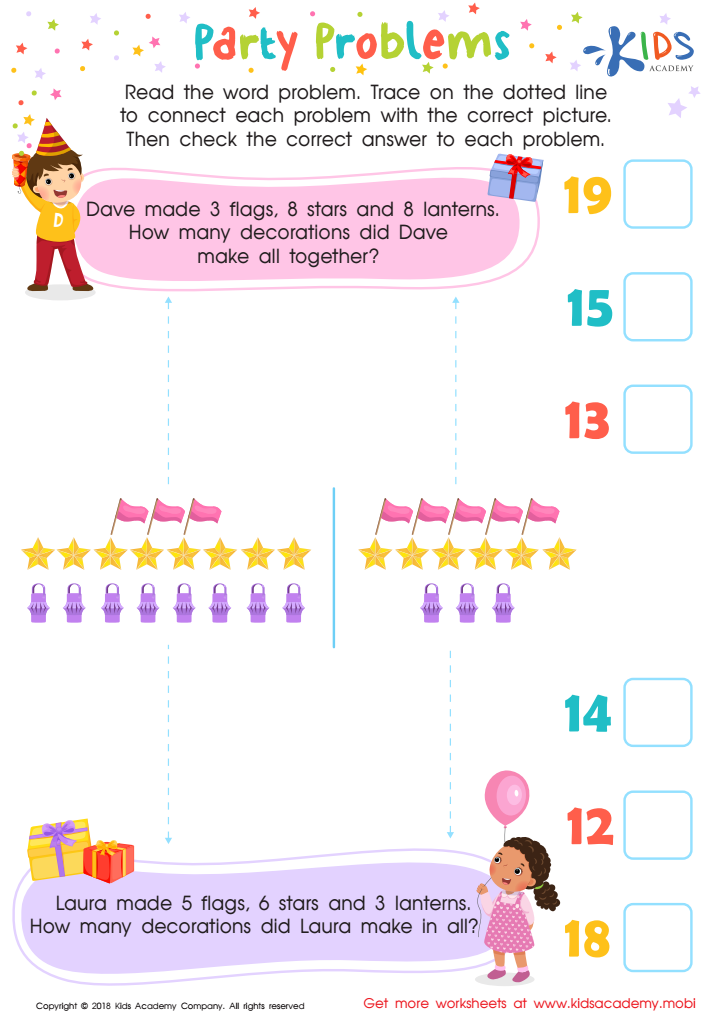
Party Problems Worksheet
 Assign to My Students
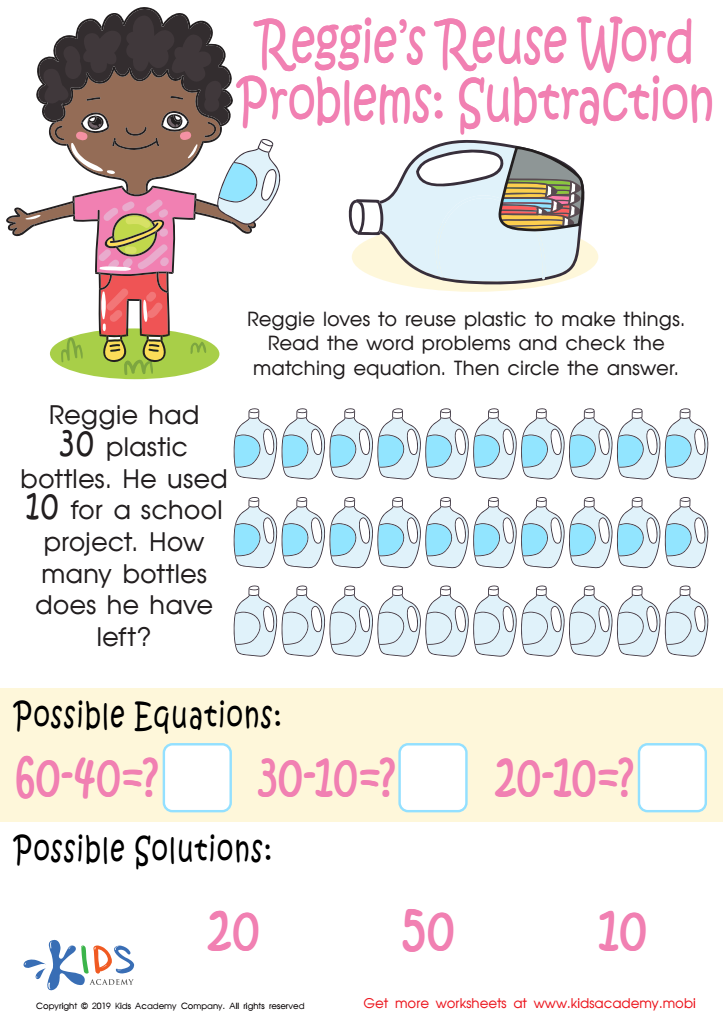
Reggie's Reuse Word Problems: Subtraction Worksheet
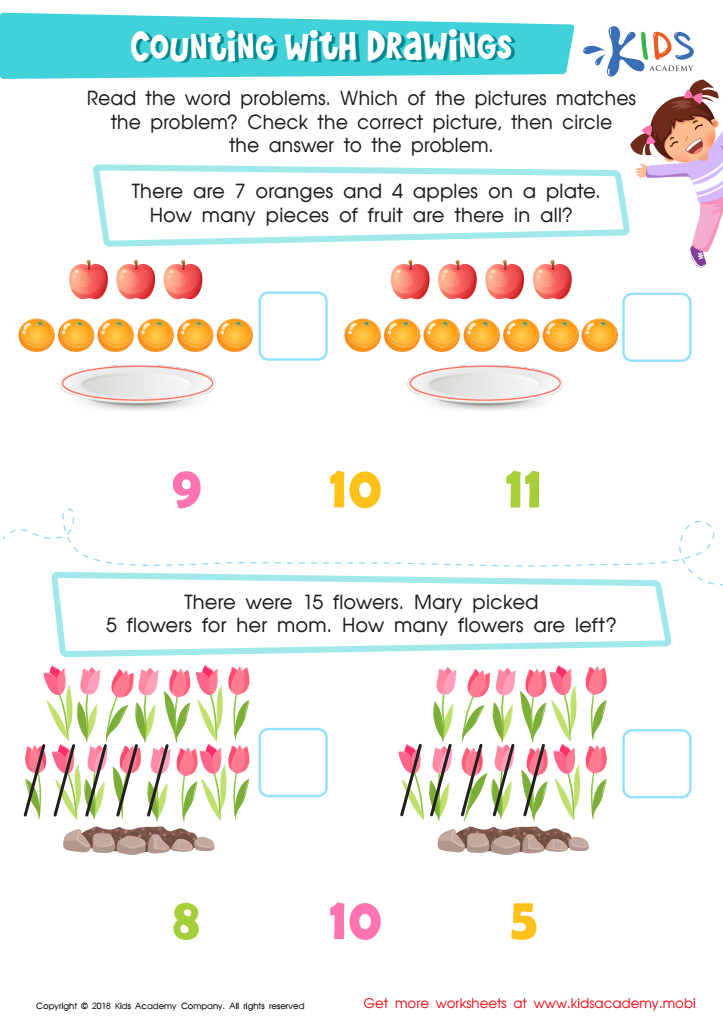
Counting with Drawings:Fruits & Flowers Worksheet
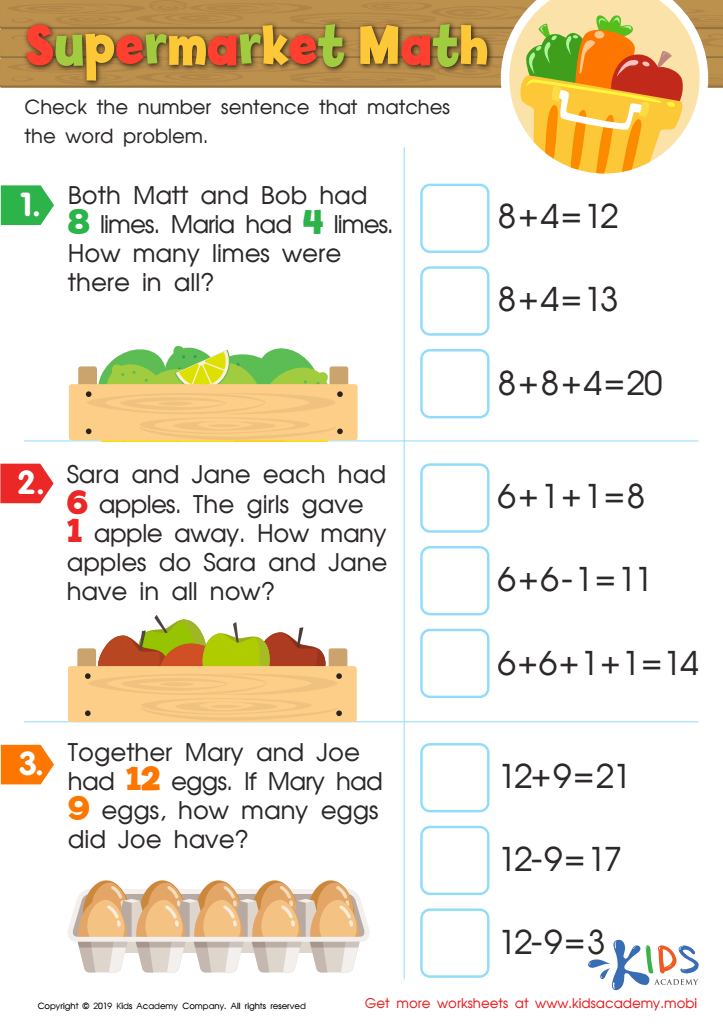
Supermarket Math Worksheet
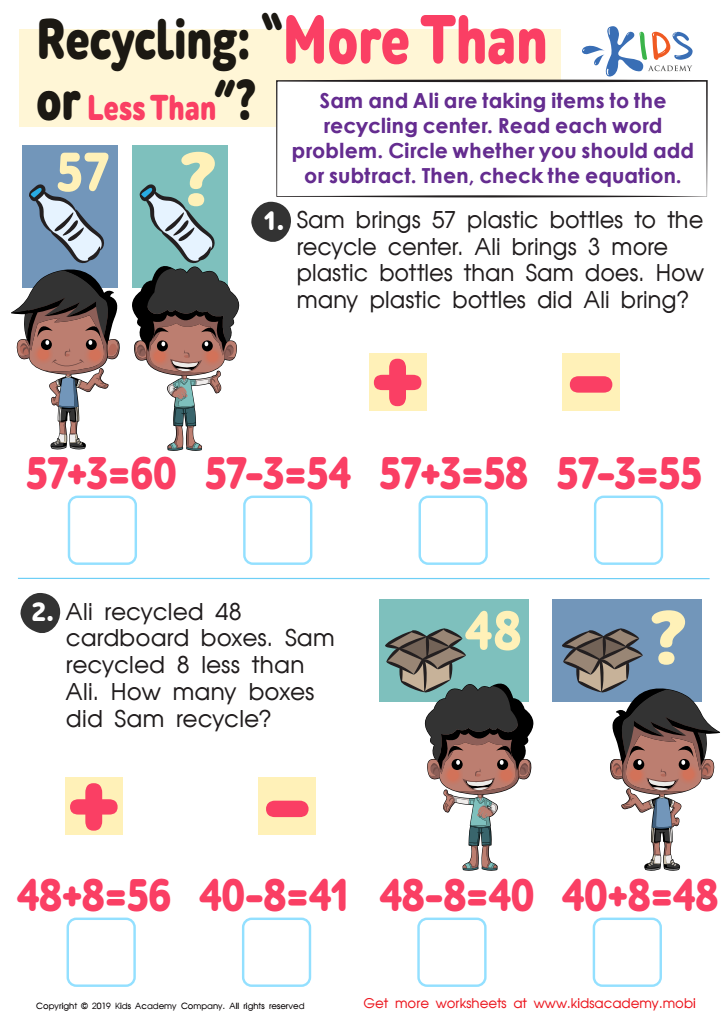
Recycling - More or Less Worksheet








Parents and teachers should care about normal addition and subtraction word problems for ages 5-9 because these problems serve as a foundation for essential mathematical skills. At this age, children are developing critical thinking and problem-solving abilities, and word problems encourage them to apply their knowledge in real-world contexts.
Firstly, word problems enhance comprehension and reading skills. Children must understand the language used in the problems, which helps them improve their vocabulary and narrative abilities. As they read and interpret, they begin to recognize patterns and relationships in the information presented.
Secondly, these problems foster an understanding of how math applies to everyday life. When children learn to relate math to real situations, such as sharing snacks or figuring out how many toys they have, they see relevance in what they are taught.
Furthermore, solving these problems builds persistence and resilience, as students encounter challenges and learn to overcome them through practice.
By prioritizing normal addition and subtraction word problems, parents and educators lay the groundwork for future mathematical learning, promoting both academic achievement and lifelong analytical skills. This integrated approach not only supports numeracy but also nurtures a confident, thoughtful learner.