Color Identification Normal Addition & Subtraction Worksheets for Ages 5-9
4 filtered results
-
From - To
Enhance your child's math skills with our Color Identification Normal Addition & Subtraction Worksheets, specifically designed for ages 5-9. These engaging resources combine the fun of color identification with essential math practice, helping young learners to develop and strengthen their addition and subtraction abilities. Featuring interactive activities and vibrant illustrations, our worksheets make learning enjoyable and accessible. Ideal for both classroom and home use, these materials support your child's educational growth and build a solid foundation in basic math. Visit Kids Academy to download your copy and watch your child's confidence and competence flourish.
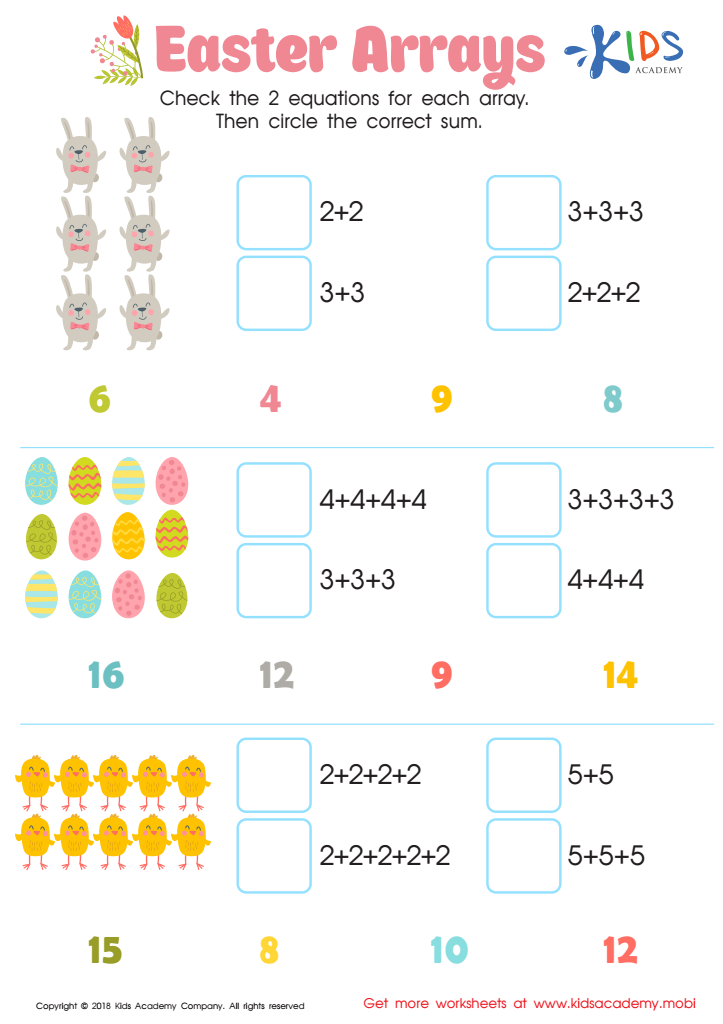
Easter Arrays Worksheet
 Assign to My Students
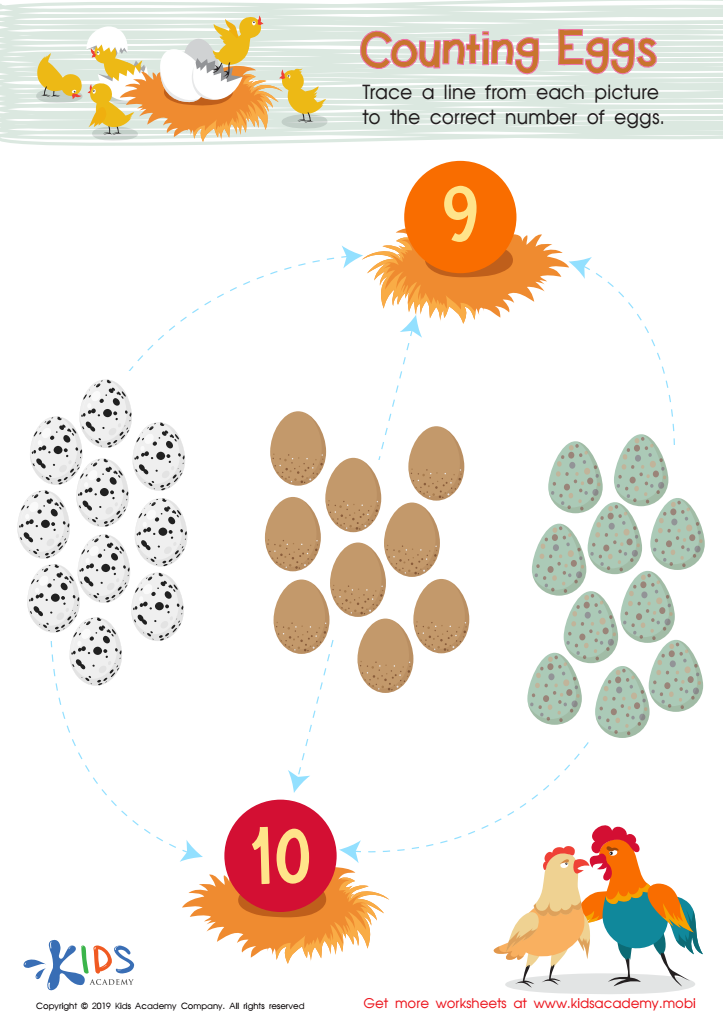
Counting Eggs Worksheet
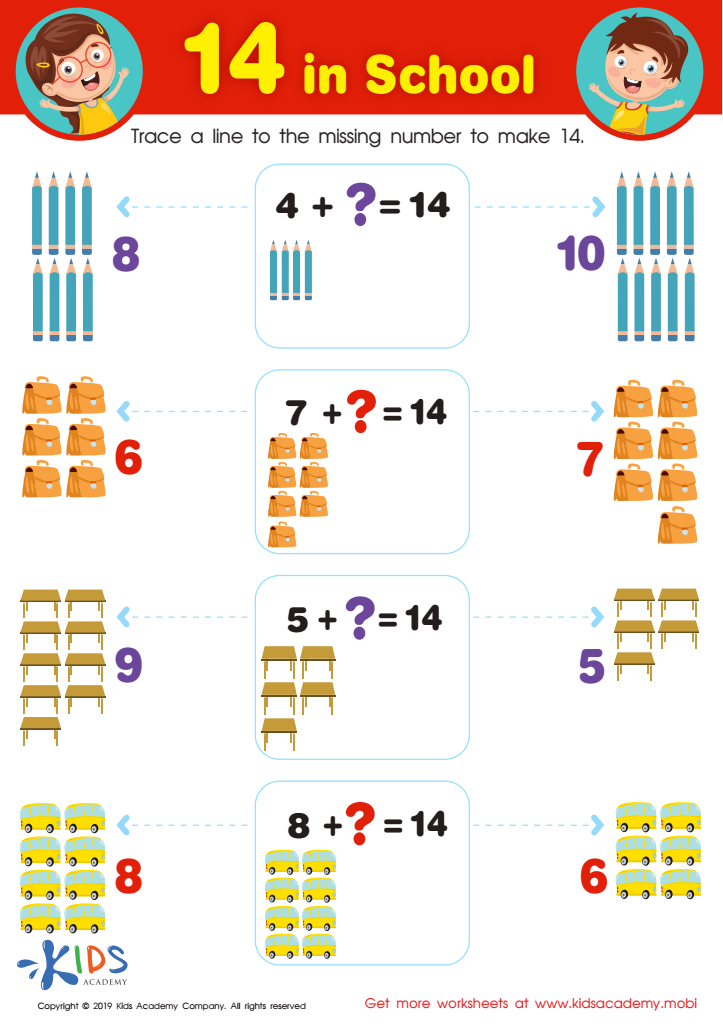
14 in School Worksheet
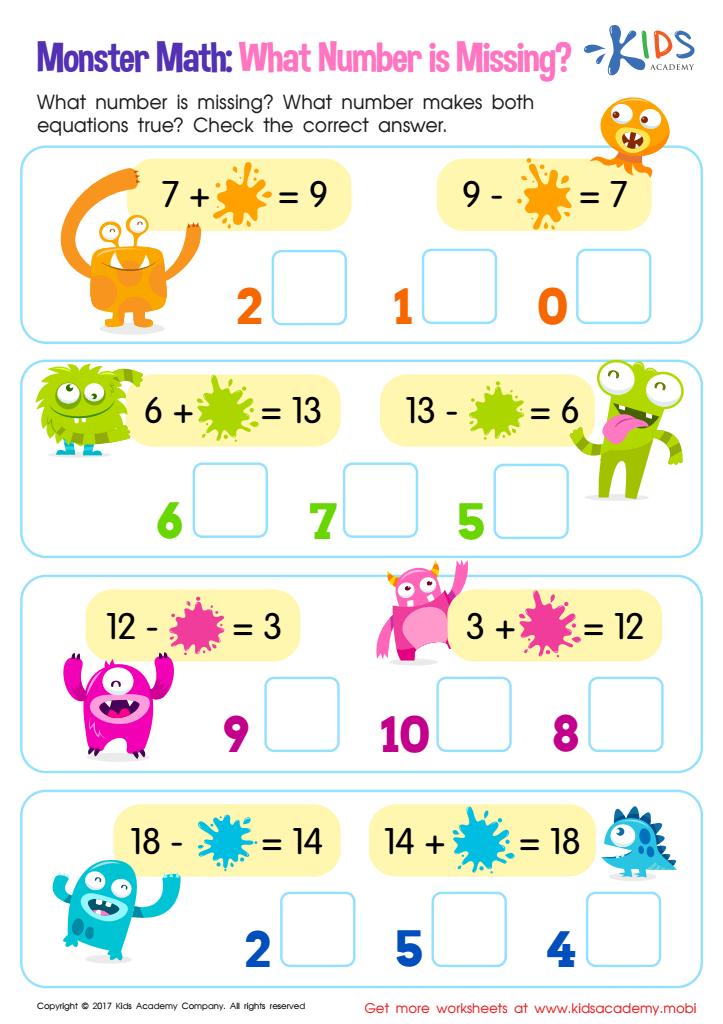
Missing Number: Monster Math Worksheet








Parents and teachers should care about Color Identification Normal Addition & Subtraction for ages 5-9 because these foundational skills are crucial in a child’s early cognitive and academic development. First, color identification aids in vocabulary building and cognitive associations, enhancing observational and descriptive skills. Children who distinguish and name colors accurately exhibit better memory and attention to detail.
Simultaneously, understanding and applying normal addition and subtraction lay the groundwork for all future mathematical learning. Arithmetic operations teach children logical sequencing, pattern recognition, and the concept of numerical relationships. These skills pave the way for more advanced topics, such as multiplication, division, and problem-solving.
Integrating color with addition and subtraction lessons makes learning interactive and fun, thereby keeping young children engaged. For instance, using colored counters, blocks, or visuals in math problems can make abstract concepts more tangible and comprehensible.
Additionally, these activities nurture fine motor skills and hand-eye coordination when activities involve sorting or manipulating colored objects. Socio-emotionally, early success in these areas can boost a child’s confidence and cultivate a positive attitude toward learning.
Therefore, focusing on Color Identification and Normal Addition & Subtraction from ages 5-9 sets children on a promising academic trajectory while simultaneously supporting their overall cognitive development and well-being.








