Number Recognition Normal Counting Worksheets for Ages 5-9
8 filtered results
Difficulty Level
Grade
Age
-
From - To
Subject
Activity
Standards
Enhance your child's number recognition skills with our engaging Normal Counting Worksheets, specially designed for ages 5-9. These worksheets provide a fun and interactive approach to learning numbers, enabling kids to identify and distinguish digits with confidence. Tailored to various learning levels, our activities encourage mastery through practice while stimulating curiosity and enjoyment in mathematics. Parents, teachers, and caregivers can easily download and print these resources, making them perfect for home or classroom use. Get started today and lay the foundation for a successful math journey as your child develops essential counting and numeral recognition skills!
Favorites
With answer key
Interactive
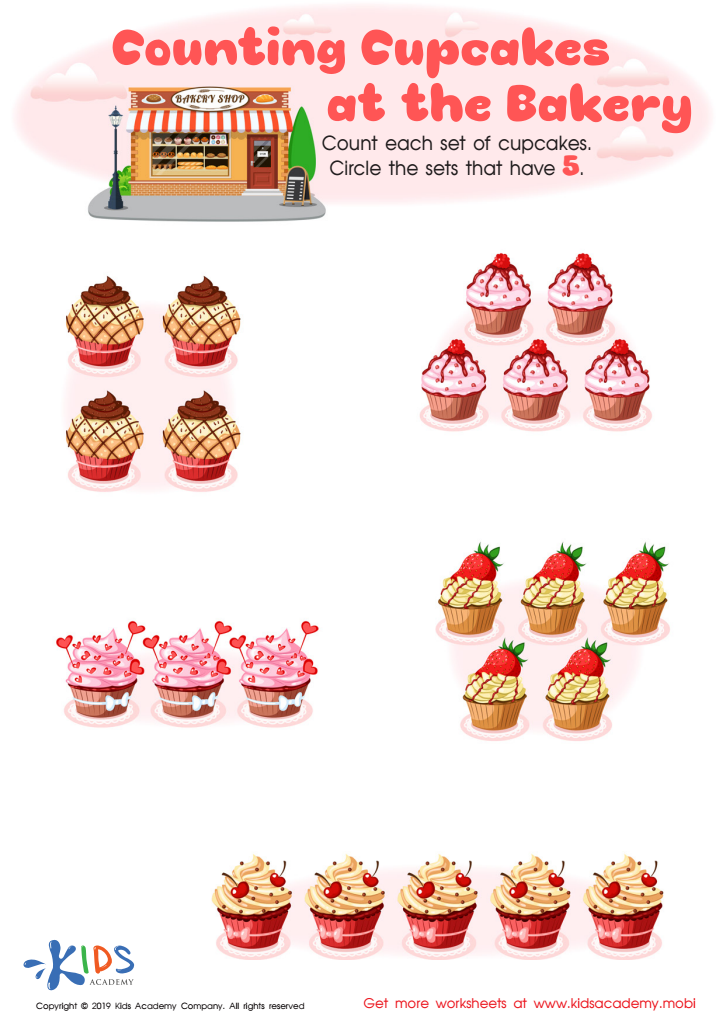
Counting Cupcakes Worksheet
This fun worksheet for preschoolers uses cupcakes to teach counting. Kids must circle the groups of cupcakes that add up to 5. The delicious treats make learning fun and engaging!
 Assign to My Students
Counting Cupcakes Worksheet
Worksheet


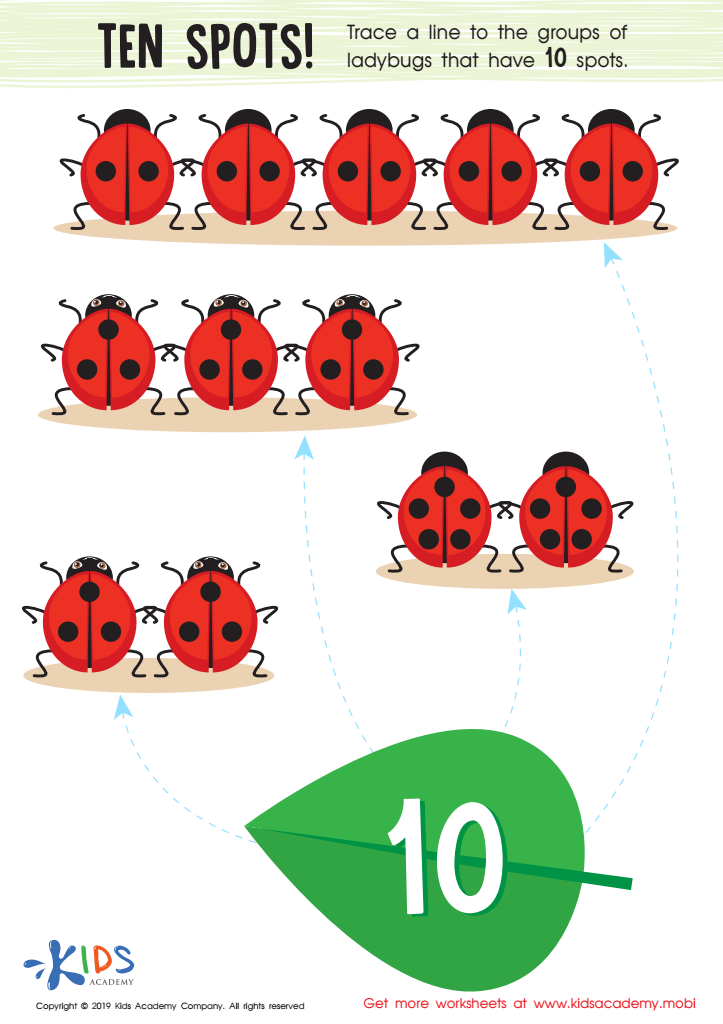
Ten Spots Worksheet
Kids love ladybugs! Ask them to tell you what stands out most--the spots. Show them a picture and help them count the spots. Trace a line to the group with 10 spots for a fun counting lesson.
Ten Spots Worksheet
Worksheet
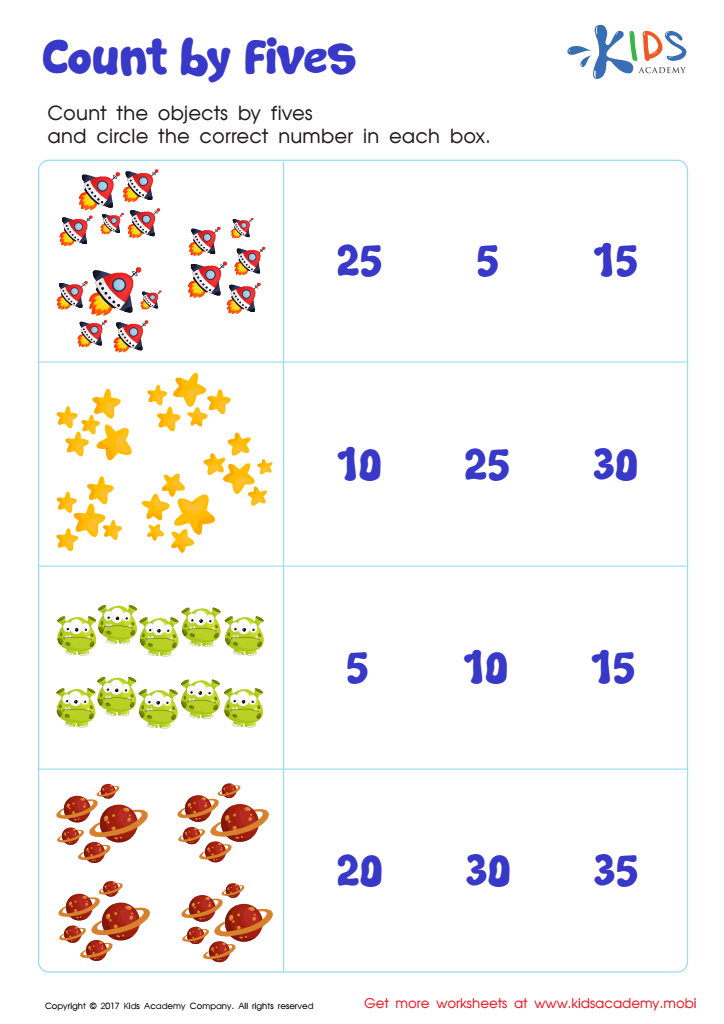
Skip Counting by 5s: Space Math Printable
This worksheet will provide your child with fun and practice counting by 5's. It'll help them visually count numbers, use problem solving skills and make connections between individual and groups of numbers. Counting money and various math concepts will become easier with this invaluable skill. Blast off with this fun and educational worksheet featuring space graphics.
Skip Counting by 5s: Space Math Printable
Worksheet
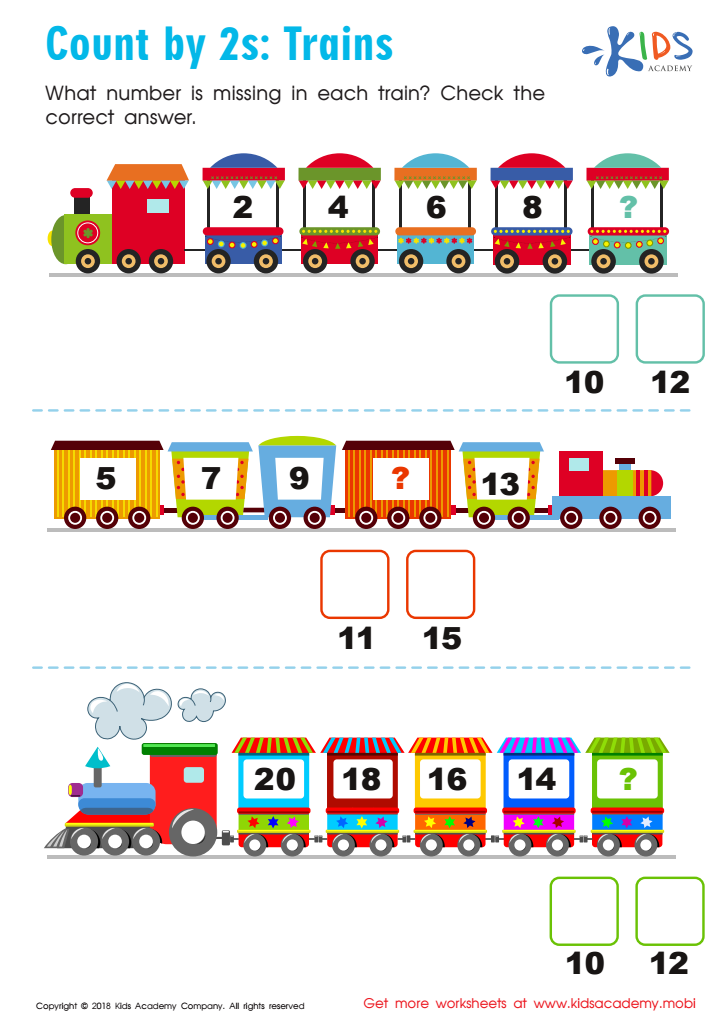
Count by 2's: Trains Worksheet
Teaching your kids quick computations? Get them skip-counting by 2s! They'll love filling in the colors of the train while counting, and it will help with 'counting up' or backward on paper or in their heads - essential for quick computations later.
Count by 2's: Trains Worksheet
Worksheet
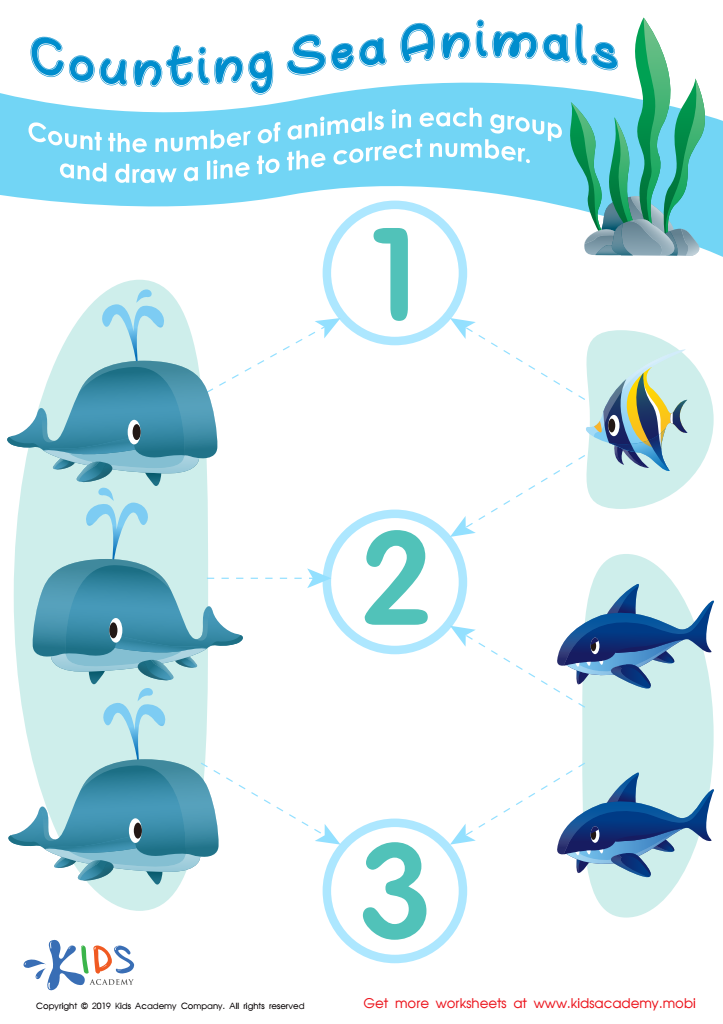
Counting Sea Animals Worksheet
Kids adore sea creatures for their captivating, unknown nature. Let them use this free worksheet to practice counting, where they match numbers to groups of animals. Through traceable lines, they'll easily connect numbers to sea creatures and learn math with vibrant, underwater fun!
Counting Sea Animals Worksheet
Worksheet
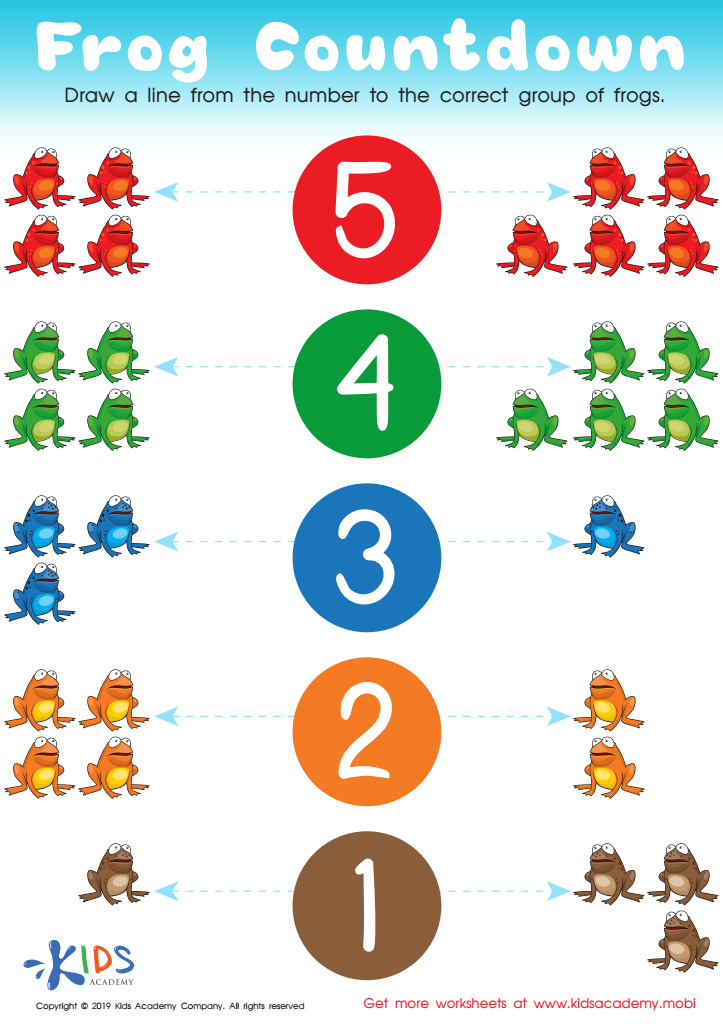
Frog Countdown Worksheet
Make learning fun for kids with traceable printouts! This exercise has kids counting frogs and drawing a line to match the number. Expand their knowledge with activities like this, beyond the basics they learn in school. Help them explore new ways of learning and make it enjoyable.
Frog Countdown Worksheet
Worksheet
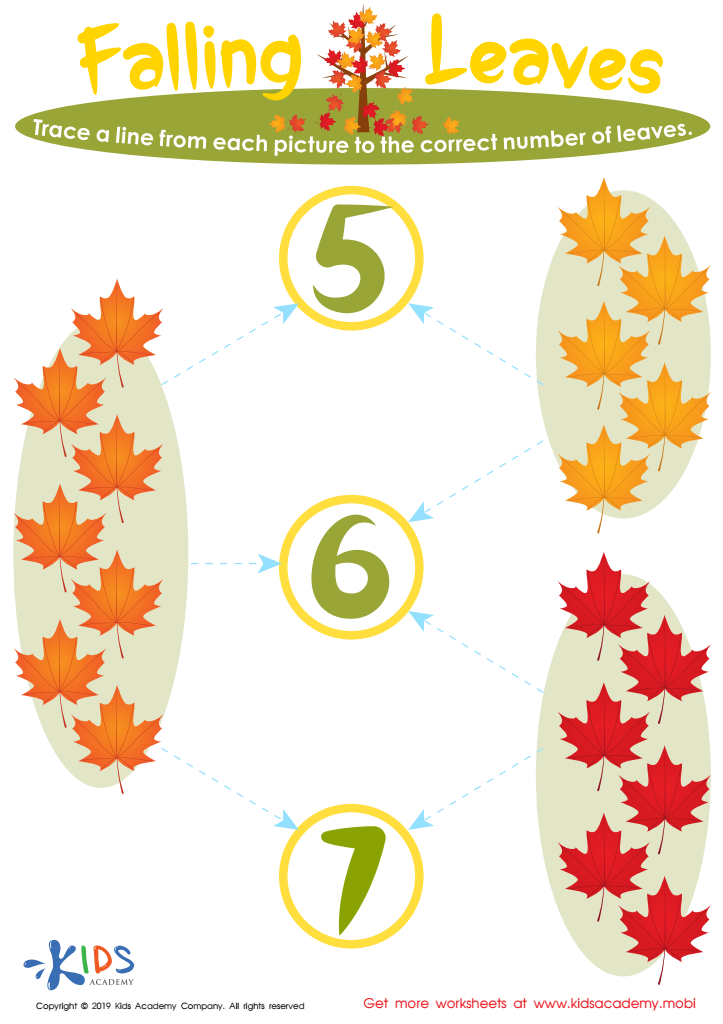
Falling Leaves Worksheet
Do your kids know the seasons? Ask them to name each one, then test their counting skills with a fun worksheet. Have them count from 1 to 10, then trace a line from each picture to the corresponding number of leaves. It's a great way to check their counting ability!
Falling Leaves Worksheet
Worksheet
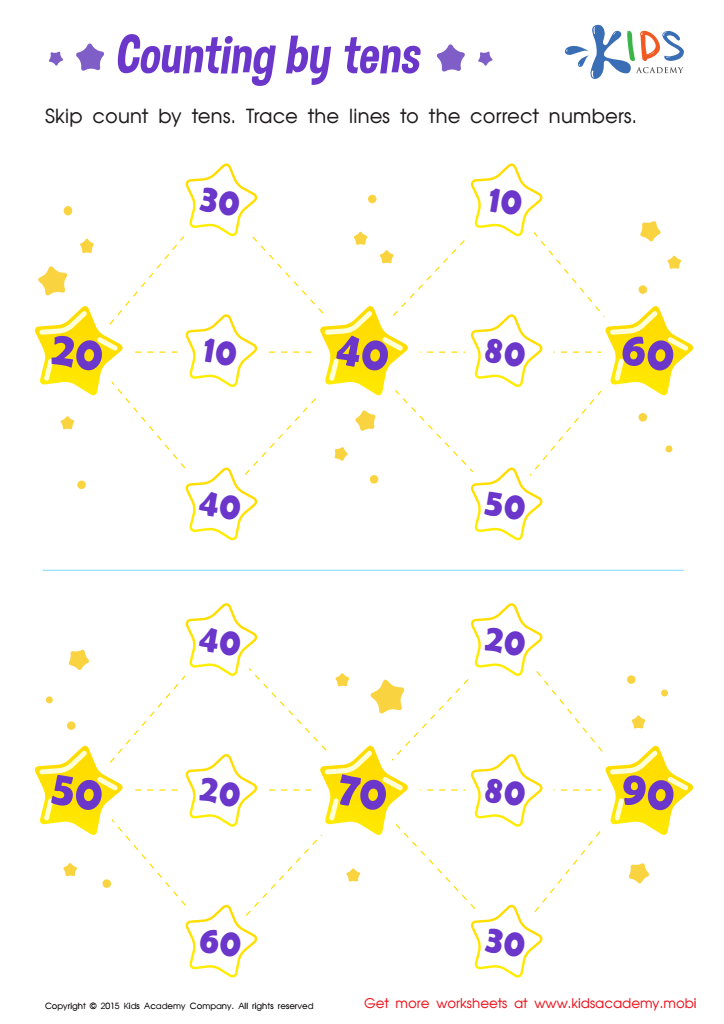
Learn Dozens: Counting by Tens Printable
Kindergartners need to learn skip counting - counting in number groups - to increase number sense and be ready for more advanced math. Our kindergarten worksheet featuring a starry trip to outer space will help your child practice this valuable skill. Your child will choose correct answers to trace the lines to the stars, building fluency in skip counting. They'll also strengthen problem solving and see the pattern it creates. Get your little learner to the next level with this skip counting worksheet!
Learn Dozens: Counting by Tens Printable
Worksheet
Join Kids Academy for Free
Who is primarily going to use this learning content?




%20(1).jpg)



Number recognition and non-sequential counting are critical foundational skills for children aged 5-9 as they lay the groundwork for mathematical understanding and numeracy. At this stage, children begin to encounter more complex arithmetic concepts, and proficiency in recognizing numbers enables them to decode mathematical language effectively.
Parents and teachers should prioritize this area for several reasons. First, number recognition aids in developing a child's sense of number relationships, allowing them to visualize quantities and compare values. This recognition builds confidence, helping children tackle math-related tasks without anxiety. Furthermore, non-sequential counting fosters flexibility in thinking, essential for problem-solving and advanced mathematics.
Beyond academics, these skills have practical implications. Children rely on numbers in everyday situations—counting money, telling time, or following instructions. Mastery of number recognition also indicates overall cognitive development and promotes logical reasoning, both of which are essential skills in numerous life areas.
Involving parents and teachers in fostering these skills through engaging activities, such as counting games, number hunts, and interactive storytelling, ensures a well-rounded approach to learning and enhances a child’s readiness for future academic challenges. Cultivating these foundational skills sets the stage for ongoing success in mathematics and beyond.