Spatial reasoning Normal Geometry Worksheets for Ages 5-9
3 filtered results
-
From - To
Unlock your child's potential with our Spatial Reasoning Normal Geometry Worksheets designed for ages 5-9. These engaging, age-appropriate worksheets foster essential skills in spatial awareness and geometric understanding, critical for early math development. Each worksheet delivers fun, interactive exercises that challenge young minds to think critically, recognize shapes, and solve problems effectively. Perfect for classroom or home use, our expertly crafted materials support foundational learning in a structured yet stimulating way. Boost your child’s confidence and interest in math through play and exploration with Kids Academy’s approachable, high-quality geometry worksheets!
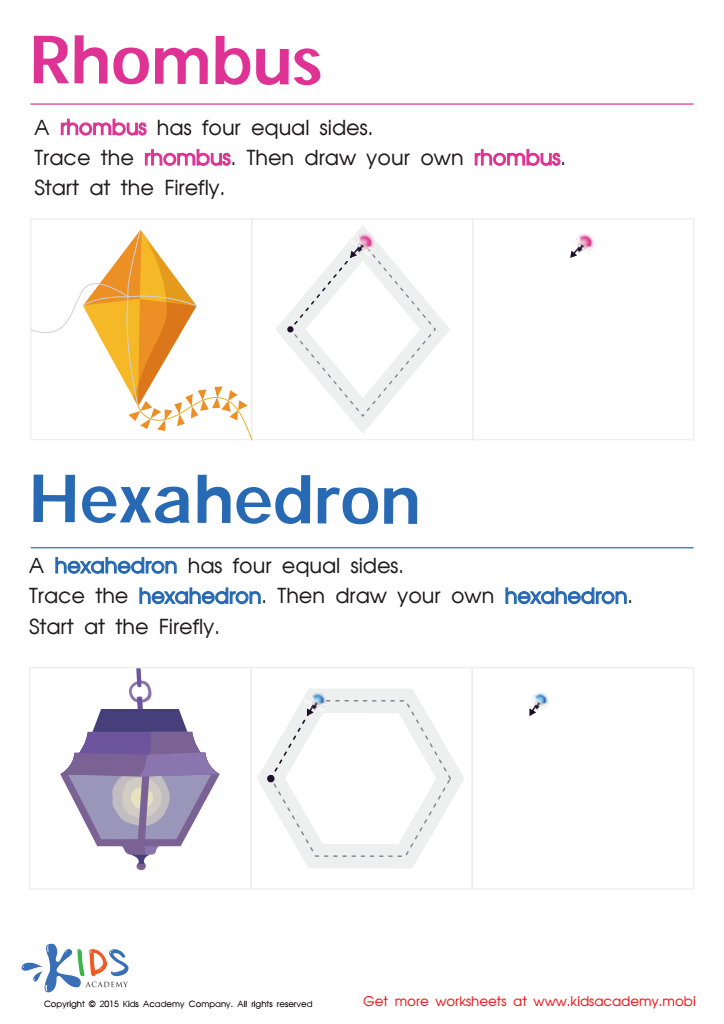
Draw a Rhombus And a Hexahedron Printable
 Assign to My Students











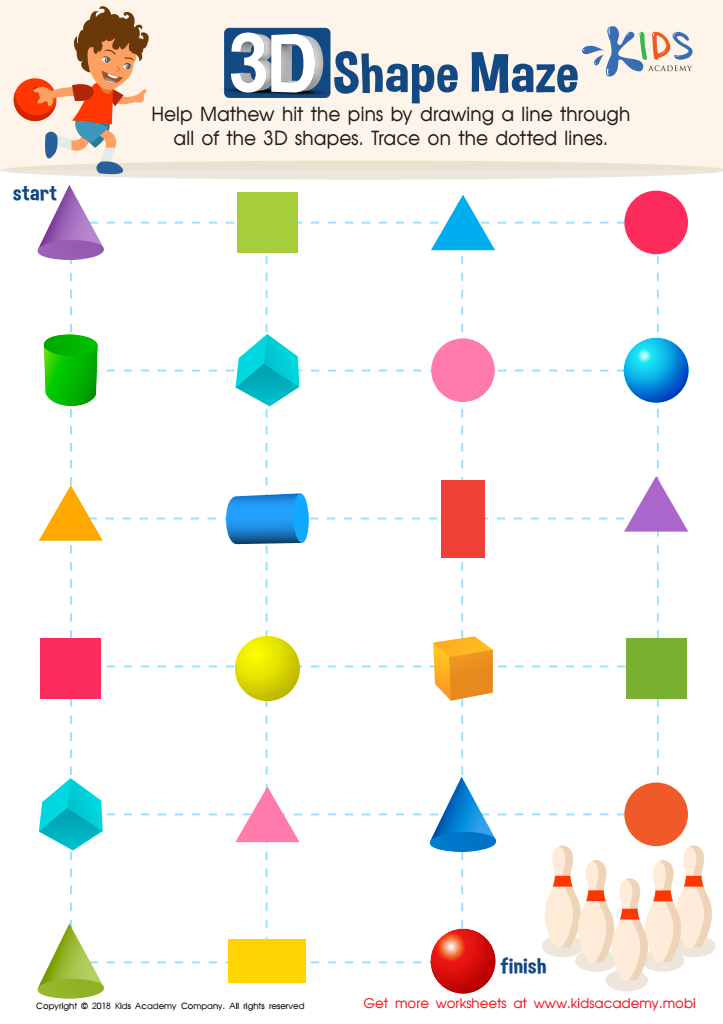
Shapes Maze Geometry Worksheet
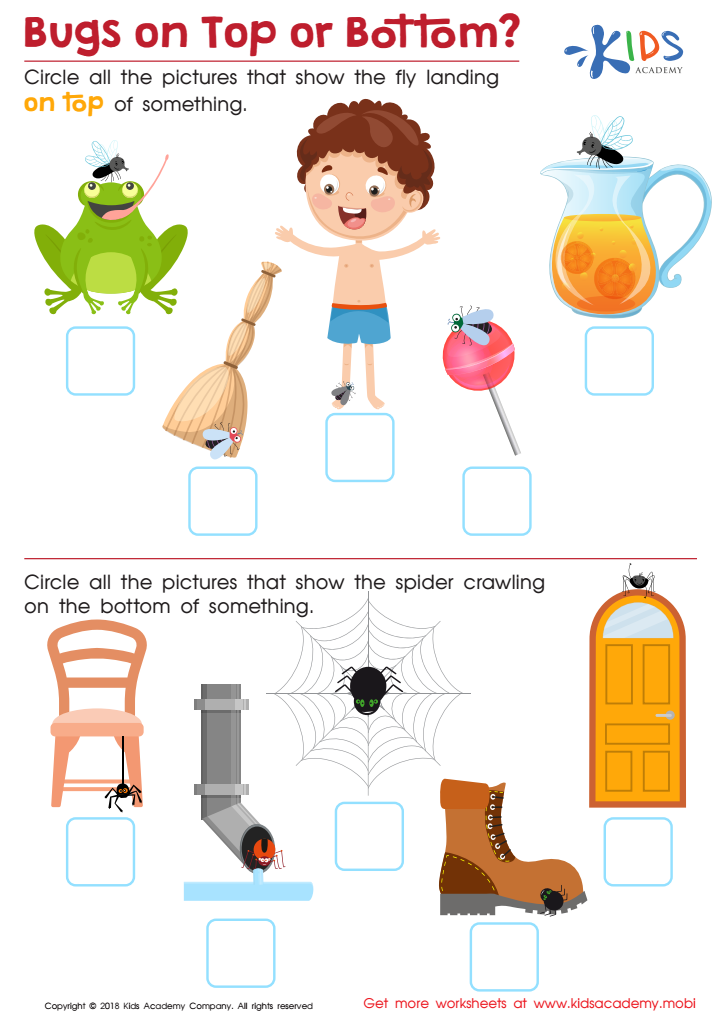
Bugs on Top or Bottom? Worksheet








Parents and teachers should care about spatial reasoning and geometry for children aged 5-9 because these skills are foundational for everyday problem-solving and academic success. Spatial reasoning involves the ability to understand and manipulate shapes and structures in one's mind, which is crucial for activities such as building with blocks, puzzles, and drawing. This cognitive skill enhances a child's ability to reason, visualize, and navigate both physical spaces and abstract concepts.
An early grasp of spatial concepts boosts performance in math subjects, particularly in geometry. Being comfortable with shapes, sizes, patterns, and spatial relationships helps children understand more complex mathematical theories later on. For instance, recognizing shapes is a precursor to understanding polygons and learning about symmetry aids in comprehending balance and proportions in algebra.
Furthermore, spatial skills are linked to STEM (Science, Technology, Engineering, and Mathematics) proficiency. Early scouting and development of these skills can ignite a child's passion for science and engineering disciplines, which rely heavily on spatial reasoning. Moreover, strong spatial skills aid in literacy and reading comprehension through better letter recognition and understanding of word problems.
In sum, fostering spatial reasoning during the critical developmental years of ages 5-9 not only enhances immediate cognitive and academic abilities but also sets the stage for long-term success in various educational and real-world scenarios.








