Understanding comparisons Normal Numbers Worksheets for Ages 5-9
3 filtered results
-
From - To
Explore our 'Understanding Comparisons: Normal Numbers' worksheets designed specifically for children aged 5-9. These engaging, educational resources help young learners develop essential math skills by making comparisons between numbers. With an array of fun and interactive exercises, children advance their understanding of numerical order, greater than and less than concepts, and number sequences. Our worksheets foster confidence in tackling math problems, supporting classroom learning. Simple to follow, yet effectively challenging, these printable worksheets are perfect for introducing children to the critical foundations of math, making learning enjoyable and rewarding. Start your child’s journey towards math excellence today!
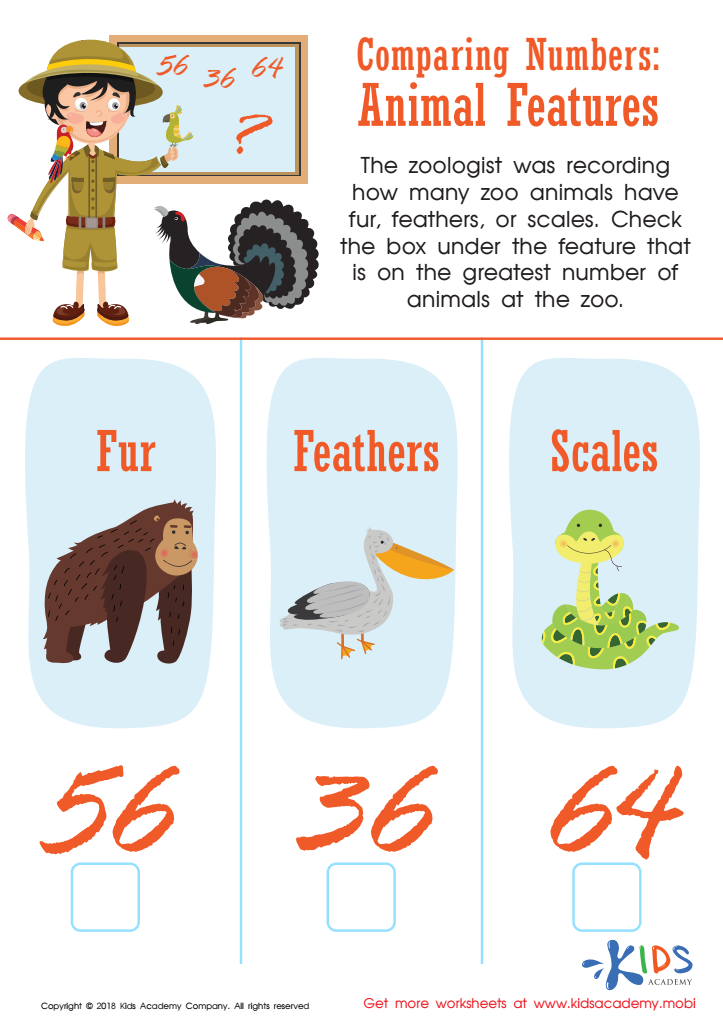
Animal Features Worksheet
 Assign to My Students
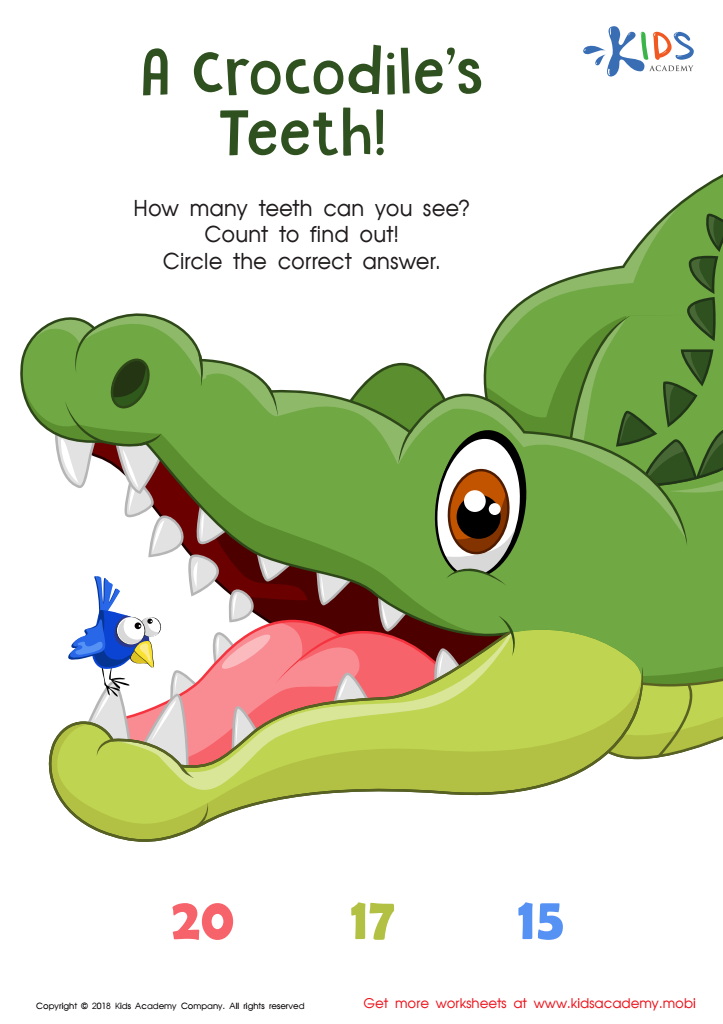
A Crocodile's Teeth Worksheet
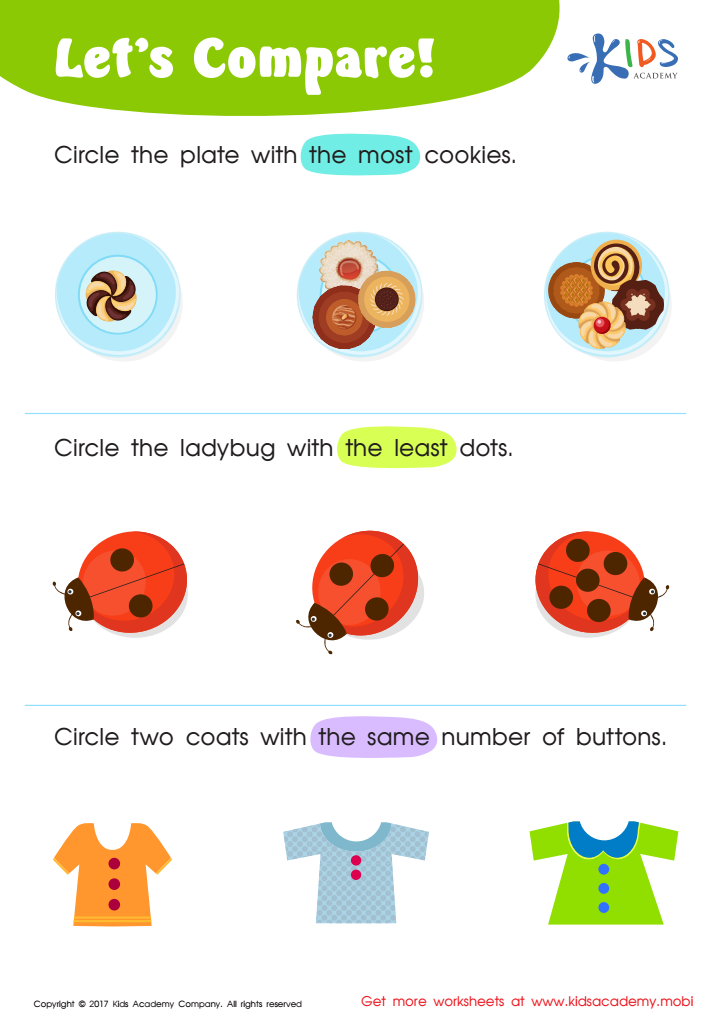
Matching: Classifying Toys by Size Worksheet








Understanding comparisons and numbers is fundamental to the development of mathematical reasoning in children aged 5-9. At this stage, their cognitive abilities are rapidly expanding, and grasping the basics of comparison sets a foundation for more complex mathematical concepts. When children learn to compare numbers, they develop a sense of numerical order, size, and value, which are crucial skills for everyday tasks. For instance, they can start to discern whether they have enough of something or if one quantity is greater or smaller than another.
Moreover, mastering these concepts in early years establishes critical thinking and problem-solving skills. It promotes mental discipline and the ability to approach situations logically and analytically. As kids engage in activities like comparing quantities, lengths, or weights, they also enhance their observational skills and begin to draw inferences based on their findings.
Teachers and parents should also recognize that competence in these early mathematical skills positively correlates with future academic performance. A strong foundation in number comparisons can lead to better achievement in advanced mathematical subjects and even in areas requiring analytical thought. Thus, fostering an early understanding of comparisons and numbers equips children not only for academic success but also for effective daily decision-making and lifelong learning.








