Understanding times tables Normal Math Worksheets for Ages 5-9
3 filtered results
-
From - To
Discover the fun and engaging world of times tables with our Normal Math Worksheets, specifically designed for children aged 5-9! These age-appropriate resources help young learners develop a solid foundation in multiplication through colorful activities and clear instructions. Our worksheets promote understanding and reinforce essential math skills while making learning enjoyable. With a variety of exercises, including interactive games, visual aids, and practice problems, children will gain confidence in their multiplication abilities. Perfect for both classroom and home use, these worksheets cater to different learning styles, ensuring that every child can master their times tables in a supportive environment. Explore the joy of math today!
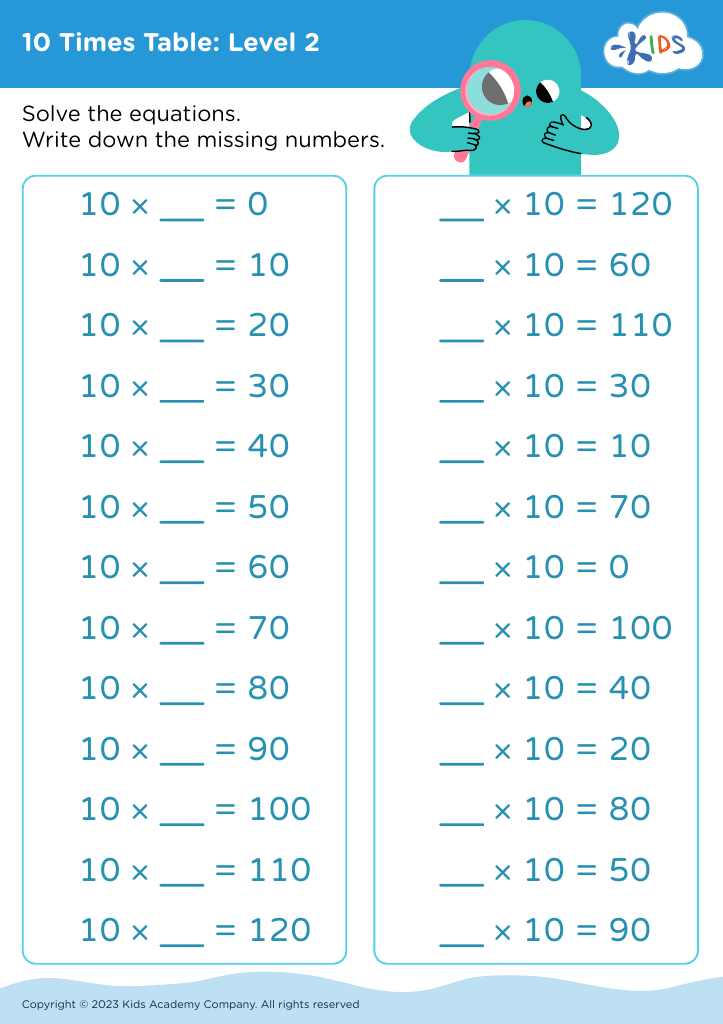
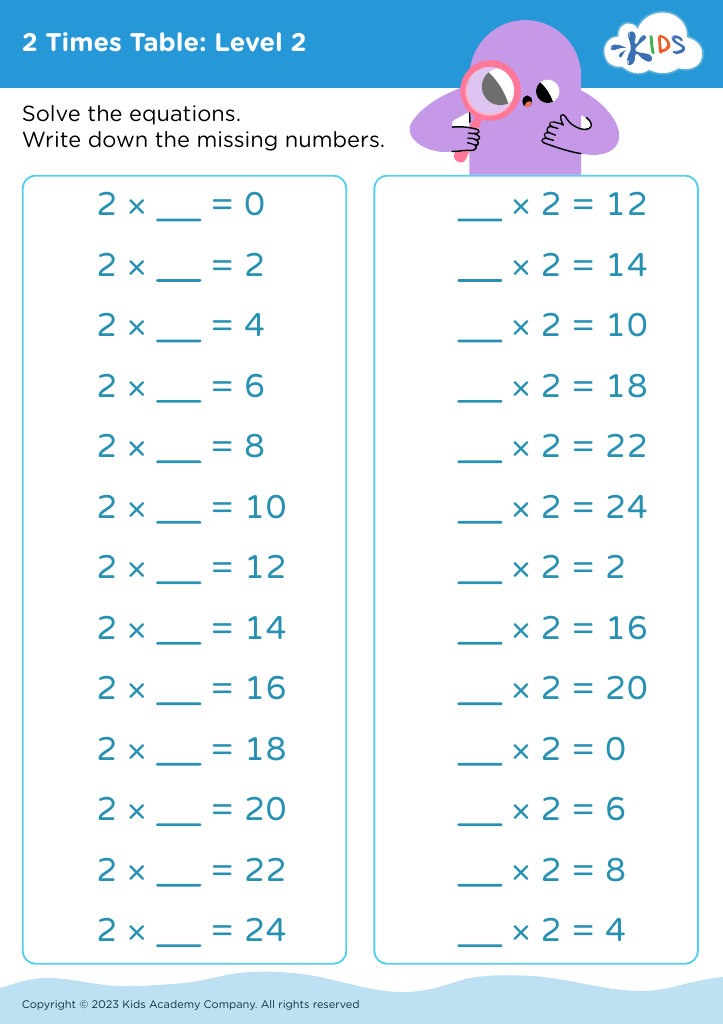
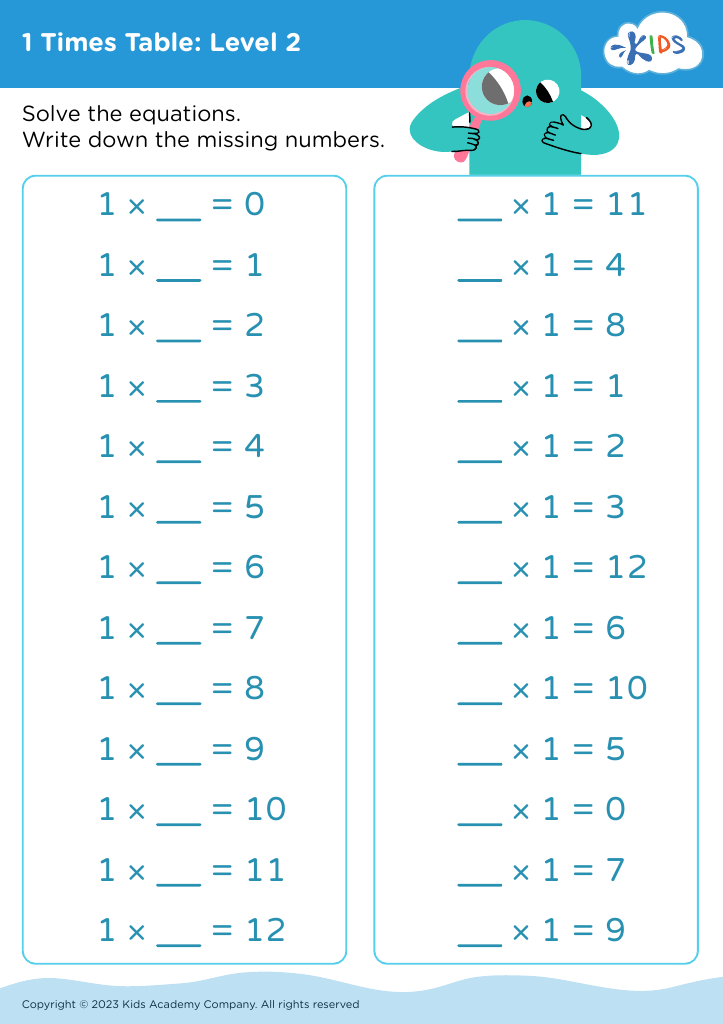







Understanding times tables is a crucial aspect of a child’s mathematical development, particularly for ages 5-9. Mastery of this foundational skill not only enhances computational proficiency but also builds confidence in young learners. Learning times tables lays the groundwork for more complex mathematical concepts, such as division, fractions, and algebra, which will be encountered in later years.
Further, the early understanding of multiplication helps children recognize patterns and relationships within numbers, fostering critical thinking skills. It encourages problem-solving abilities when applying math in real-life situations, from budgeting allowance to estimating time.
Parents and teachers play a vital role in this learning phase. By actively engaging children in practice through games, songs, and interactive activities, they can make learning times tables enjoyable and relatable. This not only promotes retention but also engenders a positive attitude towards math. Additionally, understanding these concepts empowers parents and educators to track progress and identify areas where additional support may be needed.
Overall, caring about times tables at this age can lead to a solid foundation in mathematics, benefiting children academically and beyond as they encounter new and increasingly complex challenges in their education.








