Enhancing observation skills Normal Measurement Worksheets for Ages 5-9
3 filtered results
-
From - To
Enhancing observation skills is essential for young learners aged 5-9, and our Normal Measurement Worksheets offer an engaging way to develop this vital ability. These worksheets are designed to help children sharpen their attention to detail as they accurately measure objects in their environment. With fun activities that include comparing sizes, lengths, and weights, children will explore measurement concepts while building confidence. Our easily printable resources provide an interactive and hands-on approach, making learning enjoyable. Foster your child’s observation and critical thinking skills today with our thoughtfully crafted worksheets that empower kids to become adept at real-world measurements. Start measuring for success!
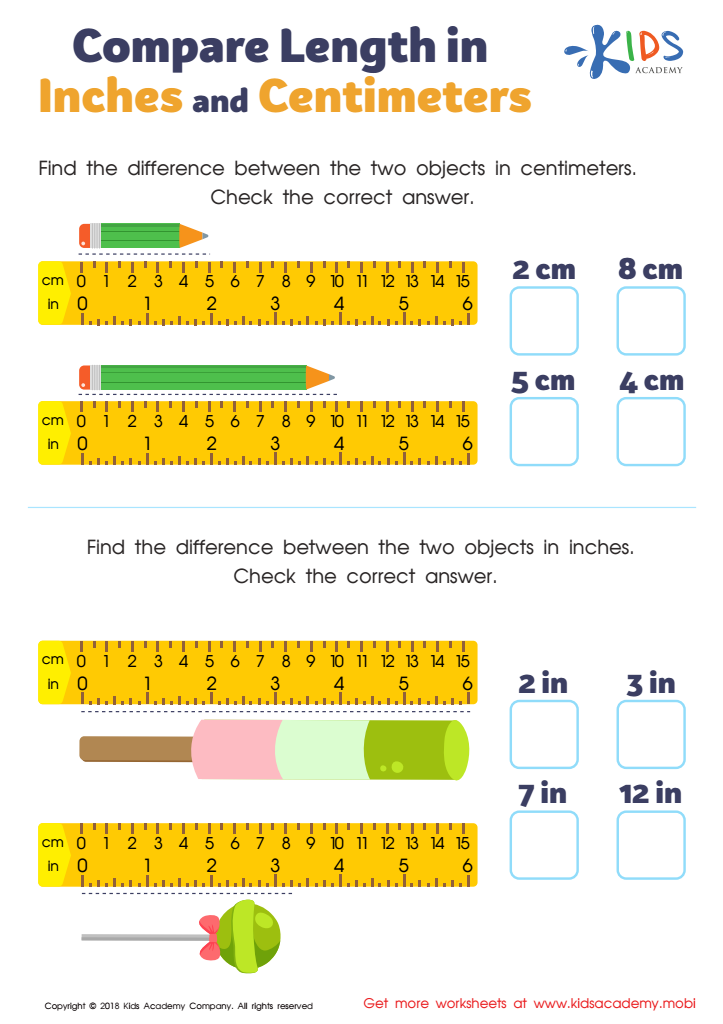
Compare Length in Inches and Centimeters Worksheet
 Assign to My Students
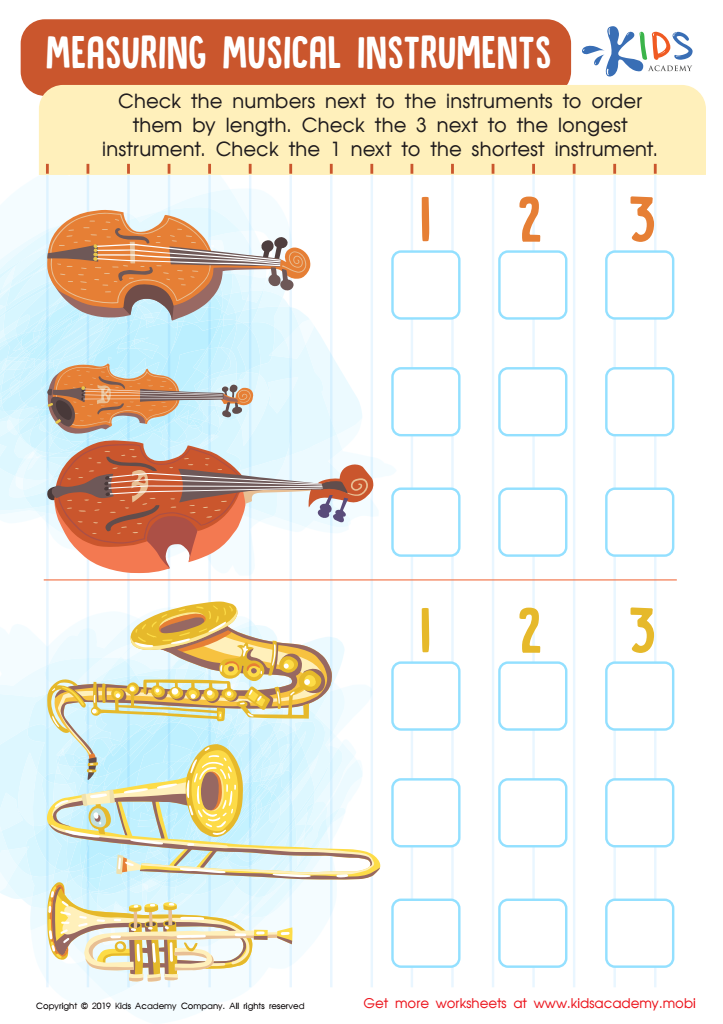
Measuring Musical Instruments Worksheet
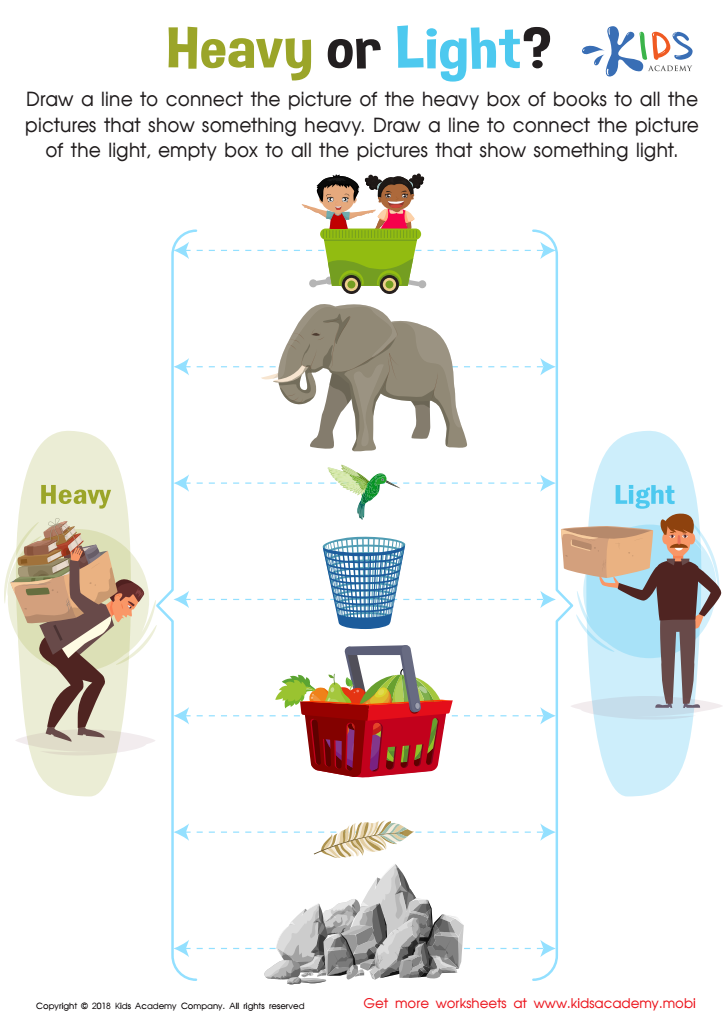
Heavy or Light? Worksheet








Enhancing observation skills is crucial for children aged 5-9 since it forms the foundation for their overall learning and development. During these formative years, children are naturally curious and eager to explore their surroundings. By honing their observation skills, parents and teachers can help foster critical thinking, problem-solving abilities, and creativity.
Effective observation enables children to notice details, make connections, and develop a more profound understanding of the world around them. When educators encourage students to observe carefully, children learn to ask questions, promote inquiry, and engage in meaningful discussions. This active participation enhances their learning experiences, making them more engaged and resilient learners.
Additionally, enhancing observation skills can improve children's academic performance. For instance, improved observation can lead to better reading comprehension, as students can make inferences from the text based on their observations. In science, noticing patterns and details helps in developing hypotheses and understanding core concepts.
Finally, strong observation skills foster social and emotional development. Children learn to read social cues and develop empathy, aiding their interaction with peers and teachers. Overall, prioritizing the enhancement of observation skills is vital for creating well-rounded, academically proficient, and emotionally intelligent children.








