Logical Reasoning Normal Building Vocabulary Worksheets for Ages 5-9
4 filtered results
-
From - To
Enhance your child's cognitive skills with our "Logical Reasoning Normal Building Vocabulary Worksheets" designed for ages 5-9. These engaging worksheets encourage critical thinking and help children develop essential vocabulary through fun exercises. Each activity is crafted to challenge young minds, promoting problem-solving and reasoning capabilities while expanding their word knowledge. With colorful illustrations and age-appropriate themes, learning becomes enjoyable and interactive. Parents and educators can easily incorporate these worksheets into their daily routines to foster language skills and cognitive development. Discover how our resources can make learning fun and effective, laying a strong foundation for lifelong learning!
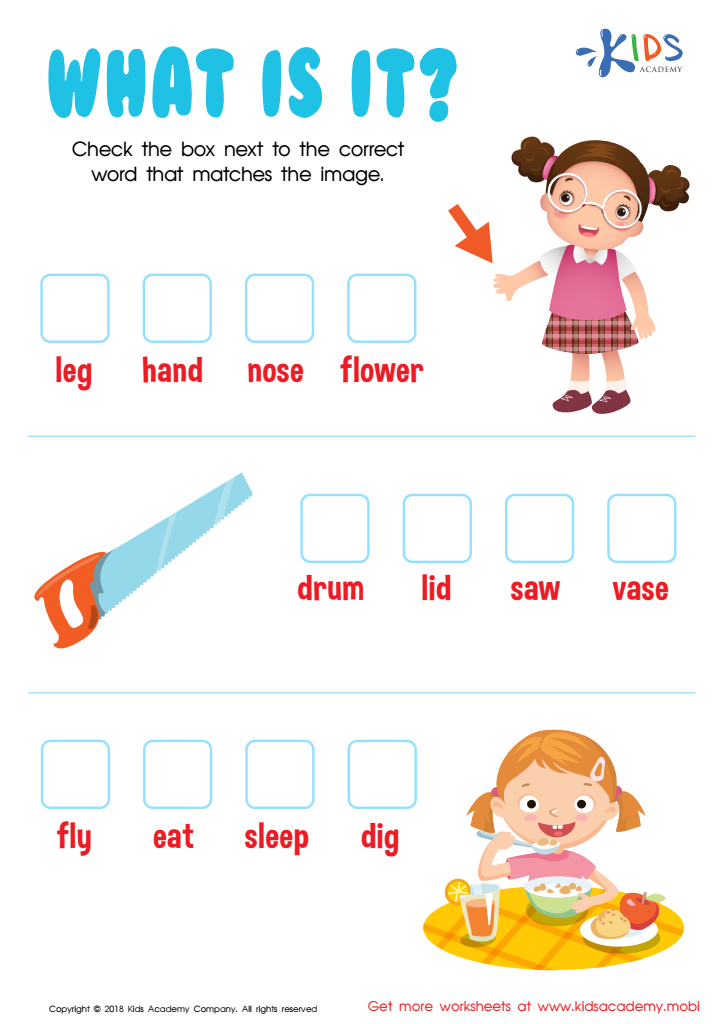
What Is It? Worksheet
 Assign to My Students











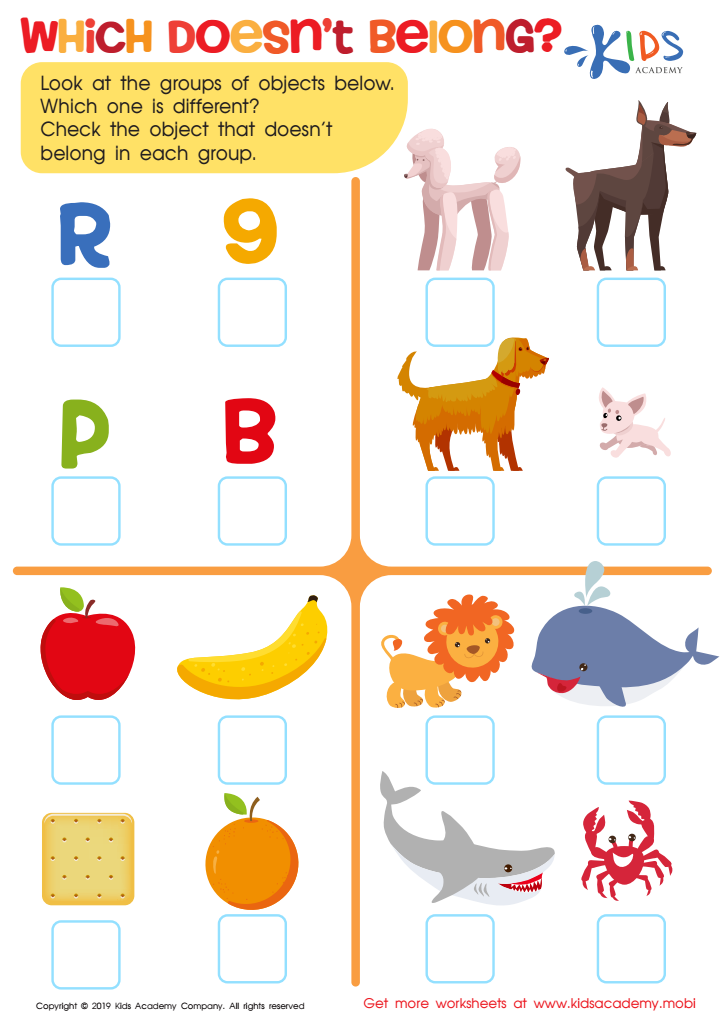
Which Doesn't Belong? Worksheet
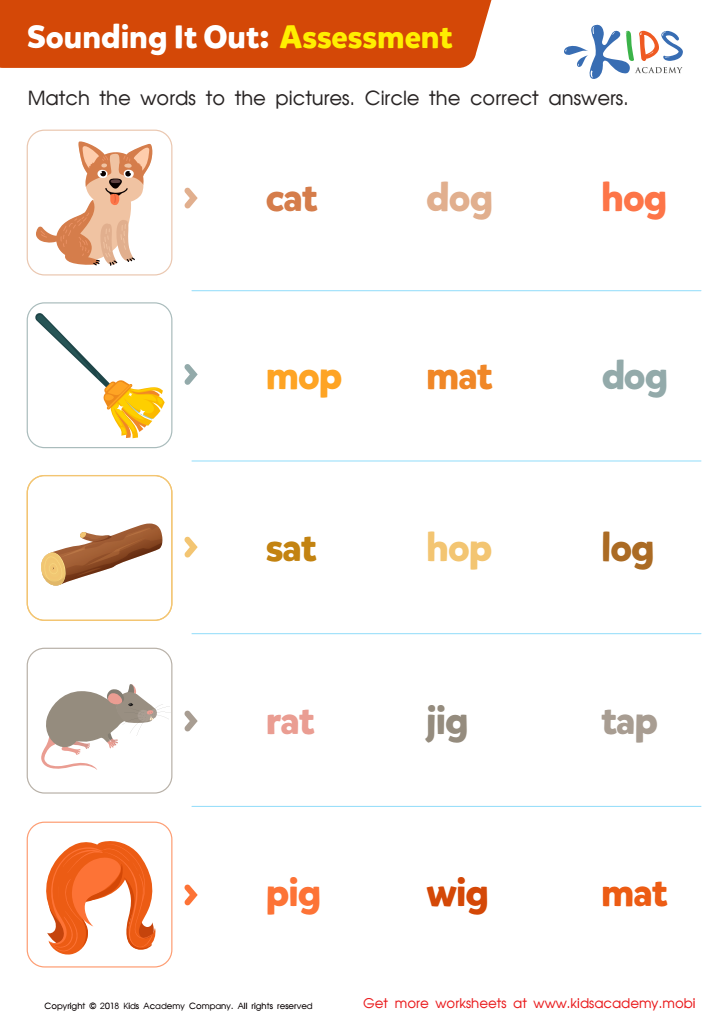
Sounding it Out: Assessment Worksheet
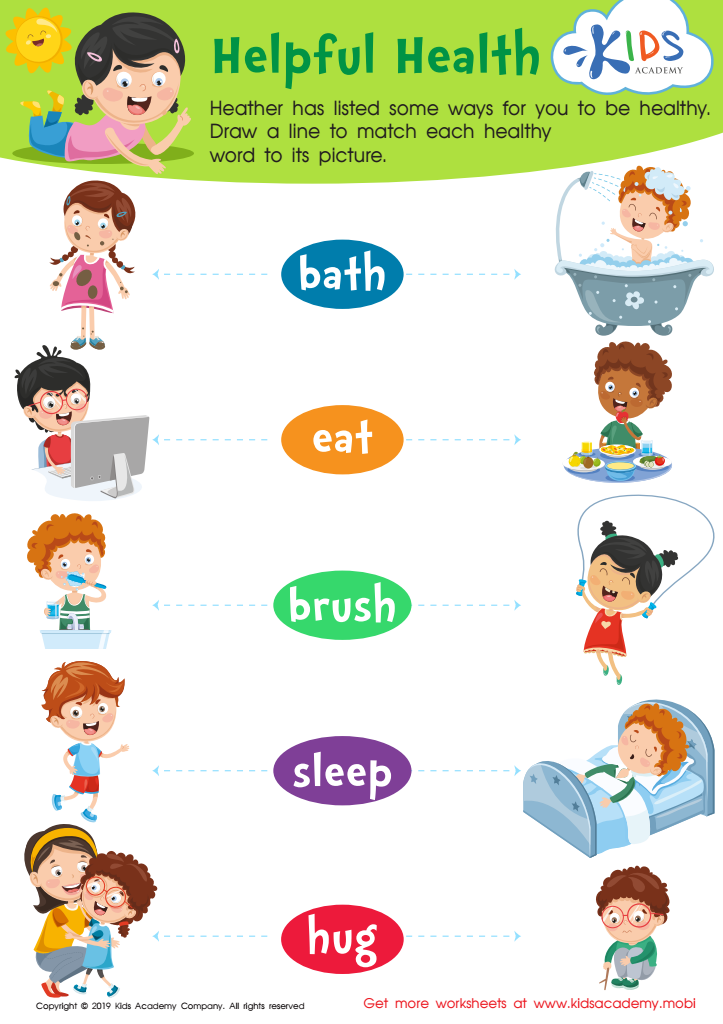
Helpful Health Worksheet






.jpg)

Logical reasoning and vocabulary development are crucial elements in a child’s early education and overall cognitive growth, particularly for ages 5-9. At this developmental stage, children are not only absorbing language but also beginning to understand complex concepts and relationships. Logical reasoning helps them make connections, solve problems, and think critically, skills that are essential for academic success and everyday decision-making.
Building vocabulary during these formative years significantly enhances a child’s ability to communicate effectively and comprehend more complex ideas. A well-rounded vocabulary allows children to express their thoughts and feelings accurately and read fluently, setting the stage for a lifetime of learning. When parents and teachers prioritize activities that promote logical reasoning and vocabulary, they create opportunities for children to explore, inquire, and engage meaningfully with the world around them.
Engaging in games, puzzles, stories, and discussions can bolster both logical reasoning and vocabulary development. By supporting these skills, parents and teachers not only foster a child’s intellectual growth but also boost their confidence and adaptability, equipping them for future challenges and interactions. Caring about logical reasoning and vocabulary is an investment in a child’s potential, shaping them into thoughtful, articulate, and capable individuals.








