Phonics recognition Normal Reading Worksheets for Ages 5-9
4 filtered results
-
From - To
Discover our engaging Phonics Recognition Normal Reading Worksheets designed specifically for children ages 5-9. These printable resources aim to foster essential phonics skills, enabling young learners to decode words effectively and develop reading confidence. Our worksheets feature a variety of fun activities, including letter sounds, blending exercises, and sight word recognition, making learning enjoyable. Each worksheet is crafted to promote phonemic awareness, helping students make connections between sounds and letters. Perfect for classroom use or at-home practice, these materials support literacy development and lifelong learning. Boost your child's reading skills today with our interactive phonics worksheets that ignite a love for reading!
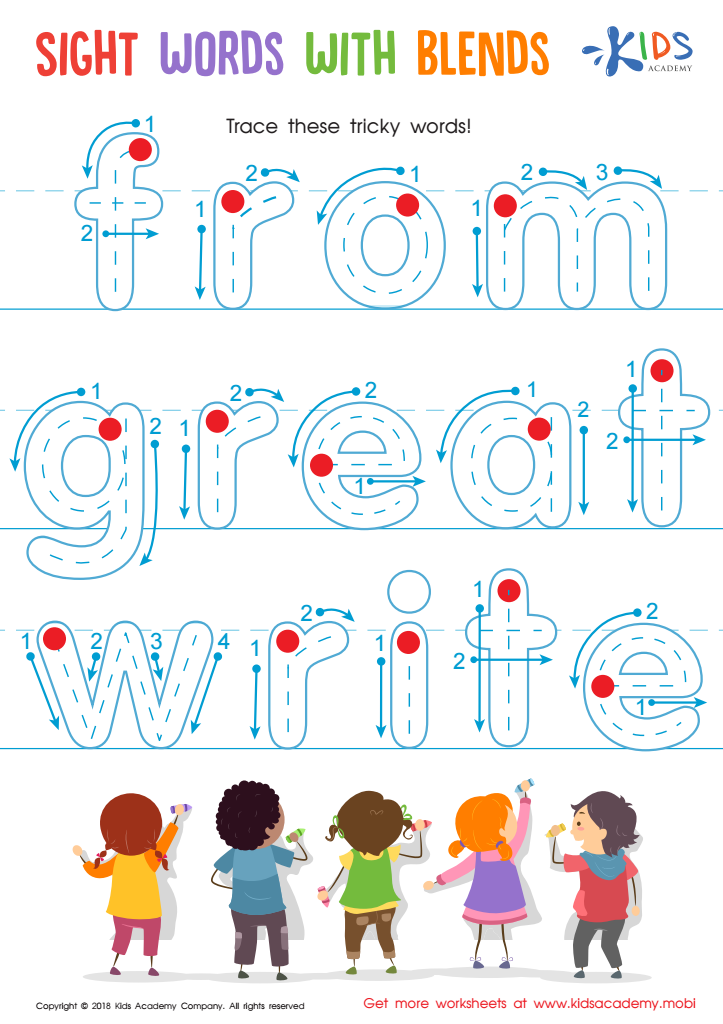
Sight Words with Blends Worksheet
 Assign to My Students
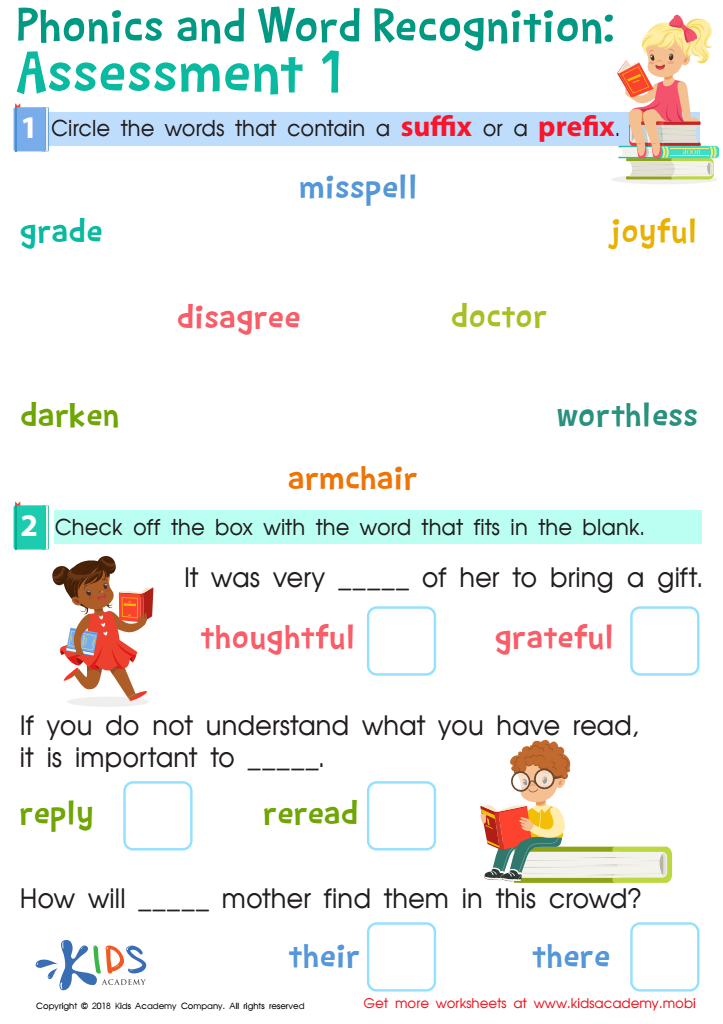
Phonics and Word Recognition: Assessment 1 Worksheet
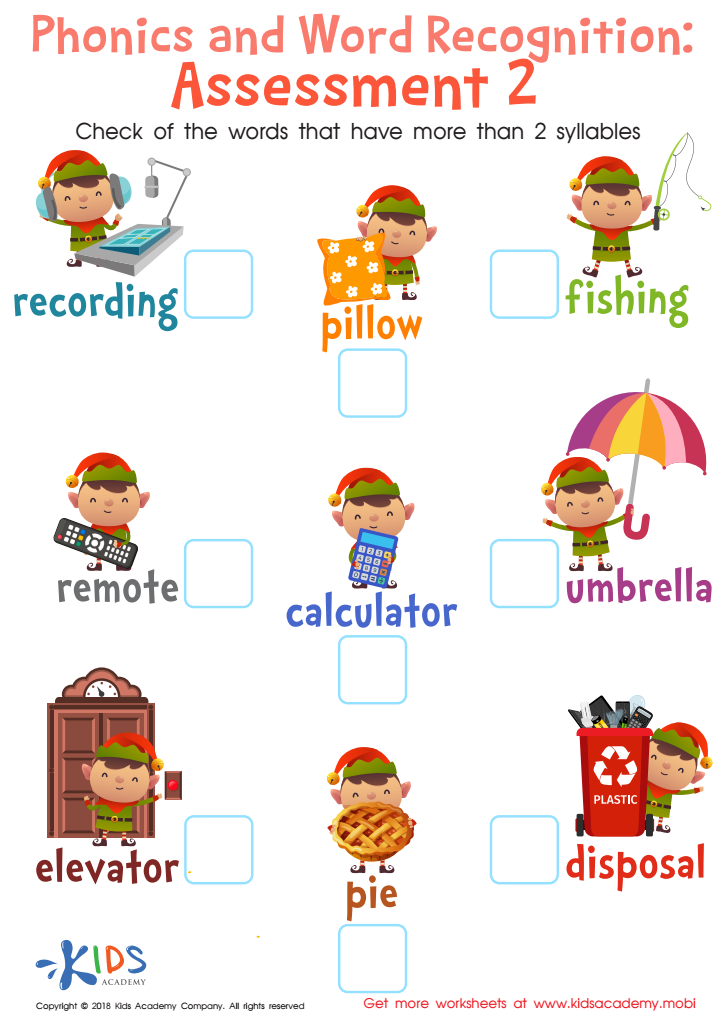
Phonics and Word Recognition: Assessment 2 Worksheet
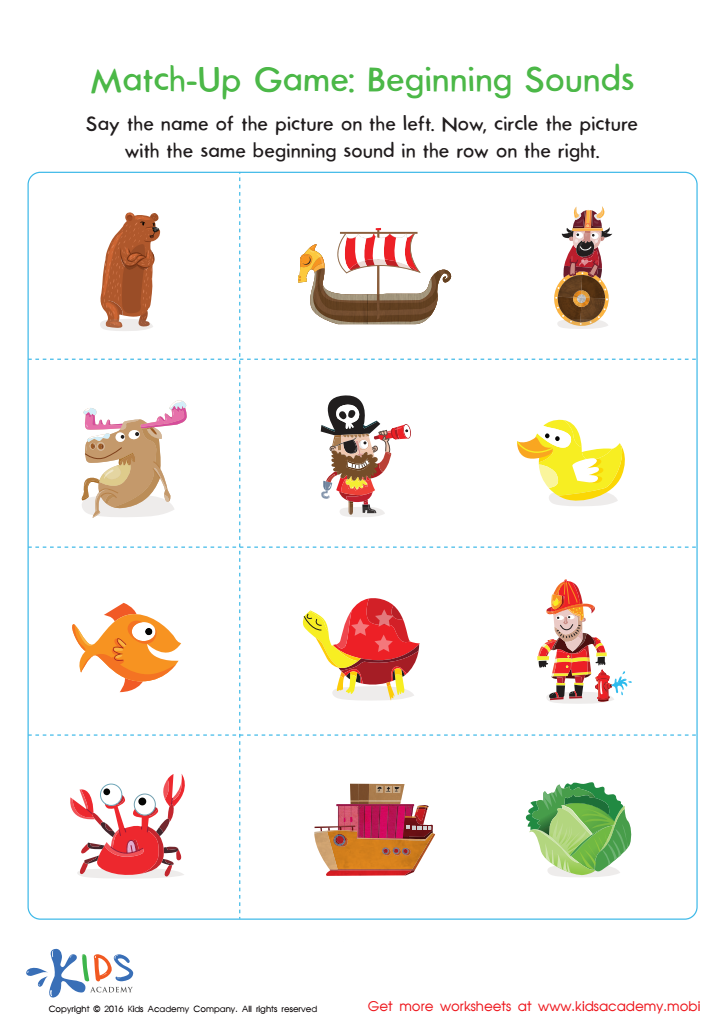
Match–Up Game: Beginning Sounds Worksheet








Phonics recognition is a fundamental skill for young readers, especially for ages 5-9, as it lays the groundwork for successful literacy development. Understanding letters and their associated sounds enables children to decode words, making reading accessible and enjoyable. When parents and teachers prioritize phonics instruction, they empower children to tackle unfamiliar words independently, boosting their confidence and motivation.
Furthermore, phonics is closely linked to overall literacy skills, including vocabulary development, spelling, and comprehension. Strong phonics recognition fosters a rich reading experience, allowing children to engage with a variety of texts. This engagement enhances critical thinking and comprehension skills as they learn to interpret meanings within stories.
Moreover, early intervention is crucial. Children who struggle with phonics may face ongoing reading challenges, which can affect their academic performance and self-esteem. By identifying and addressing phonics recognition early, parents and teachers can ensure each child develops a solid foundation, setting them up for future success.
Ultimately, fostering phonics recognition during these formative years nurtures a love for reading, which extends beyond academics, enriching children's lives and expanding their horizons. Encouraging a clear understanding of phonics equips children with essential skills for lifelong learning and enjoyment.








