Rhyming skills development Normal Reading Worksheets for Ages 5-9
3 filtered results
-
From - To
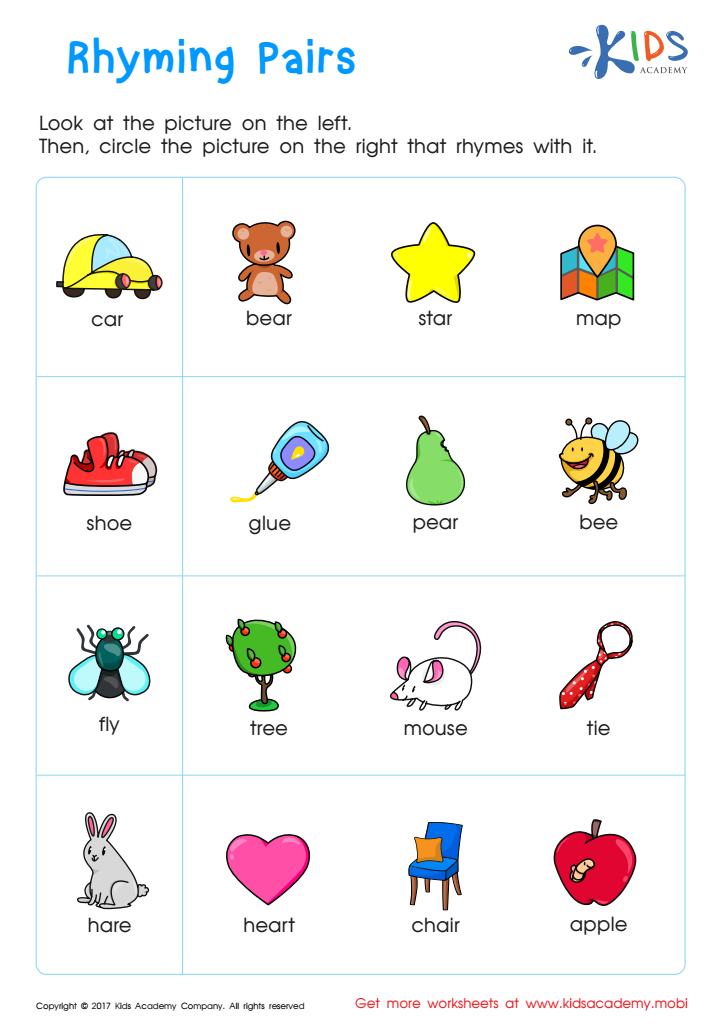
Enhance your child’s reading abilities with our engaging Rhyming Skills Development Reading Worksheets, specially crafted for kids aged 5-9. Our printable resources focus on fostering phonemic awareness and supporting literacy skills through fun rhyming activities. These worksheets feature colorful illustrations and interactive exercises that make learning enjoyable. Children will practice identifying and producing rhymes, strengthening their vocabulary and comprehension in a playful way. Ideal for classroom use or at-home learning, these worksheets align with educational standards while catering to young learners' developmental needs. Start your child's journey towards confident reading and language mastery today with our expertly designed resources!
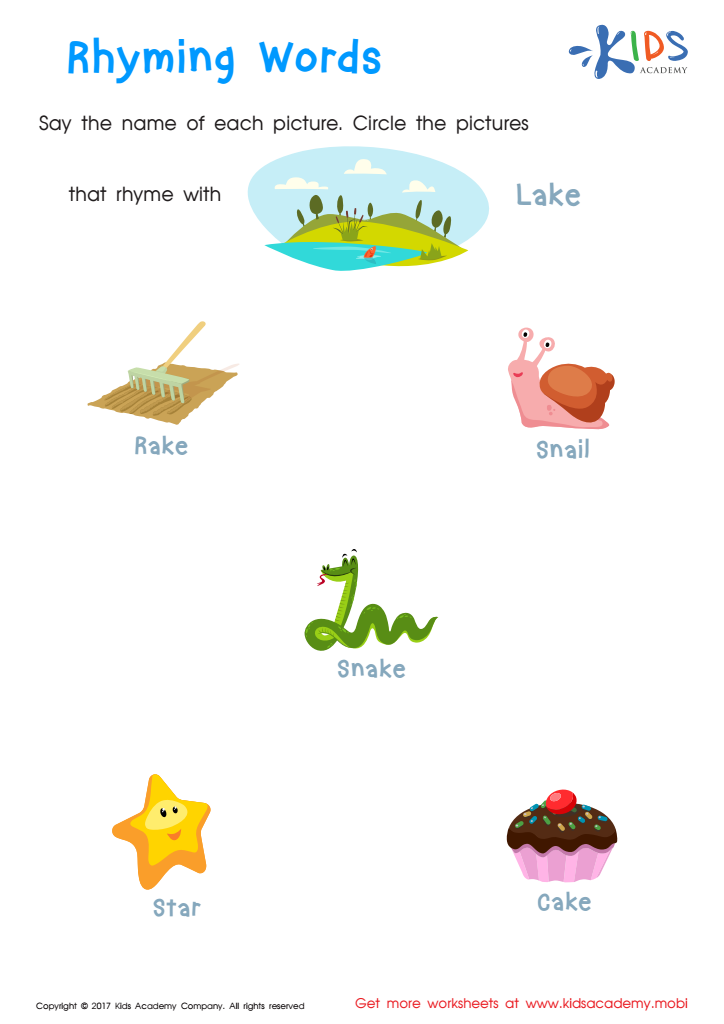
Rhyming Words Rhyming Worksheet
 Assign to My Students
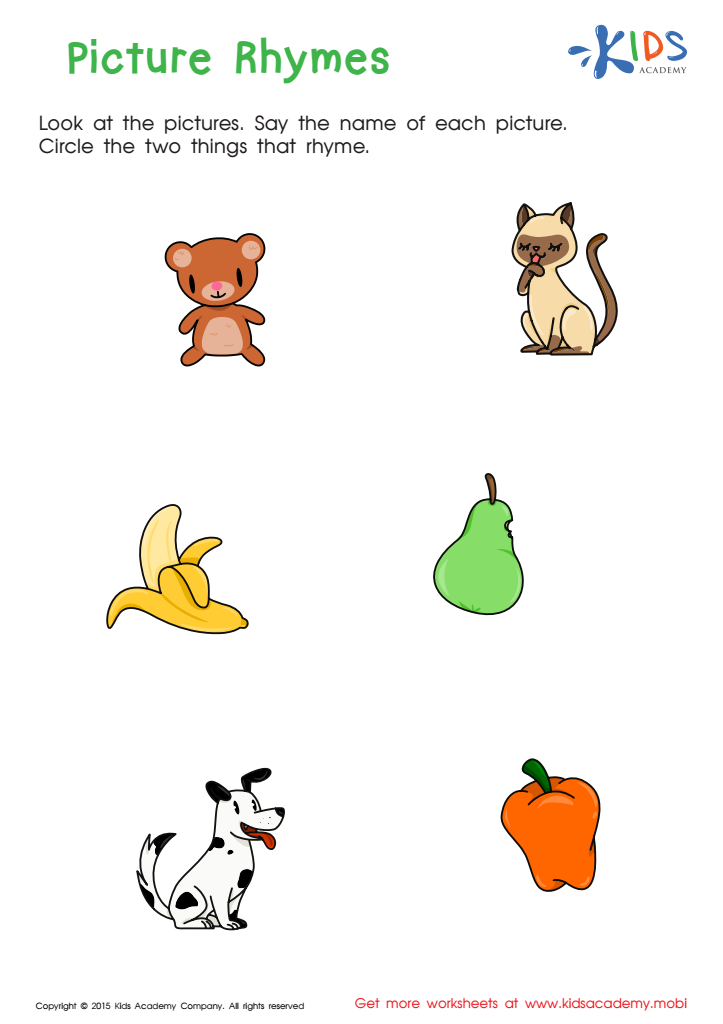
First Words: Picture Rhymes Worksheet






Rhyming skills play a crucial role in early literacy development for children aged 5 to 9. Parents and teachers should care about these skills for several reasons. First, rhyming helps children develop phonemic awareness, which is the ability to hear, identify, and manipulate individual sounds in spoken words. This ability is foundational for reading success, as it aids in decoding and spelling written words.
Additionally, rhyming enriches vocabulary and enhances language skills. Through engaging with rhyming books, songs, and poems, children encounter a variety of words, improving their comprehension and expressive language abilities. Rhyming activities also promote auditory discrimination, helping kids differentiate similar sounds, which is essential for effective communication.
Moreover, learning through rhymes can foster creativity and critical thinking. Rhyming games and interactive activities encourage children to think outside the box and build confidence in their linguistic abilities. Lastly, the rhythmic and playful nature of rhymes makes learning enjoyable, creating a positive association with reading and literacy. By prioritizing rhyming skills, parents and educators can lay a solid foundation for lifelong reading and learning, making it a vital component of early childhood education.








