Moral understanding Normal Reading Comprehension Worksheets for Ages 5-9
5 filtered results
-
From - To
Enhance your child's reading comprehension through our engaging Moral Understanding Normal Reading Comprehension Worksheets, designed specifically for ages 5-9. These worksheets not only improve reading skills but also promote critical thinking by encouraging young learners to grasp essential moral lessons. Through interactive exercises and relatable narratives, children explore essential themes such as friendship, honesty, and empathy, fostering a deeper emotional connection to the text. Ideal for parents and educators alike, our resources nurture a love for reading while reinforcing vital life lessons. Explore our collection today and empower your child with the skills to navigate stories with moral significance!
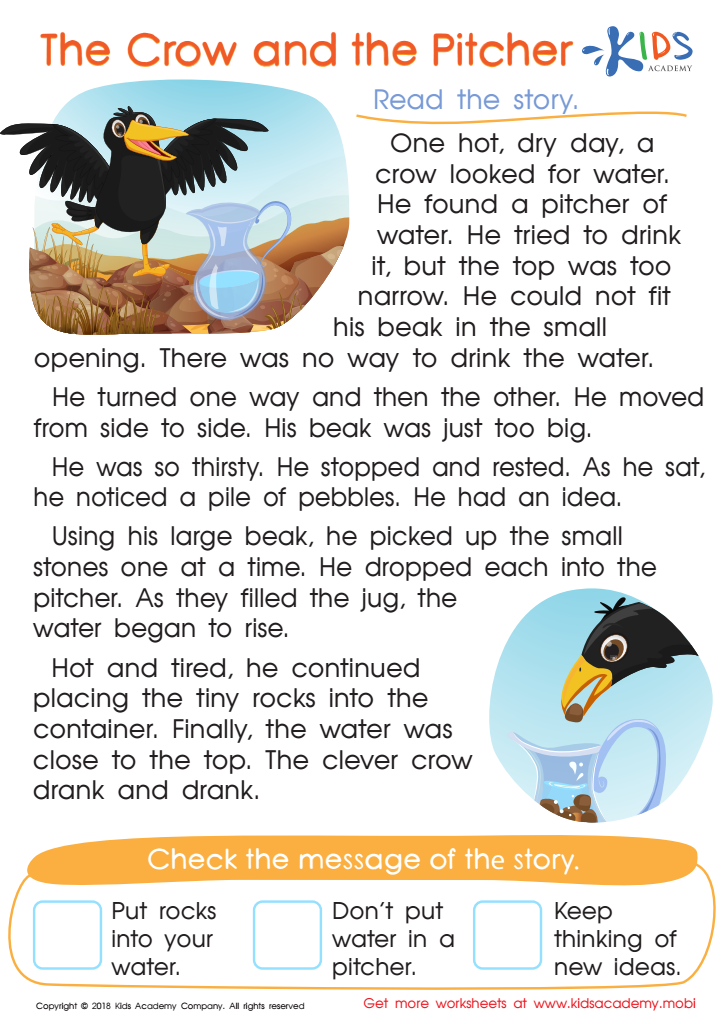
The Crow and the Pitcher Worksheet
 Assign to My Students
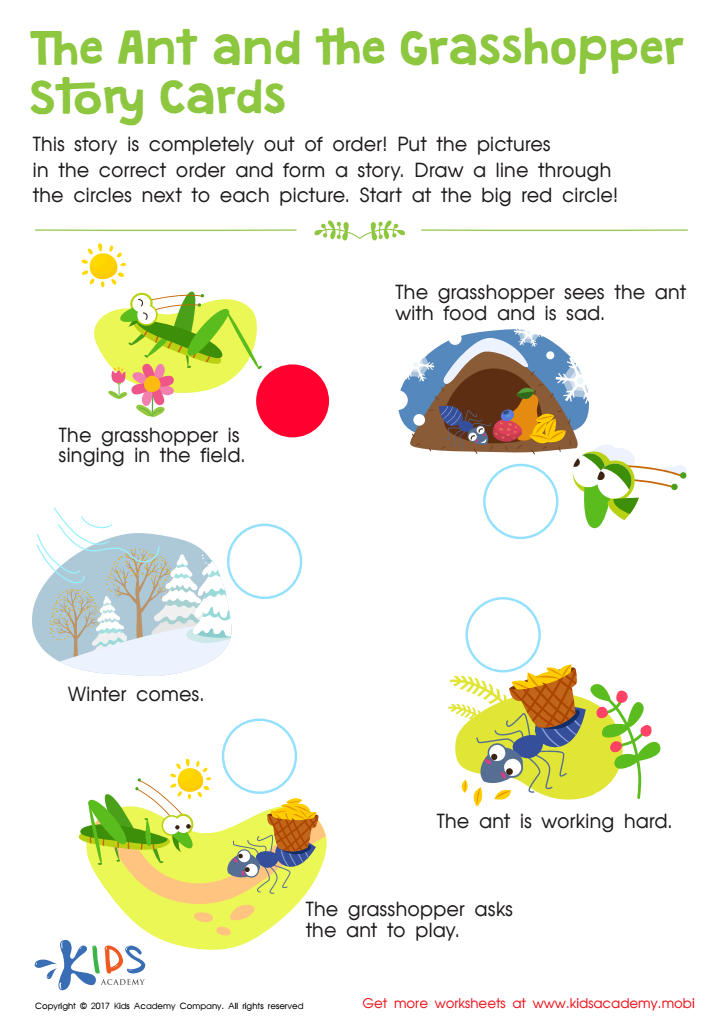
The Ant and The Grasshopper Worksheet
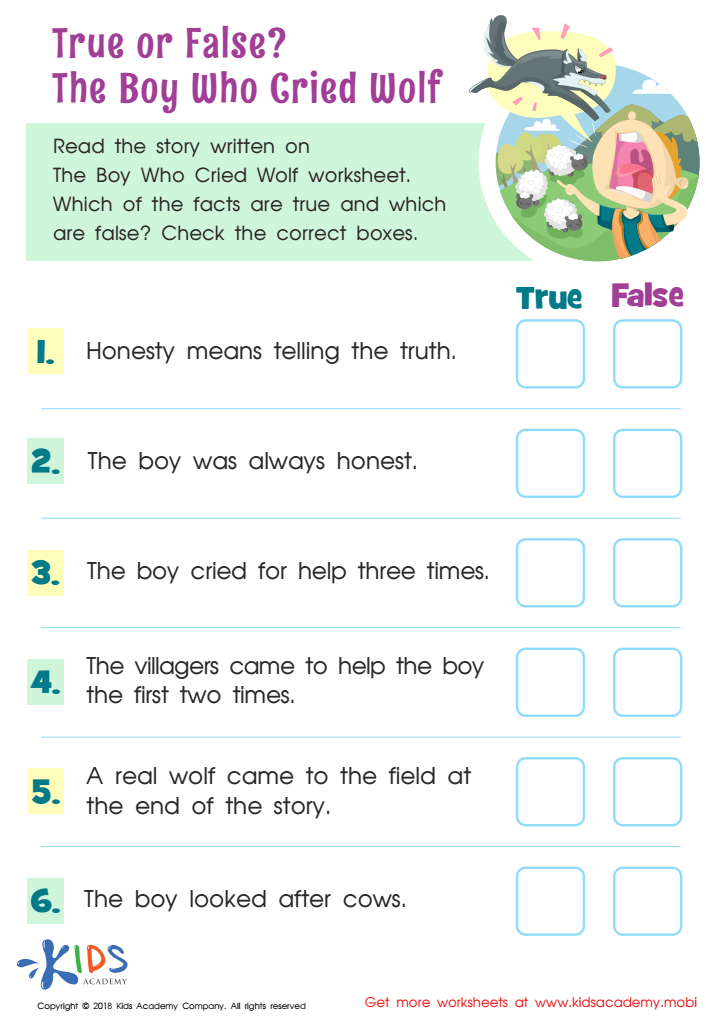
True or False? The Boy Who Cried Wolf Worksheet
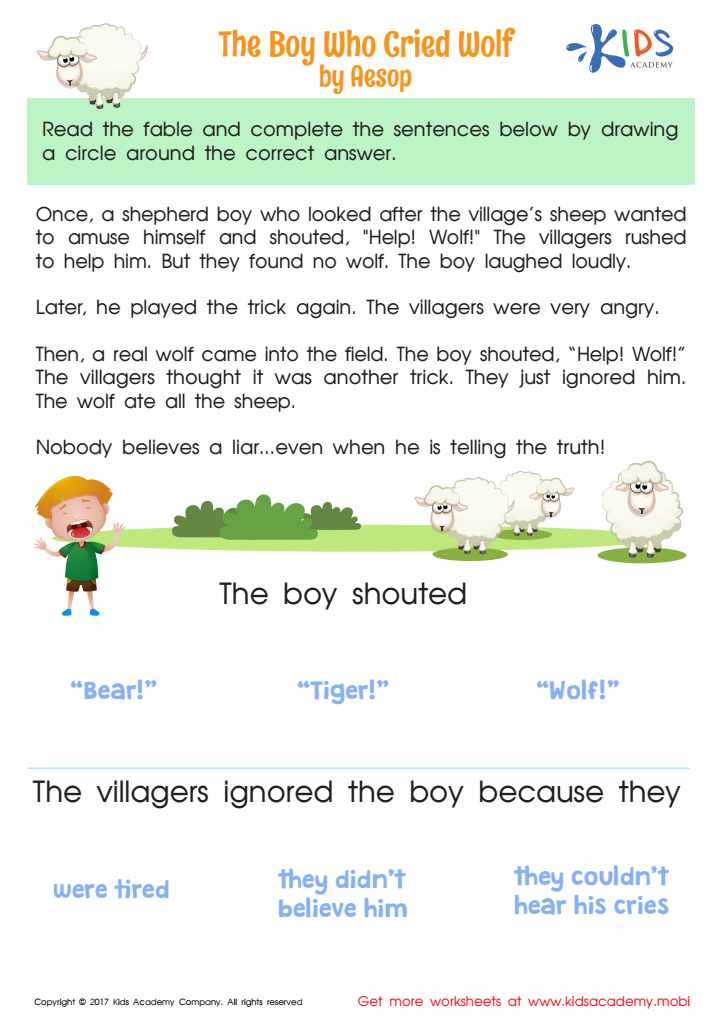
The Boy Who Cried Wolf Worksheet
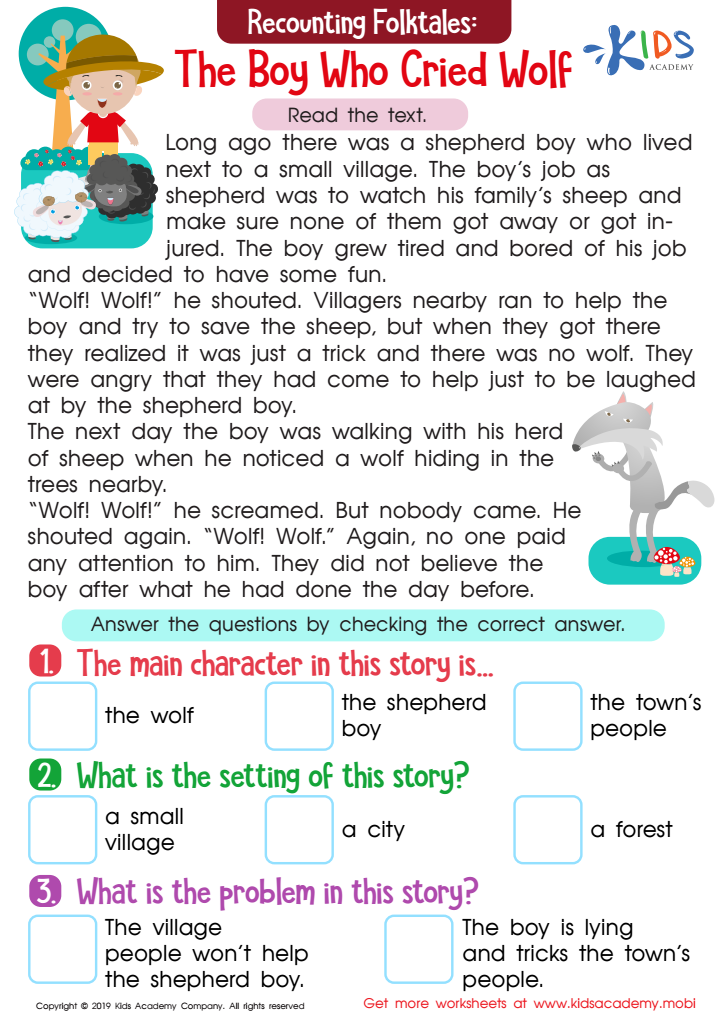
The Boy Who Cried Wolf Part 1 Worksheet





.jpg)

Moral understanding and reading comprehension are essential components of early education for children aged 5 to 9. Parents and teachers should recognize their interconnectedness in fostering well-rounded individuals.
Firstly, moral understanding helps children differentiate between right and wrong, promoting empathy and responsible decision-making. When children engage with stories that feature moral dilemmas, they learn to navigate social complexities and develop emotional intelligence, skills vital for positive interactions and relationships.
Reading comprehension plays a crucial role in this process. As young learners decode text, they are not only building literacy skills but also absorbing valuable life lessons embedded in narratives. Engaging with stories enhances children's critical thinking, enabling them to analyze characters' actions and motivations, leading to a deeper understanding of moral concepts.
Moreover, strong reading comprehension skills empower children to access various resources that provide insights into ethics, values, and diverse perspectives, encouraging open-mindedness and cultural appreciation. When parents and teachers cultivate both moral understanding and reading skills, they contribute to holistic development—teaching children to be thoughtful readers and empathetic individuals. This foundation sets the stage for responsible citizenship in an increasingly interconnected world, making it imperative for adults to prioritize these aspects of a child's education.








