Analytical skills Normal Reading Fiction Worksheets for Ages 5-9
5 filtered results
-
From - To
Unlock your child's analytical potential with our age-appropriate Reading Fiction Worksheets for ages 5-9. These engaging and vibrant worksheets are specifically designed to enhance critical thinking and comprehension skills in young readers. By exploring captivating stories and characters, children will develop the ability to analyze textual elements, draw inferences, and understand underlying themes. Ideal for early grade teachers and parents alike, our resources support a fundamental building block in literacy education. Foster a lifelong love of reading and analytical thinking with Kids Academy's expertly crafted materials. Visit our website to discover more and start your child's learning adventure today.
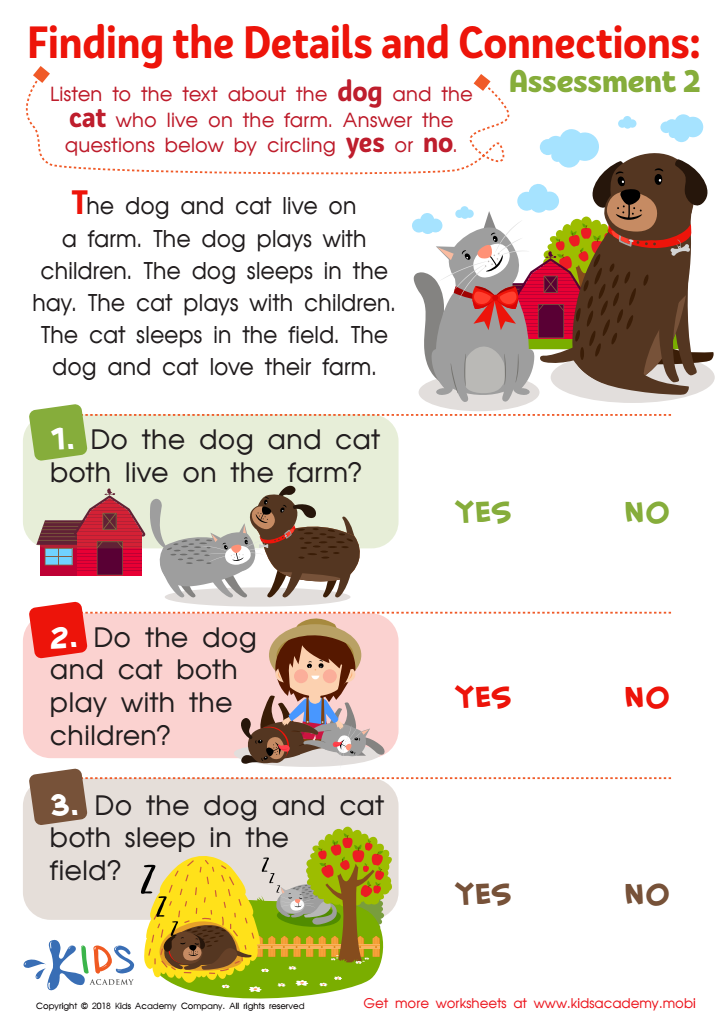
Finding the Details and Connections: Assessment 2 Worksheet
 Assign to My Students
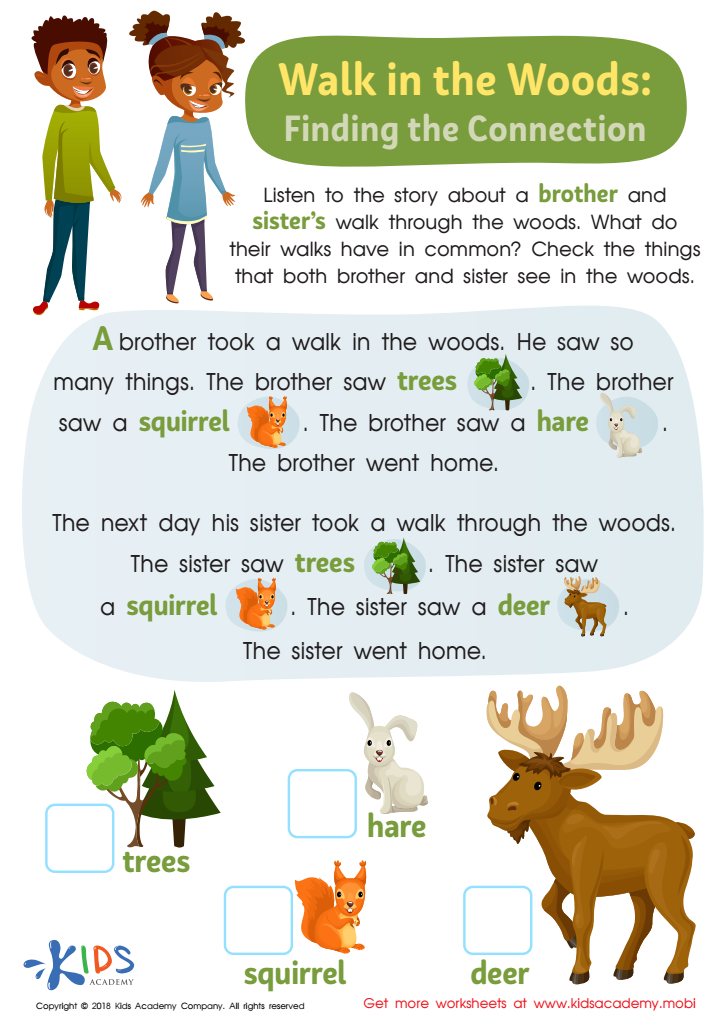
Walk In the Woods: Finding Connections Worksheet
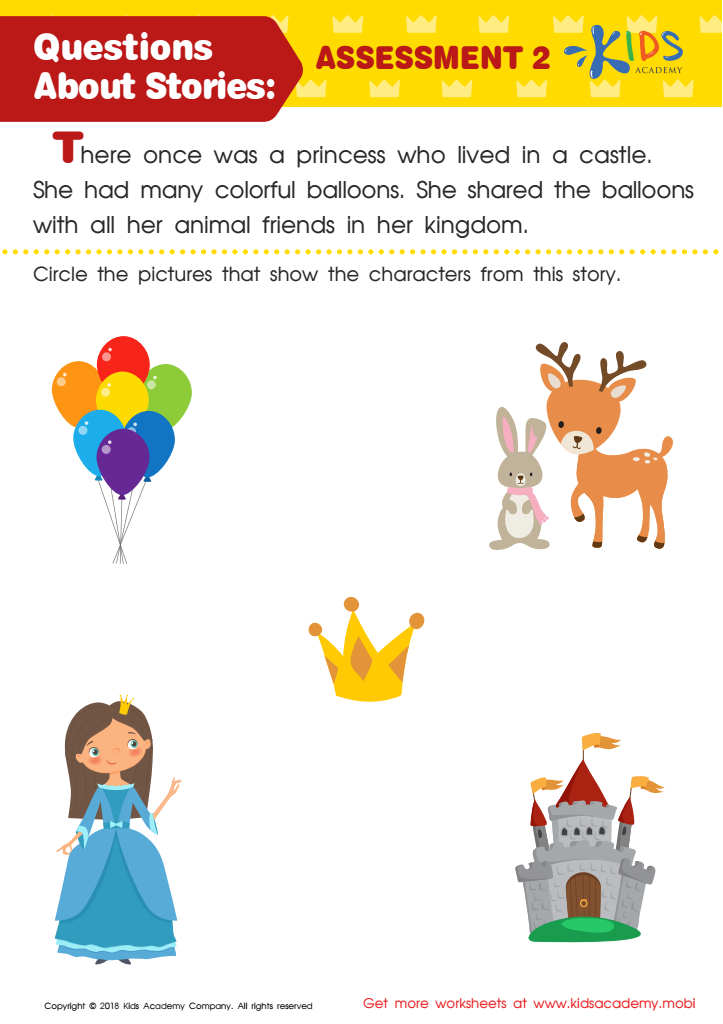
Questions About Stories: Assessment 2 Worksheet
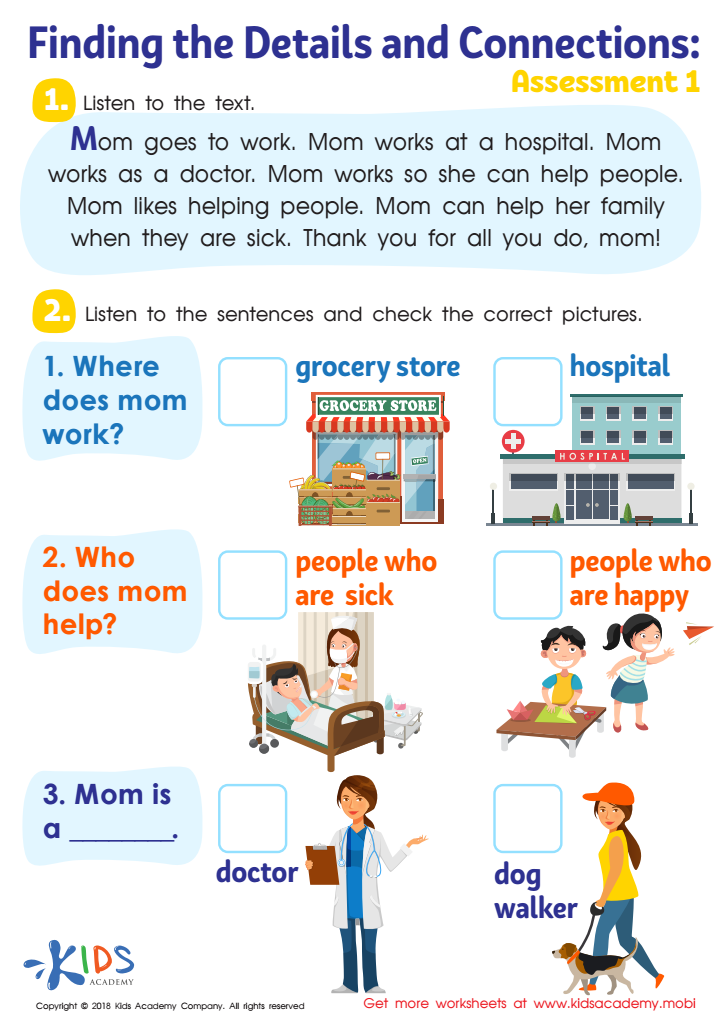
Finding the Details and Connections: Assessment 1 Worksheet
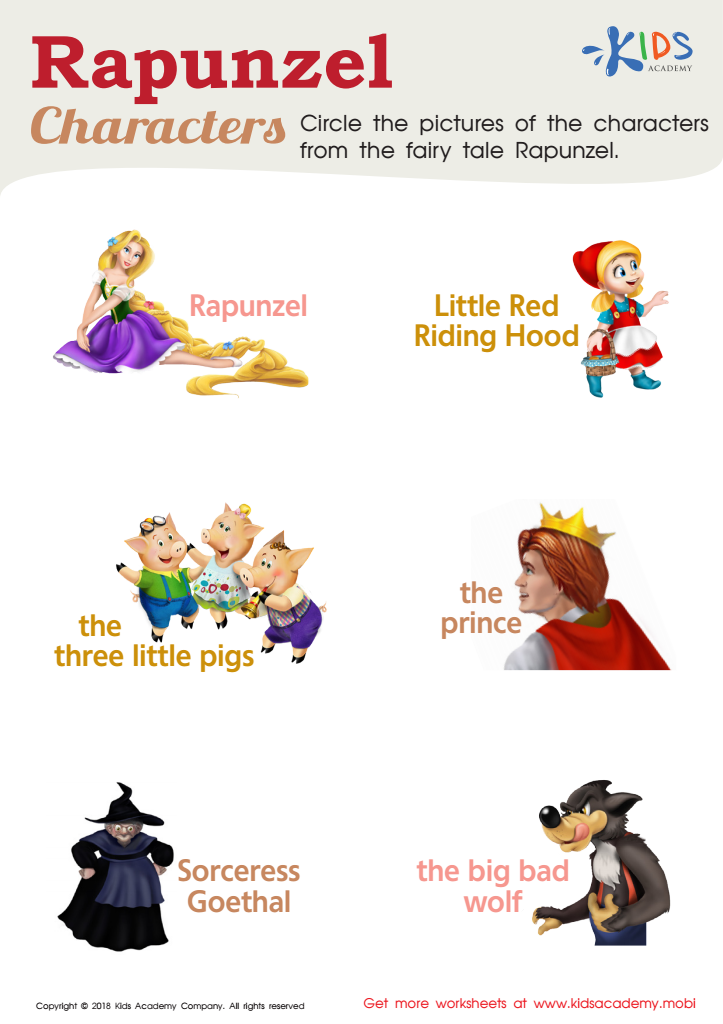
Rapunzel Characters Worksheet




.jpg)

.jpg)

Parents and teachers should prioritize the development of analytical skills and normal reading abilities through fiction for children aged 5-9, as these form the foundation of critical thinking, comprehension, and emotional intelligence. At this formative age, reading fiction stimulates imagination and introduces complex narrative structures, enabling children to understand cause-and-effect relationships and plot developments. Analytical skills help children make connections between different stories and real-life situations, fostering a deeper understanding of the world around them.
Moreover, immersing children in fictional stories enriches their vocabulary and language abilities, essential for effective communication. Through characters' diverse perspectives and experiences, young readers learn empathy and how to navigate social interactions. Analytical thinking allows them to question motivations, predict outcomes, and recognize underlying themes, promoting intellectual curiosity.
Emotionally, reading fiction can be a safe space for children to explore emotions and scenarios, helping them develop coping mechanisms and resilience. Stories can also convey moral lessons subtly, guiding children's understanding of right and wrong without didactic instructions.
By encouraging strong analytical skills and regular reading habits, parents and teachers set the stage for lifelong learning and personal growth. These skills not only support academic achievement but also empower children to become thoughtful, compassionate, and well-rounded individuals.







