Identifying story elements Normal Reading Fiction Worksheets for Ages 5-9
3 filtered results
-
From - To
Explore our engaging "Identifying Story Elements Normal Reading Fiction Worksheets" designed specifically for children ages 5-9. These interactive worksheets help young learners delve into the essential components of storytelling, including characters, setting, plot, problem, and solution. By using fun illustrations and relatable examples, our resources make learning to identify story elements enjoyable and effective. Perfect for at-home or classroom use, these worksheets cultivate critical thinking and comprehension skills, laying a strong foundation for future reading success. Spark creativity and enhance your child's understanding of literature with our user-friendly tools that make reading an exciting adventure!
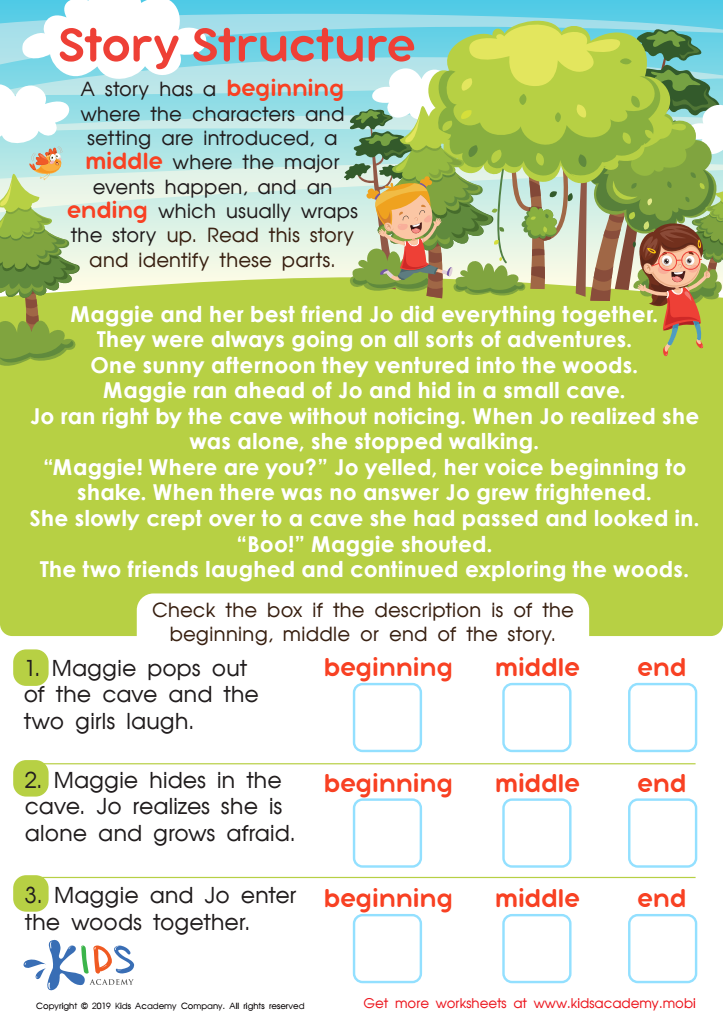
Story Structure Worksheet
 Assign to My Students
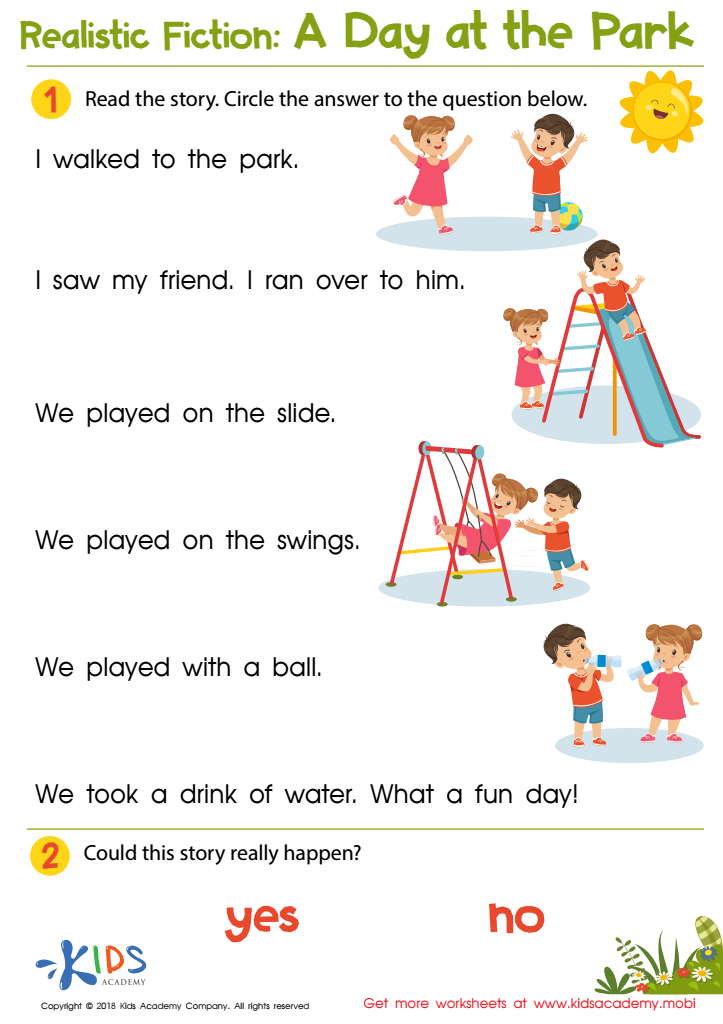
A Day at the Park Worksheet
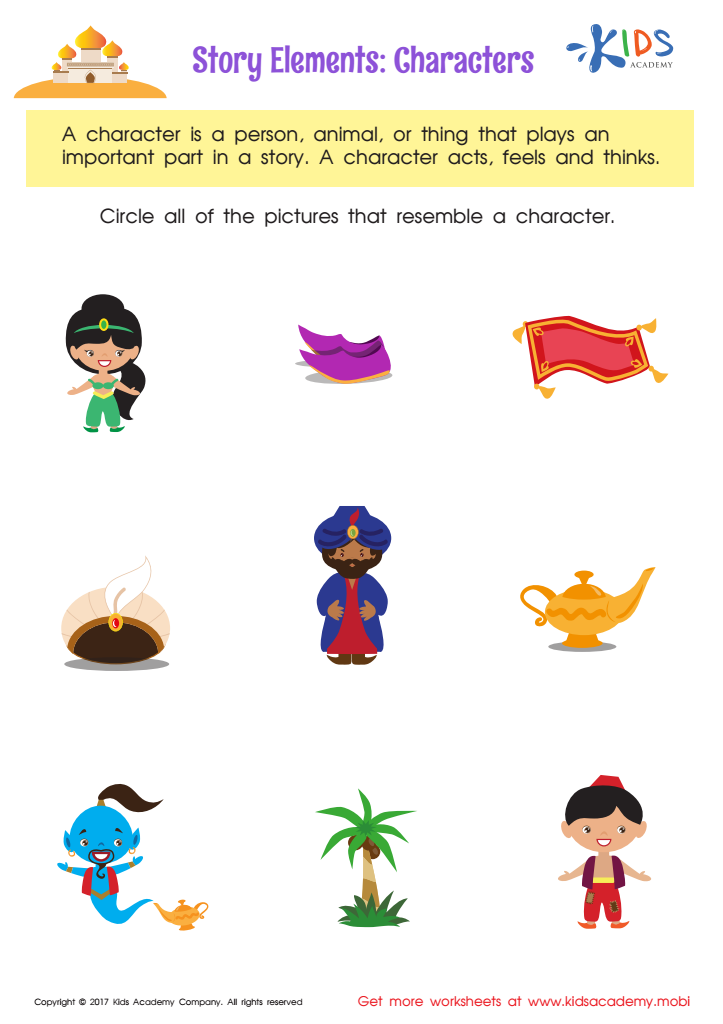
Story Elements Printable








Identifying story elements is crucial for children's understanding of reading, particularly for ages 5-9, as it lays the foundation for literacy and comprehension skills. Parents and teachers should care about this process for several reasons.
Firstly, recognizing elements such as characters, setting, plot, conflict, and resolution helps children grasp the narrative structure. This understanding not only enhances their ability to follow and enjoy stories but also empowers them to create their own narratives, fostering creativity and self-expression.
Secondly, mastery of story elements aids in critical thinking and analytical skills. As children discuss and dissect stories, they learn to interpret information and make connections, which are essential skills in both academic and real-world contexts.
Moreover, identifying story elements promotes a love for reading. When children engage deeply with stories, they are more likely to develop a lifelong interest in literature.
Lastly, these skills support comprehension strategies essential for future learning. As children progress in their education, a strong grasp of story elements will facilitate understanding more complex texts across various subjects. In short, emphasizing story elements in early education benefits children's cognitive development and encourages a positive attitude towards reading.







