Moral understanding Normal Reading Fiction Worksheets for Ages 5-9
5 filtered results
-
From - To
Explore our "Moral Understanding Normal Reading Fiction Worksheets" designed specifically for children ages 5-9. These engaging worksheets help young learners develop critical thinking skills by analyzing morals and lessons from popular stories. Each activity encourages kids to reflect on key themes, make connections to their own experiences, and understand the importance of moral values. Perfect for home or classroom use, our worksheets promote comprehension and empathy, making reading a meaningful experience. With a variety of fun exercises, students will enhance their reading skills while learning to recognize moral messages in fiction. Start nurturing thoughtful, compassionate readers today!
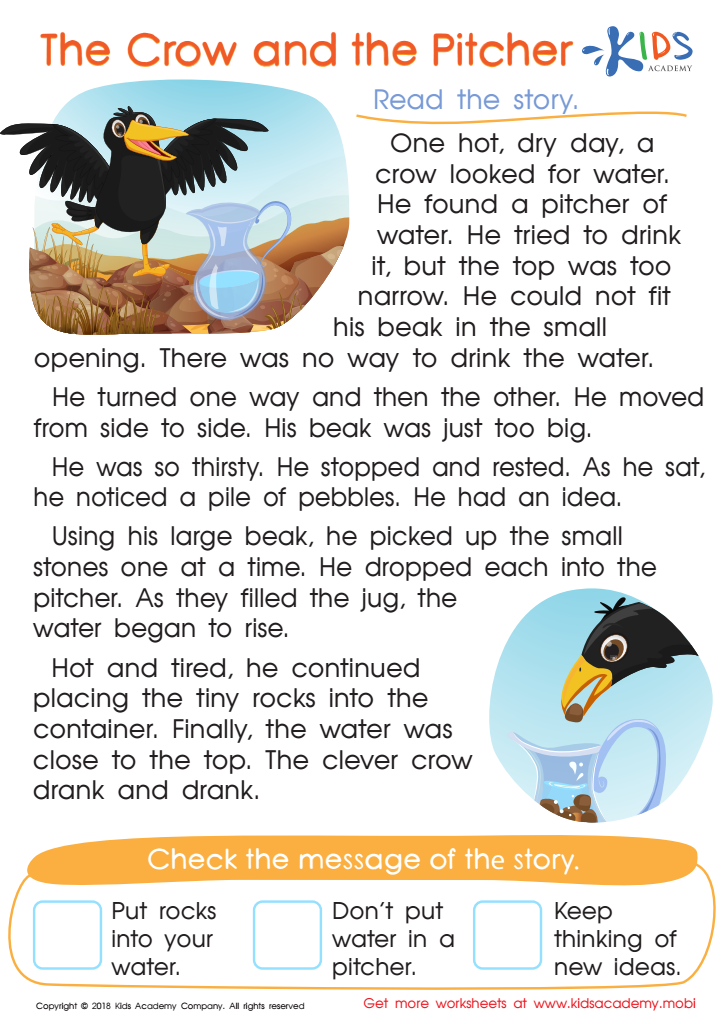
The Crow and the Pitcher Worksheet
 Assign to My Students
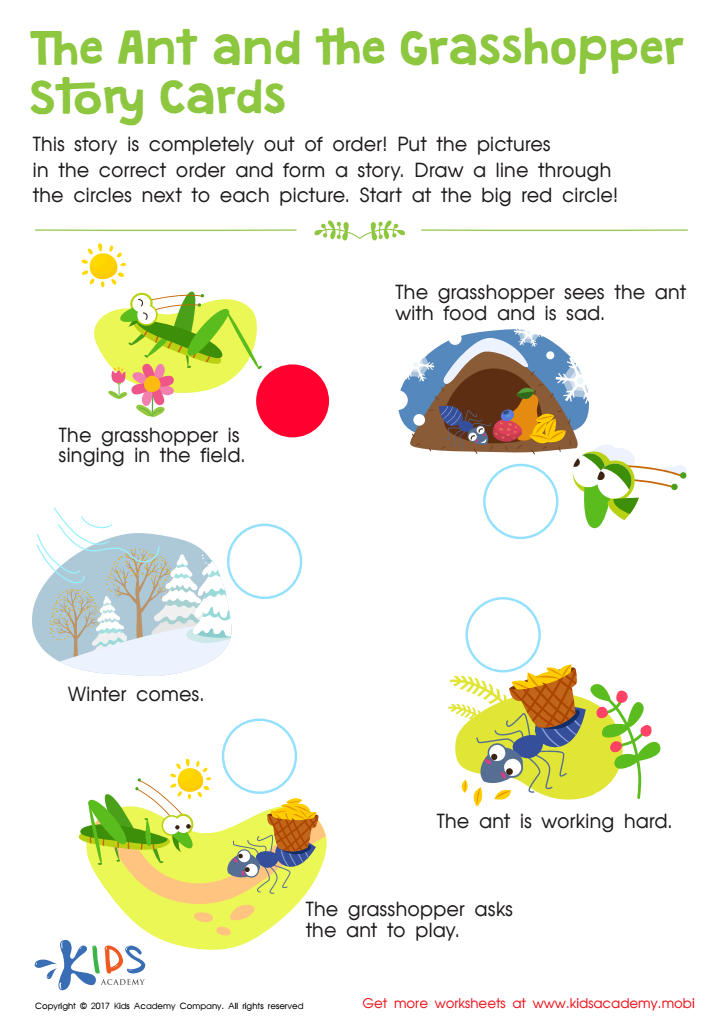
The Ant and The Grasshopper Worksheet
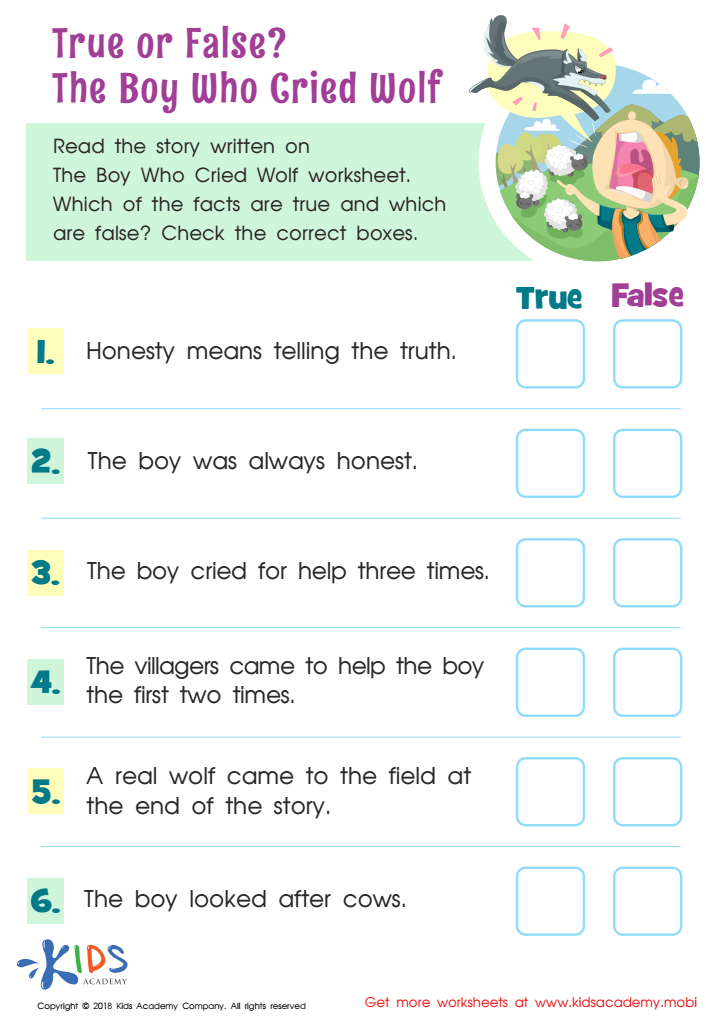
True or False? The Boy Who Cried Wolf Worksheet
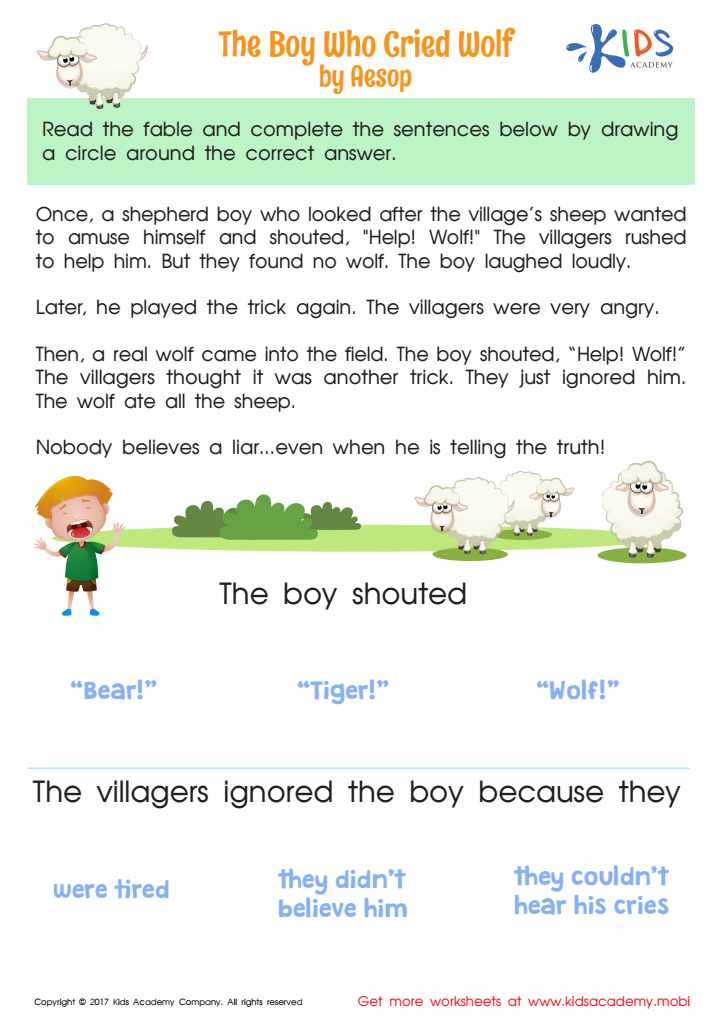
The Boy Who Cried Wolf Worksheet
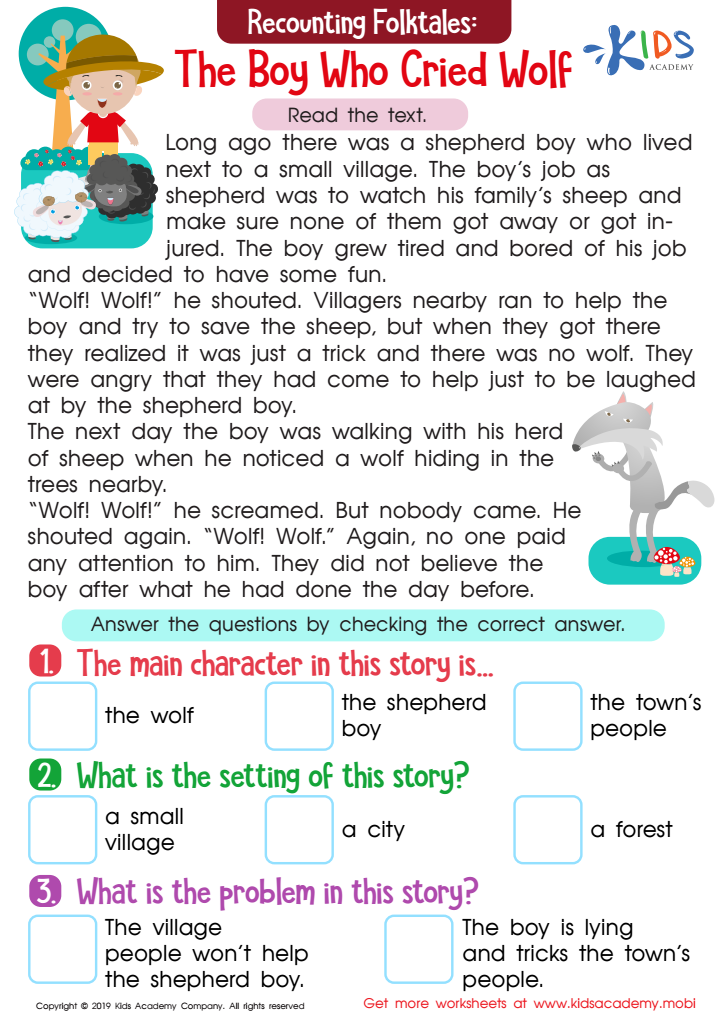
The Boy Who Cried Wolf Part 1 Worksheet








Moral understanding in children's literature plays a pivotal role in shaping young minds, particularly in readers aged 5-9. This developmental stage is crucial as children begin to navigate the social world, forming concepts of right and wrong. Engaging children with fiction that includes moral dilemmas helps them to empathize with characters, fostering emotional intelligence and ethical reasoning. Through relatable stories, children learn the consequences of behaviors, the importance of compassion, and the value of honesty.
Moreover, fiction serves as a safe space for exploration. As children encounter various situations and characters, they can reflect on their choices and beliefs without real-world repercussions. This reflection cultivates critical thinking skills, encouraging them to discuss and articulate their understanding of morality.
Parents and teachers play an essential role by guiding children in these discussions, helping them make connections between story elements and real-life experiences. By prioritizing moral understanding in their reading materials, educators, and caregivers not only equip children with essential life skills but also help to nurture a generation that values kindness, integrity, and social responsibility. Consequently, promoting moral understanding through age-appropriate fiction enriches children's lives, shaping them into thoughtful, compassionate individuals.







