Categorization skills Normal Animals Worksheets for Ages 5-9
3 filtered results
-
From - To
Enhance your child's understanding of the animal kingdom with our "Categorization Skills: Normal Animals Worksheets for Ages 5-9." These engaging and educational worksheets help young learners develop critical categorization skills by identifying and grouping different animals. Perfect for kids aged 5 to 9, these activities promote cognitive development and scientific knowledge through interactive and fun exercises. Children will practice sorting animals based on characteristics, habitats, and more, fostering a deeper appreciation for wildlife. Unlock your child’s potential and curiosity with our expertly designed worksheets, available now to support their early learning journey.
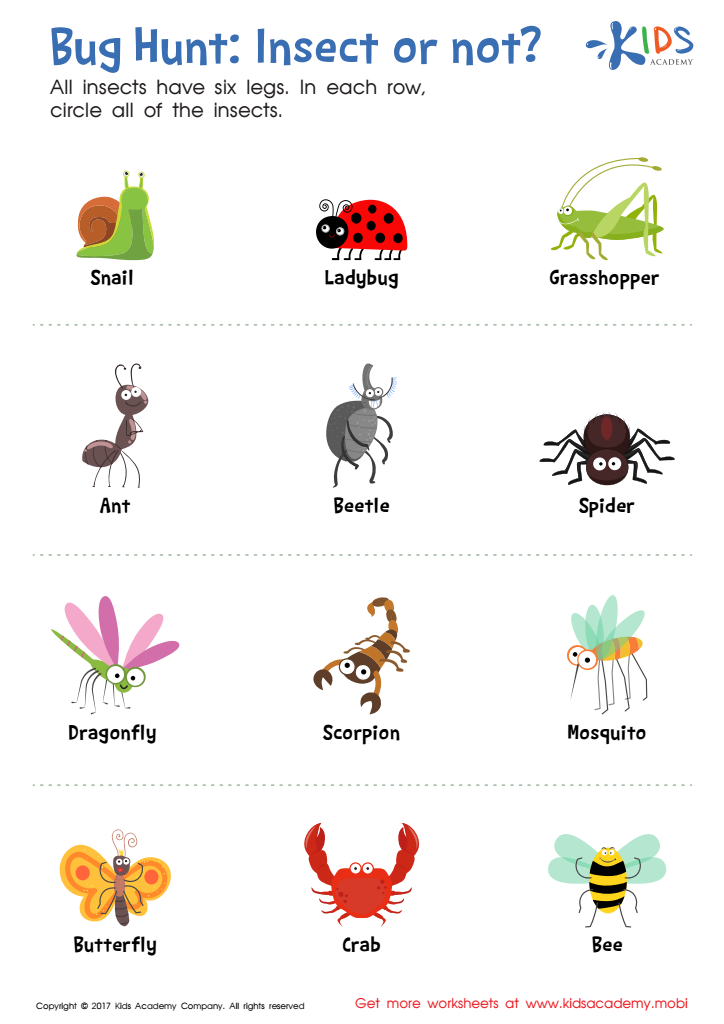
 Assign to My Students
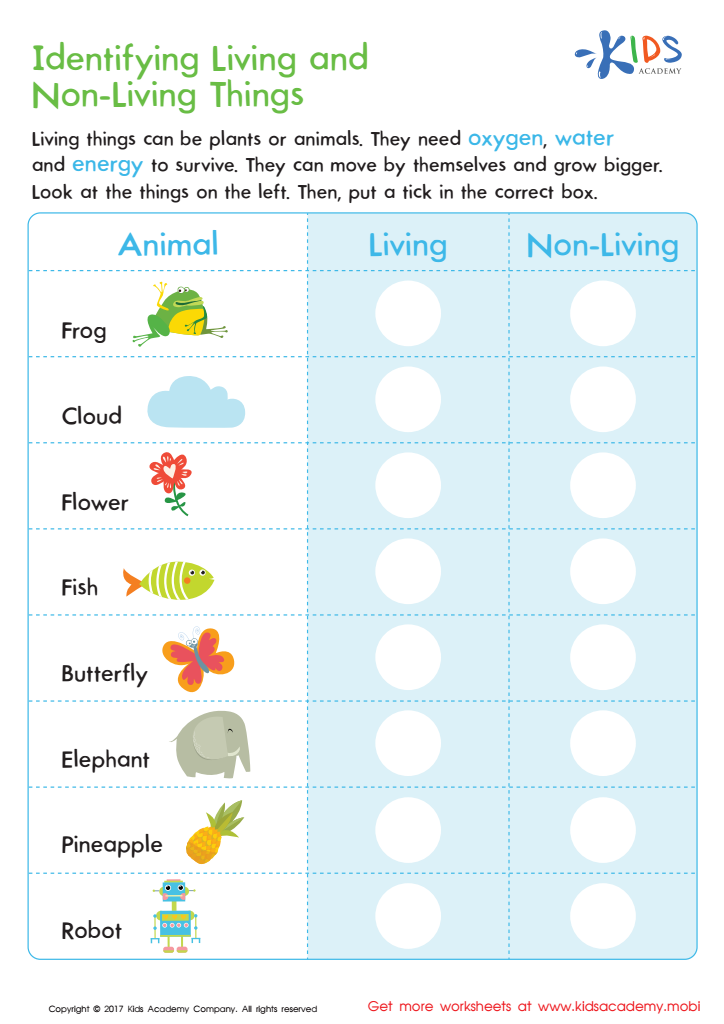
Identifying Living or Non–living Worksheet
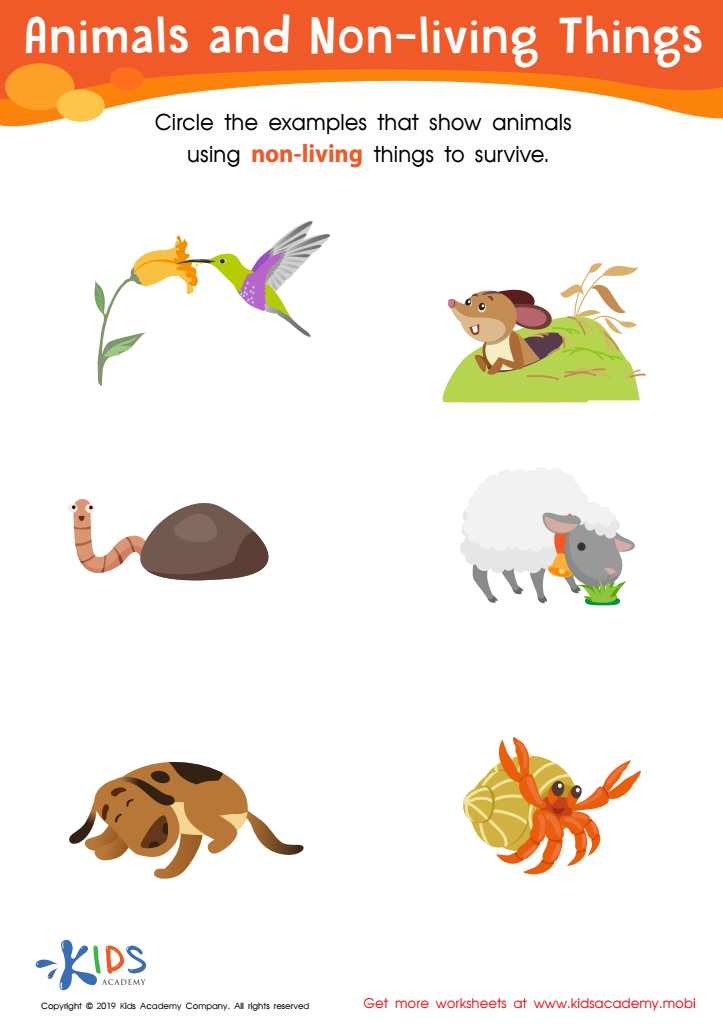
Animals and Non-Living Things Worksheet






%20(1).jpg)

Categorization skills are essential for children aged 5-9 because they form the foundation for critical cognitive development. When parents and teachers focus on helping children categorize normal animals, they are cultivating their ability to identify, compare, and classify information, which is key for academic success and everyday problem-solving. These skills are fundamental for understanding the world, as children learn to group animals based on characteristics like size, habitat, diet, and movement.
For instance, understanding the differences between mammals and reptiles, or distinguishing between domestic and wild animals, helps children make sense of complex information and develop their memory and recall abilities. Such practice in categorization encourages them to observe closely, think critically, and make connections between different pieces of information.
Moreover, engaging in categorization activities enhances language development. Discussing animal features and classifications increases vocabulary and improves conversation skills. It also lays the groundwork for scientific thinking by fostering curiosity and questioning.
Overall, fostering categorization skills through lessons on normal animals sets children up for success across various subjects, nurtures their investigative instincts, and aids social development as they share and discuss their findings with peers and adults.








