Categorizing objects Normal Science Worksheets for Ages 5-9
4 filtered results
-
From - To
Discover our "Categorizing Objects Normal Science Worksheets" designed for curious minds aged 5-9. These engaging printable worksheets foster critical thinking and observation skills by teaching young learners how to sort and categorize various objects based on their attributes. Ideal for enhancing early science learning, each worksheet challenges kids to analyze similarities and differences, group items by common features, and refine their sorting skills in a fun, educational way. Boost your child's cognitive abilities and prepare them for advanced concepts with our captivating and accessible activities. Unlock the world of categorization with Kids Academy today!
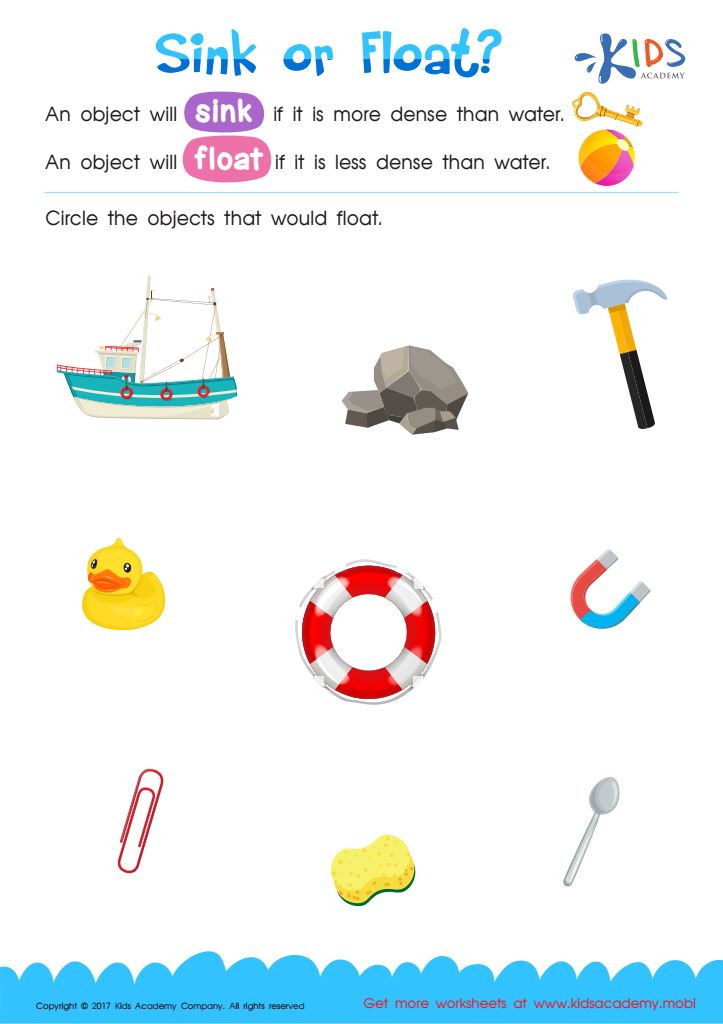
Sink or Float Printable
 Assign to My Students
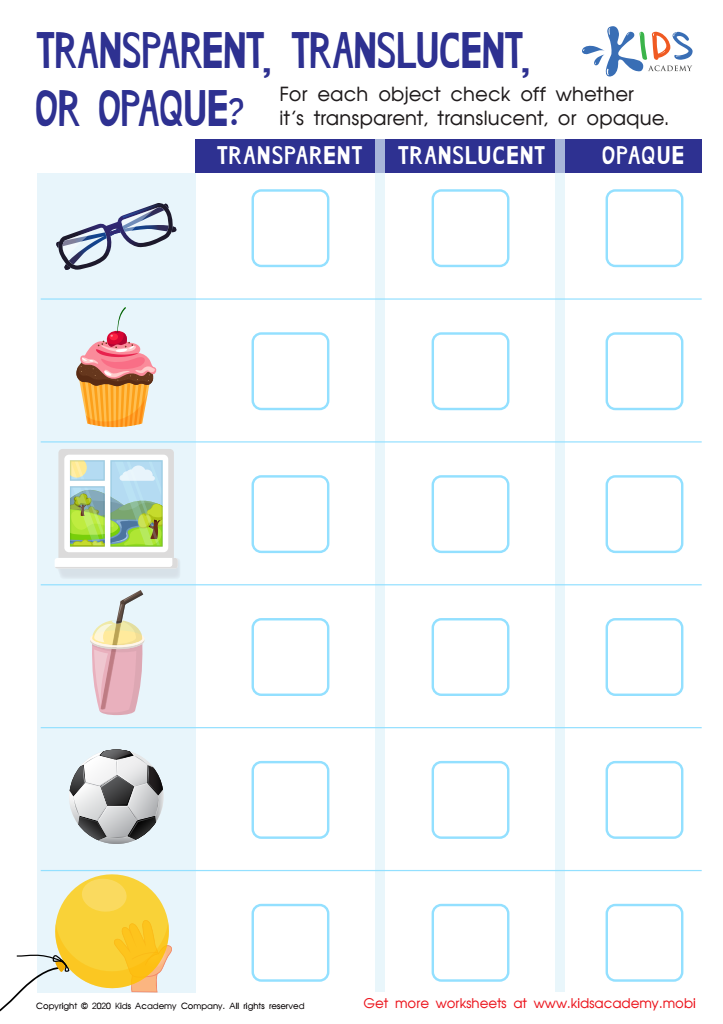
Transparent, Translucent, or Opaque Worksheet
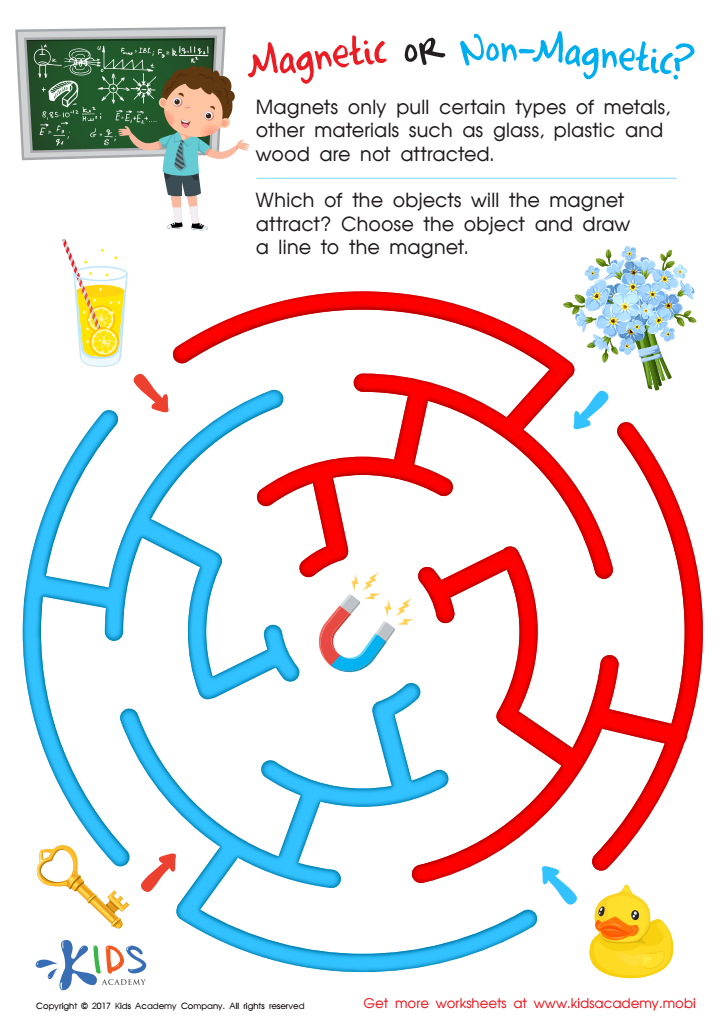
Magnetic or Non–Magnetic Worksheet
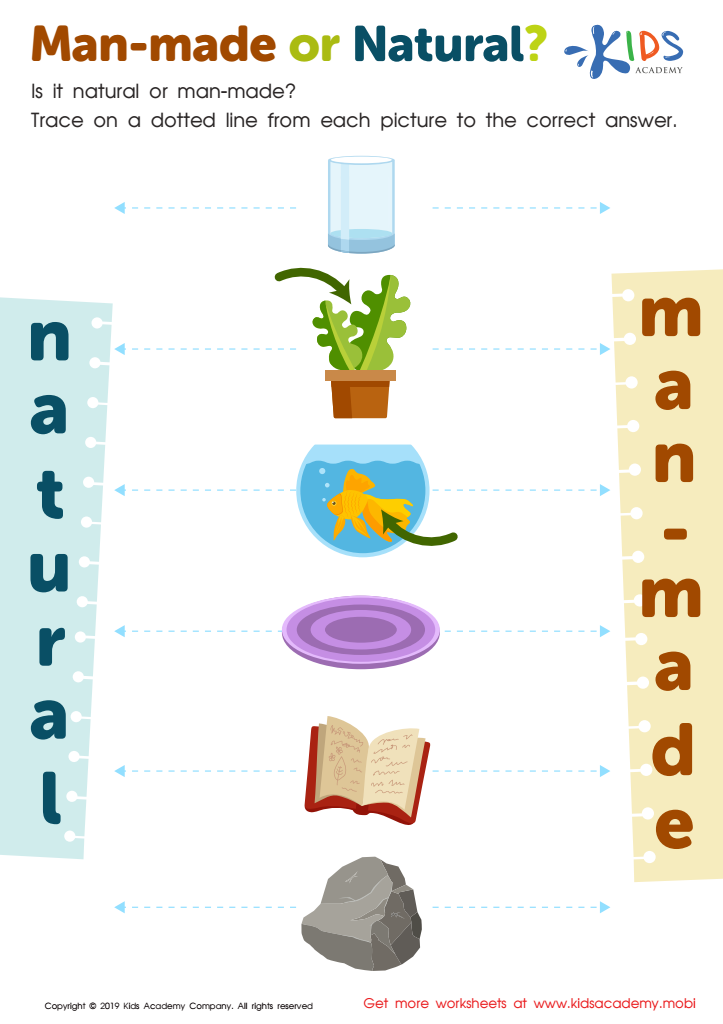
Man-Made or Natural? Worksheet








Categorizing objects is a fundamental skill in early science education, crucial for children ages 5-9. This cognitive process helps young learners develop essential skills such as observation, comparison, and organizing information. When children categorize objects, they learn to notice similarities and differences, which sharpens their critical thinking. These capabilities form the building blocks for more complex scientific reasoning and problem-solving in future years.
Moreover, categorizing nurture's children's innate curiosity and encourages them to ask questions about the world around them. It helps demystify the environment as they start seeing patterns and connections. For instance, sorting animals by habitat or grouping plants by the type of leaves stimulates keen observation and expands their knowledge of the natural world.
Parents and teachers benefit, too. As children categorize objects, it provides valuable insights into their developmental progress and understanding. It makes learning interactive and hands-on, often leading to enhanced engagement and better retention of information. Also, these activities can be tailored to interdisciplinary lessons, tying into language arts by integrating new vocabulary or into mathematics by introducing concepts of sorting and numeration.
Overall, fostering categorization skills in young learners is not just about science; it equips them with a versatile toolkit for academic and personal growth.







