
Multiplication practice Normal Science Worksheets for Ages 5-9
8 filtered results
Difficulty Level
Grade
Age
-
From - To
Subject
Activity
Standards
Enhance your child's learning experience with our Multiplication Practice Normal Science Worksheets designed specifically for ages 5-9. These engaging and interactive worksheets introduce multiplication concepts within scientific contexts, making learning both fun and effective. Each worksheet is crafted to reinforce essential skills through a variety of activities, from simple multiplication problems to exciting science-themed challenges. Perfect for classroom use or at-home practice, these worksheets support your child's understanding of math while fostering a love for science. Download our Multiplication Practice Worksheets today and watch your child build confidence and mastery in both math and science disciplines!
Favorites
With answer key
Interactive
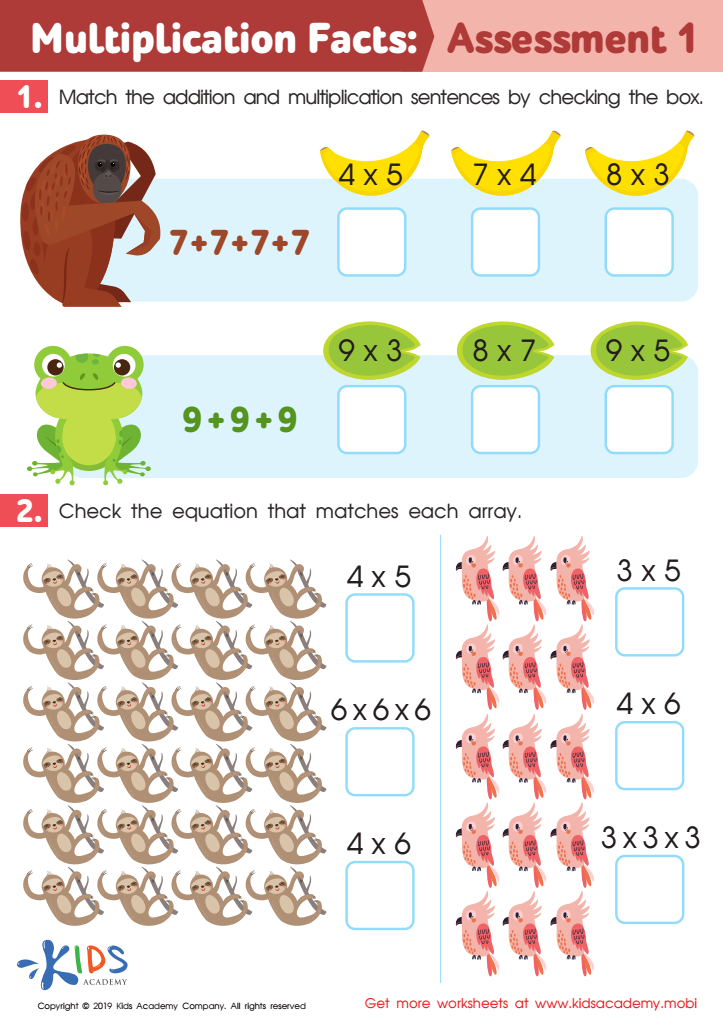
Multiplication Facts: Assessment 1 Worksheet
Teach your kids math with diligence, patience and practice. This colorful worksheet helps by matching addition and multiplication sentences, then checking the equation that matches each array. Perfect for kids having difficulty or to give extra practice. Help your little ones master mathematics with this printout.
 Assign to My Students
Multiplication Facts: Assessment 1 Worksheet
Worksheet
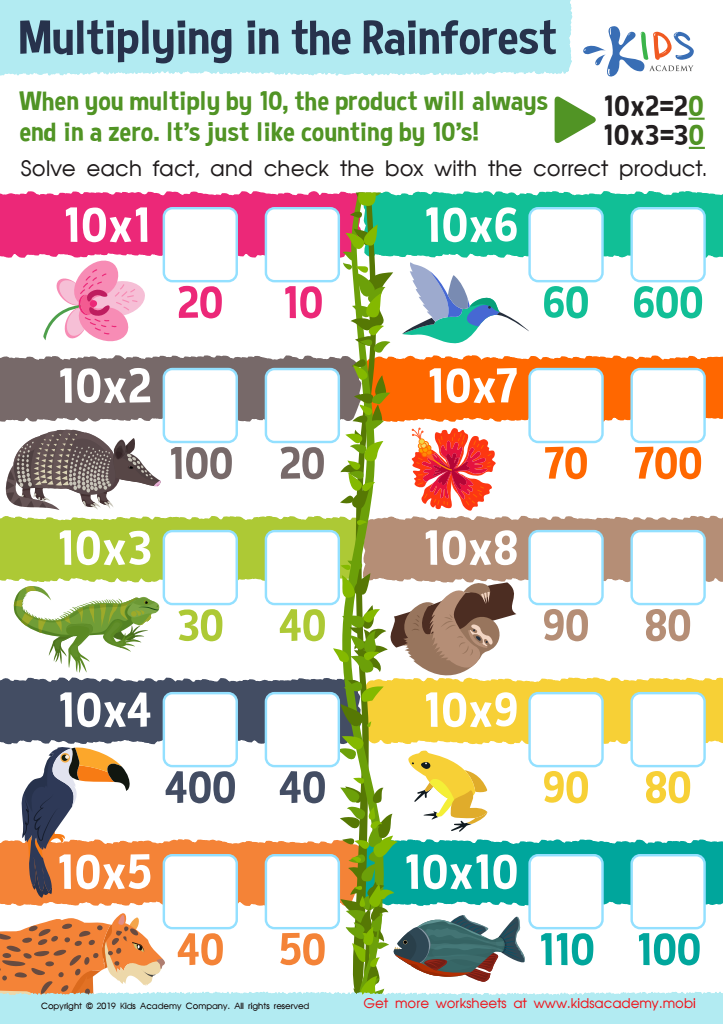
Multiplying in the Rainforest Worksheet
Teaching your child multiplication can be tricky. Help them out with some easy tips! Teach them that when multiplying by 10, the answer always ends in 0. Just like counting by 10's. Show them examples and encourage them to solve the facts, checking their answer with the correct product.
Multiplying in the Rainforest Worksheet
Worksheet
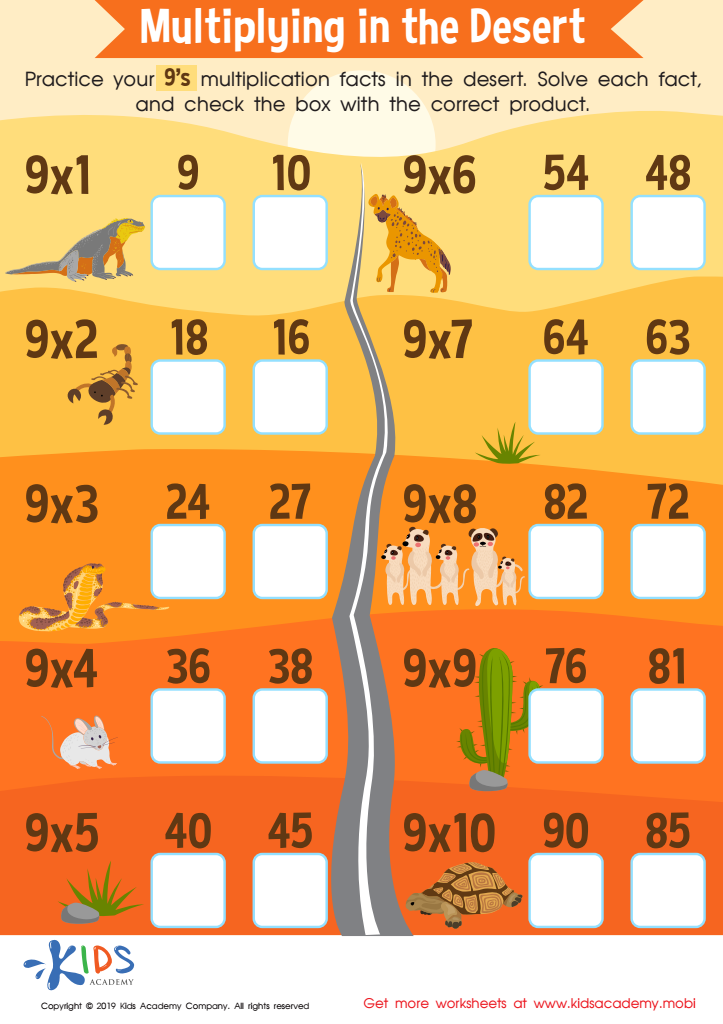
Multiplying in the Desert Worksheet
Help your kids learn the multiplication table faster by introducing them to this fun worksheet! It allows them to learn at a more engaging pace, with the added challenge of naming desert animals. Solve each fact and check the correct product, for an enjoyable and effective way to practice their 9’s multiplication facts.
Multiplying in the Desert Worksheet
Worksheet
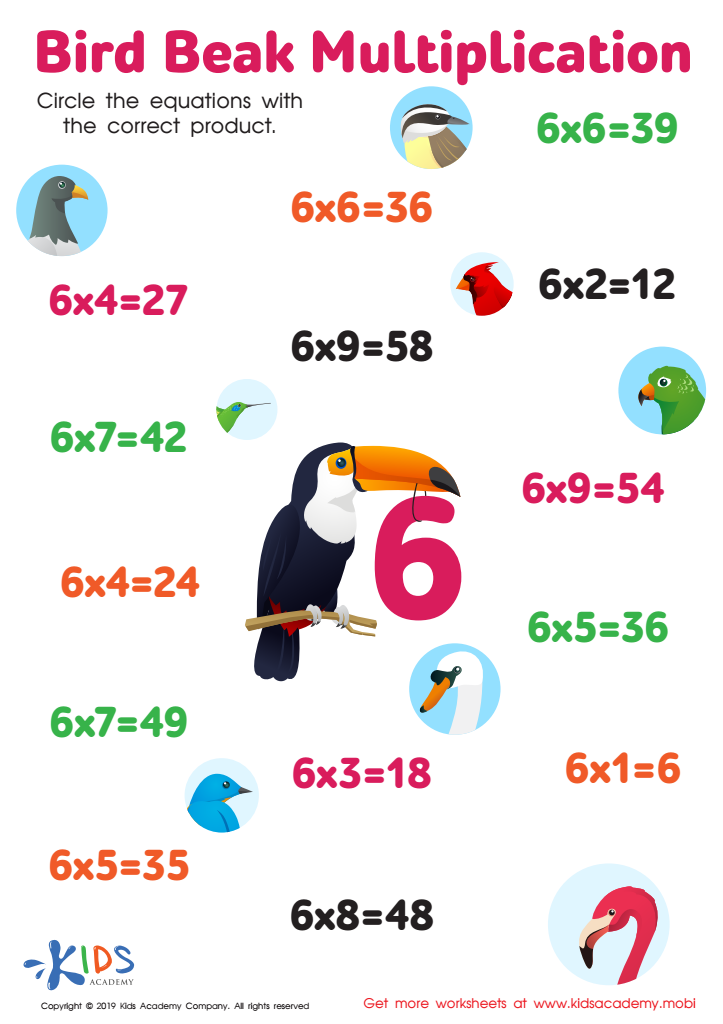
Bird Beak Multiplication Worksheet
Ask your kids to identify the birds in the pic and help them solve the equations. Then, have them circle the correct product. Encourage your kids to explore the wonders of nature with this bird-themed worksheet that'll take their interest to a whole new level, especially if they already have a pet bird or love birds!
Bird Beak Multiplication Worksheet
Worksheet
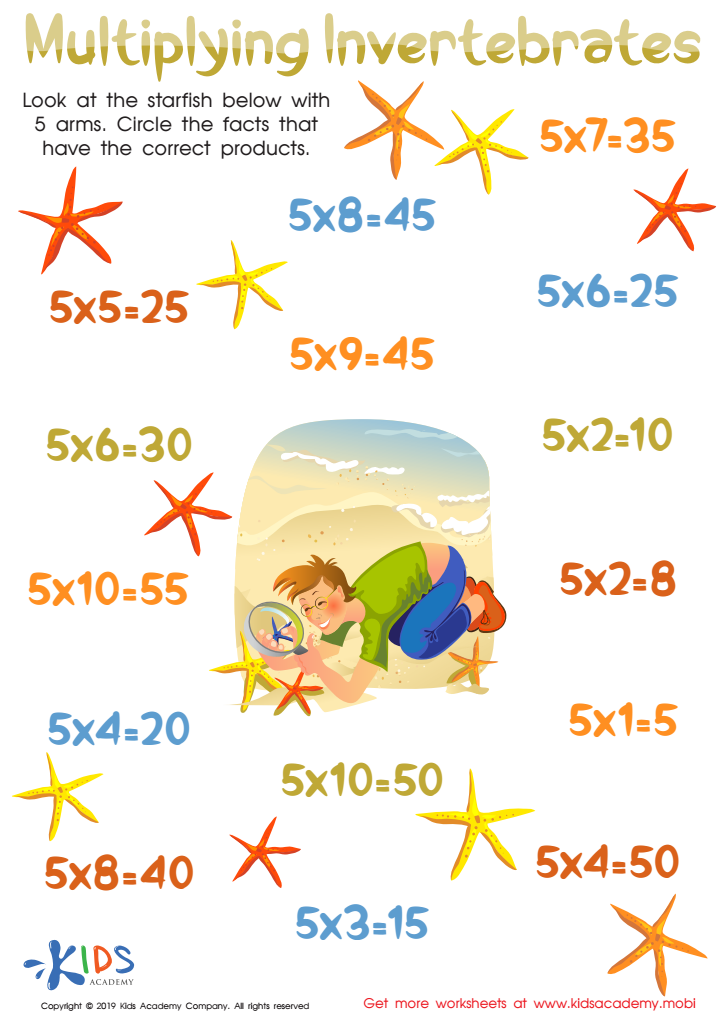
Multiplying Invertebrates Worksheet
Explain to your kids an invertebrate is an animal without a backbone. Examples: squid, jellyfish, octopus. Now, look at the starfish in the picture and help your kids circle the correct facts.
Multiplying Invertebrates Worksheet
Worksheet
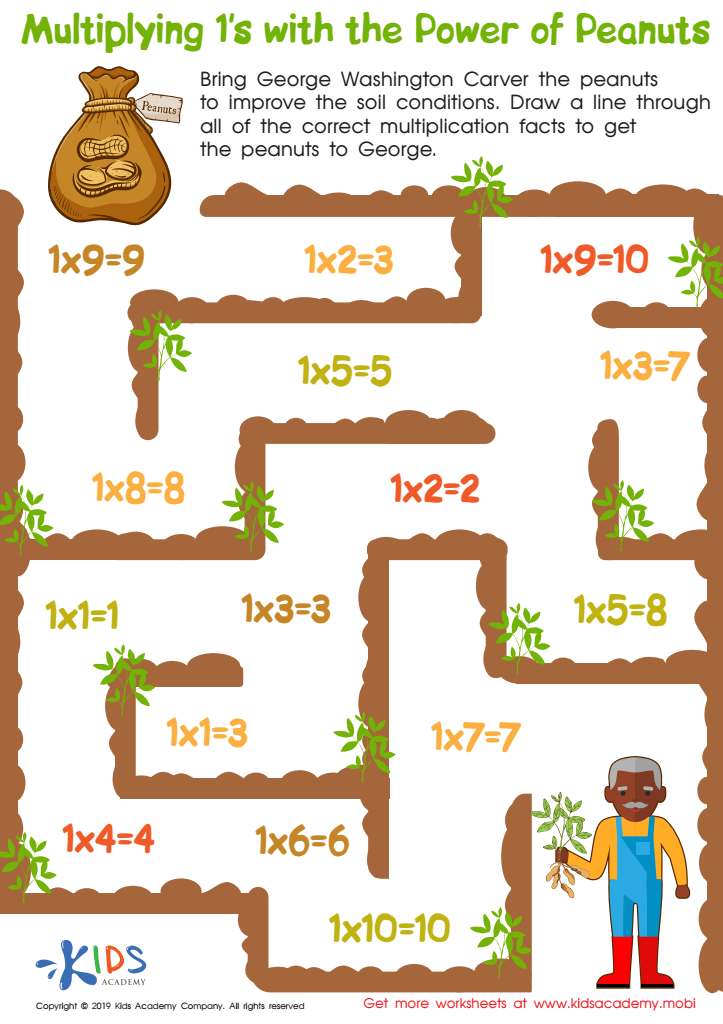
Multiplying 1’s With the Power of Peanuts Worksheet
Help your kids learn about George Washington Carver with this fun worksheet! Assist them in bringing peanuts to Carver by drawing a line through the correct multiplication facts. Introduce them to Carver's genius creations and show them how he used peanuts to improve the soil condition.
Multiplying 1’s With the Power of Peanuts Worksheet
Worksheet
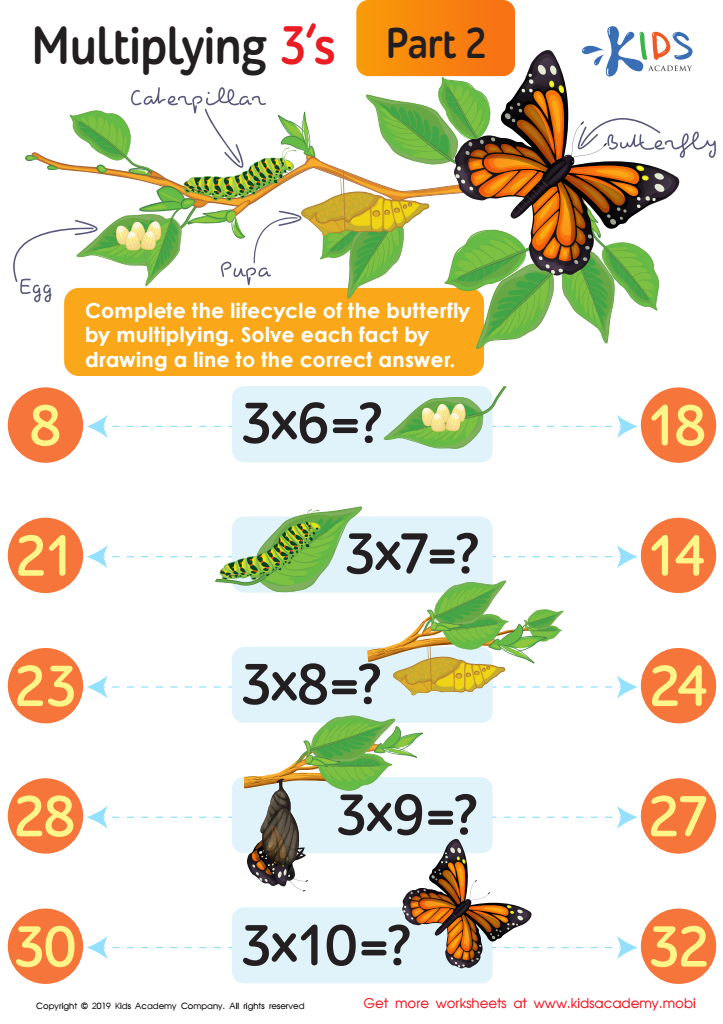
Multiplying 3s Part 2 Worksheet
Once a tiny egg, a butterfly goes through its life cycle. From egg to caterpillar to cocoon to beautiful winged creature! Ask your kids to complete the lifecycle by solving the facts on the worksheet. Help them draw a line to the right answer and let them marvel at the butterfly's amazing transformation!
Multiplying 3s Part 2 Worksheet
Worksheet
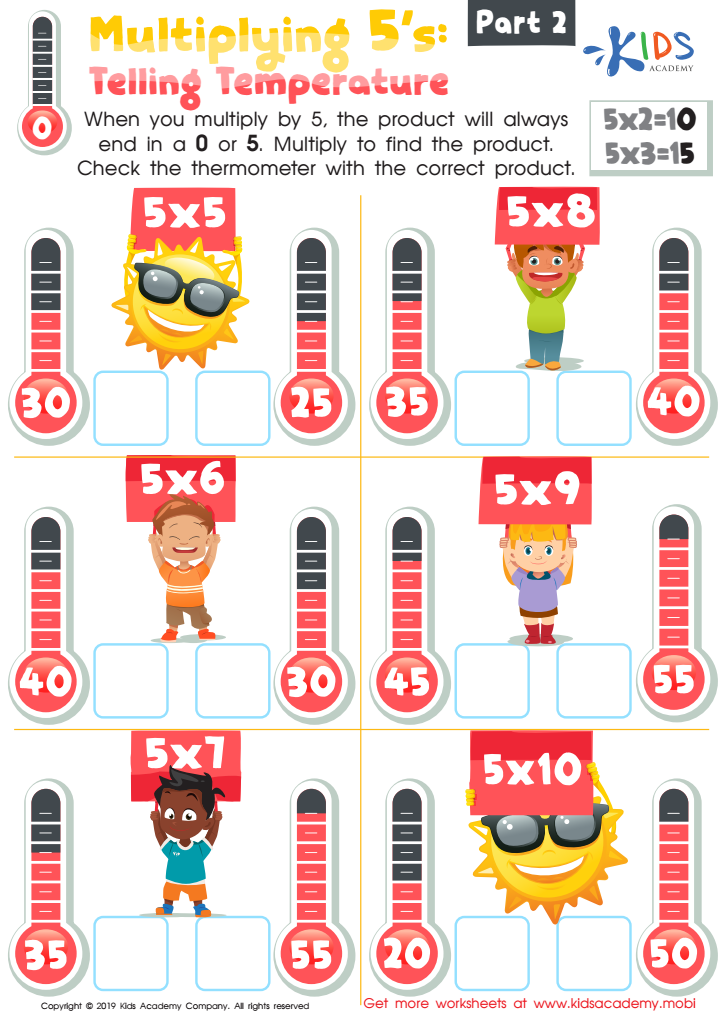
Multiplying 5’s: Telling Temperature Part 2 Worksheet
To help your child with multiplication, teach them some simple tricks. For example, when multiplying 10's the product always ends in a 0, and when multiplying by 5, the product will end in 0 or 5. Look at the problems in this worksheet and help your child find the product. Then, check the thermometer with the correct answer.
Multiplying 5’s: Telling Temperature Part 2 Worksheet
Worksheet
Join Kids Academy for Free
Who is primarily going to use this learning content?








Parents and teachers should prioritize multiplication practice in normal science for children ages 5-9 because it forms a critical foundation for their overall mathematical understanding. Early exposure to multiplication aids in developing number sense, which is essential for intermediate mathematical concepts like division, fractions, and even basic algebra.
Engaging with multiplication helps students build confidence in their math skills, showing them they can tackle challenges systematically. As students in this age group learn about science concepts related to multiplication—such as measuring ingredients in cooking, counting animal populations in habitats, or interpreting data—understanding multiplication deepens their contextual learning. It connects math to real-world situations, making both subjects more engaging.
Furthermore, emotional and cognitive development occurs through practice and problem-solving, promoting persistence and resilience. By laying a solid mathematical groundwork, parents and teachers empower children to face more complex concepts in subsequent grades with confidence. Regular multiplication practice also allows for easier integration of scientific inquiry, supporting STEM (Science, Technology, Engineering, and Mathematics) education and enhancing critical thinking skills. When multiplication is approached creatively in a science context, it fosters a love for learning and inquiry, establishing a lifelong appreciation for both math and science.







