Visual perception improvement Normal Social Studies Worksheets for Ages 5-9
3 filtered results
-
From - To
Enhance your child's visual perception skills with our specially designed Social Studies worksheets for ages 5-9. These educational resources integrate engaging activities that support the development of essential visual and cognitive abilities. Each worksheet offers fun, interactive exercises focusing on matching, pattern recognition, and spatial understanding, all crucial for a well-rounded learning experience. Perfect for young learners, our Visual Perception Improvement worksheets encourage critical thinking and attention to detail, supporting academic growth across various subjects. Visit us today and discover how our expertly crafted materials can help your child excel both visually and academically.
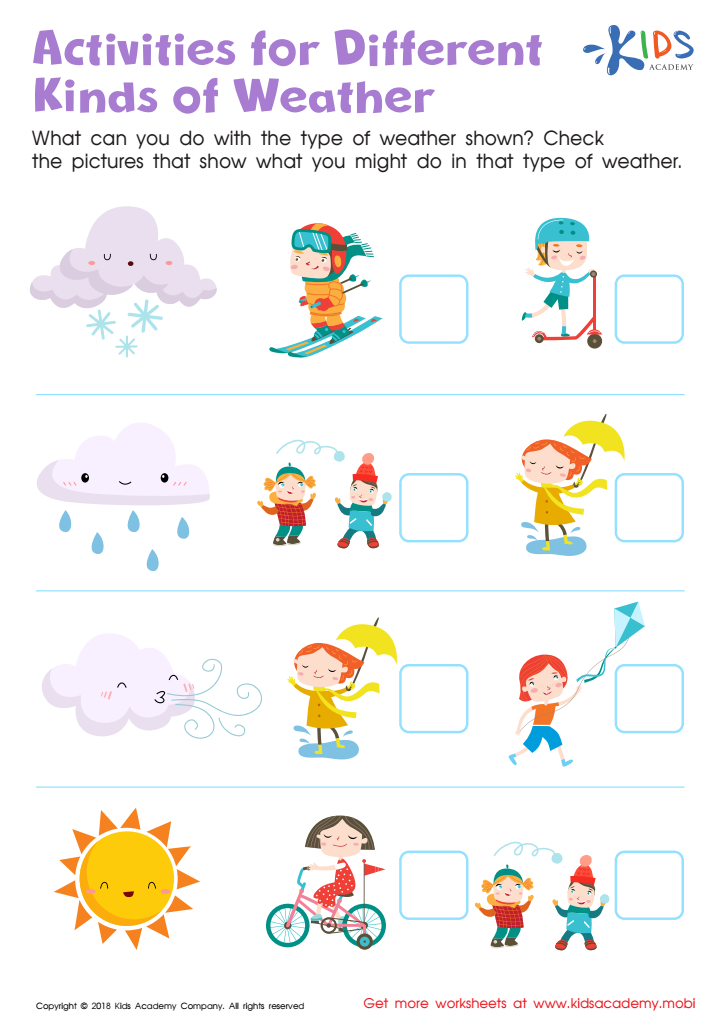
Activities for Different Kinds of Weather Worksheet
 Assign to My Students
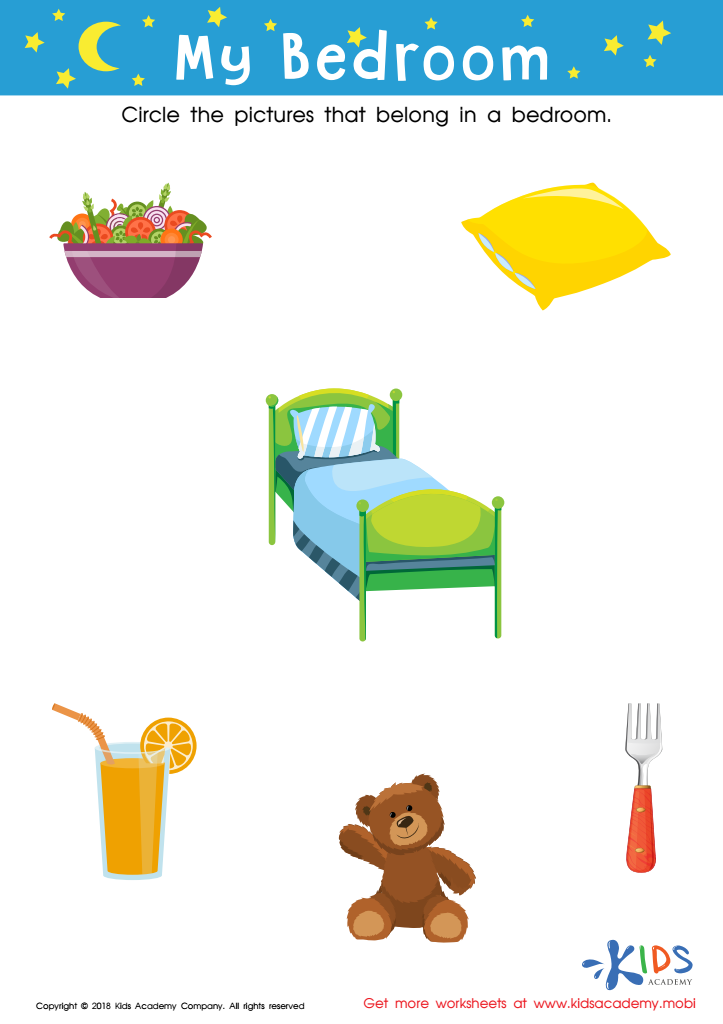
My Bedroom Worksheet
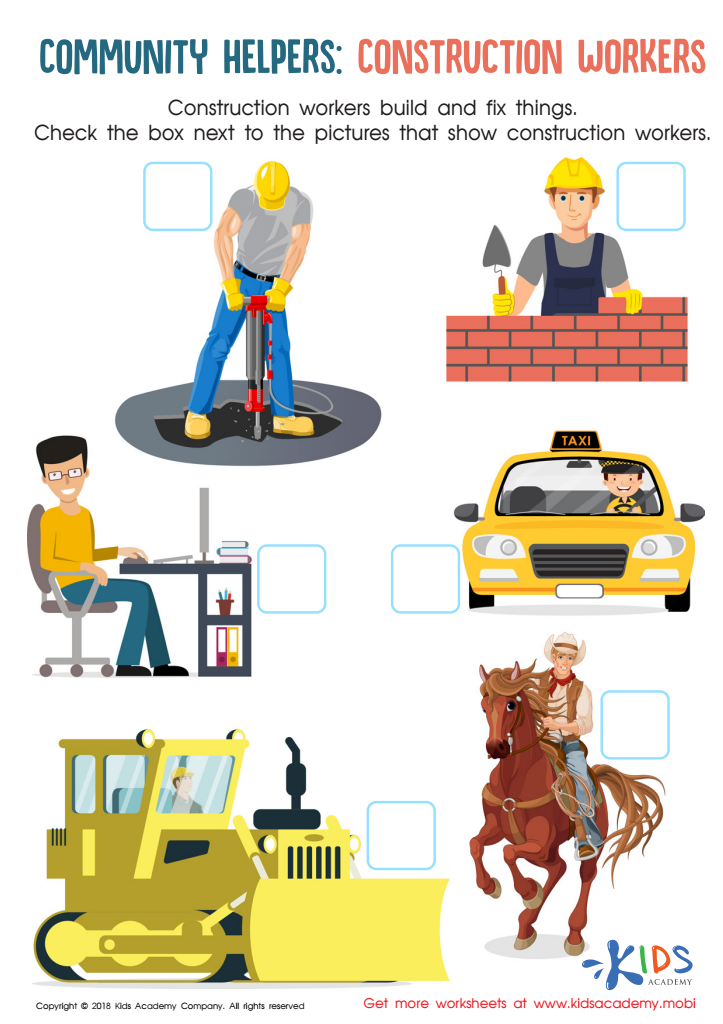
Construction Workers Community Helpers Worksheet


.jpg)


Visual perception is a crucial component in early childhood education, especially for children ages 5-9. This developmental stage benefits immensely from enhanced visual perception skills, which underpin much of their learning and social interactions. For parents and teachers, improving a child's visual perception can lead to better academic performance, as these skills are integral to reading, writing, and problem-solving. Good visual perception allows children to accurately interpret visual information, meaning they can better understand text, diagrams, and other classroom materials.
In social studies, visual perception helps children make sense of physical and social environments. Basic maps, charts, and pictures used in social studies become comprehensible only when a child can adequately process visual information. This ability to understand visual cues aids in grasping concepts like geography, community roles, and historical timelines. Improved visual perception also positively impacts social interactions, as children learn to correctly interpret facial expressions and body language, essential for developing empathetic relationships and effective communication skills.
By focusing on visual perception improvement, parents and teachers not only enhance a child's academic capabilities but also foster well-rounded development. Activities such as puzzles, drawing, and interactive games are practical and enjoyable ways to strengthen these essential skills, making learning both effective and fun.