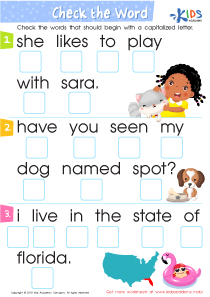
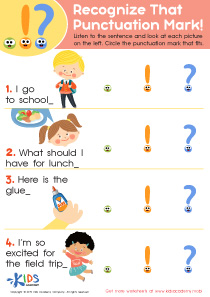
Enhancing Reading Comprehension Normal Writing Worksheets for Ages 5-9
3 filtered results
-
From - To
Discover our "Enhancing Reading Comprehension Normal Writing Worksheets" designed for children aged 5-9! These engaging and educational worksheets aim to boost your child's reading and writing skills through fun and interactive activities. Each worksheet features vibrant illustrations and simple exercises to help young learners retain information, understand vocabulary, and develop critical thinking. Suitable for classroom settings or at-home practice, these worksheets are a fantastic way to support your child's literacy journey. Explore our collection today and watch your child grow into a confident reader and writer! Visit Kids Academy for more details.
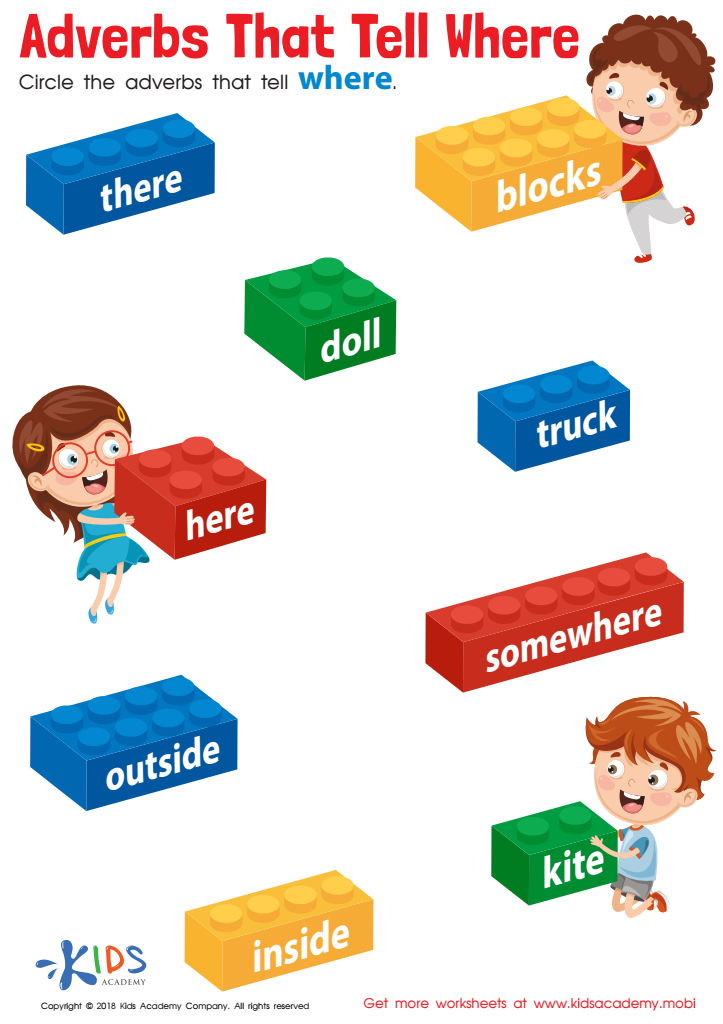
Adverbs That Tell Where Worksheet
 Assign to My Students
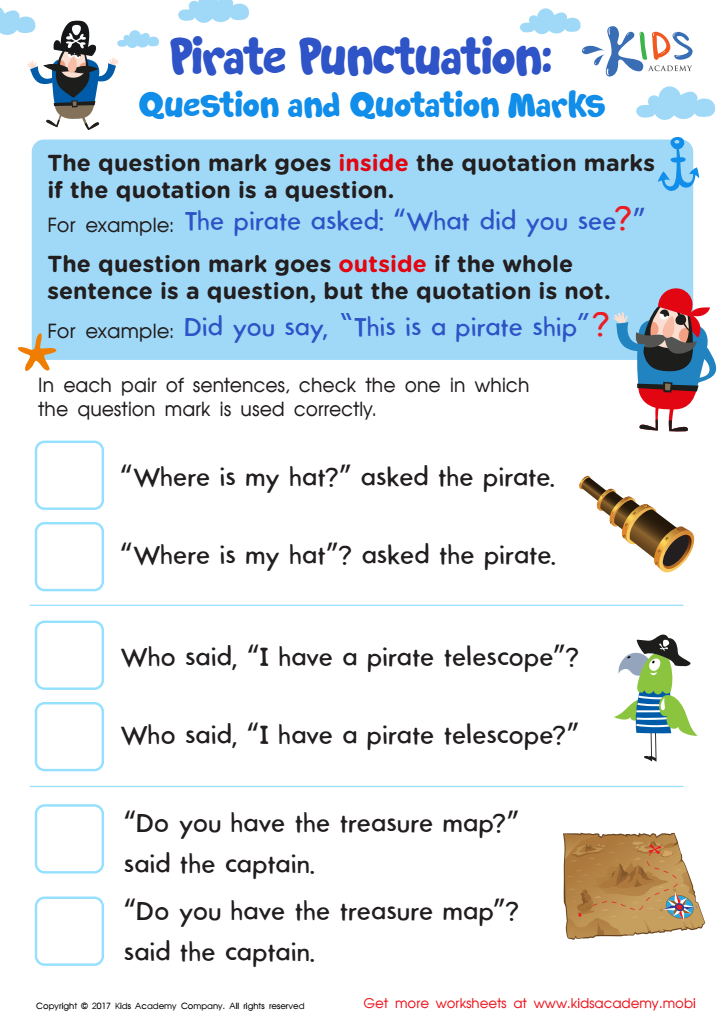
Question and Quotation Marks Worksheet
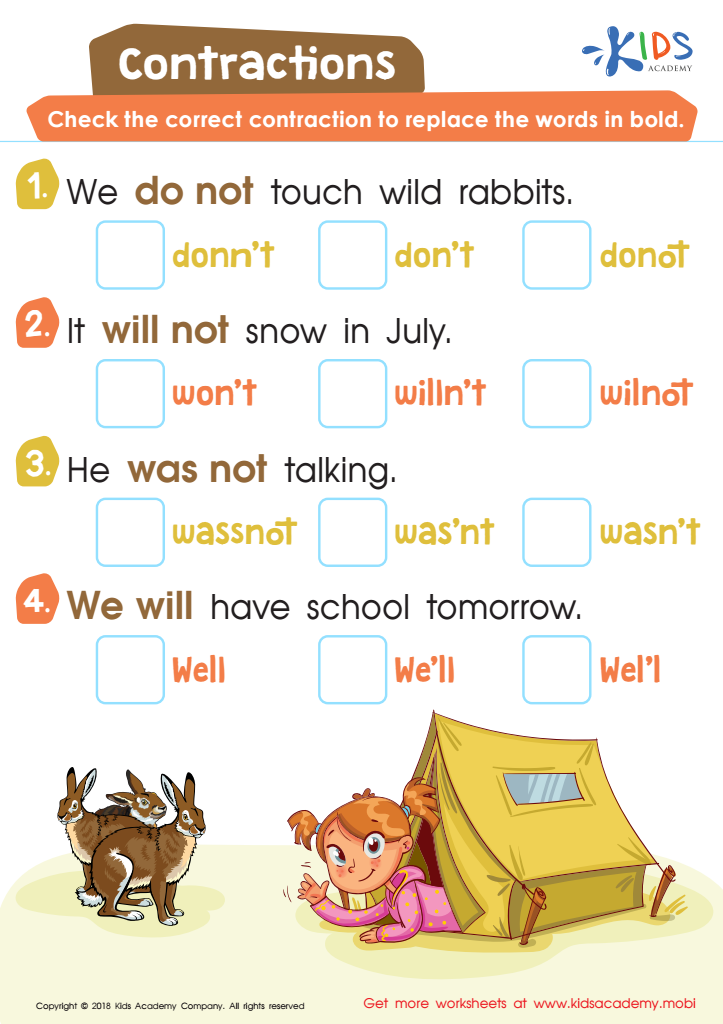
Contractions Worksheet








Enhancing reading comprehension in children aged 5-9 is crucial for their overall development and academic success. At this stage, children transition from learning to read to reading to learn. Strong reading comprehension skills are foundational, enabling children to grasp the meaning of texts, make connections, and develop critical thinking.
First, reading comprehension enhances vocabulary and language development. When children understand what they read, they encounter new words in context, making it easier to grasp and retain them. This expansion of vocabulary helps children articulate their thoughts better and improves communication skills.
Second, it fosters a love for reading. Young children who comprehend what they read are more likely to enjoy reading. This positive experience can turn reading into a lifelong habit, essential for continuous learning and personal growth.
Third, reading comprehension directly impacts academic performance across all subjects, not just literacy. Understanding written problems in math, grasping scientific concepts, and interpreting social studies materials all rely on the ability to comprehend text. Difficulty in reading comprehension can lead to struggles in these areas.
Finally, enhanced reading comprehension builds confidence and self-esteem. When children successfully understand and discuss texts, they feel more confident in their abilities, encouraging a positive attitude towards school and learning in general.
Therefore, parents and teachers should prioritize reading comprehension to lay a strong educational foundation and support the all-around development of children.